
What International Hunters Learn Quickly on Serious Hippo Safaris
Published: March 2026
Last Updated: June 2026
[DYNAMIC-BLOGTABLEOFCONTENT]
The Illusion of Calm Water
There is something quietly deceptive about a river that looks calm.
Most American and Canadian hunters who arrive in Africa for a serious hippo safari expect the challenge to feel familiar. They assume it will come down to wind, distance, composure and the same fundamentals that apply to elk in steep country or bears in heavy timber. Experience builds confidence, and confidence is usually earned.
Yet hippo hunting occupies a unique place among Africa's Big Game Hunting safaris. Most American and Canadian hunters who begin researching regulated hippo safaris quickly discover that this hunt demands far more than surface-level preparation.
Most of us land in Africa believing we've already seen big animals and managed difficult shots.
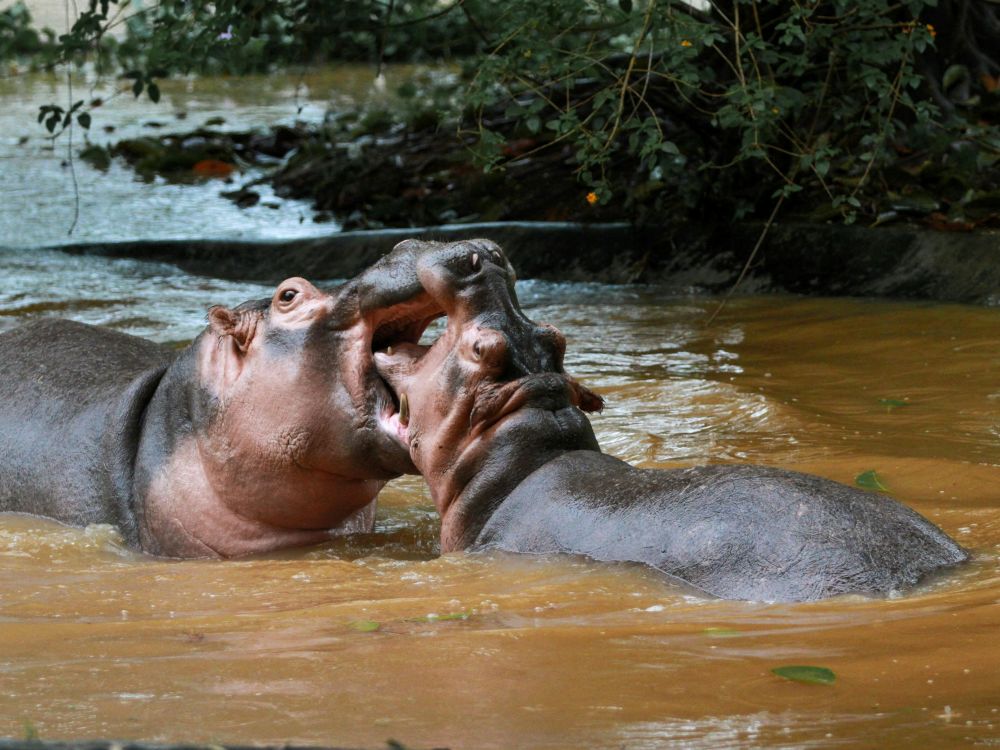
Hippo Hunting introduces a different kind of pressure, one you don’t fully understand until you are standing on a riverbank in a place like the Zambezi River, watching nothing but the top of a massive head break the surface. A floating hippo can look as steady as a half-submerged log, barely disturbing the water around him.
The surface reflects sky and glare back at you. It looks flat. Quiet. Manageable.
It isn’t.
The animal you are studying, the common hippopotamus (Hippopotamus amphibius), can weigh well over 3,000 pounds. His skull is thick, dense, engineered by nature for dominance within the river system he occupies. Yet in deep water, almost all of that mass disappears beneath a surface that gives away very little.
WWhat unsettles most experienced hunters is not the animal’s size. It’s the realization that placing a precise shot on something partially submerged in water is fundamentally different from shooting an animal anchored on solid ground.
That difference is where many first impressions fall short. In water, only a fraction of the animal is visible, angles are deceptive, and movement is constant, subtle, but enough to affect your point of aim.
This is why understanding proper hippo shot placement becomes critical. It is not simply about accuracy, but about knowing exactly what lies beneath the surface and how small errors can be amplified in that environmen
On land, a hippo feels tangible. His weight presses into earth. His posture is readable. In water, that same body is supported by depth you cannot see clearly. The head rises and settles almost imperceptibly with each breath. What appears steady through binoculars begins to feel less certain once you look through glass and narrow your focus.
I remember thinking it looked simple from the bank. It wasn’t.
That subtle instability, not obvious at first, is what changes the entire experience.

Why Shooting a Hippo in Deep Water Is Different
When a mature bull holds in a deep channel, you are never seeing the whole animal. What’s visible is limited to the crown of the skull, ears twitching water away, nostrils opening and closing with steady rhythm. Beneath the surface lies the rest of him, thousands of pounds of muscle and bone supported by water whose true depth you are estimating rather than measuring.
At first glance, the opportunity can seem straightforward. If you have ever steadied a crosshair on an elk across a canyon and felt composed, it is easy to assume this will feel similar.
It doesn’t.
When you settle behind the rifle, small movements begin to register that weren’t obvious moments before. The head lifts slightly with each breath and settles again. The current nudges him just enough to shift alignment. Glare off the water bends light in subtle ways, making edges appear cleaner than they truly are. What seemed fixed now feels fluid.
Through a scope, that “log” no longer looks motionless. It feels more like trying to hold precisely on something that is drifting almost too slowly to notice.
Those inches matter more than most hunters expect.
You are not shooting at an animal planted firmly in earth. You are committing to a brief alignment within an environment that is constantly adjusting itself. In deep water, errors do not announce themselves loudly. They unfold quietly, absorbed by the same surface that looked so forgiving only minutes before.
That awareness settles in quickly.

Hippo on Land vs Hippo in Water
When a hippo leaves the river to graze, often under low light, the atmosphere changes in ways that are difficult to describe until you’ve experienced both scenarios.
On land, the animal’s full outline is visible. You can judge the way he carries his head, the angle of his shoulders, the rhythm of his stride. Even though hippos are fast and unquestionably dangerous when pressured, the situation feels closer to what experienced hunters understand. There is solid ground beneath him and beneath you, and that shared footing shifts the psychology.
In water, however, he is operating entirely within his element. Depth varies without warning. What appears shallow can drop away into darker channels that allow him to submerge and reappear yards away. Hippos do not swim in the way many imagine; they move along the river bottom, pushing off and rising where they choose. The structure beneath the surface is real, but it is invisible to you.
For hunters accustomed to reading tracks in dust or studying the body language of a buffalo bull before closing distance, that lack of visible structure can feel strangely abstract. There is no disturbed brush, no clear line of retreat, no obvious reference points beyond what the surface chooses to reveal.
The river operates on its own terms, and you are stepping into a system that does not adjust itself for your understanding.
What International Hunters Often Underestimate
Most international hunters arrive with strong fundamentals. They manage recoil confidently, understand the discipline required around dangerous game, and appreciate how quickly circumstances can change if impatience creeps in.
What often surprises them on a hippo safari is not overt danger, but how quietly the environment alters the equation. Depth influences the angle without announcing it. Visibility gives the impression of opportunity even when alignment is fleeting. A head that looks perfectly presented one second can shift just enough the next to introduce doubt.
Standing on the bank of a broad African river, feeling heat radiate off sand behind you and hearing the hollow exhale of a bull clearing water from his nostrils, it is easy to believe that what you see is what you get. But this is not a hunt booked for dramatic photographs or simple narratives. It demands patience that feels active rather than passive, restraint that grows heavier the longer you watch and wait.
Over time, you begin to recognize how rarely everything aligns at once, angle, steadiness, clarity. The waiting sharpens rather than dulls your focus.
The Mental Adjustment That Comes Quickly
The most honest reflection I can offer about my first hippo hunt is that I underestimated how technical it would feel.
I assumed the animal’s size would dominate the experience.
Instead, precision did.
Settling a crosshair on a floating head that shifts almost imperceptibly with breath and current forces you to slow down in ways that land hunting does not always require. You become acutely aware of your position, the stability of your rest, the pressure on the trigger. Small inconsistencies that might pass unnoticed on broader targets feel magnified when the visible window is limited.
That is when the advice of experienced professional hunters begins to make deeper sense. Stability is emphasized not because the animal is theatrical or unpredictable in a dramatic way, but because the margins are narrow and the environment amplifies error.
International hunters who recognize that early tend to adapt quickly. Those who assume it will feel like any other large animal usually need a quiet recalibration, often within the first hours on the river.
The water may appear calm from a distance. But it carries its own rules and learning those rules is only the beginning.
The Weight Beneath the Surface
There are few animals in Africa more misunderstood than the common hippopotamus (Hippopotamus amphibius).
To much of the world, the hippo exists somewhere between novelty and caricature. It appears in children’s books, zoo exhibits, and wildlife clips that highlight exaggerated yawns or surface aggression. Even serious documentaries often reduce the animal to spectacle.
What tends to disappear in that framing is context.
Spend enough time watching a dominant bull hold position in a river system and the caricature fades quickly. What replaces it is structure. Hippos are not decorative wildlife drifting through African waterways. They are embedded within them. Their grazing paths carve corridors through floodplains. Their daily movement between land and water redistributes nutrients across ecosystems in measurable ways. In many river systems, they are ecological drivers.
Understanding that matters, because hippo hunting in Africa does not exist in isolation from those systems.
Like several other African hunting destinations, Hunting in Tanzania operates under a government-managed quota system for hippos. Annual quotas are carefully reviewed as part of broader wildlife management programmes that balance conservation, local community needs and sustainable hunting. During the dry season, falling water levels concentrate hippos into narrower river systems, increasing conflict with people living along these waterways.
A controlled hippo safari operates inside that reality.
Outside Africa, a single photograph can circulate without explanation. What it rarely shows is the structure behind the hunt, the permit systems, the quotas, the local revenue that supports anti-poaching presence and community infrastructure.
Hippo hunting in Africa, when conducted within regulated quotas and strict ethical standards, is not spectacle. It is structured wildlife management.
That distinction is important.
No one books a hippo safari casually. It is rarely an impulse addition to a plains game hunt. For American hunters, especially those who have built careers, raised families, and spent decades earning their time away, the idea develops slowly. It begins as curiosity. It becomes research. Eventually, it becomes a serious internal question.
Not simply whether it would look impressive. But whether it is worth the commitment.
A hippo hunt is rarely about filling a line on a Dangerous 7 list. For most hunters, it represents years of planning, conversations at home, and the decision to pursue something few men will ever stand close enough to understand.
On the river systems where we conduct regulated hippo safaris, the decision to pursue a mature bull is deliberate. It is tied to quota allocation, area management, and professional oversight. A dominant bull removed within that structure is not an isolated act. It is part of a broader conservation model that has shaped much of modern African wildlife management.
For hunters pursuing the Dangerous 7, hippo is often the species that separates a checklist from a commitment. There are easier animals to hunt in Africa. Hippo simply isn’t one of them.
That knowledge changes how the hunt feels.
There is a moment after a successful hippo harvest when the river settles again. The surface closes. Birds resume their calls. The current continues without ceremony. It does not resemble the visible collapse of plains game in open grass. It feels quieter and, in some ways, more reflective.
At night in camp, when the generator cuts and the river hum replaces conversation, that weight tends to settle in fully. You realize the day was not about proving toughness. It was about discipline.
You understand that you have removed an animal that held authority within that stretch of water. A dominant bull shapes spacing and tension along the channel he occupies. His presence influences movement patterns and hierarchy within the pod.
Recognizing that does not diminish the hunt. It deepens it.
Hippo hunting does not translate easily into highlight reels. It is not built around visible pursuit or theatrical moments. The most important decisions are often made long before the trigger is touched. It attracts hunters who are comfortable with restraint and who understand that complexity does not announce itself loudly.
In the end, the weight of a hippo safari is not defined by size alone. It is defined by context, by regulation, by ecosystem balance, and by responsibility.
And when you finally leave the river and board the long flight home, you do not just carry a trophy. You carry the memory of standing still while the water moved around you — and knowing you chose something that required more than enthusiasm.
Understanding that weight is only part of the equation. The real standard reveals itself when the moment to shoot finally arrives.

When the Moment Comes
By the time the opportunity presents itself, the real work has already been done. The hours of watching, the deliberate waiting, and the quiet conversations with your professional hunter about angle, depth, and timing all lead to this point.
On a serious hippo safari, nothing meaningful happens by accident.
When the moment finally arrives, it rarely feels dramatic. There is no surge of chaos or theatrical tension like you might experience on a charging buffalo. Instead, there is a narrowing of focus and a steady awareness that this is the second everything has been building toward.
This is not a young man’s rush; it is a seasoned hunter’s decision. You are not there to prove toughness, you are there to meet a standard.
In that moment, you are not acting alone. You are relying on the judgment of the professional hunter beside you, and he is relying on your discipline in return. Trust runs both directions. If he tells you to wait, you wait. If he advises that the angle is not clean, you lower the rifle without argument. And when he confirms that everything is right, you commit fully and without hesitation.
That partnership is part of the hunt.
Many men speak confidently about dangerous game, but far fewer are willing to hold steady when patience is required and accept the responsibility that follows a single shot.
When the rifle reports and preparation is reflected in the outcome, the feeling is not explosive. It is controlled and certain. The river does not react dramatically. The current continues. Birds lift and settle again as if nothing significant has occurred.
Then there is the quiet work that follows.
You notice the smell of wet river mud along the bank and the heaviness of the air. Up close, the scale of the animal is no longer abstract. A firm handshake is exchanged. Words are few and measured. Nothing about the moment feels excessive.
It is here that something shifts internally. You realize that the hunt was never about adrenaline. It was about judgment, restraint, and the ability to do something difficult without turning it into theater.
For American hunters who pursue the Dangerous 7 later in life, hippo becomes the hunt that confirms something quietly personal. It is not about strength or bravado. It is about discipline and responsibility carried correctly when it matters.
The river forgets quickly. You do not.
Long after the travel fades and daily routines return, what remains is not the photograph or the measurement. It is the memory of standing still while the water moved around you and knowing that, when the moment came, you met the standard the hunt required.
That is what defines a serious hippo safari. Not spectacle, but standard.
Frequently Asked Questions About Hippo Hunting in Africa
1. Is hippo hunting legal in Africa?
Yes. Hippo hunting is legal in several African countries under government-issued quota systems. Permits are allocated annually within structured wildlife management programs and must be conducted under the supervision of licensed professional hunters. Regulations vary by country and concession, and all hunts operate within approved conservation frameworks.
2. Why are hippos hunted?
In certain river systems, hippos contribute to significant human-wildlife conflict, particularly during dry seasons when water sources compress and animal density increases. Controlled hunting of mature bulls helps manage localized pressure while generating conservation revenue for communities, anti-poaching operations, and wildlife management programs.
3. Is hippo hunting ethical?
Ethical hippo hunting depends entirely on regulation, quota compliance, and professional oversight. When conducted within legal frameworks and focused on approved animals under government allocation, it forms part of structured wildlife management rather than unregulated removal. Ethical standards also require precision, discipline, and respect for the environment in which the hunt takes place.
4. Is hippo considered dangerous game?
Yes. Hippo is widely recognized as part of Africa’s Dangerous 7, alongside elephant, lion, leopard, buffalo, rhino (where legally permitted), and crocodile. While hippos are not predators, they are highly territorial and responsible for numerous human injuries in certain regions, particularly around waterways.
5. Which animals are commonly hunted with hippo?
Hippo safaris are often combined with Crocodile Hunts, as both species are frequently found within the same river systems and hunting areas. Depending on the country and available quotas, hunters may also pursue Cape buffalo or selected plains game during the same safari. Combining species allows hunters to experience different styles of hunting while making the most of their time in Africa.
6. Can hippo trophies be exported to the United States?
Export regulations depend on current international agreements and U.S. Fish & Wildlife Service policies at the time of the hunt. Trophy export approval may vary by country and year. Hunters should always confirm current import requirements before booking a safari to ensure compliance with U.S. regulations.
7. Is hippo hunting usually added to another safari?
Rarely. Most serious hippo safaris are planned as dedicated Hunting Trips, with area selection, quota allocation and seasonal conditions carefully considered well in advance. While some hunters combine hippo with crocodile, buffalo or selected plains game species, many view a hippo safari as a specific goal within a broader Dangerous 7 journey rather than an impulse addition to another hunt.
About the Authors
Pierre van Wyk and Tamlyn van Wyk are co-founders of Game Hunting Safaris. They have conducted and participated in regulated hippo safaris under varying environmental conditions, including both wet and dry seasons in Namibia.
Their approach emphasizes ethical discipline, professional oversight, and long-term conservation alignment. Every safari they oversee operates within structured quota systems and established wildlife management frameworks.