
About the Author
Pierre van Wyk is co-founder of Game Hunting Safaris and has hunted Cape buffalo across South Africa, Namibia, Mozambique, and Tanzania. Over the years, he has guided and advised numerous first-time American and Canadian hunters pursuing dangerous game. His approach is straightforward: no hype, no pressure, just honest conversations so hunters make the right decision for the right reasons.

[DYNAMIC-BLOGTABLEOFCONTENT]
The Shift From North American Big Game to Dangerous Game
For many American and Canadian hunters, the idea of Cape buffalo begins after years of experience at home. It’s not a first hunt, it’s something you work toward. And when that moment comes, it’s worth understanding what a true Cape buffalo hunt actually demands.
You may have hunted elk in steep western country, tracked moose through northern bush, or waited patiently in hardwoods for whitetails to step into range. Over time, you build confidence in your abilities. You learn to handle difficult conditions, recover animals responsibly, and stay composed when things don’t go perfectly.
But Cape buffalo is not simply a larger version of what you have already done. It belongs to a different category entirely, one that falls under Africa’s most serious and respected pursuits: dangerous game hunting.
At some point, buffalo stops being an abstract ambition and becomes a serious thought.
In North America, independence is often part of the culture. You judge the moment, make the call, and live with the outcome. Buffalo hunting in Africa operates within a more structured system. You are part of a coordinated team that relies on communication, timing, and trust.
That shift, more than the animal itself deserves reflection.
For hunters, Cape buffalo becomes the first step into the broader world of African dangerous game hunting. Some eventually combine buffalo with species such as elephant or leopard hunts on future safaris, while others choose to focus entirely on buffalo during their first trip. Hunting environments also vary significantly between countries, which is why understanding the differences between hunting in Zimbabwe, South Africa, or Mozambique can shape expectations long before arriving in camp.
Why Do You Want to Hunt Cape Buffalo?
There is nothing wrong with ambition. There is nothing wrong with wanting to test yourself.
But buffalo should not be booked casually.
Hunters who gain the most from the experience are usually drawn to:
- The discipline of close-range tracking
- The responsibility of dangerous game
- The mental control required under pressure
- The seriousness of the encounter
If your motivation feels steady rather than impulsive, you are starting from the right place.
The Mental Weight of the Final Approach
Most experienced American and Canadian hunters can make the shot.
The difference is what surrounds it.
When you are inside 60–80 yards in thick bush, tracking a mature bull, everything narrows. The margin for error shrinks. The window for decision tightens.
It is rarely chaotic. But it is serious. First-time buffalo hunters often say afterward that they did not expect it to feel that heavy, not frightening, just weighty.
Respecting that weight beforehand changes how you prepare. For many first-time hunters, preparing mentally for a Cape buffalo hunt becomes just as important as rifle practice, physical conditioning, and understanding how dangerous game hunts unfold in thick bush.
The Silence Before the Shot
Most first-time hunters imagine Cape buffalo hunting as constant intensity. In reality, experienced buffalo hunts are often defined by long periods of silence.
The tracker slows. Communication becomes minimal. Every movement matters. The closer you get, the less anyone wants unnecessary noise or rushed decisions.
Many hunters are surprised by how calm the final moments can feel. There is no dramatic music. No cinematic buildup. Just breathing, distance, posture, and awareness.
That quietness is part of what makes buffalo hunting different from many other hunts around the world. It forces patience. And patience is often what separates a clean, ethical shot from a poor decision made under pressure.
Hunters who understand this beforehand usually adapt to African dangerous game hunting more naturally than those expecting constant adrenaline.
The Reality of Charges — and the Myth Around Them
Many first-time hunters arrive in Africa with expectations shaped by dramatic footage—close-range charges, dust, and adrenaline.
Those moments are real. But they are not the norm.
In professionally conducted hunts, where discipline, communication, and proper shot execution guide every decision, true charge scenarios are rare. The vast majority of buffalo hunts are controlled, deliberate, and end without chaos.
That said, this is not an animal to underestimate. A Cape buffalo reacts quickly when wounded or pressured poorly, which is why precision matters. Understanding proper buffalo shot placement is not just a technical detail, it is central to a safe and ethical hunt.
Experienced professional hunters do not build hunts around danger. They work to prevent it—through positioning, patience, and disciplined shooting.
If your expectations are centered on experiencing a charge, it is worth reconsidering your approach.
Buffalo hunting is not about chasing danger. It is about managing risk with skill, judgment, and respect

Dangerous Game and Decision Speed
In much of North American hunting, you often have time to work through a decision. You may range the animal, study wind direction, adjust your position, and wait for the exact angle you prefer.
Buffalo encounters can compress that timeline.
When a bull shifts slightly or steps into a narrow opening in thick bush, the opportunity may last only seconds. Angle, distance, posture, and background must register clearly and quickly.
This is not about rushing a shot. It is about being prepared enough that hesitation does not override sound judgment.
Hunters who handle these moments well are not impulsive. They are composed. That composure is built long before arriving in Africa.
Physical Preparedness and Field Reality
Buffalo hunting is steady, physical work.
Depending on the country and terrain, you may track for hours in heat and thick thorn bush, moving carefully over uneven ground. There may be moments where repositioning quickly becomes necessary, particularly during follow-up situations.
It is not necessarily more extreme than mountain hunting in North America, but it does demand controlled breathing, stable footing, and the ability to remain mentally sharp while fatigued.
Conditioning does not make the hunt easier. It makes you steadier when it matters most.
Understanding the Full Financial Commitment
For hunters traveling from the United States or Canada, a Cape buffalo safari is a significant undertaking.
Beyond the hunt itself, you are committing to international travel, firearm paperwork or rental arrangements, trophy preparation, shipping logistics, and eventual taxidermy at home.
Many first-time hunters underestimate smaller realities — additional baggage fees, currency fluctuations, customs timing, or shipping delays.
None of these are insurmountable. But they are part of the full picture.
The commitment should feel stable and deliberate. Dangerous game demands a clear head, and financial strain has a way of introducing unnecessary pressurre.
Many first-time international hunters also underestimate how safari deposits, payment structures, escrow arrangements, cancellation terms, and trophy fee timing work when booking African hunts abroad. Understanding how African hunting safari payments and financial protection work beforehand can help reduce unnecessary stress later in the process.
Differences in Hunting Environments
Not all buffalo hunts are structured the same.
Property size, management style, herd dynamics, and terrain vary significantly across Africa. Terms like “free range” and “fenced” are often oversimplified, yet they influence the experience more than most first-time hunters realize. The important question is not which model is universally better.
It is which aligns with your expectations. Understanding how Cape buffalo hunts in Africa are structured helps prevent mismatched assumptions before booking.
Clarity before departure prevents disappointment later.
Understanding Bull Selection and Patience
One of the more subtle aspects of a first buffalo hunt is recognizing maturity.
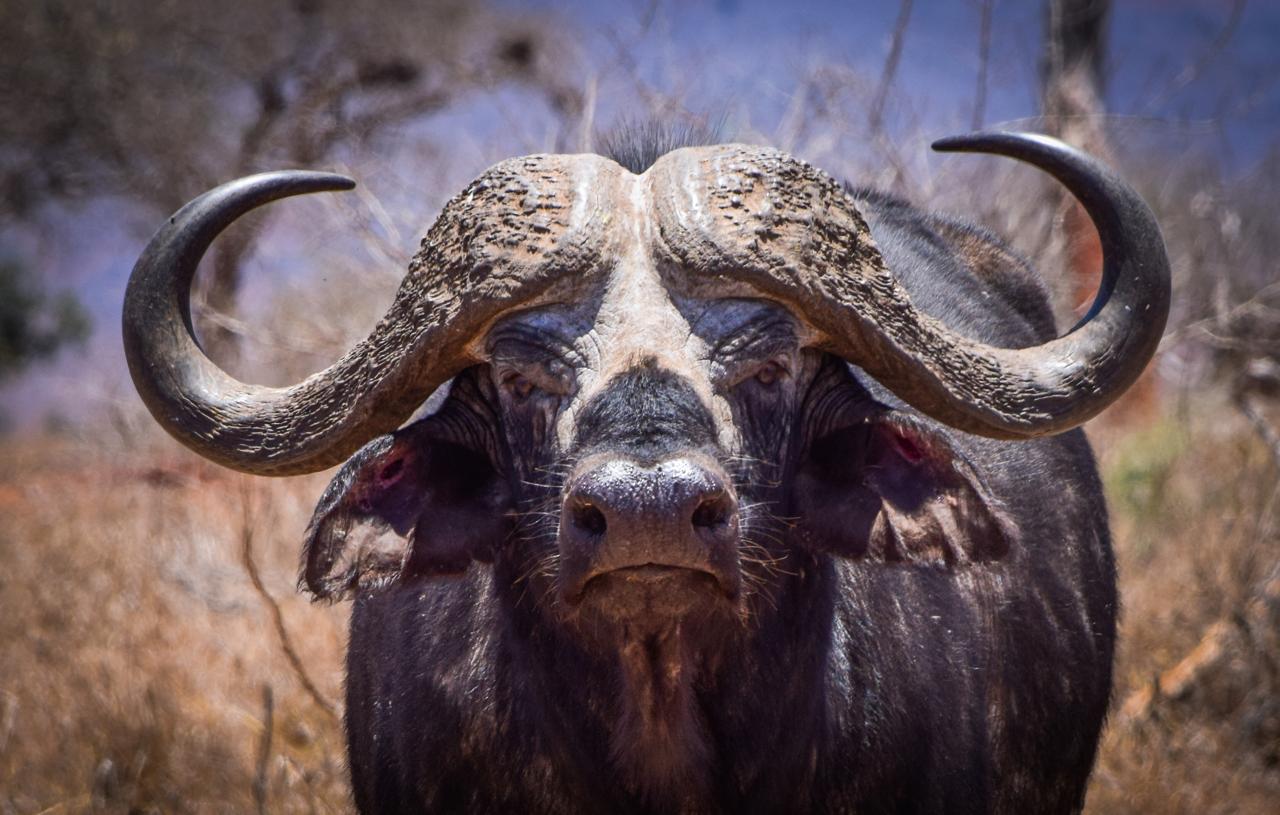
Not every heavy bull is old. Not every wide spread reflects age. Experienced professional hunters look for worn bosses, scarring, posture, and herd behavior that indicate a mature animal.
For American and Canadian hunters accustomed to limited tags and short seasons at home, the instinct to act quickly when opportunity appears can be strong.
Buffalo hunting often rewards restraint instead. Tracking for hours and passing on a bull requires discipline. That patience is part of what gives the hunt its integrity.
Experienced PHs often look for older solitary bulls, commonly called “dagga boys,” rather than younger herd bulls still in breeding condition. Patience matters. A mature buffalo worth taking may require hours of tracking and observation before the right opportunity presents itself.

When First-Time Hunters Focus Too Much on Horn Width
One of the most common misunderstandings among first-time buffalo hunters is an early fixation on horn width.
Spread is easy to measure. It looks impressive in photographs. It is simple to compare.
But width alone does not define a mature bull.
Experienced professional hunters pay closer attention to boss development and hardness, the drop and sweep of the horns, wear patterns, facial scarring, body posture, and herd behavior.
A bull with heavy, fully hardened bosses often reflects age and maturity far more than a wide but softer, younger bull.
Many first-time hunters are surprised to learn that some of the most meaningful buffalo taken are not the widest bulls in the herd — they are the oldest.
Age matters.
An older bull that has survived predators, drought, territorial battles, and herd displacement carries a different weight than a younger bull that simply measures wide.
Understanding this before the hunt helps align expectations and reduces disappointment in the field.
Buffalo hunting should be about maturity, character, and decision-making — not measurement alone.
Should You Hunt Plains Game First?
Africa introduces new variables: different anatomy, different shot angles, and a different rhythm of tracking and communication.
Some hunters step directly into buffalo and do well. Others benefit from a plains game safari first, not because they lack skill, but because familiarity builds confidence.
There is no ego in preparation.
Many professional hunters recommend starting with a few plains game species before pursuing dangerous game. Animals such as kudu, gemsbok, or eland help hunters adapt to African tracking, shooting positions, sticks, terrain, and communication styles before stepping into a Cape buffalo encounter.
The Role of Trust
Buffalo hunting requires trust in your professional hunter. They read herd behavior, terrain, and animal posture differently than a first-time visitor can.
That trust should begin before the hunt through honest conversation about expectations, bull age, shot placement, and follow-up procedures.
Clear communication reduces hesitation when the moment arrives.
Accepting Imperfection and Uncertainty
No buffalo hunt unfolds exactly as imagined. Wind shifts. Bulls move. Shots sometimes require follow-up.
Expecting perfection creates frustration. Accepting unpredictability creates composure.
The Emotional Moment After the Shot
When you stand behind a mature Cape buffalo bull, the moment often feels quiet first. It is not regret. It is respect, and sometimes a deeper sense of responsibility than expected.
That weight is part of what makes the experience meaningful.
What Most Hunters Reflect On Afterward
On the flight home, most hunters do not replay horn measurements.
They replay moments — the tracking line through dust, the subtle change in the bull’s posture, the quiet nod from the professional hunter, and the stillness afterward.
Buffalo hunts are remembered for the process far more than the photograph.
The experience stays longer than the image.
Who Should Probably Wait
Buffalo is not ideal for:
- Hunters booking primarily for validation
- Those financially stretched thin
- Those uncomfortable working within structured professional guidance
- Those unwilling to practice seriously beforehand
Waiting does not diminish the experience. In many cases, it strengthens it.
Final Thoughts Before You Decide
Cape buffalo hunting in Africa is not about proving something.
It is about stepping into a serious dangerous game hunting environment prepared, physically, financially, mentally, and ethically.
For first-time international hunters, planning a Cape buffalo safari becomes less about excitement and more about clarity, patience, and understanding what the experience truly involves.
Hunters wanting a broader understanding of planning a Cape buffalo safari should explore our Cape Buffalo Hunting in Africa: U.S. Hunter’s Complete Guide and learn more about gear, preparation, and readiness in How to Prepare For A Cape Buffalo Hunt before booking.
No pressure.
No urgency.
Just clarity.

Frequently Asked Questions
Is buffalo hunting significantly more dangerous than elk or moose hunting?
Yes. The risk is not constant chaos but the elevated consequence of mistakes. A wounded buffalo in thick cover demands composure and disciplined follow-up.
How much prior experience should I have before booking?
You should be fully comfortable with controlled shooting under pressure and ethical decision-making without hesitation.
How should I practice differently for buffalo?
Practice from sticks at realistic distances (50–100 yards), and rehearse controlled follow-up shots. Dangerous game exposes hesitation more than lack of skill.
Is it physically more demanding than North American hunts?
It may not be more extreme than mountain hunts, but it requires steady conditioning and focus under fatigue.
What surprises first-time buffalo hunters most?
The seriousness of the final approach and how heavy the moment feels.
Is free-range always better than fenced?
Not automatically. The right environment depends on what kind of experience you are seeking.
Should I bring my own rifle?
Many prefer familiarity, but quality rental rifles are often available. Comfort and confidence matter most.
Is a buffalo hunt worth the financial commitment?
For hunters who approach it thoughtfully, yes. It should never be booked under financial strain.
How many days should I plan?
Seven to ten hunting days is common for first-time buffalo hunters.
What happens if the first shot is not perfect?
Follow-up procedures are controlled under your professional hunter’s direction. Preparation and communication are critical.
Can I combine buffalo with other species?
Yes, but many first-time hunters prefer focusing entirely on buffalo to stay mentally sharp.
How do I know if I am truly ready?
If you feel steady rather than hyped or rushed, you are likely approaching it correctly.
How important is shot placement compared to caliber selection?
Shot placement and control under pressure matter more than sheer caliber size. Confidence with your rifle is critical.
What role does the professional hunter play during a follow-up?
The professional hunter directs movement, timing, and positioning. Immediate response and trust are essential.
How do I mentally prepare for close-range scenarios?
Visualization, repetition, and disciplined practice reduce adrenaline spikes and maintain clarity.
What separates a good buffalo hunt from a meaningful one?
Effort, patience, composure, and ethical decisions often matter more than horn measurements.