
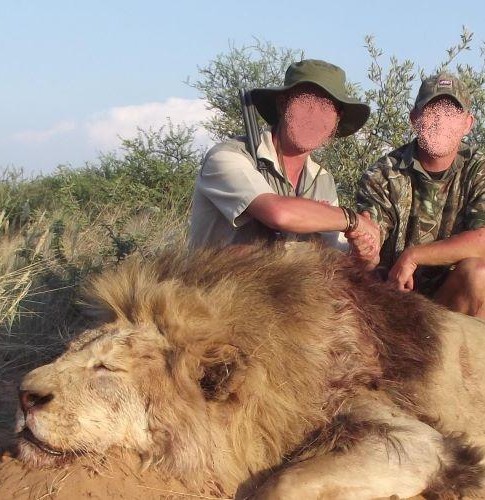
On a Tanzania lion hunt, some of the work can begin before the hunter arrives in camp.
If pre-baiting has been arranged, bait will already be hanging in several parts of the hunting area. Teams must establish those baits, drive back to check them, maintain the meat, freshen scent drags or make new ones where needed, and look for signs that lions have found them.
The work will then continue after the hunter arrives.
On a lion hunting safari in Tanzania, several baits may be working at the same time. Some will never produce a lion. Others may attract lionesses or younger males. Then one morning a bait may have fresh tracks underneath it, meat missing and an interesting male on the trail camera.
Now things get interesting. But even that doesn't mean you have a lion to hunt.
Baiting for lion hunts is not simply hanging meat in a tree and waiting. The PH and his team are using each bait to learn which lions are moving through the area, when they are visiting and whether one deserves a closer look.
A lion bait doesn't create a lion hunt. It gives the hunting team a place to start reading one.
What Pre-Baiting Actually Involves
Pre-baiting gives the hunting team a head start, but there is a lot more to it than putting meat in a tree.
Before the hunter arrives, suitable bait must be obtained and taken into the concession. That can itself require hunting animals for bait. The team then selects promising locations, hangs the baits and establishes scent drags to help lions find them.
Putting the bait up is only the beginning.
The crew must return regularly to check for tracks and feeding activity, inspect trail cameras, maintain the bait and freshen the drags. With several bait sites spread across a large Tanzanian hunting area, that can mean many miles of driving, staff time, vehicles, fuel and ammunition before the hunter even reaches camp. This helps explain why pre-baiting can be an expensive item on a lion safari quotation.
You are not simply paying for meat hanging in a tree. You are paying for part of your lion hunt to start before you get there.
Pre-baiting may save valuable hunting time and give the PH useful information before the safari begins.
It can buy time. It cannot guarantee a lion.
With Lion Baits, Location Matters
There is an old rule in property: location, location, location.
The same applies to an effective lion bait.
A good bait in the wrong place may never be found. The PH and trackers don't simply look for a convenient tree. They are looking for places where lions are already likely to move.
Fresh spoor can point them in the right direction. So can recent sightings and what the hunting team already knows about lion activity in that part of the concession. Some sites may also be known from previous safaris as places lions regularly move through.
Where communities are present in or around the hunting area, local knowledge can add another piece to the puzzle. News travels quickly when lions are seen, heard at night or begin moving around livestock and villages. That local grapevine can sometimes help the hunting team identify where lions have recently been active.
The large concessions associated with hunting in Tanzania can include very different types of lion country. Roads, game trails, river systems, water and concentrations of game may all help build the picture.
Access is important. The team needs to return regularly to check the bait, cameras and surrounding spoor without creating unnecessary disturbance every time they arrive.
Once the location has been chosen, the bait is secured high enough to keep it beyond the reach of hyenas and many other ground scavengers.
The trail cameras also need some thought. They must give the PH a useful view of the bait while being positioned and secured where lions, hyenas and other animals are less likely to reach or damage them. Hyenas are notoriously curious and quite capable of pulling down a poorly protected camera and chewing it to pieces. Scent drags are then made through suitable surrounding areas to help lions find it.
With lion baiting, the meat matters. But location comes first.
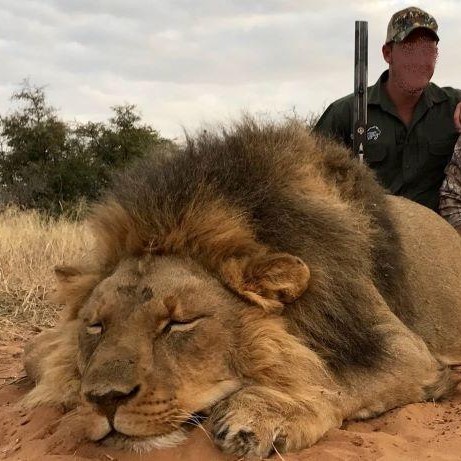
One Lion Hunt Can Mean Several Baits
A Tanzania lion hunt is not built around one piece of meat hanging from one tree.
Several baits may be working across different parts of the concession at the same time. In a large hunting area, those sites can be many miles apart. And they won't all produce the same result.
One bait may remain untouched. Another may attract lionesses. A younger male might begin feeding at a third, while somewhere else the trail camera suddenly shows a male that deserves the PH's attention.
Each bait gives the hunting team another place to learn what lions are moving through the concession.
But several working baits also need meat.
Baits must be maintained and refreshed, and scent drags may need to be made again. Depending on the area, available quota and how the safari is structured, animals taken by the hunter during the safari may become part of the bait supply.
That means the rifle may have work to do long before there is a lion in front of it.
A suitable animal taken during the safari can provide fresh meat for an existing bait or help the team establish another one. Larger animals can provide a substantial amount of bait where they are available on quota. Hippo, for example, can provide a considerable amount of meat and is commonly valued as lion bait.
So don't assume that hunting another animal during a lion safari is taking time away from the lion hunt. Sometimes it is helping to build it.
Even when one bait begins producing promising activity, the team may continue maintaining others. Lions move, activity changes and a quiet bait can suddenly become the one everybody wants to check first in the morning.
What Does Checking a Lion Bait Mean?
Checking a lion bait is about more than seeing whether something has eaten the meat.
The team will start reading the site before they even reach the tree. Fresh spoor can show what approached the bait. Tracks around the site may help establish whether lions were alone, travelling together or simply passed through.
Then there is the bait itself.
How much meat has been taken? Has a lion fed, or has something else disturbed the bait? What does the spoor around the site show? Has the same lion returned on successive nights?
Not every lion that finds a bait will walk in and feed. Sometimes a lion may approach the site, circle it or hang back without touching the meat. Fresh spoor or the trail camera may show that he was there even though the bait appears untouched.
There isn't always an obvious reason. Recent human activity or scent around the site may make a lion cautious, while some individuals simply appear more suspicious of a bait than others. An untouched bait doesn't necessarily mean that no lion found it.
The trail camera adds another layer of information. It may show whether the visitor was a lioness, a younger male or a male worth watching more closely. It can also show when the lion arrived, how long he remained around the bait and whether he has returned more than once.
That timestamp can be particularly important.
A lion hammering the bait at 1:30 in the morning may look exciting on the camera, but it does not yet give the hunter a daylight opportunity. A male that begins returning closer to legal hunting hours can make the same bait considerably more interesting.
The team is therefore building a picture from spoor, the condition of the bait, camera images, timing and repeated visits.
A hit bait tells you that a lion found it. It doesn't yet tell you that you have the right lion, at the right time, in a huntable situation.
Why the Time on the Camera Matters
A trail-camera photograph tells the PH more than which lion visited the bait. The timestamp matters.
Lions are strongly nocturnal, and much of the activity around a bait may take place during the night. A male might feed repeatedly at 11 p.m., 1:30 a.m. or just before dawn.
That is useful information, but it does not necessarily create a hunting opportunity.
Lion hunting in Tanzania must take place during legal hunting hours. A male that arrives, feeds and disappears again during the night may therefore be using the bait regularly without ever presenting the hunter with a legal opportunity.
The pattern can change.
If camera records begin showing the same male arriving progressively earlier in the evening, remaining near the bait later in the morning or returning during daylight, the PH has another piece of information to work with.
The time beside the photograph can sometimes matter almost as much as the lion in it.
A Hit Bait Isn't Necessarily a Good Bait
Finding fresh lion activity at a bait is exciting, but it doesn't automatically make that bait a good hunting prospect.
Lionesses may be feeding there. A younger male may be responsible for the tracks and missing meat. A male may visit only once and disappear, or he may repeatedly arrive during the middle of the night.
Even a bait being hit hard can therefore leave the PH with more questions than answers.
What becomes more useful is a pattern. The same male returns. Fresh spoor appears again. More camera images are collected. His visits become regular enough for the hunting team to understand how he is using the bait.
Activity gets a bait noticed. Consistent activity from the right kind of lion is what makes it interesting.
And even then, interesting does not mean shootable.
When Does a Bait Deserve More Attention?
As the safari progresses, some baits will naturally begin receiving more attention than others.
A quiet bait still needs checking, but a site producing repeated visits from an interesting male becomes important. The team must keep the bait fresh, maintain the drags and continue monitoring the spoor and trail-camera images.
Temperature can make that job easier or more difficult.
Tanzania's cooler conditions earlier in the hunting season can help bait meat remain usable longer. As temperatures rise later in the season, meat deteriorates faster and productive baits may need more frequent attention and fresh bait.
That means more driving, more meat and more work to keep an important site operating.
Meanwhile, the information continues to build.
The same male appears again. Fresh spoor confirms another visit. Camera images show a developing pattern, and the PH begins paying much closer attention to that bait.
At that point, the hunting team may have a male using the site regularly enough to deserve closer attention.
But finding an interesting lion on bait and deciding that he is the right lion to hunt are two different things.
Frequently Asked Questions About Lion Baiting in Tanzania
How Many Lion Baits Are Normally Used on a Tanzania Lion Hunt?
There is no fixed number. It depends on the size of the hunting area, available bait, known lion activity and what the PH and hunting team are learning as the safari develops.
Several baits may be maintained at the same time because each gives the team another place to monitor lion movement. Some may remain quiet while another begins producing regular activity.
Does a Lion Always Return After Feeding on a Bait?
No. A lion may feed once and never return, while another may begin visiting the same bait repeatedly.
That is why a single visit only tells the hunting team so much. Repeated spoor, camera images and feeding activity can gradually reveal a pattern, but there is never a guarantee that a lion will return.
Is Lion Hunting Part of Big Game Hunting in Tanzania?
Yes. Lion is one of the major dangerous-game species hunted in Tanzania, and a lion safari may also involve other species depending on the hunting area, available quota and how the safari is structured.
This means that big game hunting in Tanzania can involve several hunting objectives that form part of the wider safari.
Is Lion One of Africa's Big Five?
Yes. Lion is one of Africa's traditional Big Five, together with elephant, Cape buffalo, leopard and rhinoceros.
However, Big Five hunting does not mean that all five species are hunted on one safari. Which species can be hunted depends on the country, hunting area, available quota, permits and the safari being booked.
The Bait Is Only the Beginning
A successful lion hunt may eventually come down to one opportunity, but a great deal can happen before the hunter ever sees the lion.
Baits have been established, checked and refreshed. Miles have been driven. Cameras have been studied. Tracks have been read. Some sites have gone quiet, while another has slowly begun producing the information the PH needs.
That is part of what makes lion hunting different from many other African hunting trips. Much of the hunt is being built in the background while the hunter waits for the right pieces to come together.
The bait itself is only meat in a tree.
What matters is what an experienced hunting team learns from it.