
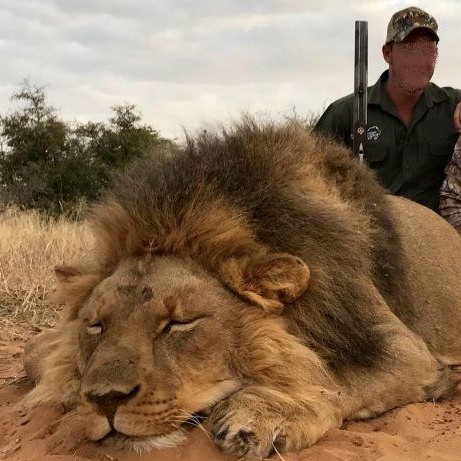
You may have waited ten days for this moment. The lion is finally there. He looks enormous. His head is heavy, his face is scarred and there is enough mane around his shoulders to convince you that the hunt is about to end.
Your rifle is ready, but your Professional Hunter still hasn't told you to shoot.
He will study the lion through binoculars, may whisper to the tracker, look again and wait for the animal to turn. To the hunter, those extra seconds can feel like an eternity. To the PH, they may be the most important seconds of the entire lion hunt.
A mature-looking male is not automatically the right lion.
The difficult call is often not the obviously young male. It is the impressive lion that looks old enough at first glance, but leaves just enough doubt for an experienced PH to keep looking. A mane can tell him something. So can the lion's face, body and behaviour. What the hunting team already knows about that male may tell him even more.
No single clue makes the decision. Before a PH tells his hunter to shoot, he wants the pieces to tell the same story.
There is good reason for the caution. Once the PH gives the instruction to shoot, there is no taking the bullet back. The hunter may be looking at the lion of a lifetime. The PH must decide whether it is the right lion to take.
A Big Mane Does Not Automatically Make Him the Right Lion
A heavy mane gets a hunter's attention.
It should. Mane development can assist a PH when judging a male, particularly when it agrees with other signs of maturity. But a mane alone cannot be used as a ruler for age.
Not every adult African lion grows the same mane.
The environment matters, as well as the population the lion comes from. Mature males in some parts of Africa may carry less mane than hunters expect, while lions of a similar age elsewhere may look much heavier around the head, neck and shoulders.
The famous example is Kenya's Tsavo region, where adult males are known for their reduced manes. Similar regional differences have been documented farther south, including among lions from the Selous ecosystem in Tanzania and Niassa in northern Mozambique.
That may create a real problem for the visiting hunter.
If the picture in his head of an old lion is a huge black mane reaching down between the front legs, a perfectly mature male from another part of Africa may look younger than he really is. A local PH cannot afford to make the same assumption.
He is judging the lion in front of him against the animals he knows from that area. A lighter or less developed mane may mean something very different there than it would in another lion population.
The opposite is just as important.
An impressive mane does not automatically prove that the lion carrying it is old enough to hunt. It is one piece of evidence, and the PH still needs the rest of the lion to support what the mane appears to be telling him.
The mane can strengthen the judgement. It should never make the judgement by itself.
The PH Is Looking at the Whole Lion
While the hunter's attention may be fixed on the mane, the PH is looking at the rest of the lion.
The face may carry scars. The nose may show increasing pigmentation associated with age. The body may show the condition and proportions of a mature male.
A scarred face, for example, can add to the picture. It does not provide a birth certificate. The same applies to body condition. Lions live hard lives, and an animal can look rough for reasons that have little to do with whether he is the right lion to hunt.
This is why an experienced PH keeps moving between clues rather than searching for one feature that settles the question.
Does the face support what the mane suggests? Does the body look consistent with the animal the hunting team believes it is watching? Does anything about the lion create doubt?
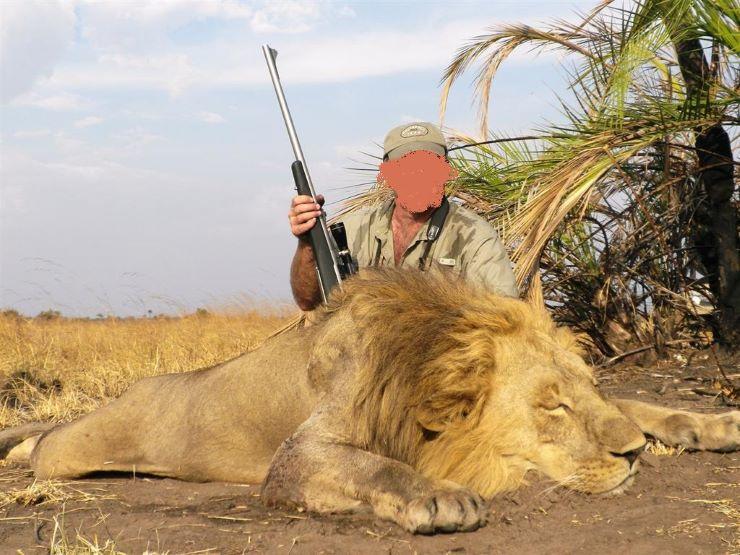
The PH May Know the Lion Before You Ever See Him
Throughout the hunting season, a PH and trackers may have spent time learning which lions are moving through the concession. They read spoor, check trail cameras where they are used, watch activity around baits and remember previous encounters. Over time, separate pieces of information can begin to form a picture of the males using that area.
Not every track identifies an individual lion. Not every photograph provides a perfect view. A lion seen once at last light may leave more questions than answers.
Information accumulates.
A male may have been photographed repeatedly in one part of the area. Tracks may show that one or more males are regularly using a particular game trail. The hunting team may have watched a lion previously and decided they needed a better look before making any judgement about him.
This matters when the lion eventually appears in front of the hunter. The PH may not be assessing him for the first time.
He may be comparing the animal with photographs he has already studied, sightings the team has discussed or information his trackers have gathered on the ground. Something the hunter has only just noticed may be familiar to the people who have spent days or weeks following what is happening in that hunting area.
In some hunting concessions, useful information may come from people living nearby. Where lions traverse through country that holds livestock, farmers, herders or members of local communities may report seeing a male, hearing lions at night or finding livestock that has been killed. They may be able to tell the hunting team where a lion was seen, whether he appeared to be alone or with other lions, and what they noticed about him.
Those reports do not prove that the lion eventually standing in front of the hunter is the same animal. But when they agree with spoor, photographs, previous sightings or the hunting team's own observations, they can add another piece to the picture.
Trackers are important in building that picture.
A good tracker may recognise where males have been moving, when fresh spoor appears in an area and whether something has changed since the previous day. Small observations made repeatedly can become useful when they are combined with cameras, sightings and what the PH already knows.
None of that automatically makes a lion huntable. What it can do is give the PH context.
When the moment finally comes, he is not trying to make an entire decision from a mane, a scarred face and a few seconds through binoculars. He may be adding what he sees now to information the hunting team has been collecting long before the hunter shouldered his rifle.
For the hunter, the decision may happen in seconds. For the hunting team, it may have been taking shape for days.
The Borderline Lion Can Be the Hardest Lion to Judge
An obviously young male may make the decision easy. So can a lion carrying enough signs of age and maturity that there is little argument about what the PH is looking at.
The difficult lion can sit somewhere between the two.
He may have a good mane. His body may look mature. His face may carry scars. Nothing about him immediately says young, and to the hunter he may look every bit like the lion he travelled to Africa to hunt.
But the PH may still hesitate.
Estimating the age of a living lion is not an exact science. Research using known-age African lions has shown that even experienced Professional Hunters can make mistakes when judging males in the middle age classes.
That does not mean the physical signs are useless. It means they are more reliable when several of them agree.
A younger male can already carry one or two characteristics that make him look older than he is. A clearly old male has had more time for the signs of maturity to accumulate.
The borderline lion gives the PH less room for certainty.
His mane may suggest maturity while his face leaves questions. His body may look right while other signs do not quite agree. Previous photographs may help, but perhaps they were taken at night or from poor angles. Sometimes the PH simply needs another look.
He may wait for the lion to turn his head, step into better light or remain visible long enough to compare what he is seeing with what the hunting team already knows.
That is not indecision. It is exactly where experience should make a PH more cautious, not less.
There is a difference between believing a lion is old enough and being confident to tell a hunter to take him. The hunter may have travelled halfway around the world and spent serious money to reach that moment.
None of that makes a doubtful lion any older.
And getting the call wrong can have consequences beyond the hunt itself. Depending on where the hunt takes place, taking an underage or otherwise unsuitable lion may have implications for the PH, outfitter or hunting area, as well as for how lion quotas are managed.
When there is genuine doubt, passing the lion may be the most experienced decision the PH makes.
The Right Lion Still Has to Give You the Right Shot
There is another frustration a lion hunter needs to be prepared for. The PH may finally be satisfied that the animal in front of you is the right lion, and you still may not be able to shoot.
The angle may be wrong. Vegetation may cover part of the lion. He may never stand still long enough, or he may turn and disappear before giving you the opportunity everyone has been waiting for.
That can be difficult to accept. You may have travelled from the United States, spent days hunting and finally have the lion you came for standing within range.
A lion represents one of the most serious big game hunting challenges a hunter will ever undertake. Every part of you wants the hunt to come together.
But wanting the shot does not create one. Identifying the right lion and having the right opportunity to take him are two separate decisions. The PH must be comfortable with both, including the angle and shot placement on an African lion before giving the hunter the go-ahead.
That is part of lion hunting.
The bait can be hit. The right male can arrive. The PH can be satisfied with the lion, and the hunt can still end that evening with everyone climbing back into the vehicle without firing a shot.
Getting the lion in front of you is an opportunity. It is not a promise.
The Final Call Belongs in the Field
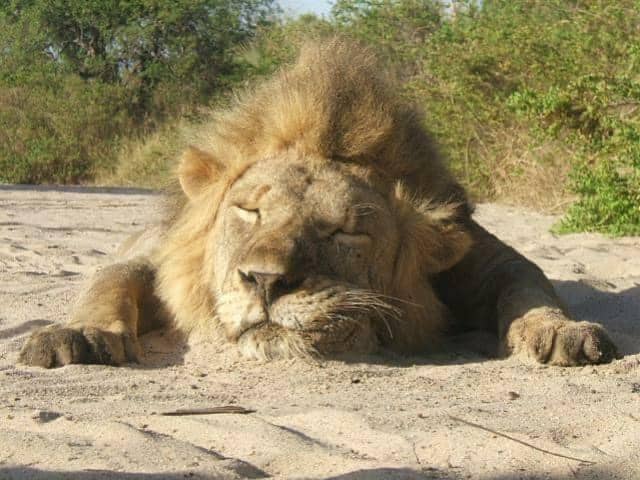
Eventually, the PH must make the call.
The lion may have been on camera for days. The trackers may know his movements. His mane, face and body may all point towards the maturity the PH wants to see.
None of that replaces the final look at the animal standing in front of the hunter.
A lion hunt cannot be reduced to a trophy photograph, a bait being hit or a promise made before the safari begins. A well-planned African hunting trip can put the right hunting area, enough time and an experienced team around the hunter.
It cannot guarantee the final opportunity. Sometimes the PH will lower his binoculars and tell you to get ready. Sometimes he will keep looking.
And sometimes, after all the preparation, travelling, waiting and money that brought you to that moment, he will tell you not to shoot. This is a hard decision for a hunter to hear.
It may also be the decision you are paying an experienced Professional Hunter to make.
The measure of good judgement is not how quickly a PH can put a lion in front of his client. It is whether he knows when the animal in front of them is the right lion, when the shot is right and when there is still enough doubt to walk away.
Finding the lion creates the opportunity. Knowing when to take him, and when not to, is what makes the final call professional.
Frequently Asked Questions About Judging a Lion Before the Shot
Is the African lion one of the Big Five?
Yes. The African lion is one of the traditional Big Five, together with the African elephant, Cape buffalo, leopard and rhino. Lion hunting is very different from hunting the other four species, particularly because so much of the final decision can depend on judging the individual male before the shot. Hunters considering more than one dangerous-game species can learn more in our guide to Big Five hunting.
Can a Professional Hunter tell exactly how old a lion is before the shot?
Not always. A PH can use characteristics such as mane development, facial appearance, nose pigmentation, body condition and other signs of maturity to estimate a lion's age. Previous photographs, sightings and local knowledge may also help. However, judging a living lion is not an exact science, which is why experienced PHs look for several signs that support the same conclusion rather than relying on one characteristic.
Does a big, dark mane mean a lion is old enough to hunt?
No. Mane development can be useful when judging a male lion, but it should not be used by itself. Mane appearance varies between individual lions and populations, and environmental conditions can also influence its development. A PH will consider the mane alongside the lion's face, body and other signs of maturity before deciding.
How does a Professional Hunter know when a lion is mature enough to hunt?
A Professional Hunter does not normally rely on one characteristic. He will consider several signs of maturity, which may include the lion's mane, face, nose pigmentation, body condition and overall appearance. He may also have photographs, previous sightings, spoor and information gathered by trackers to help build a clearer picture of the individual male.
If those clues do not give the PH enough confidence, the correct decision may be to wait for another opportunity or let the lion walk.
About the Author
Pierre van Wyk is the co-founder of Game Hunting Safaris and has extensive experience in the African hunting industry. He writes from a practical hunter's perspective, helping international hunters better understand African hunting, safari planning and what to expect in the field.