
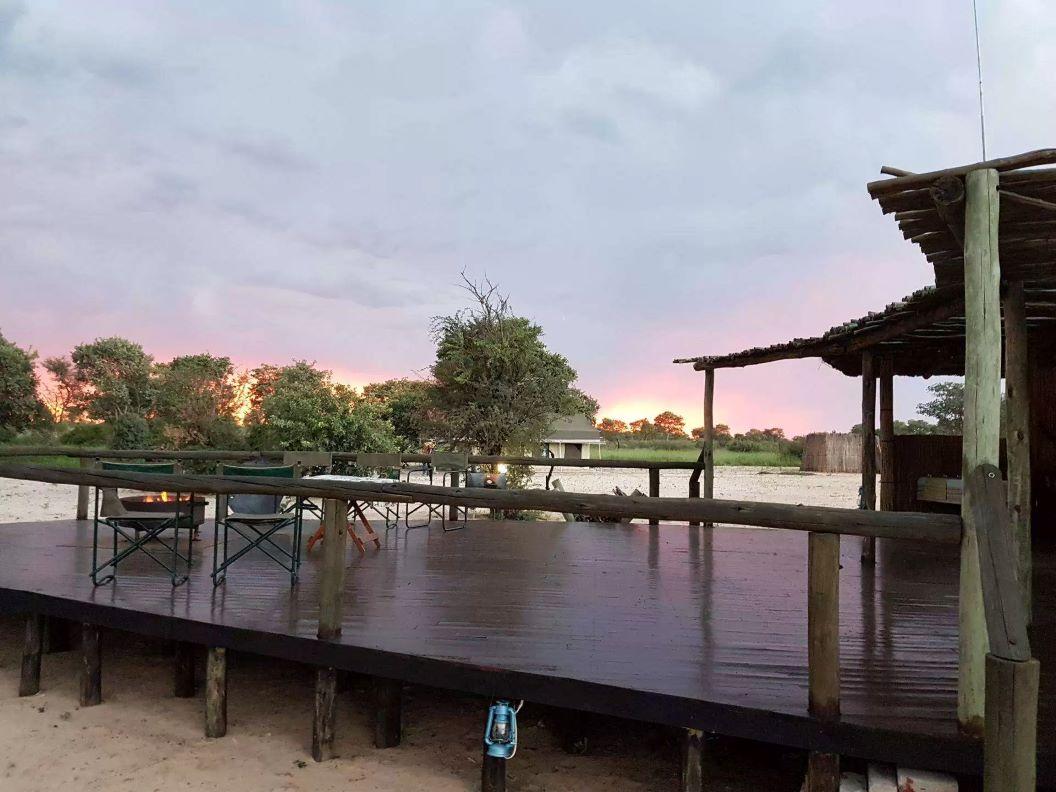
A hunter can book the right country, the right species and a good PH, but still end up disappointed because nobody asked one simple question before the safari:
How many other hunters will be in camp?
It sounds like a small detail. It is not.
The answer can affect who you hunt with, whether you have your own vehicle and PH, how busy the hunting area feels, whether other hunters are after the same species and what the camp atmosphere is like when you get back at night.
A safari may be booked as 2 hunters to 1 PH, but that only tells you how your own hunting party will be guided. It does not tell you whether another two, four or six hunters will be staying in camp at the same time with their own PHs and vehicles.
It can also affect something harder to measure: whether the safari feels like the experience you thought you booked.
Some hunters enjoy a busy camp. They like meeting other hunters, comparing stories over dinner and having a bit of life around the place. Others want privacy, their own hunting team and as little overlap as possible.
Neither is wrong.
The problem starts when the hunter expects one thing and arrives to find another.
Before booking an African hunting trip, it is worth asking more than whether the camp is “private” or “exclusive.” You need to know how many hunting parties may be there, what resources will be available to you and what exclusivity means in practice.
A successful hunt can still become a disappointing safari if the camp experience is not the one you thought you were booking.
Why the Number of Hunters in Camp Matters
The number of hunters in camp does not automatically tell you whether an operation is good or bad.
A well-run safari company may comfortably handle several hunting parties at the same time. Another operation may feel stretched with only a few hunters if there are not enough PHs, vehicles, trackers or suitable hunting areas available.
What matters is whether the operation has enough resources to support everyone properly.
If three hunting parties are in camp, there should be a clear plan for who hunts with which PH, which vehicle each team uses and where those teams will hunt. Problems start when hunters begin waiting for vehicles, sharing staff unexpectedly or changing plans because another party has already gone to the area they intended to hunt.
The species being hunted can matter too. Several hunters in camp chasing different animals may create little conflict. Three hunting parties all looking for buffalo, leopard or the same limited-quota species can be a different situation.
The number of hunters can also affect how the hunting area itself is used. On a large concession, several parties may be spread far enough apart that they rarely see one another. On a smaller property, or where everyone is concentrating on the same productive blocks, water points or species, hunting parties may start crossing paths or pushing animals from one area to another.
It can also create priority questions. If a community member, tracker or anti-poaching team reports a good buffalo in one part of the concession and two hunting parties in camp are both looking for buffalo, the outfitter needs to know which client has priority. That may be handled perfectly well, but it is something hunters rarely think to ask about before they arrive.
Camp size also tells only part of the story. Ten people around the dinner table may include observers, spouses or members of one group travelling together. Four hunters may represent four separate safaris, each requiring a PH, vehicle, tracker and hunting plan.
Privacy can matter just as much as hunting pressure. A husband and wife, a father and son or a small group of friends may specifically want the camp to themselves. If that matters, it should be discussed before booking rather than assumed.
A safari booked as 2 hunters to 1 PH will also often cost less per hunter than booking 1 hunter to 1 PH, because some guiding, vehicle and daily operating costs are being shared. This is one of the factors that can affect African hunting safari prices. That pricing difference tells you how your own party will hunt, however. It still does not tell you whether other hunting parties will be staying in camp at the same time.
Simply asking “How many people will be in camp?” is not enough.
The better question is how many separate hunting parties will be operating from camp during your safari, and whether the outfitter has the people, vehicles, hunting ground and clear priorities to support all of them properly.
Ask How Many Hunting Parties, Not Just How Many Hunters
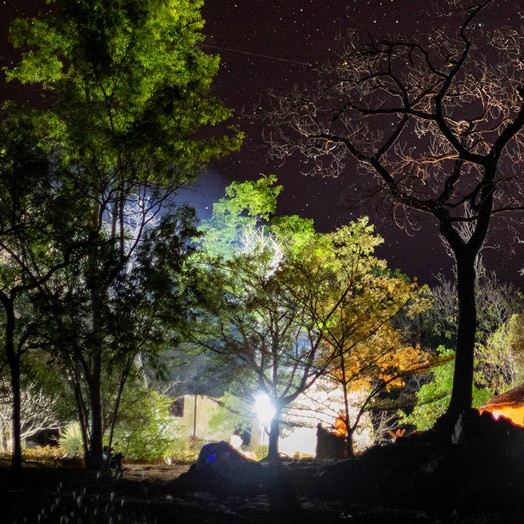
The number of hunters in camp does not always tell you how busy the operation will be.
Six hunters who arrived together as one group may share PHs, vehicles and the same safari plan. Six hunters who booked separately could represent three, four or even six different hunting parties, each with its own species list, PH, vehicle and priorities.
Those are different situations.
Observers can make the headcount even more misleading. A camp with ten guests may include only three hunters, while a camp with six guests could have six hunters heading out in different directions every morning.
The better question before booking is:
“How many separate hunting parties will be operating from camp while I am there?”
Then ask how those parties will be managed. Are they hunting different areas? Are several pursuing the same species? Does each party have the PH, tracker and vehicle it was promised?
The number of people sitting around the dinner table matters far less than the number of separate hunting teams leaving camp the next morning.
Will You Have Your Own PH, Vehicle and Hunting Team?
When you book a safari, you need to know exactly what resources are allocated to your hunt. That includes your PH, hunting vehicle, tracker and any other staff required for the species you are hunting.
A 1×1 guided hunt means one hunter with one PH, while a 2×1 hunt means two hunters sharing a PH. What matters is whether that PH and hunting vehicle are genuinely available to your party for the hunting days you booked.
This is important when several hunting parties are operating from the same camp.
A well-run operation may have enough PHs, vehicles and trackers to support everyone without a problem. Trouble starts when the resources promised to one party are suddenly needed somewhere else.
Situations can arise where a PH is required to assist elsewhere, particularly on a dangerous game hunt. But if a hunter has booked a five-day hunt and loses the first hunting day because the PH has been reassigned to help with another client’s elephant hunt, the question becomes what the outfitter does about it.
Does another qualified PH take over? Is the lost hunting day added back? Is another proper hunting opportunity arranged? Or is the hunter simply told to go fishing while one of his booked hunting days disappears?
Fishing may be a perfectly good way to spend an afternoon if the hunter chooses it. It is not the same thing as delivering the hunting day he booked.
This principle also applies to vehicles and trackers. If another hunting party needs help, that should not automatically mean your own safari comes to a halt.
A five-day hunt should not quietly become a four-day hunt because your PH, vehicle or hunting team has been allocated somewhere else.
Before booking, ask whether your PH and hunting vehicle are dedicated to your safari for the agreed hunting days, and what happens if either must be reassigned.
What Does “Exclusive” Mean?
“Exclusive” can sound straightforward when a safari is being planned, but hunters should ask what the word includes.
It may mean your hunting party has the camp to itself. It may mean no other hunting clients will be staying there during your dates. It may also mean your group has exclusive use of a particular hunting area.
Those are not the same thing.
A hunter can have an exclusive camp while other hunting activity is taking place elsewhere in the concession. Another safari may offer a dedicated PH and vehicle while the camp itself is shared with another hunting party.
The important thing is not the label. It is understanding what has been agreed.
If privacy matters to you, ask whether exclusivity covers the accommodation, the hunting camp, the hunting area, your PH and vehicle, or some combination of them.
The answer may also depend on the type of hunting area. A private property, large concession and community-based hunting area can operate differently, and “exclusive” may be used differently in each.
Whatever is agreed should be recorded clearly in the hunting agreement or booking confirmation.
If an outfitter says your safari is exclusive, ask one more question: “Exactly what is exclusive?”
Exclusive Does Not Always Mean Nobody Else Will Be Around
Even when no other hunting party is sharing your camp, there may still be people coming and going during the safari.
In some hunting concessions, especially community-based areas such as the Caprivi in Namibia or Cahora Bassa in Mozambique, the outfitter may have regular contact with local community members. Meetings may take place in or around camp, and staff may be involved in community projects, anti-poaching work or other responsibilities connected to operating the area.
Builders or contractors may also be working on projects funded or supported by the outfitter. Maintenance crews, deliveries, camp staff, anti-poaching teams or business partners may occasionally pass through as well.
None of that means the hunter is sharing the safari with another hunting party.
It does mean that exclusive use of a camp should not automatically be understood as complete isolation.
Some hunters will barely notice that activity. Others may have booked the safari specifically because they want quiet evenings with their family, hunting partner or small group and do not want unexpected people joining meals or spending time around camp.
Expectations should be clear before the safari starts.
If having the camp completely to yourself matters, ask whether people connected to the operation may still visit or stay during your dates. The answer may be perfectly reasonable, but it is better to know before arriving than to discover halfway through the hunt that your idea of privacy was different from the outfitter’s.
An exclusive hunting arrangement can still be exclusive even when normal life and work continue around the camp. The important thing is knowing what to expect before you get there.
Your Safari May Overlap With the Next Group of Hunters
A shared camp is not necessarily a bad thing, and a short overlap between hunting parties can happen for perfectly normal reasons.
Your safari may have a day or two left when the next group arrives because of flight schedules, transfers or the way booking dates line up. You may end up sharing a meal, drinks around the fire or part of the camp for a night or two.
Some hunters enjoy that. It can be good fun sharing stories and experiences with people who have just arrived or are heading home. Others specifically want privacy and would rather not share any part of the safari.
The important thing is knowing in advance.
If having the camp to yourself for the full safari matters, ask whether there will be any crossover with the party before or after yours.
A shared camp can still be a great safari experience. The problem is not the overlap, it is being surprised by it.
Frequently Asked Questions
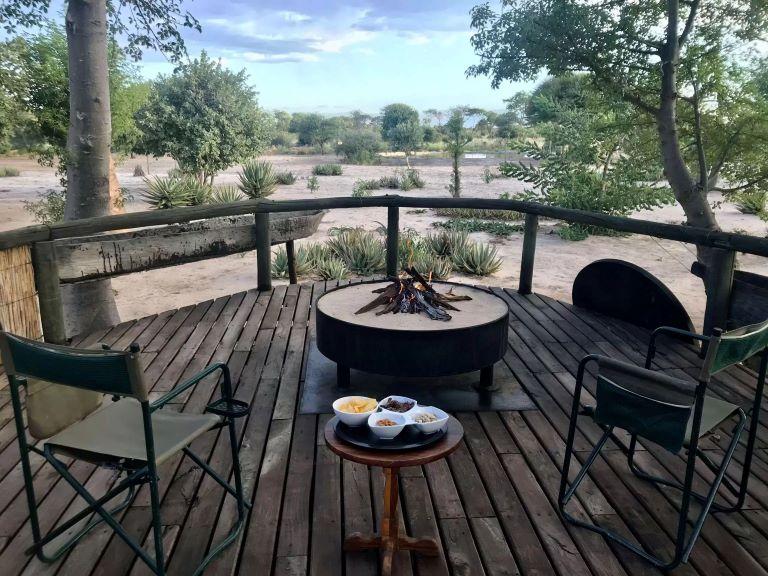
How many hunters are normally in an African hunting camp?
There is no standard number. Some camps may host only one hunting party at a time, while larger operations may accommodate several parties.
The more useful question is how many separate hunting parties will be operating from camp during your dates and whether each has the PHs, vehicles, trackers and hunting areas needed to run properly.
Does a 2×1 safari mean only two hunters will be in camp?
No. A 2×1 arrangement normally means two hunters are sharing one PH.
It does not tell you how many other hunters or hunting parties may be staying in camp. Another group may be hunting from the same camp with its own PH, vehicle and safari plan.
What does an exclusive hunting camp mean?
It depends on the operation.
Exclusive may mean your party has the accommodation to itself, that no other hunting clients will be in camp, or that your group has exclusive access to a particular hunting area. These are different arrangements, so ask exactly what is included and have anything important recorded in the booking agreement.
Should I avoid a safari where other hunters will be in camp?
Not necessarily.
A well-run shared camp can be an excellent experience, and plenty of hunters enjoy meeting other hunting parties over dinner or around the fire. What matters is whether the operation has enough resources for everyone and whether the camp arrangement matches what you expected when you booked.
Author
Pierre van Wyk is the co-founder of Game Hunting Safaris and has spent years helping international hunters plan African safaris. He works closely with hunters, outfitters and PHs, and believes the small booking details often matter as much as the hunt itself. Pierre is also quite happy to share camp with other hunters, provided there is cold beer and good company.