
Two African hunting packages can look almost identical on paper and still represent different hunts.
Both may offer the same number of days, a similar species list and a headline price that looks close enough to compare directly. Once you look more closely, one package may include more full hunting days, a dedicated Professional Hunter, airport transfers and trophy fees, while the other leaves several of those costs outside the quote.
Checking the fine print matters.
Hunters planning African hunting trips need to compare more than the total price at the bottom of the proposal. The real comparison is between what each package actually gives you: how many days you will hunt, which animals are genuinely included, what happens if you add another species, whether you are hunting 1×1 or sharing a PH, how you get to camp, what an observer costs, and which charges may still appear after the hunt has started.
A cheaper package can still become the more expensive hunt. A longer package can give you fewer hunting days. And a longer species list means little if the animals you really care about are not realistically available in the area.
The goal is simple: put both proposals on the same footing before you decide which one is better for your hunt.
Compare Full Hunting Days, Not Just Package Length
A 10-day package does not always mean 10 full days of hunting.
One proposal may include eight full hunting days plus arrival and departure days. Another may give you 10 full hunting days, with travel handled outside the package length. On paper, both may be described as a 10-day safari, but they are not giving hunters the same amount of time in the field.
Transfers can also eat into hunting time. A long road transfer, charter flight or late arrival into camp may turn what looks like a hunting day into little more than a travel day. When comparing two packages, ask how many full hunting days you get and whether arrival, departure and transfer days are counted inside the advertised length.
A longer package is only better if it gives you more useful hunting time.
Are the Trophy Fees Really Included?
Two packages can carry similar headline prices and still be materially different once trophy fees are added.
One proposal may include the trophy fees for every animal listed in the package. Another may include only the daily rate, with trophy fees charged separately after each animal is taken. The wording matters. A package described as “buffalo, kudu and impala” does not automatically mean all three trophy fees are included in the quoted price.
Compare each proposal line by line and confirm exactly which trophy fees are included, which are additional, and whether any species carry separate size-based or trophy-class charges. If Package A includes $8,000 worth of trophy fees and Package B does not, the cheaper-looking package may not be cheaper at all. That is the kind of comparison the headline price will never show.
Are You Hunting 1×1 or Sharing a Professional Hunter?
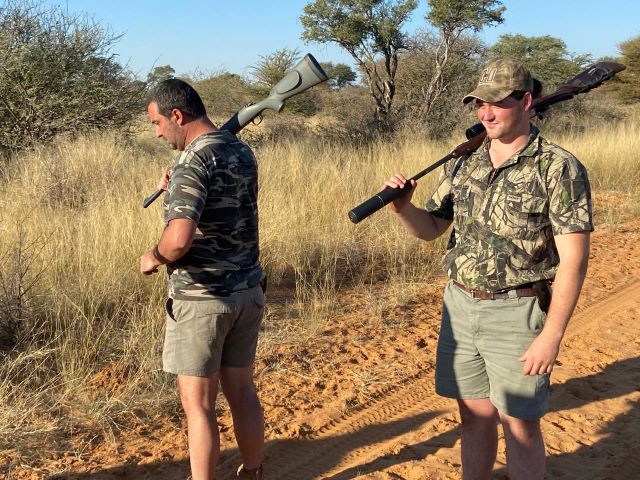
Two packages can quote similar prices while offering different hunting arrangements.
A 1×1 hunt means one hunter has the Professional Hunter’s full attention during the safari. A 2×1 arrangement means two hunters share the PH, which may reduce the daily rate but can also change how the hunt is structured. That does not necessarily make 2×1 a worse option. For friends or family hunting together, it can work very well. But it is not the same product as a dedicated 1×1 hunt.
The important questions are simple: Will you have your own PH? Will you share the vehicle? Will both hunters pursue the same species, or different priorities? For a U.S. hunter travelling a long way for one important animal, that distinction can matter far more than a small difference in the package price. Compare the PH arrangement before comparing the final number.
What Does “All-Inclusive” Actually Include?
“All-inclusive” can mean different things from one outfitter to another.
One package may include accommodation, meals, drinks, laundry, airport transfers, hunting licences, field preparation and all local transport. Another may go further and include rifle rental, ammunition or even certain taxidermy or trophy-handling costs.
A different operator may use the same phrase while leaving several of those items outside the quoted price. That does not mean anyone is being difficult or misleading. It usually means the packages have been structured differently. The comparison only becomes useful when you strip away the label and compare what is actually included.
A package that is $3,000 cheaper can lose that advantage quickly if transfers, permits, firearm costs, ammunition, drinks, laundry, local transport or trophy handling are all added later. Before wiring a deposit, make sure the inclusions you agreed to in the quotation are carried through into the final hunting contract. If rifle rental, ammunition, transfers, observer terms or trophy handling were part of the deal, they should still be there when the paperwork is signed.
Treat “all-inclusive” as a description to verify, not a guarantee that every cost is covered.
What Will Additional Animals Actually Cost?
A package may look generous because it includes a long list of additional species, but that does not mean those animals are included in the package price.
In many cases, the package covers the daily rate and a fixed group of trophy fees, while any extra animals are charged separately at the outfitter’s current trophy-fee rate. Those extra costs can add up quickly if you decide to take opportunities as they come.
The important part is to understand the rule before the hunt starts. Some packages allow additional species at standard trophy fees. Others may have package-specific rates, minimum charges or different pricing for animals taken outside the original list.
In South Africa especially, hunters should also check whether field preparation, skinning, trophy handling and transport to the taxidermist are included. These services may be built into one package and charged separately in another, even when the trophy fee itself looks similar.
There is a difference between an animal being available to add and an animal simply appearing on a price list. The hunting area, quota and timing still must support the opportunity.
When comparing two proposals, work out what your likely extras would cost under each one. A package that looks more expensive at the start may give you far better value once additional animals are considered.
Are There Trophy-Class Limits or Upgrade Rules?
This matters because two packages can include the same species while offering different trophy terms.
A buffalo, sable or plains-game animal may be included only up to a stated trophy class or size. Another package may have no size restriction, while a third may charge an upgrade if the animal exceeds an agreed measurement or falls into a higher trophy category.
That difference can have a material impact on the final cost.
A package that includes “one buffalo” is not always directly comparable with another package that also includes “one buffalo.” One may include any mature bull available within the agreed hunt structure, while the other may apply additional charges above a certain horn measurement or trophy class. Hunters should also be clear on who makes that decision in the field. If an upgrade applies, the PH and hunter should understand the rule before the animal is taken, not discover it when the final account is prepared.
The safest comparison is simple: ask exactly what trophy class is included, what triggers an upgrade, and what that upgrade will cost.
What Happens if an Animal Is Wounded and Not Recovered?
Wounded-animal terms can differ between outfitters, and they can materially change the cost of a hunt.
A confirmed wounded animal may be treated as taken for billing purposes even if it is never recovered. Another contract may define the rule differently or explain how a follow-up animal is handled.
That matters when comparing packages because the trophy fee may not be the only issue. Hunters may also lose hunting time while the team follows the wounded animal, and the opportunity to take another animal may depend on quota, availability or the terms of the agreement.
The important point is not to assume every outfitter handles wounded game the same way.
Read the wounded-animal clause before you sign, and make sure you understand what counts as wounded, what you may be charged, and what happens if the animal is not recovered.
What Will It Cost to Get to Camp?

Two packages can start at the same price and still leave the hunter with different travel costs before the hunting even begins.
One may include airport pickup and the full road transfer to camp. Another may require a domestic flight, charter aircraft, overnight hotel or a long private transfer that sits outside the quoted package price. Remote camps can be difficult to compare because the extra cost is not always obvious from the headline figure.
If another hunter is travelling to the same camp at the same time, ask whether charter or transfer costs can be shared. In some areas, splitting a charter flight or private transfer between two hunters can make a noticeable difference to the final cost. For a U.S. hunter already paying for international flights to Africa, another charter or long-distance transfer can change the total cost of the trip.
The useful comparison is not simply where the safari starts. It is what it will cost to get from the international arrival point to the actual hunting camp, and whether that cost is already included.
What Does an Observer Cost and Which Costs Sit Outside the Package Price?
Observer terms can change the real cost of a hunting package more than hunters expect.
One proposal may include an observer in the package price, while another charges a daily observer rate for accommodation, meals, transport and other camp services. If your spouse, child or friend is travelling with you, that difference can add up quickly over a 7- or 10-day hunt.
The same applies to costs that sit outside the quoted package price. Rifle rental, ammunition, firearm permits, gratuities, hotels, insurance, dip-and-pack, taxidermy and trophy shipping may all be charged separately.
Comparing the full trip cost matters more than comparing the hunting package alone.
Our guide to African hunting safari prices explains how the main cost components fit together, but for this comparison the important question is simple: what will you still have to pay after the quoted package price?
Is Your Priority Species Really Available in Both Packages?
A species appearing on a package list does not automatically mean it offers the same hunting opportunity in both areas.
One outfitter may have current quota, fresh sign and regular recent encounters with the species you are travelling for. Another may technically have the animal available, but only in limited numbers, on a different part of the concession, or under conditions that make it a much less realistic objective.
That distinction matters most when one animal is the reason for the trip.
A buffalo, sable, leopard or other priority species should be compared on more than whether it appears in the proposal.
Tanzania is a good example. A longer safari licence may allow species such as gerenuk, lesser kudu, fringe-eared oryx and certain gazelles, but that does not mean every hunting area offers the same realistic opportunity for them. Many of those species are associated with Masailand and northern Tanzania rather than the Selous.
A species can therefore be legal on the licence and still be the wrong species to build your hunt around in that block. Look at where it will be hunted, how recently it has been taken or encountered, whether quota is still available, and what the outfitter is seeing now.
Our article on quota on paper versus a realistic hunting opportunity goes deeper into that difference.
What Can Still Change Before the Hunt?
A hunting package may be agreed months, and sometimes years, before the hunter arrives in camp.
During that time, things can change. A Professional Hunter may become unavailable, quota may be adjusted, access to a hunting area may change, a camp may move, or the dates may need to be shifted.
None of those changes automatically means there is a problem. African hunting operates in the real world, and concessions, wildlife, people and logistics do not always stay exactly as they were when the hunt was booked.
What matters is how those changes to the safari are handled.
If the PH, hunting area, dates or an important part of the package changes, the hunter should know what the alternatives are and whether the replacement still gives him the hunt he originally agreed to buy.
Make sure the final hunting contract is clear about substitutions, material changes and what happens if the original arrangement can no longer be delivered.
A good package is not only clear about what you are buying. It is also clear about what happens when something changes before you get there.
Frequently Asked Questions
Should You Ask to See a Final Proposal Before Booking an African Hunt?
Yes. A final proposal can show how the outfitter normally handles trophy fees, rifle hire, ammunition, observer charges, transfers, gratuities, trophy handling and other extras after the hunt. It will not tell you exactly what your final account will be, but it can expose charges that are easy to miss in the original package quotation.
Can You Change Species After an African Hunting Package Is Booked?
Often, yes, but it depends on the country, quota, hunting area and the terms of the package. Some outfitters allow hunters to substitute one species for another or add animals at the current trophy-fee rate. Others structure packages around fixed species, limited quota or specific trophy categories. If flexibility matters to you, confirm the substitution rules before paying the deposit.
Should You Compare Recent Hunt Results Before Choosing a Package?
Yes, particularly when one or two species are the main reason for the safari. Recent results can help show whether the hunting area is currently producing the animals being advertised, what trophy quality is realistic and how often hunters are seeing the species you care about. Ask for recent photographs and results from the same hunting area, not simply from the outfitter’s wider operation.
Does a Cheaper African Hunting Package Usually Mean a Lower-Quality Hunt?
Not necessarily.
Price can differ because of country, concession costs, trophy fees, charter requirements, PH structure, accommodation, package design and the species included. Two good hunts can therefore be priced quite differently. The useful question is not whether one package is cheaper. It is whether both proposals are offering the same hunting time, opportunity, services and terms.