
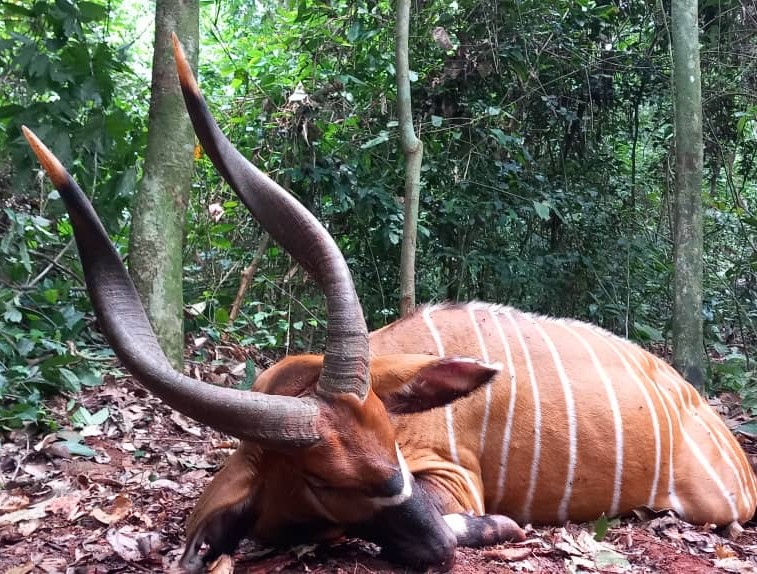
A large block of rainforest does not automatically make a good bongo hunting area.
What matters is whether the hunting team can find current mature-bull sign, reach the parts of the forest where those bulls are moving, and work that terrain effectively when conditions are right.
Hunters must look beyond concession size, old trophy photographs and claims about how many bongo live in the area. Road access, active mineral licks, experienced trackers, the dog team, recent results and how the concession is managed all matter more than the number of hectares printed in a brochure.
Two areas can both hold healthy bongo populations and still offer different hunting opportunities. One may have fresh bull spoor crossing usable logging roads, active licks and a team that knows exactly where to look. Another may be enormous, remote and impressive on paper, but difficult to access or work efficiently.
Before booking a bongo hunt, the better question is not simply whether the forest holds bongo. It is whether the specific area you are being offered is producing realistic opportunities for mature bulls now. For an American hunter travelling to Central Africa, that distinction matters. A bongo safari is a major commitment in time, travel and money, and the quality of the area should be understood before the deposit is paid.
Current Mature-Bull Sign Matters More Than Reputation
A bongo concession can have an excellent reputation and still not be the best area to hunt this season. Bongo do not use every part of a rainforest equally. Bulls move, conditions change, roads open and close, and areas that produced consistently in the past may not be where the strongest sign is being found today. Recent evidence matters.
Fresh tracks, current trail-camera photographs, regularly used crossings and activity around known mineral licks tell you far more about the hunt in front of you than photographs of bulls taken several seasons ago.
The question to ask an outfitter is therefore not simply:
“Do you have plenty of bongo?”
Ask: “Where are you finding mature bulls at the moment?” Then ask what evidence supports the answer.
A healthy bongo population is important, but population and huntable opportunity are not the same thing. The hunting team still has to locate a suitable bull, find a workable track and have enough access to turn that sign into an opportunity.
How Much of the Forest Can the Team Actually Hunt?
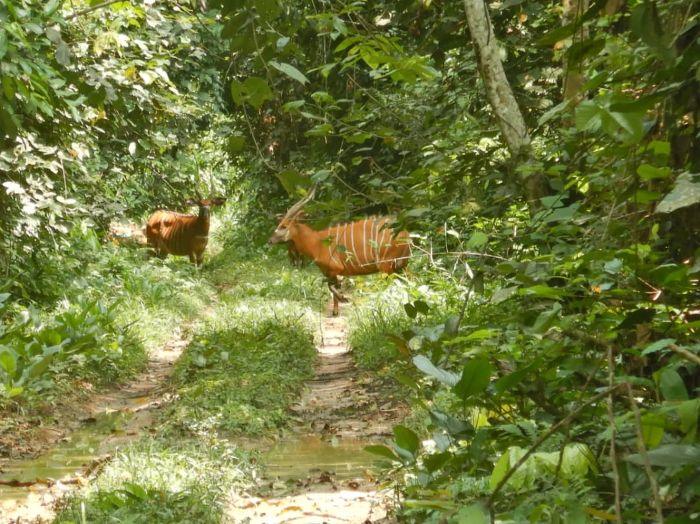
The size of a bongo concession can look impressive on paper, but acreage alone tells you little about the quality of the hunt. In the rainforest, access determines how much of that ground can really be worked. Old logging roads, secondary tracks, mineral licks and known crossings give the hunting team places to search for fresh spoor and ways to move quickly when a promising track is found.
That usable footprint can change from season to season. Roads wash out, old tracks disappear under vegetation, bridges fail and heavy rain can turn parts of a concession into terrain that exists on the map but is difficult to hunt.
Two areas of similar size can feel completely different. One may allow the team to cover a great deal of
useful country each morning, while another may leave large sections effectively out of reach. A smaller forest with good access, bongo sign and a workable road network may offer a stronger hunting proposition than a much larger concession that cannot be covered efficiently.
A huge forest is useless if the team cannot effectively hunt it.
Mineral Licks Matter When Bongo Are Using Them
Natural mineral licks can be important focal points in bongo country. They give the hunting team places to check for fresh tracks, trail-camera activity and repeated movement through a known part of the forest.
A natural mineral lick is a place where mineral-rich soil, clay or salts are exposed in the forest. Bongos may return to these sites repeatedly to consume minerals and feed on the grasses and other vegetation growing around them. In the right area, a productive lick can become a regular point of activity rather than just another opening in the forest.
Simply having a lick in the concession means little on its own. What matters is whether suitable bulls are using it now. A productive lick can give the team a clearer picture of what is moving through an area, particularly when fresh spoor and camera evidence begin to tell the same story. An old photograph of a good bull at a lick may be interesting, but it is current activity that matters to the hunter arriving this season.
The value of a mineral lick is therefore not that it guarantees a bongo will be there. It is that it can help the team identify where worthwhile bull activity is taking place and where a fresh track may begin.
The Trackers Must Know This Forest
A good bongo area still depends heavily on the people reading it. Following bongo spoor through rainforest is different from tracking across open woodland or dry ground. Sign can disappear under leaves, vegetation can close behind an animal and visibility may be measured in only a few yards.
In the Congo rainforest, hunters quickly learn that the forest has to be read differently. Roads, tracks, openings and small changes in vegetation can become far more important when visibility disappears. That makes local knowledge especially valuable.
On bongo hunts in Cameroon, local tracking teams may have years of experience in the same forest systems, road networks and crossings. The same principle applies to hunting in Gabon, where local knowledge of the forest is just as important as the size of the concession itself. The value is not simply that the trackers are local. It is that they know the forest being hunted.
They may know which roads regularly produce crossings, which licks have been active, where bulls have been moving and which parts of the concession are worth checking after rain or changing conditions.
A tracker who has worked the same area for years may recognise patterns that mean little to somebody seeing that forest for the first time. The PH still carries responsibility for the hunt, but in bongo country the local tracking team can make the biggest difference between finding fresh sign and losing valuable hunting time.
That means the quality of the area cannot be separated completely from the quality and continuity of the team working it.
The Dog Team Is Part of the Hunting Product
In some bongo areas, dogs can make a big difference once a worthwhile track has been found. But saying a hunt is “done with dogs” does not tell you much at all.
The real questions are which dogs are being used, who handles them, how experienced the pack is, and whether that same team will be available during your safari. A well-worked pack that has hunted bongo together is a different proposition from a few dogs put together for the season. Dogs can also be lost, injured or simply unavailable at the wrong time. That makes depth in the pack important. A team with several proven dogs and an experienced handler has more resilience than one depending heavily on a single animal.
The dogs do not replace good trackers or forest knowledge. A strong bongo area is therefore not only about habitat and sign. It is also about whether the people and dogs needed to turn that sign into a realistic opportunity are in camp and ready to work.
Recent Results Need Context
Recent results matter, but the headline number rarely tells the full story.
An outfitter may say an area produced six bongo last season or that hunters enjoyed a high success rate. Both statements can be impressive, but they mean more when you know how those results were produced. Six bulls taken by six hunters is different from six bulls taken by fifteen. The number of hunting days also matters, as does whether those hunters were in the same concession, with the same PH, trackers and dog team.
Recent photographs are useful, but they should be tied to the area being offered. A trophy bull taken elsewhere in the outfitter’s operation tells you little about the forest you will be hunting. The same applies to unsuccessful hunts. Knowing how many hunters left without a bongo gives the successful results proper context.
Recent results matter more when you know how many hunters produced them.
Rain and Current Conditions Can Change the Hunt
Rain is part of bongo hunting, not an inconvenience around it.
Across much of the Central African rainforest, annual rainfall runs from roughly 1,500 mm to well over 2,000 mm, with some wetter forest regions receiving more. Southeastern Cameroon, for example, averages around 1,500–2,000 mm in many forest areas, while parts of Gabon receive closer to 3,000 mm a year.
That amount of water changes the forest constantly. Fresh rain can make spoor easier to recognise, soften the ground and quieten dry leaves underfoot. Boddington has described finding fresh bongo tracks after rain and following them through still-wet forest before releasing the dogs.
But rain can work against the hunting team just as quickly. Heavy downpours can wash tracks away, flood low ground, damage roads and make parts of a concession difficult to reach. The same bongo area can hunt differently from one week to the next. It is not simply about whether you are hunting during the rainy season. What matters is whether recent rainfall, road conditions and fresh sign are allowing the team to work the forest effectively when you are there.
Hunting Pressure Can Matter More Than Acreage
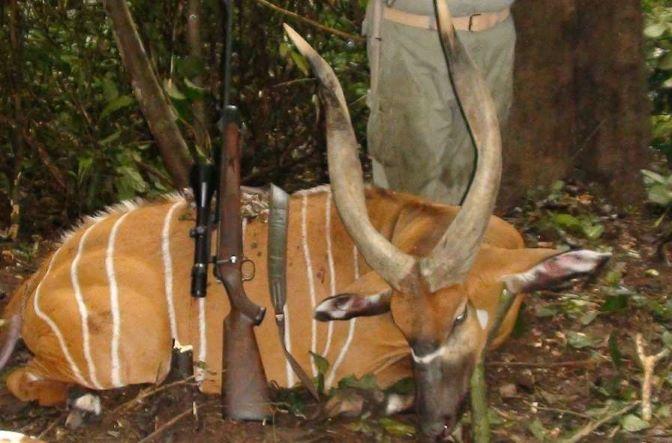
A large forest does not automatically mean light hunting pressure. What matters is how much bongo hunting is taking place in the parts of the concession that are being utilized. If several hunters are repeatedly using the same roads, licks and productive pockets of forest, that pressure matters more than the total size of the block.
The same is true when a concession looks big on a map but only a smaller portion is accessible during the season. That does not mean a heavily hunted area is automatically poor, or that a lightly hunted area is good. It means hunting pressure needs to be understood in context. A correct question would be how many bongo hunters have been through the area recently, where they hunted, and whether the same productive zones are being worked again and again.
Bongo may still use pressured country, but repeated vehicle movement, dogs, hunters and tracking activity can change how animals use familiar roads, licks and crossings. The point is not that pressure automatically ruins an area. Hunters should understand whether the current bongo activity being shown comes from lightly worked country, heavily hunted country, or the same productive areas being hunted repeatedly by several clients.
In bongo country, the real hunting footprint matters more than the acreage printed on the licence.
How Well Is the Area Managed Between Hunts?
A bongo concession does not stop mattering when the last hunter leaves camp. What happens during the rest of the year influences the quality of the area just as much as what happens during the hunting season. Roads need to be maintained, illegal hunting needs to be addressed, and the team must maintain a presence in country that may otherwise be remote.
That is where long-term concession management starts to matter.
Some established operators invest heavily in anti-poaching patrols, local employment and cooperation with wildlife authorities and surrounding communities. Mayo Oldiri in Cameroon, one of the outfitters represented by GHS, is an example of an operation where anti-poaching and wider concession stewardship form part of the management model.
Not every good bongo area has to be managed in the same way. What matters is whether the concession is being looked after when clients are not there. A large forest with good bongo sign can lose much of its value if uncontrolled access, poaching or poor management are allowed to become normal. For hunters comparing bongo areas, it is worth understanding what is happening in that forest during the other eleven months of the year, not only during the two weeks they intend to hunt it.
Questions to Ask Before Booking a Bongo Hunt
A good bongo area should stand up to a few direct questions.
- Where are you finding mature bulls now?
- What recent sign or trail-camera evidence comes from the exact area I will hunt?
- How much of the concession is realistically huntable during my safari dates?
- Which roads, crossings and mineral licks are currently producing useful sign?
- Who are the trackers, and how long have they worked this forest?
- Which dog team and handler will be in camp for my hunt?
- How many bongo hunters have hunted this area recently, and how many were successful?
- How heavily are the same productive parts of the concession being worked?
- What are the current rainfall and road conditions?
- How is the concession managed when hunters are not there?
None of those questions guarantees a bongo.
The Best Bongo Area Is the One the Team Can Actually Hunt
A good bongo area is more than a large block of rainforest with bongo in it. It needs current mature-bull sign, usable access, productive parts of the forest, experienced trackers, the right dog team and recent results that stand up to scrutiny. Conditions can change. Rain can help or hurt. Roads can open or disappear. Hunting pressure and concession management can alter how effectively the same forest can be worked from one season to the next.
The best-looking area on paper is not always the best hunting proposition.
The same principle applies when comparing African hunting trips more broadly. The strongest safari is rarely the one with the biggest area, the longest species list or the most impressive photographs. What matters is whether the ground, the team and the current conditions give you a realistic opportunity to hunt what you came for.
Bongo hunting simply makes that lesson harder to ignore.
A huge forest is useless if the team cannot effectively hunt it.
Author
Pierre van Wyk is co-founder of Game Hunting Safaris and works with hunters, Professional Hunters and African outfitters to compare hunting areas, safari structures and realistic opportunities before a hunt is booked.