
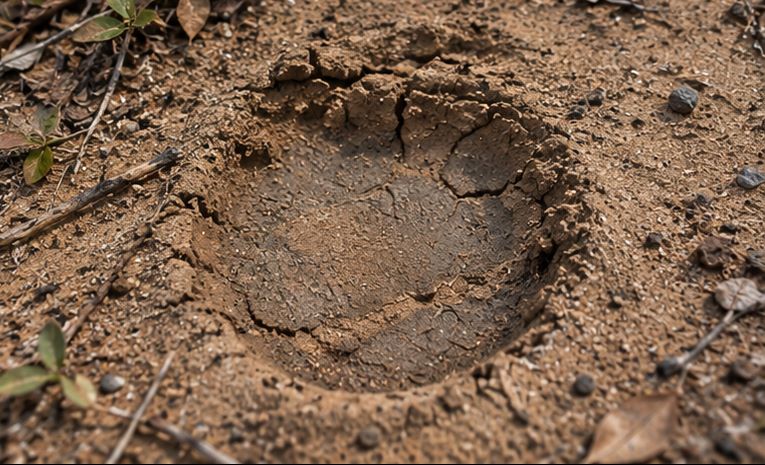
A good elephant track does not always deserve the rest of the day.
In Botswana, trackers may cut fresh bull spoor that looks promising at first. The track may belong to a mature bull, the sign may be recent, and the direction may seem workable. But as the pursuit develops, the picture can change. The bull may be travelling hard toward a boundary. The spoor may become older than first thought. Hard ground or crossing elephant tracks may make it increasingly difficult to stay on him. Daylight may start working against the team.
Judgement starts to matter.
On an elephant hunt in Botswana, the question is not simply whether the trackers can keep following the spoor. It is whether the track still gives the team a realistic chance of catching the right bull in legal hunting territory.
A good track can still become a bad use of hunting time.
The best elephant hunters and trackers know when to keep pushing, when to slow down and reassess, and when to leave one track and look for a better opportunity.
A Promising Track Can Stop Being Promising
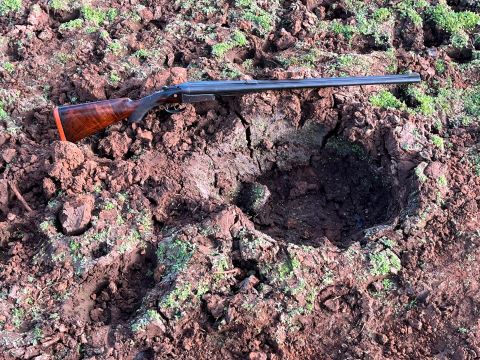
A track that looks worth following at first can become a different proposition two or three hours later.
Freshness matters, but it is only part of the decision. The trackers will also be watching what the bull appears to be doing, how quickly he is moving, what kind of terrain lies ahead and whether the team is gaining on him.
A bull that is feeding, breaking branches and moving slowly can give the hunting team time to close the gap. A bull that is travelling steadily in one direction can be different. He may put miles between himself and the hunters without ever giving them a realistic chance to catch up. A good PH and tracking team will reassess a track several times during the day.
A spoor can begin as the best option available and gradually become a poor use of hunting time. The track may be getting older rather than fresher. The bull may be heading toward difficult country or a boundary. The ground may stop holding sign properly. Another opportunity may become more promising somewhere else.
This does not mean the original decision to follow was incorrect.
Elephant hunts are full of decisions made with incomplete information. The important thing is not to be stubborn simply because several hours have already been invested in one bull. Sometimes the hunting party needs to know when to quit a spoor.
Time already spent on a track is not a reason to keep following it if the odds have changed.
The Track Is Too Old for the Time Left
An older track is not always a bad track.
Trackers judge the age of elephant spoor from more than the footprint itself. They will also look at the condition of dung, disturbed soil and vegetation, feeding sign and how sharp or softened the edges of the track appear. Freshly broken branches, recently disturbed ground and crisp spoor can all suggest that a bull passed recently.
A bull may have passed during the night and still be worth following first thing in the morning, particularly if the trackers understand where he is likely to be heading and the spoor suggests he has slowed down to feed.
That judgement is built over years in the same country. Experienced trackers learn the seasonal movement of elephants, the places bulls tend to use at different times of year, and the habits of lone bulls that may follow surprisingly consistent routes between water, feeding areas and cover. Much of that knowledge is learned in the field and handed down from one generation to the next.
The problem comes when the age of the track and the time left in the day begin working against each other. If the bull has already had several hours to travel and the team is still not gaining on him, the chances of catching up before dark can start to fall quickly. The spoor may still be clear. The bull may still be a mature animal. But neither of these guarantees that continuing to follow the bull is the best use of the remaining daylight.
Local knowledge is important.
Trackers are not only looking at how fresh the spoor is. They are trying to understand what has happened since the bull passed. Has he been feeding and slowing down? Is he still walking steadily? Is he moving toward cover, water, a boundary or another part of the concession? A track that looked excellent at 7:00 in the morning can be a different proposition at 2:00 in the afternoon. Sometimes the right decision is to keep pushing because the team believes the bull has slowed and they are closing the distance.
Sometimes the better decision is to turn back, check another road or water point, and use the remaining daylight looking for a fresher opportunity. An elephant track does not have to be bad before it stops being worth the time. Following a clear spoor is not the same thing as catching the elephant that made it.
The Bull Is on the Move, Not Feeding
An elephant bull that is feeding gives the tracking team a different problem from one that is simply covering ground.
Feeding elephants tend to leave more sign behind them. Broken branches, stripped vegetation, dung and disturbed ground can help the trackers judge how recently the bull passed and whether his pace has slowed. If the sign starts looking fresher, the team may be closing the gap.
A bull that is travelling and on the move is a different story.
He may walk steadily for miles between water, feeding areas or different parts of the concession. The spoor can remain perfectly clear while the distance between the hunters and the elephant hardly changes. That is where the tracking team must read more than the track itself. They will be looking at the bull’s direction, the country ahead, how much feeding sign is appearing, whether his pace seems to be changing and how much daylight is left.
Sometimes a travelling bull slows down later, starts feeding or beds in cover. Sometimes he simply keeps going. Sometimes there may be a reason for maintaining that pace. The bull may have caught the scent of the hunting party, been disturbed earlier, or simply be an animal that has learned to leave pressure behind. Old bulls that have been hunted before can be quick to put distance between themselves and trouble.
And that is when a good spoor can start becoming a long walk with little chance of catching the elephant.
For American hunters planning their first Botswana elephant safari, fitness matters more than many expect. A travelling bull can keep a hunting party on foot for hours, and the difference between staying with the spoor and falling behind can simply come down to how well you can keep walking.
A Good Track Can Still Be Going the Wrong Way
It is not always the age of the spoor or the pace of the bull that can be a problem. It is where the bull is going.
A reality of hunting in Botswana is that an elephant can be moving through huntable country one hour and heading toward a boundary the next. A bull travelling toward Chobe or another protected area may still be exactly the kind of elephant the hunting party wants, but the value of following him changes if the legal opportunity is about to disappear.
That can be a frustrating decision.
The spoor may be fresh. The trackers may be reading it well. The bull may be suitable. But if the direction of travel keeps pulling him toward ground where the hunting party cannot follow, continuing can become a poor use of the day. Again, local knowledge adds value. PHs and trackers who know the concession understand which roads, rivers, pans, cutlines and boundaries matter, and which elephant movements are likely to carry bulls out of reach.
Sometimes the right decision is to push hard because the team believes there is still time to catch him before he crosses. Sometimes the better decision is to leave the spoor and look for another bull moving deeper into huntable country.
When the Ground Stops Giving the Track Back
Sometimes the spoor is still worth following, but the ground stops making it easy. Hard, rocky or heavily crossed terrain can test even highly experienced trackers, including San trackers whose ability to read spoor has been developed over generations in Botswana’s environment.
Soft sand can hold an elephant track beautifully. Hard ground, rocky patches, dry gravel or heavily trampled areas can do the opposite. A track that was obvious a few hundred yards earlier can become difficult to read. Here, trackers earn their keep.
They may spread out, circle ahead, look for a scuff mark, a shifted stone, disturbed grass or the next footprint where the bull has crossed softer ground. Sometimes the spoor comes back quickly and sometimes recovering it takes longer.
Crossing elephant tracks can make the job more difficult. In a country carrying a lot of elephants, the team may spend time sorting through several sets of tracks, trying to make sure they stay with the same bull. That does not automatically mean the spoor should be abandoned. Good trackers can recover tracks that would look completely lost to most hunters. There comes a point where the time spent trying to recover one bull must be weighed against the rest of the hunting day.
If the spoor keeps disappearing, the country ahead is getting worse and the team is no longer making useful progress, continuing can become an exercise in persistence rather than good judgement.
Frequently Asked Questions
How fresh does an elephant track need to be before you follow it in Botswana?
There is no fixed number of hours that makes an elephant track worth following. A track made during the night may still be worth taking first thing in the morning if the trackers believe the bull has slowed down, started feeding or is moving toward country where he can realistically be caught. Freshness must be judged together with the bull’s direction, pace, the terrain ahead and the amount of daylight left.
Can trackers tell how old an elephant bull is from his spoor?
Experienced trackers can sometimes make a good judgement about the maturity of a bull from the size, shape and wear visible in his tracks. But a track cannot tell the hunting team exactly what the bull’s ivory looks like.
The spoor may lead to an old bull, but the elephant still must be caught and assessed properly before the hunter knows whether he is the animal they want. That is where the judgement behind walking away from an elephant bull can become just as important as choosing the right track in the first place.
How far can an elephant bull travel in a day in Botswana?
A travelling bull can cover many miles in a day, particularly when moving between water, feeding areas or different parts of a concession. This is one reason a clear track does not always mean the hunting party is gaining on the elephant. A bull that continues walking steadily can keep the team on his spoor for hours without ever allowing them to close the gap.
What happens if the elephant crosses into Chobe National Park while you are tracking it?
Once an elephant moves into protected ground where hunting is not permitted, the hunting party cannot continue the hunt there. A PH and trackers may sometimes realise from the direction of the spoor that a bull is heading toward Chobe or another protected area and decide to abandon the track before spending the rest of the day following an opportunity that is likely to disappear.
How much walking should I expect on a Botswana elephant hunt?
Potentially a lot. Some elephant tracks are resolved quickly, while others can keep a hunting party on foot for several hours. A travelling bull may cover considerable ground before slowing down, and difficult terrain can make the day even more demanding. Hunters preparing for Botswana should expect walking to be an important part of the safari and arrive fit enough to stay with the tracking team for long periods.
When to Abandon an Elephant Track
A Botswana elephant hunt can involve hours of following spoor, but success is not always about staying on one track for as long as possible.
Good judgement means knowing when a spoor is still worth the effort and when the hunting day may be better spent looking for another opportunity. Track age, direction, terrain, daylight and the behaviour of the bull all play a part, and those decisions are often made long before the elephant is ever seen.
For hunters planning serious African hunting trips, understanding that reality matters. Elephant hunting in Botswana is not simply about finding a track and following it until something happens. It is about making good decisions with the time, country and opportunities available.
Knowing when to abandon a track can be just as important as knowing which one to follow.
Author
Pierre van Wyk is co-founder of Game Hunting Safaris and has spent years helping hunters plan elephant safaris across Africa. He works with hunters, Professional Hunters and outfitters to compare areas, hunt structures and realistic opportunities before matching each hunter with the elephant safari that best suits what they are looking for.