
Dangerous game hunting in Botswana, Trophy Elephant
Booking Season: 2026
Hunt Difficulty: Difficult

Elephant hunting in Botswana often begins with tracks in the sand. They may have been left by a bull moving through during the night, or by several elephants whose paths crossed before sunrise. The first challenge is deciding which tracks are worth following, because finding elephants and finding the mature bull a hunter has travelled to Botswana to pursue are two very different things.
Once the trackers take up a promising spoor, there is no knowing where it will lead. A bull may have covered considerable ground since leaving the tracks behind, moving between water, feeding areas and the vast stretches of bush that make Botswana such remarkable elephant country. The hunting team may follow for hours, only to catch up and discover that the bull is not the elephant they are looking for. Then the search begins again.
This is what gives Elephant Hunts in Botswana their character. Success is rarely about simply locating an elephant. It is about tracking, judging and eventually getting close enough to the right bull to decide, often after days spent following animals that ultimately walk away unharmed.
Botswana's enormous elephant population and extensive wilderness areas provide an exceptional setting for this kind of hunt, but they do not make it easy. Elephants can cover extraordinary distances, herds and bulls move through the same country, and tracks that looked promising at first light may lead the hunting team deep into the bush before the animal responsible for them is finally seen.
Since the return of regulated elephant hunting, Hunting in Botswana has once again become an important option for international hunters looking to pursue mature bulls in one of Africa's great elephant strongholds. Quotas and hunting opportunities are carefully controlled, and the areas in which hunts take place can vary, but the fundamentals of the hunt remain remarkably simple.
Find the tracks of a good bull. Follow them. Catch up with him. Then decide whether he is the elephant you came to Botswana to hunt.
Available Elephant Hunts
Dangerous game hunting in Botswana, Trophy Elephant
Booking Season: 2026
Hunt Difficulty: Difficult
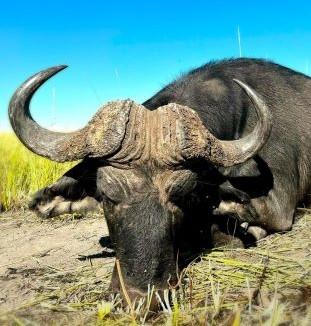
Free-Range Elephant & Buffalo Hunt in Botswana
Booking Season: 2026
Hunt Difficulty: Difficult
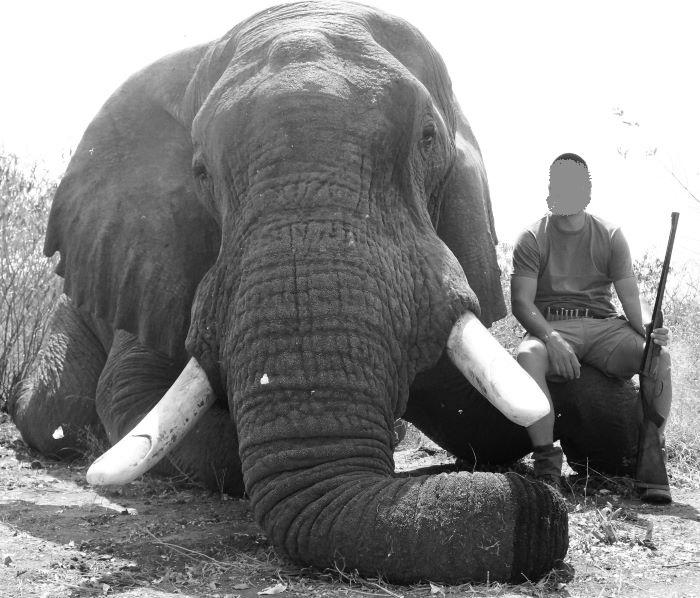
14-Day Exportable Elephant Hunting Safari in Botswana
Booking Season: 2026
Hunt Difficulty: Difficult
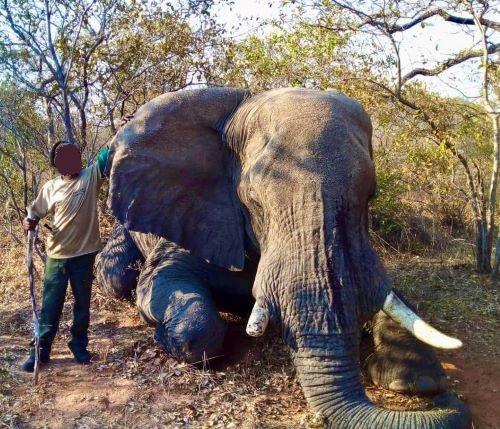
Exportable Elephant Hunting Safari in Botswana's Bushmanland
Booking Season: 2026
Hunt Difficulty: Difficult
Free-Range Elephant & Leopard Hunt in Botswana
Booking Season: 2026
Hunt Difficulty: Difficult
Botswana Dangerous Game Safari | Elephant, Leopard & Cape Buffalo
Booking Season: 2026
Hunt Difficulty: Difficult
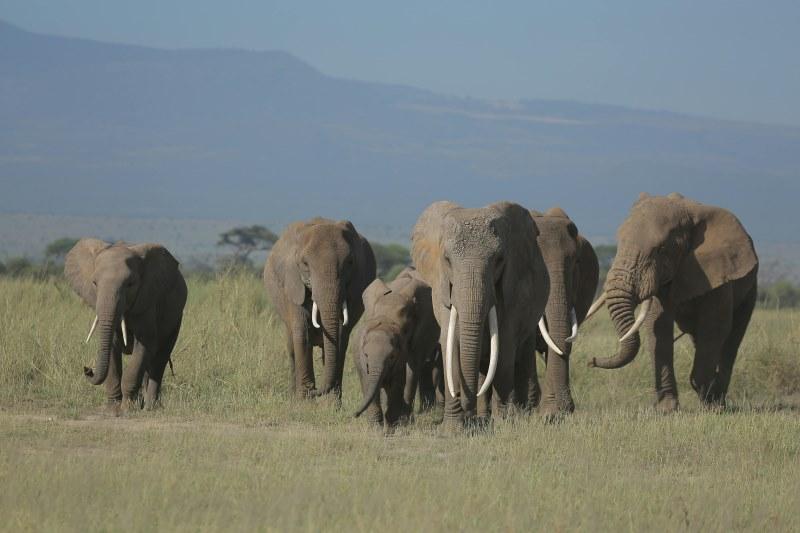
Botswana holds one of Africa's largest elephant populations, but numbers alone do not explain the country's reputation as elephant country. What matters to the hunter is the scale of the landscape and the freedom elephants have to move through it.
Bulls can travel considerable distances between water and feeding areas, moving through woodland, mopane and open country as conditions change. Some travel alone, others join small bachelor groups, and older bulls may spend time around breeding herds before disappearing back into quieter country.
That movement is central to Elephant Hunting in Botswana. A hunting area may hold plenty of elephants, yet the bulls using it can change. The elephant seen yesterday may be miles away the following morning, while a completely different bull may have walked into the area during the night.
It also means seeing elephants does not necessarily mean the hunt is progressing. A team can encounter breeding herds, younger bulls and elephants carrying ivory that does not meet the expectations of the hunt while continuing to search for one class of mature bull.
Tracks become the starting point for those decisions. Experienced trackers can often distinguish the spoor of a large bull from the confusion left by other elephants moving through the same country. The size of the track, stride, direction of travel and freshness of the sign all help determine whether a spoor is worth following.
Then comes the walking.
Following an elephant on foot can take the hunting team through miles of country before there is any opportunity to see what is at the end of the tracks. The wind may change. The bull may join other elephants. The tracks may cross those of another bull, forcing the trackers to unravel which animal they have been following.
And when the team finally catches up, the answer may still be no. The bull may be too young. His ivory may not be what the Professional Hunter is looking for. The approach may be wrong, or other elephants may make getting closer impossible.
Botswana's strength as an elephant hunting destination is therefore not simply that it has elephants. It has the country where a hunter can go looking for the right one.
One of the realities of elephant hunting in Botswana is that a hunter can see plenty of elephants and still spend days searching for the bull he wants.
The objective is not simply to find an elephant with tusks. The Professional Hunter is looking for a mature bull that meets the expectations of the safari and any requirements applying to the hunting area. Age, body size, the appearance of the head and tusks, and the overall condition of the bull can all form part of that assessment.
Making that judgment is rarely as simple as standing in the open and looking through binoculars.
The first glimpse may be the grey shape of an elephant moving between trees. Tusks can be partly hidden by brush. A bull may be standing among other elephants, or the hunting team may have approached from an angle that makes judging him difficult. Sometimes the only option is to move, wait and try to get another look.
That creates a situation experienced elephant hunters understand well: the team has spent hours following tracks, finally caught the bull and now needs to get closer, not necessarily to shoot, but simply to decide whether the hunt should continue.
This is where patience becomes important. A promising bull can become an easy animal to talk yourself into after a long day on tracks. The Professional Hunter must make the opposite decision. If there is doubt, the team may need to spend more time looking at him or simply walk away.
There will always be another set of tracks to investigate.
Elephant hunting is often described as a tracking hunt, but one of the most important decisions can be made before anyone starts walking: choosing which track is worth following.
In country holding large numbers of elephants, roads, pans and waterholes can be covered in spoor. Breeding herds may have passed through during the night, several bulls may have crossed the same road at different times, and fresh tracks can overlap older ones until the ground becomes a record of elephant movement that only an experienced tracker can begin to untangle.
Following every track is impossible, so the trackers and Professional Hunter look for clues that suggest a mature bull worth investigating. The size of a footprint may immediately attract attention, but freshness and direction of travel can be just as important. A tremendous track left too many hours earlier could put the hunting team miles behind a bull that has continued walking since before sunrise.
Choosing well can mean catching up with an elephant while there is still plenty of hunting day ahead. Another set of tracks may lead the team through miles of bush before they finally get their first look at the bull, only to discover that he is younger than expected or simply not the elephant they are looking for.
That does not mean the day has been wasted. It is part of elephant hunting in wild country, where there is no guarantee that the animal at the end of a promising track will be the bull a hunter eventually decides to take.
The team may walk back to the vehicle after hours on spoor knowing that somewhere else in the hunting area another bull has already crossed a road or passed a waterhole, leaving behind a completely different set of tracks.
By the following morning, those may be the tracks that change the hunt.
Following elephant tracks can occupy most of the day, but the mood changes when the trackers begin to slow down. The spoor is getting warmer, the dung is fresher and broken vegetation may show that the bull passed through only recently. Eventually someone hears branches breaking or catches movement through the bush, and the elephant that has existed only as tracks for the past several hours is suddenly somewhere close ahead.
From this point, the hunt becomes quieter and more deliberate. The wind matters constantly, and every movement must account not only for the bull being followed but also for other elephants that may be nearby. A breeding herd or another bull encountered unexpectedly can change the entire approach before the hunting team even gets a clear look at the elephant they have spent the day tracking.
Getting close enough to judge him may require circling to keep the wind right, waiting for other elephants to move or finding an opening in the vegetation that provides a proper view. In thicker cover, distances can close quickly, yet the Professional Hunter may still have only brief opportunities to assess the bull before he disappears behind the bush again.
After hours on the tracks, there is always the temptation to want the elephant at the end of them to be the right one. Sometimes he simply is not. The bull may be younger than expected, his ivory may not be what the hunting team is looking for, or the situation may make it impossible to get close enough for a confident assessment. In that case, the decision is to back away and begin looking for another track.
If he is the right bull, there is still no reason to rush. The Professional Hunter needs to understand the position of the elephant and any others around him, while the hunter needs a clear opportunity and enough time to make the shot properly.
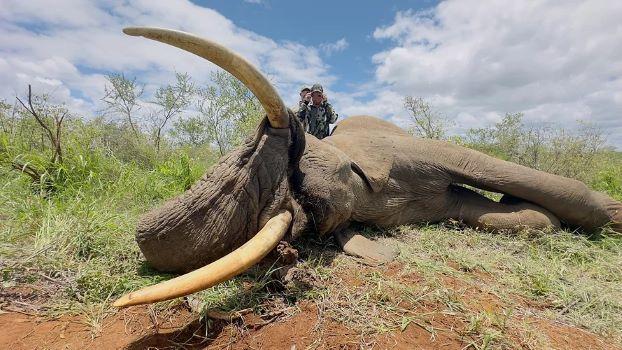
Hours of tracking may ultimately bring the hunting team to within a relatively short distance of the bull they have been searching for. From there, the hunt that began with a footprint in the sand can come down to a few careful minutes.
Catching up with a bull does not necessarily mean the hunting team has caught up with one elephant. He may be travelling with other bulls, feeding near a breeding herd or moving through country where elephants are scattered across a much larger area. The animal being hunted may be directly ahead while another elephant, unseen in thicker cover, is standing much closer.
That can make the final approach considerably more complicated. The Professional Hunter and trackers need to keep track of what the target bull is doing while remaining alert to the movement of every other elephant around them. A change in wind can alert an animal the team has not even seen, and the reaction of one elephant can quickly influence the behaviour of others nearby.
Elephants also do not always respond to people in the same way. One may move off quietly after becoming aware of the hunting team, while another may stand its ground or turn to investigate. A bull that appeared relaxed a few minutes earlier can become alert, and a straightforward approach can suddenly require the team to withdraw and reconsider the situation.
This is one reason elephant hunting demands such close cooperation between the hunter and Professional Hunter. As with other forms of Big Game Hunting in Africa, the Professional Hunter carries much of the responsibility for assessing the animal and managing the final approach. By the time a shooting opportunity develops, the PH may already have spent considerable time assessing the bull, watching the wind, identifying other elephants and deciding how close the team can safely approach.
The hunter's job at that point is much simpler: listen carefully, know which elephant is being hunted and be ready when the opportunity comes.
Until then, there is no advantage in forcing the situation. The bull has already been found. The difficult part is creating the right opportunity without allowing everything happening around him to unravel the hunt.
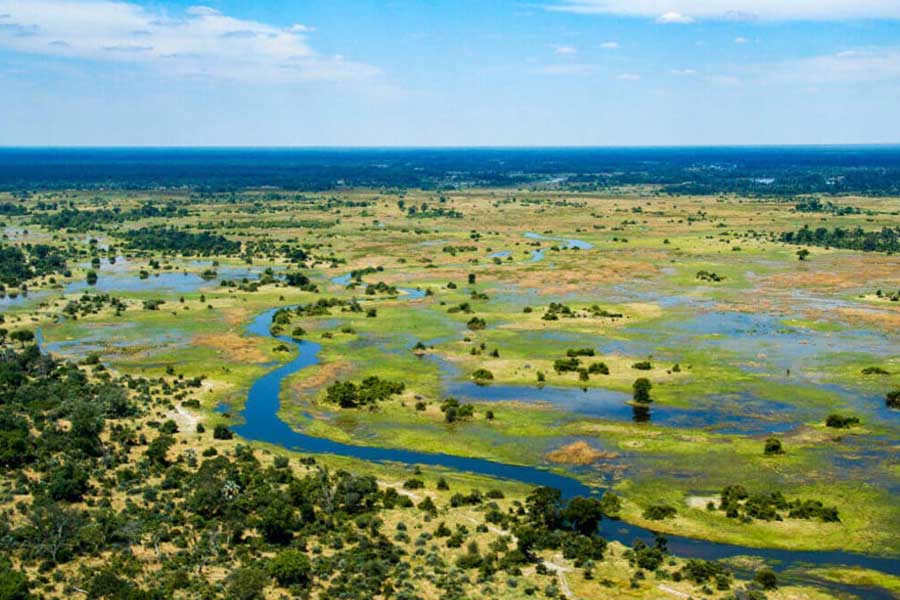
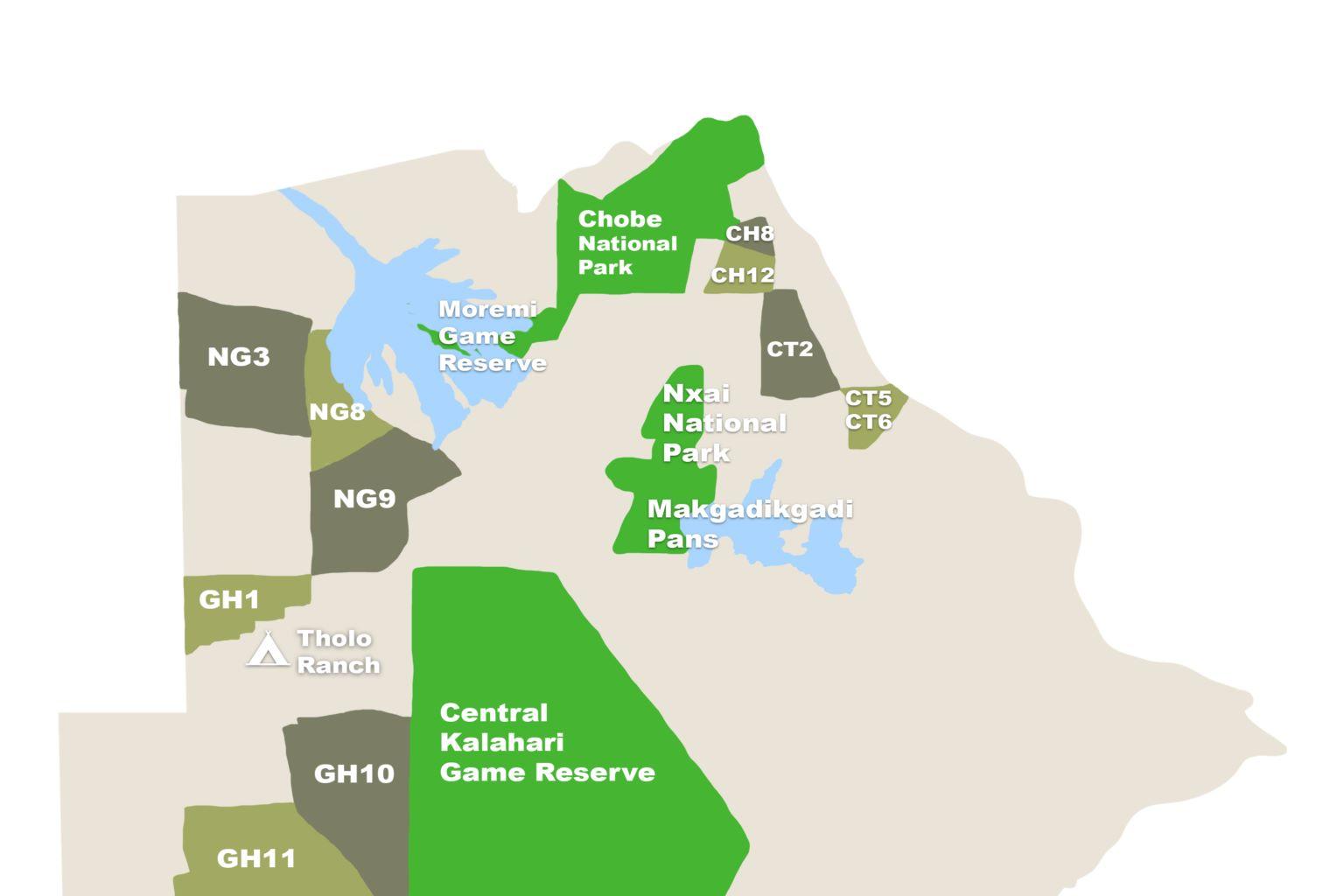
Elephant hunting in Botswana is concentrated largely in the north and northwest of the country, particularly across parts of the Chobe and Ngamiland regions where large elephant populations move through an extensive network of wildlife management and community areas. This is the broader landscape connected to the Okavango and Chobe systems and the vast Kalahari sands that extend across much of northern Botswana.
The Chobe region, including country around Kasane and areas extending south and west from the Chobe River, is particularly well known for elephants. Farther west, hunting opportunities can also occur across parts of Ngamiland, where elephants move through country influenced by the Okavango system and the drier Kalahari landscapes surrounding it. Specific hunting areas and available elephant quota can change, making the location of a safari dependent on current allocations and access.
These areas can produce very different hunts. Some are influenced by permanent rivers and concentrations of water, while others become progressively drier as the season advances. Mopane woodland, thick bush and more open stretches of Kalahari country all affect how elephants are located and how a hunting team approaches them.
Bulls also move across enormous areas, often travelling between wildlife management areas and neighbouring regions in response to water and feeding conditions. A hunting area that produced regular sightings of mature bulls earlier in the season may look completely different several months later, while new bulls can move into the country with little warning.
This is why recent knowledge of an area matters. Elephant numbers may be high across northern Botswana, but the movement and quality of bulls using a particular hunting block at a particular time can ultimately have far more influence on the hunt than the country's overall elephant population
Elephant hunting in Botswana takes place through much of the dry season, with conditions changing considerably as the months progress. Earlier in the season, vegetation may still be relatively thick and water more widely available, allowing elephants to remain dispersed across larger areas.
As the country becomes drier, reliable water begins to play a greater role in elephant movement. Bulls may travel considerable distances between feeding areas and water, while thinning vegetation can improve visibility and make fresh tracks easier to pick up. Later in the season, however, temperatures can become demanding, particularly when a promising spoor leads to several hours of tracking on foot.
There is no single month that guarantees better bulls. Local rainfall, available water and the movement of elephants through a particular hunting area can all influence what is happening on the ground. An area holding several mature bulls at one point in the season may look completely different a few weeks later as elephants shift their movements.
The best timing often comes down to the hunting area itself and what the Professional Hunter and outfitter are seeing that season. Recent bull movement and current water conditions can tell a hunter considerably more than simply choosing the driest month on the calendar.
There is something undeniably traditional about carrying a big-bore double rifle on an elephant hunt. Rifles chambered in cartridges such as the .470 Nitro Express have been associated with African Dangerous Game Hunting for generations, and in close country the ability to fire a rapid second shot remains one of the reasons doubles continue to have a place on safari.
A suitable bolt-action rifle can be equally effective. The elephant at the end of the tracks has no interest in whether the hunter is carrying an expensive English double or a well-used bolt action. What matters is using a legal and appropriate dangerous game calibre, a properly constructed bullet and, above all, a rifle the hunter can shoot accurately under pressure.
Elephant shot placement leaves little room for uncertainty. The brain is a relatively small target within an enormous head, and its position changes considerably depending on the angle of the elephant. A hunter who has practised only on a flat paper target may find the reality of standing in front of a live elephant very different.
The Professional Hunter will usually spend time before the hunt discussing the possible shot angles and ensuring the hunter understands exactly where to aim. Our detailed Elephant Shot Placement guide covers the different angles and anatomical considerations in greater depth, so there is little value in repeating them all here.
Whether the rifle has two barrels or one, the principle remains the same. When the opportunity finally comes after hours or even days spent looking for the right bull, confidence in the rifle and certainty about where the bullet needs to go matter considerably more than what is engraved on the action.
Planning an elephant hunt in Botswana begins with availability. Elephant hunting is quota dependent, and the number of bulls that can be hunted in a particular area is limited. Hunters looking for specific dates or a particular hunting area may therefore need to plan well in advance, especially where established operators have access to productive elephant country.
The cost of a Botswana elephant hunt can vary considerably depending on the hunting area, length of the safari, available quota and the pricing structure of the outfitter. Government charges, licence fees, trophy fees and transfers into remote hunting areas can also influence the final cost, which is why two apparently similar elephant hunts may carry very different prices.
When comparing quotations, it is worth looking beyond the advertised price and understanding how African Hunting Safari Prices are structured. A hunter should know whether the quotation includes the elephant trophy fee, daily rates, government charges, licences, firearm arrangements and transfers, as well as which costs will still be payable after the safari.
Price should also be considered alongside the hunting opportunity itself. Recent bull movement, the quality of the hunting area and the experience of the Professional Hunter and tracking team can matter considerably more once the hunt begins than saving a few thousand dollars on the original quotation. A higher price cannot guarantee a particular bull, just as a cheaper hunt is not automatically better value.
The outfitter should be able to explain what quota is available, where the hunt will take place and what class of bull represents a realistic expectation for that area. These conversations are best had before the safari is booked, leaving the hunter with a clear understanding of both the opportunity and the total financial commitment involved.
Once that is settled, the hunt itself returns to something much simpler: finding a good track in the sand and seeing where it leads.
Yes. Regulated elephant hunting is legal in Botswana and takes place under government-approved quota in designated hunting areas. Quota and availability can change, so the status of the hunting area and elephant permit should always be confirmed when planning a safari.
The cost of an elephant hunt in Botswana depends on the hunting area, length of safari, trophy fee, available quota and applicable government charges. Hunters should compare the complete cost of competing hunts rather than the headline price, particularly where licences, transfers, trophy fees and other expenses are quoted separately.
Elephant hunting takes place through much of Botswana's dry season, with conditions changing as water becomes scarcer and vegetation thins. There is no single month that guarantees better bulls, and the recent movement of mature elephants through a particular hunting area can be more important than simply choosing the driest time of year.
Hunters need a suitable dangerous game calibre that meets Botswana's current legal requirements. Big-bore double rifles and appropriate bolt-action rifles are both used for elephant hunting, but familiarity with the rifle and the ability to place the first shot accurately matter far more than the type of action a hunter chooses.
An elephant safari needs enough time to search for and properly assess mature bulls rather than placing pressure on the hunting team to take the first suitable elephant encountered. Hunters comparing African Hunting Trips should consider the number of actual hunting days included in the itinerary, as several days may be spent following tracks and looking over bulls before the right opportunity develops.
Potentially, depending on current quota, hunting areas and which species are legally available at the time. Hunters considering a broader Big Five Hunting safari should plan each species individually, as quota, permits and the areas in which individual species can be hunted may differ.
Search from our range of Hunts across various popular destinations in Africa.

Book Your Hunt