
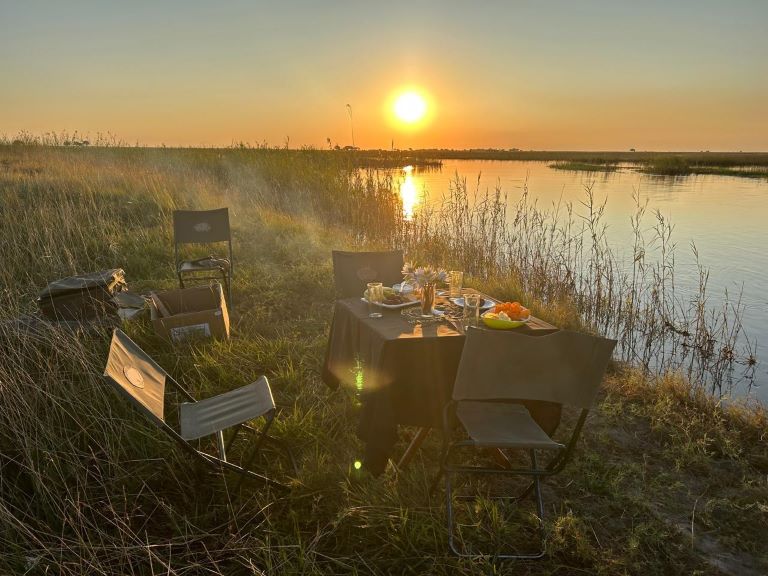
An African hunting safari is not simply a guided hunt that happens to take place in Africa.
The structure is different from the start. The hunting area, Professional Hunter, trackers, camp, species, terrain, local knowledge and logistics all form part of the hunt itself. Change any one of those, and the safari can feel different even if the species list looks the same on paper.
Two African hunting safaris can be difficult to compare from a brochure or trophy list alone. One may take place on a private property with good road access, high game density and several species available in a compact area. Another may involve a vast free-range concession, long tracking days, limited vehicle access and one or two animals that require most of the safari to pursue properly.
Both are African Hunting Safaris. But they are not the same hunting product.
What makes hunting in Africa distinctive is not one animal, one country or one hunting method. It is the way the entire safari is built around the country, the hunting area, the people who know it, and the type of opportunity that area can produce. Those differences matter before a hunter judges an African safari by price, acreage or the number of animals listed in the package.
An African Hunting Safari Is More Than a Guided Hunt
A guided hunt can be straightforward: a hunter, a guide, a hunting area and a specific animal to pursue. An African hunting safari is built around more moving parts.
Professional hunters and outfitters may be responsible for the hunt, but trackers, drivers, skinners, camp staff and local concession teams all influence how efficiently the safari runs. Roads, water, camp position, game movement and access to different parts of the hunting area can matter just as much as what species are listed on the licence.
The safari should be viewed as a hunting system rather than simply a guided outing. A buffalo hunt may depend on trackers cutting spoor at first light. A plains-game day may involve hours of glassing and driving between different habitats. A leopard hunt may revolve around bait sites and night-time activity. The hunting method can change while the wider safari structure remains the same.
The common thread is that the hunt is shaped by the area, the team and the conditions on the ground. That combination is what turns a guided hunt into an African hunting safari.
Africa Does Not Have One Hunting Model
An easy mistake to make is to talk about African hunting as though the same system applies everywhere. It does not. A safari in South Africa may take place on intensively managed private land, while a hunt in Zimbabwe, Zambia or Tanzania may operate from a remote concession where the team covers enormous areas and wildlife moves through country that cannot be managed in quite the same way.
Even within the same country, the hunting can change completely. Zambia can move from broad miombo woodland into river systems and wetland country, while Namibia can take a hunter from dry, open desert and mountain country to the greener riverine and wetland environments of the Caprivi. The country name only tells you so much. The actual hunting area, habitat and access determine what the safari will feel like on the ground.
Central African rainforest hunting is different again. Visibility may be measured in yards, road access can determine which parts of the forest can be hunted, and trackers may spend much of the safari looking for fresh sign rather than animals standing in the open. In other areas, a hunter may spend hours glassing open country, driving between water points or following spoor through dry woodland.
None of those models automatically produces a better safari. Each model simply creates different kinds of hunting, which is why broad labels can be misleading. Property size, fences, wildlife management, concession structure, access and habitat all influence how hunting in Africa is conducted.
Two hunting areas can operate so differently that judging them under the same assumptions makes little sense. Understanding the hunting model behind the safari often tells you more than the country name alone.
The Hunting Area Shapes the Safari as Much as the Species
Hunters naturally focus on the animals first. That makes sense, but the hunting area often has just as much influence on the safari as the species themselves.
A buffalo hunt in broken country is not the same hunt as a buffalo hunt across open floodplain or thick miombo. Kudu hunted in steep mountain terrain can require a very different hunting style from kudu hunted in flatter bushveld. Even when the animal is the same, access, visibility, water, vegetation, road networks and hunting pressure can change the way the hunt plays out.
The size of an area on paper only tells part of the story. A big concession may contain large sections that are difficult to reach or rarely productive at a particular time of year. A smaller area may allow the hunting team to cover useful country efficiently and stay close to where animals are moving.
The best hunting areas are not simply large or famous. They are areas the team understands well enough to use properly.
For hunters comparing hunting safaris in Africa, it is worth looking beyond the species list and asking what the country actually allows the hunting team to do: how they find game, how they move through the area, where animals go under pressure, and how much of the ground can realistically be hunted.
Not every hunter starts with an animal. Some choose a country first because they want to hunt a particular landscape, concession system or part of Africa. In those cases, the area is not simply where the hunt happens. It is part of the reason for going.
The species may be the reason you travel to Africa. The hunting area determines much of how you will hunt it.
Different Species, Different Hunting Methods
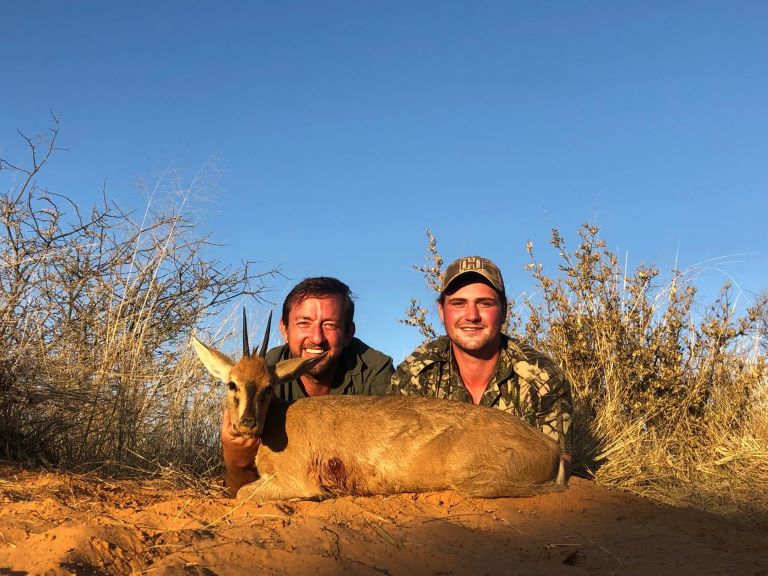
The hunting method can change completely from one species to the next.
A morning may start with trackers cutting buffalo spoor and following it for several hours on foot. The next day may involve glassing open country for kudu or sable, and later in the safari the focus may shift to sitting over a leopard bait, watching a waterhole or working thick cover for an animal that is rarely seen before fresh sign is found. The safari can move from following buffalo tracks in daylight to waiting quietly for a much smaller animal several hours after sunset.
Hunting the Tiny Ten can be different again. Instead of searching miles of country for a large animal, hunters may be watching a narrow patch of cover for a duiker or trying to pick a small antelope out of
thick bush. Some nocturnal species bring another change of pace altogether. Where legal, hunts for animals such as hyena, serval or civet may involve calling, baiting or working after dark.
The equipment may be the same, but the way the hunter uses it can change completely.
Plains game often involves a mixture of driving, glassing and stalking. Buffalo and elephant hunting can become a tracking exercise where the condition of the spoor and the direction of the wind decide whether the hunt continues. Mountain species may require long periods behind binoculars before a stalk even begins, while forest hunting can depend heavily on trackers finding and interpreting fresh sign in country where visibility is limited.
That variety is part of what makes hunting in Africa so different. A safari is rarely built around one hunting method from beginning to end. The species, terrain, weather and hunting area determine how each day is approached.
This constant change is one reason an African safari never feels like the same hunt repeated with a different animal.
The Safari Is Built Around a Hunting Team
African hunting is rarely a one-man operation.
The Professional Hunter leads the hunt, but the safari often depends on a much wider team. Trackers may find and follow spoor, drivers keep the hunting area accessible, skinners handle the animal once it is recovered, and camp staff keep everything moving behind the scenes. In remote concessions, this support is even more important as small delays or poor coordination can cost valuable hunting time.
The strength of the team is often most obvious when conditions are difficult. A tracker who knows how animals move through a particular piece of country, a driver who understands which roads remain usable after rain, or a PH who knows when to leave an area alone can all affect the outcome of the day.
Not every safari uses the same structure. Some hunts run with a small team, while others involve several trackers, camp staff and local specialists. What matters is that the people around the hunter are part of the hunting system, not simply support in the background.
A good safari team also needs practical skills that have little to do with spotting game. Trackers and drivers are often expected to help with punctures, mechanical problems, stuck vehicles, broken roads and the small problems that come with operating far from town. Camp staff need to be reliable, supplies need to arrive, vehicles need to run and everyone needs to be where they are supposed to be. In remote country, a strong team keeps the safari moving when things do not go according to plan.
Two safaris in similar country can feel completely different simply because one team works better than the other.
Local Knowledge Is Part of What You Are Buying
Local knowledge can be one of the biggest differences between an average safari and a very good one.
A hunting area may look simple on a map, but the people who have worked it for years often know things that are impossible to see on paper. They know which water points stay productive late in the season, which roads become useless after rain, where animals tend to cross, which valleys hold game when the heat builds and which parts of the concession go quiet after pressure.
That knowledge is often built over generations.
Some trackers grow up in the same country they later hunt professionally. They learn to read spoor, wind, vegetation and animal behaviour long before they ever work with visiting hunters. A PH who has hunted the same concession for years may know where old buffalo bulls tend to move, which areas usually hold kudu after the first rains, or when an apparently good track is simply not worth following.
In some areas, that knowledge goes even further. Hunting teams may know individual animals or groups over several seasons. A particular elephant bull may follow a similar migration route each year. Resident lions may be recognised by scars, mane patterns or other markings. Old buffalo bulls can sometimes be identified by broken horn tips, worn bosses or repeated movements through the same parts of a concession. The hunt can still change by the hour, but that knowledge gives the team a much better understanding of what is living in the area and how those animals move through it.
It is not just about finding animals. It is about knowing when to keep going and when to stop wasting time.
Local knowledge also matters when conditions change. Water can dry up, roads can wash out, fires can move game, hunting pressure can shift animals into quieter parts of the area and seasonal vegetation can make previously productive country difficult to hunt. A team that understands those changes can adjust quickly instead of hunting the area the way it worked last season.
That is difficult to measure in a brochure.
Two operators may have access to similar country and similar species, but the team that understands the ground better will often use the area more effectively. In African hunting, that knowledge is part of the hunt itself.
A Species List Does Not Tell You What the Safari Will Feel Like
A species list can look almost identical on paper, yet the actual safari can be completely different once the hunting starts.
A list may show buffalo, kudu, sable, zebra and impala on both hunts, but that tells you little about how those animals are found, how much country must be covered, how heavily the area is hunted or what sort of access the team has. One safari may provide regular opportunities across relatively compact country. Another may require long days, more tracking and much more patience for the same animals.
Management also changes the experience. In some areas, wildlife numbers are closely monitored and hunting pressure is spread across different blocks or properties. In others, animals move through large free-range areas where the hunting team has less control over where they will be on any given day.
The same applies to hunting style. A sable hunt on one safari may involve long periods of glassing open woodland and planning a stalk. On another, the same animal may be encountered in thicker country where visibility is short and the opportunity develops much faster.
A species list is useful, but incomplete. It tells you what may be available. It does not tell you what the hunt will be like. Hunters comparing Hunting Trips in Africa should look beyond the list of animals included.
The structure of the safari, the hunting area, the time available and the way those species are actually hunted can matter more than how impressive the package looks on paper. For hunters, the better question is not only what can I hunt? It is also how will I be hunting it?
There Is No Single Version of an African Hunting Safari
There is no single template for an African safari, and there probably never will be.
A hunter may spend a week on a well-managed private property with good roads, comfortable camp and plenty of game, then return to Africa for a remote concession where the days are longer, the country is rougher and most of the hunting depends on tracks, water and time. Another safari may be built around mountain country, rainforest, floodplain or desert. The animals may change, but so does almost everything around them.
The same is true of the hunting itself. One safari may be dominated by plains game and long glassing sessions. Another may revolve around buffalo tracks, leopard baits or elephant movement. The same principle applies to Big Game Hunting in Africa. Buffalo, elephant, lion, leopard and other major species may all fall under the broad big-game label, but the way they are hunted can change completely depending on the country, terrain, concession and local conditions.
Some hunts are physically demanding. Others are more patient than strenuous. Some rely heavily on mobility. Others depend on sitting still in the right place for a very long time.
None of those versions is more “African” than the others. They are simply different ways the continent, the species and the hunting area come together.
By the second or third safari, the trophy list often matters less. Country, terrain, people and style of hunting start to carry more weight, and the experience itself becomes part of what the hunter is choosing. We looked at that change in more detail in Why Hunters Cross the Atlantic and Keep Coming Back to Africa.
That variety is part of what gives African hunting safaris their character. The country matters. The area matters. The team matters. The method matters. And once all those pieces are put together, the safari becomes something more specific than a list of animals on a page.
Frequently Asked Questions
Are all African hunting safaris multi-species hunts?
No. Many safaris include several species, especially plains-game hunts, but others are built around one main objective such as buffalo, elephant, leopard or bongo. Even when additional species are available, the primary animal may determine how most of the safari is hunted.
Does free-range automatically mean a better African hunting safari?
Not necessarily. Free-range hunting can offer large areas and greater freedom of animal movement, but the quality of a safari still depends on habitat, wildlife numbers, hunting pressure, access, management
and the team working the area. A well-run private property can provide an excellent hunt, just as a large free-range concession can be difficult if the game is thin or the area is poorly managed.
Is a larger hunting area always better?
No. Acreage alone tells you very little. A large concession may include country that is difficult to reach or holds little game at certain times of year, while a smaller area may be extremely productive and well understood by the hunting team. What matters is how much useful hunting country is available and how effectively it can be hunted.
Are African hunting safaris always physically demanding?
They can be, but not every safari requires the same level of fitness. Tracking buffalo or elephant, climbing mountain country or hunting rainforest can involve long days on foot. Other hunts may involve more glassing, driving, waiting or hunting from blinds. The species, terrain and hunting method usually determine how physically demanding the safari becomes.
Can two safaris in the same African country be completely different?
Absolutely. One area may be dry, open and easy to access, while another in the same country may be mountainous, heavily wooded, wet or extremely remote. Wildlife density, hunting pressure, road networks, camp location and local knowledge can also vary. The country name is only the starting point; the individual hunting area usually tells you much more about the safari.
Author
Pierre van Wyk is co-founder of Game Hunting Safaris and has spent years hunting across Africa in very different countries, terrain and safari systems. His writing is shaped by practical experience in the field and by comparing how hunts actually work on the ground, not just how they look in a brochure.