
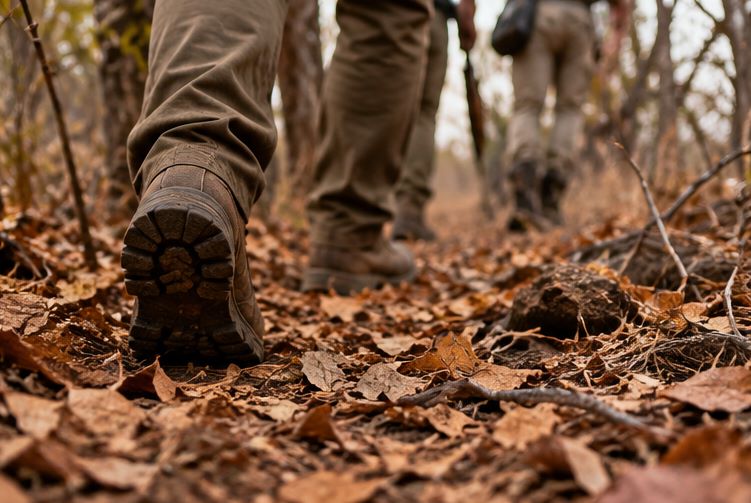
A Zimbabwe buffalo stalk can unravel long before the buffalo see the hunters. Once the buffalo are close, the problem often changes from finding buffalo to getting through the last stretch of country quietly enough to keep the stalk alive.
In the dry season, that can be more difficult than it sounds. Mopane leaves, brittle grass, sticks, loose stone and hard ground can make every step noticeable, especially once the trackers begin slowing down and the team knows the buffalo are somewhere ahead. A distance that looks insignificant on open ground can take a long time to cross when nobody wants to make the wrong sound.
That is where buffalo hunting in Zimbabwe can get difficult. The track may have brought you to the buffalo, but from that point the stalk becomes a matter of wind, cover, noise and patience. Sometimes there is a workable line through the bush. Sometimes the hunters wait for the wind to rise or the buffalo to move. And sometimes the ground simply does not give you a quiet way in.
Why Zimbabwe’s Dry Ground Can Be Almost Impossible to Cross Quietly
Once the buffalo are close, the ground starts to matter in a way it did not earlier in the track. Dry mopane leaves, brittle grass, sticks, loose stone and hard patches of earth can make even careful movement noisy, especially when the bush is still and there is little background noise to cover it.
Not every part of Zimbabwe is the same. Some areas carry more sand, some more rock, some thicker jess or mopane, and conditions can change from one drainage line to the next. Those differences are part of what makes hunting in Zimbabwe so varied from one area to another. Late in the dry season, there are many places where hunters quickly learn that twenty quiet yards can be more difficult to cover than the previous mile
The trackers usually recognise the problem before the client does. They start looking for bare patches, old game trails, softer ground or a line that avoids the worst of the leaves and sticks. The pace drops, everyone closes, and each step becomes more deliberate. Sometimes the easiest-looking route is not the quietest one.
The final approach can take a long time. The buffalo may be close enough to hear moving in the bush, but that does not mean there is a clean way to get closer without making noise. For a hunter using open sights on a double rifle, this can matter even more. A scoped rifle may allow a little more flexibility if the buffalo offers a clear shot farther out, but with open sights the team often needs to get closer before the shot becomes comfortable. That makes every quiet yard more valuable.
At that point, forcing the stalk usually achieves little. The ground is now part of the hunt.
When the Wind Gives You Enough Noise to Move
Dry ground is not always the enemy. A steady breeze moving through mopane leaves, grass and branches can create enough background noise to help cover the sound of hunters moving through otherwise difficult ground. The same patch of bush that feels impossible to cross in dead still conditions may become workable once the wind picks up.
The important distinction is between a steady wind and an unpredictable one. A consistent breeze can help mask footsteps and small movements, while a wind that swirls can end the stalk by carrying human scent toward the buffalo. The PH and trackers are therefore not only watching where the wind is going, but also listening to what it is doing around them.
There are times when the team may simply wait for a little more movement in the bush before closing the distance. A stronger gust through the leaves, buffalo shifting their feet, or animals feeding ahead can create a few seconds of cover for the hunters to move. Those opportunities are often small, but in dry country they can be enough to gain another few valuable yards.
A buffalo stalk can slow right down once the animals are close. The team is no longer moving whenever it wants to move. It is often waiting for the bush itself to provide the chance.
A Buffalo Does Not Have to See You to Know Something Is Wrong
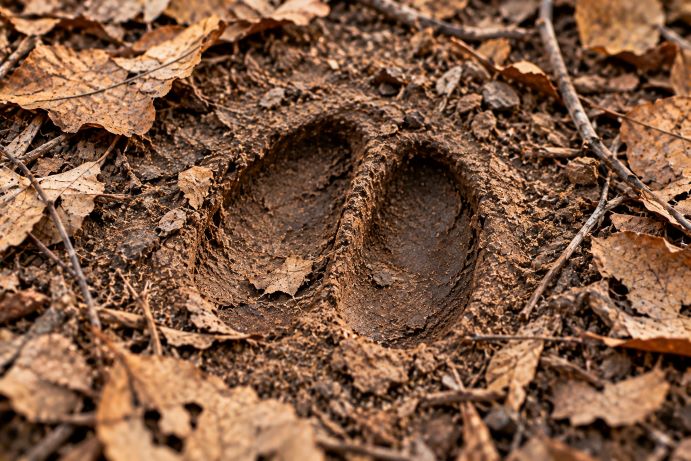
Buffalo do not need a clear view of the hunters to become restless. In thick bush, they may never actually see the hunting team. A strange sound, a change in the wind, or movement where there should be none can be enough to put them on edge.
A noisy stalk does not always end with buffalo running flat out. Sometimes the first sign is more subtle. Feeding stops, heads come up, animals begin to bunch, or a bull shifts position and starts paying attention to the wind. Once that happens, the margin for error becomes smaller.
The difficulty for the PH and trackers is deciding whether the buffalo are merely alert or whether the stalk is beginning to unravel. Pushing forward at the wrong moment can turn a workable situation into a lost opportunity, while waiting too long may allow the animals to move away on their own.
Experience matters. The team is not only trying to get closer; they are also reading how the buffalo are reacting to what they can hear, smell and sense around them.
The Tracker Chooses Where Every Boot Is Placed
Once the buffalo are close, the tracker is no longer simply following spoor. He is also choosing where every boot behind him should go.
That may mean stepping onto bare soil, using an old game trail, avoiding dry sticks, or placing a foot exactly where the tracker ahead has already stepped. In very noisy country, hunters will sometimes even remove their boots for the final approach and continue in socks or other softer footwear. The route may not be the shortest one, but it is often the quietest.
The hunter needs to slow down and follow the team rather than trying to find his own way through. One careless step into dry leaves can undo a lot of patient work. When the tracker stops, everyone stops. When he changes direction, there is usually a reason. At close range, a few quiet yards are worth far more than twenty noisy ones.
When the Ground Is Too Noisy, Waiting Can Be Faster Than Pushing
There are times when the best way to make progress is not to move at all. If the ground ahead is covered in dry leaves or broken sticks, pushing forward can do more harm than good.
The team may wait for the wind to strengthen, for the buffalo to start feeding again, or for the animals to move onto ground that offers a quieter approach. A few minutes of patience can open a route that was impossible moments earlier. Some hunters may sometimes struggle with the pace of a buffalo stalk. The animals may be close, the tracks may be fresh, and it can feel as though the obvious thing is to keep going. But close does not always mean ready.
A good PH knows when another ten yards is worth taking and when it is better to sit tight. In dry country, patience can gain more ground than forcing the stalk ever will.
Bedded Buffalo Create a Different Problem
When buffalo are feeding or moving, they make some of their own noise. Leaves rustle, sticks break and the herd shifts through the bush. That can give the hunters a little more cover.
Bedded buffalo are different. Once the animals settle down, the bush can go quiet very quickly. A footstep that would have disappeared in the noise of a moving herd can sound much louder than it did a few minutes earlier. Even when the buffalo are bedded, they are not switched off. Some may be lying down while others are still standing, chewing cud, changing position or watching the cover. In a herd, that still leaves plenty of eyes and ears working even when the animals look settled.
The problem also changes depending on whether the hunters are dealing with a small group of old bulls or a larger herd, something we cover in more detail in Dagga Boys vs Buffalo Herds in Zimbabwe.
The PH may decide to wait rather than try to creep closer through dry ground while the buffalo are lying still. Sometimes the better option is to let them get up and start moving again before trying to close the distance. It is another reason the final approach cannot be rushed. The buffalo may only be a short distance away, but if the bush is quiet and the animals are settled, there may be no good way to move without announcing that something is coming.
Close Does Not Mean the Stalk Is Nearly Over
One of the easiest mistakes to make on a buffalo hunt is assuming that being close means the hard part is almost finished. In dry country, the opposite can be true.
The last fifty or hundred yards may take longer than the previous mile because the team is no longer simply following tracks. They are trying to move through ground that may be noisy, thick or exposed, while keeping the wind right and watching for any change in the buffalo’s behaviour.
At this stage, progress often comes in small pieces. Ten yards may be gained, then everyone waits. Another few yards may open up, then the wind drops or the buffalo settle again. The distance on the ground becomes less important than whether the next move can be made cleanly. For American hunters used to more open country and longer shots, this can take some adjustment. On a close Zimbabwe buffalo stalk, another twenty quiet yards can matter more than another two hundred yards of visibility.
Being close to buffalo does not necessarily mean the shot is close. Sometimes it simply means the stalk has entered its slowest and most careful stage.
Dry Leaves Can Also Give the Buffalo Away
The same dry ground that makes a stalk difficult can also help the hunters. Buffalo moving through leaves and brittle cover are not silent either, and in thick bush the first warning that an animal has changed position may be sound rather than sight.
A bull stepping out of a bed, a small group beginning to feed, or a herd shifting through the jess can give the PH and trackers a better idea of where the buffalo are and whether they are moving closer or farther away. In terrain where visibility may be limited to a few yards, that information matters.
The important point is that the team is listening as much as watching. A few leaves moving somewhere ahead can confirm that the buffalo are still there, while a sudden burst of noise may tell the hunters that the animals have started moving.
Dry leaves therefore work both ways. They can betray the hunters, but they can also betray the buffalo. On a close stalk, both sides are making noise, and the advantage often goes to whichever side understands what that noise means first.
What Hunters Can Actually Do
Hunters do not need to become trackers, and trying to out-think the PH or the team usually creates more problems than it solves. The most useful thing a client can do is slow down, watch closely, and move exactly when and where he is told.
That means stepping into the same bare patches, following the same line through the bush, and stopping the moment the tracker stops. It also means keeping loose equipment quiet. A rifle sling, shooting sticks, water bottle, rangefinder or anything else that knocks against gear can ruin the silence the team has worked hard to maintain.
There may also be times when the boots come off for the final approach and the hunter continues in socks or softer footwear. The point is not to turn the stalk into theatre. It is simply to reduce unnecessary noise when the ground gives very few other options.
For hunters more used to scoped rifles, open country and longer shooting distances, the hardest adjustment may simply be patience. A close buffalo stalk in Zimbabwe can move in feet rather than yards, and there are moments when doing nothing is the right decision.
The hunter’s job is therefore simple: stay quiet, stay close to the team, trust the pace, and be ready when the opportunity finally opens.
Questions Hunters Ask About Close Buffalo Stalks in Zimbabwe
If Buffalo Hear the Hunters, Is the Stalk Over?
Not always. Buffalo may stop feeding, bunch up, move off, or start paying more attention to the wind without immediately leaving the area. The PH and trackers will usually judge how alert the animals have become before deciding what to do next.
Sometimes the right move is to wait. Sometimes it means changing the approach or circling for a better wind. If the buffalo are already too unsettled, the team may simply back out rather than force the stalk.
Do Dry Leaves Mean You Should Avoid a Late-Season Zimbabwe Buffalo Hunt?
No. Dry conditions can make the final approach noisier, but they can also make tracking easier, reduce foliage, and change how buffalo use water and cover.
The trade-off is that once the animals are close, the ground may become much harder to cross quietly. Late-season buffalo hunting is not automatically worse; it simply creates a different set of problems for the PH, trackers and hunter to solve.
How Close Do Hunters Normally Get to Buffalo in Zimbabwe?
There is no fixed distance. Some opportunities develop close in thick bush, while others allow a longer shot across more open ground.
The usable distance also depends on the rifle setup, cover and how settled the buffalo are. A hunter using open sights on a double rifle may need to get closer than someone using a scoped rifle. Whatever the distance, the important thing is that the hunter has a clear, comfortable shot and understands the correct Cape buffalo shot placement before the opportunity develops.
Do Hunters Really Take Their Boots Off During the Final Buffalo Stalk?
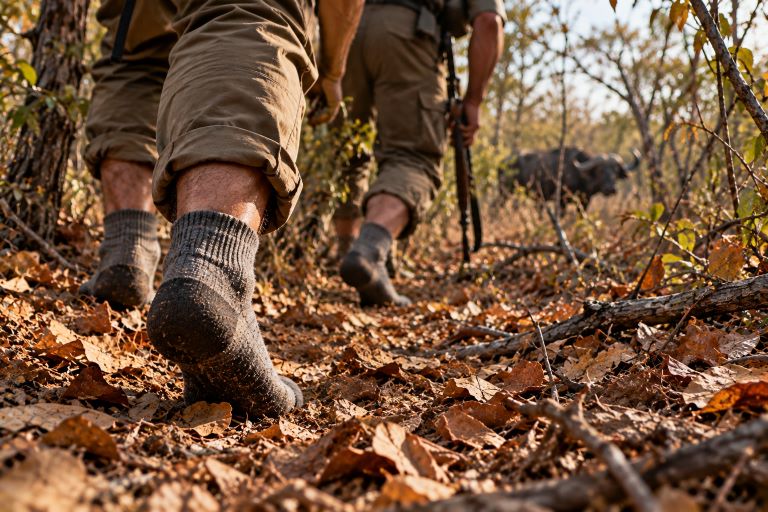
Sometimes. If the ground is extremely noisy, the PH may decide that boots are creating more noise than they are worth and ask the hunter to continue in socks or softer footwear for the final approach.
It is not something that happens on every buffalo hunt, and it depends entirely on the ground, cover and how close the buffalo are. The point is simply to remove unnecessary noise when every step matters. If the PH says the boots stay on, they stay on. If he says they come off, that is usually because he has a reason.
The Ground Is Part of the Hunt
Dry leaves are only one part of a Zimbabwe buffalo hunt, but they are a good example of why local
conditions matter so much. Terrain, wind, cover and the experience of the PH and trackers can shape the final approach just as much as the buffalo themselves. That same reality carries across big game hunting in Zimbabwe, where the country, area and hunting conditions can completely change how a safari unfolds.
For hunters comparing African hunting trips, that is worth remembering. A species list may tell you what can be hunted, but it does not tell you what the hunt will feel like on the ground. On a Zimbabwe buffalo safari, sometimes the difference between getting the shot and starting again tomorrow is no more complicated than where the next boot lands.
About the Author
Pierre van Wyk is the co-founder of Game Hunting Safaris. A lifelong African hunter, he has spent years hunting across Southern and East Africa and working closely with professional hunters, outfitters and safari operators. His writing focuses on the practical realities of African hunting, helping hunters understand what happens in the field and how to make better decisions before booking a safari.