
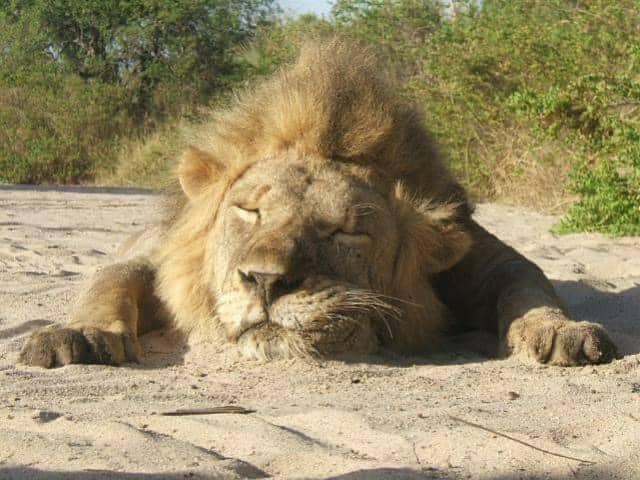
A hunter may spend days on a lion safari without seeing the mature male he eventually hunts. He may hear lions at night, find their tracks the next morning or know they have been feeding on baits, without ever laying eyes on the lion he is looking for.
That does not mean little is happening.
Long before the hunter gets his first look at a lion, the Professional Hunter and tracking team may already be building a picture of which lions are moving through the hunting area. They are trying to establish where a mature male is travelling, whether he is returning and whether he is the right lion to pursue.
That preparation is part of what makes Lion Hunts different from simply finding an animal and planning a stalk. Finding evidence of lions is only the beginning. A track proves that a lion passed through. A bait that has been fed on proves that a lion was there. Neither automatically tells the hunting team that they have found the lion they want.
The work comes from putting those pieces together. Over time, separate clues begin to form a pattern. Some lions disappear. Others return. A promising male may move into another part of the hunting concession overnight. Another may appear where nobody expected him.
By the time the hunter sees the right lion, much of the hunt that created that opportunity may already have happened.
The Lion Hunt Starts With Knowing What Is in the Area
Before a hunting team can decide which lion to pursue, they first need to understand what lions are moving through the area.
That information can come from several places. Fresh tracks on a road may show that a male passed during the night. Lions may be heard calling from camp or from another part of the concession. Trackers may find sign around water, along well-used game trails or near areas holding plenty of prey. Baits can also begin showing which lions are feeding in a particular part of the hunting area.
In community hunting areas, local knowledge can be just as useful. People living in and around these areas see and hear things the hunting team cannot be everywhere to observe. A herder may have heard lions calling during the night. A game scout may have crossed fresh tracks that morning. Someone travelling between villages may have seen a male near a water point or crossing a road.
That information can travel quickly. A message or phone call from someone miles away may give the PH another piece of the puzzle. Africa's old bush telegraph works remarkably well; today it simply has mobile phones and satellite internet helping it along.
Where trail cameras are used, they add another piece to the picture. A camera can help show which lion visited a bait, when he arrived and whether he returned. Combined with tracks, local reports and what the hunting team is seeing on the ground, that information can help the PH decide where to spend time and which areas are worth watching.
But knowing that lions are present is not the same as having a lion to hunt.
A large male track may look promising, but the team still needs to learn more about the animal that made it. A lion feeding on a bait may turn out to be too young, part of a coalition or simply not the mature male the Professional Hunter is looking for.
The first days of a lion hunt can involve a great deal of checking without much being seen by the hunter. Each track, call, local report, bait visit and sighting adds another piece of information. Some will lead nowhere. Others may eventually lead the hunting team to the lion they have been looking for.
Finding a Lion Is Not the Same as Finding the Right Lion
Finding a male lion can change the mood of a safari quickly, but it does not mean the hunt is ready to move forward.
The PH needs to establish exactly what animal he is dealing with. A male may look impressive at first glance but prove to be younger than expected when better photographs or a clear sighting becomes available. Another may be travelling with other males, while females or a pride may also be using the same area.
Patience becomes important. There can be a temptation to turn fresh tracks or a promising lion on a trail camera into an immediate hunting opportunity. A good PH will instead keep gathering information until he is comfortable with the animal in front of him.
That judgement is especially important when hunting lion as part of Dangerous Game Hunts in Africa. Finding the animal is only one part of the job. Deciding whether that lion should be hunted is another.
Sometimes the decision is simple. Sometimes it takes a few days. And sometimes the right decision is to leave a lion alone and continue looking.
Why Baits and Tracks Have to Build a Pattern
A single track tells the hunting team that a lion passed through. A single visit to a bait tells them that a lion was interested enough to investigate. What matters is what happens next.
Tracks appearing repeatedly along the same pathways, riverbeds or game trails show how a lion is moving through the concession. Trackers may be able to establish which direction he came from, where he went afterwards and whether he is using the same route again. When that information is combined over several days, what started as one set of tracks can begin to form a pattern.
Baits add another layer of information, even when the lion does not feed.
Tracks may show that a lion followed a drag, walked directly to a bait and then left without touching it. He might have fed somewhere else, detected human scent or simply approached to investigate what had changed in his territory. The hunting team may never know exactly why.
A bait is placed in the hope that a lion will feed, but the lion does not know the plan. He may arrive exactly where everyone hoped he would and then simply walk away.
When a lion does begin feeding, repeated visits become more useful than one isolated event. The team can start looking at when he arrives, whether he returns regularly, which direction he approaches from and whether other lions are using the same bait. Trail cameras, tracks and the observations of trackers can all help build that picture.
Patterns can also disappear as quickly as they develop. A lion that seemed predictable for several nights may stop returning. The hunting team then has another decision to make: keep waiting, move attention elsewhere or start looking for evidence of where he has gone.
Checking tracks and baits is not simply a matter of finding out whether a lion was there. The real value comes from what repeated activity begins to reveal about the lion behind those tracks.
A Lion Can Change the Entire Hunt Overnight
A lion that has been feeding regularly can make it feel as though the hunt is finally coming together. Then the next morning the bait is untouched and there are no new tracks.
The lion may have killed elsewhere and no longer be hungry. He may have moved after females, followed buffalo or other prey into another part of the concession, or encountered another male. An older solitary lion may even be pushed away from a feeding area by hyenas. Something may have disturbed him. Sometimes there is no obvious explanation at all.
Male lions can range over large areas, and they do not necessarily move through that country on a schedule that suits the hunting team. A lion may spend days using one part of his range before his movements take him somewhere else. Changes in where buffalo and other prey are concentrated can also change where a lion spends his time.
That changes the decisions the hunting team must make. They can continue checking the same area and hope the lion returns, or shift their attention to other baits, tracks and reports. What looked like the best opportunity yesterday may no longer be the best place to spend time today.
Yesterday's information still matters, but it does not guarantee what a lion will do tonight. A successful lion hunt must keep changing with the animal being hunted.
The Professional Hunter Is Making Decisions the Client May Never See
The Professional Hunter may make the final call, but a successful lion hunt is rarely the work of one person.
Trackers are central to the process. Some have been following animal tracks since childhood and can pick up details in the spoor that most hunters would walk straight past. Game scouts, camp staff and people living in surrounding communities may also contribute information about lions they have seen, heard or crossed during the day.
Much of that work happens without the client ever knowing about it.
There may be conversations around the vehicle, meetings back at camp and phone calls from another part of the hunting area. Trackers compare what they have seen. Bait activity is discussed. Trail-camera photographs are studied. A report of fresh tracks several miles away may change where the team starts the following morning.
The PH then has to bring that information together. Do they keep working the lion they already know about or investigate another track? Does a bait need to be moved? Is the sign fresh enough to justify spending half a day following it? Should a promising lion be left alone for another night?
There is no single person who can predict what a wild, free-range lion will do next. The advantage comes from putting several experienced heads together, including trackers who understand the ground and people who know the lions and wildlife in that area.
The hunter may only see the final decision: We're going back to that bait tonight.
What he may not see are the hours of work, years of bush knowledge and dozens of smaller decisions that went into making that call.
There is pressure on everyone involved, although it comes from different places. The lion may be investigating new smells, a drag or other activity that has appeared in his range. The PH may lie awake wondering whether the lion has found the bait, fed somewhere else or moved on. The hunter may be lying awake as well, counting the hunting days he has left and wondering whether the opportunity will come.
That pressure cannot be allowed to rush the decisions being made. The lion does not know how many days are left on the safari, and the hunting team cannot make him follow their timetable.
The Shot May Be the Shortest Part of the Lion Hunt
A lion safari may have been planned months before the hunter ever arrives in camp. There is the budgeting, travel, permits and preparation before the hunt even begins. Once in the hunting area, days may be spent checking tracks, hanging and checking baits, studying photographs and waiting for the right lion to settle into a pattern.
Then, eventually, the opportunity comes.
The lion the team has been looking for is there. The PH has made his decision. The trackers have done their work. Everything that has happened during the previous days has brought the hunter to this point.
Now the pressure changes.
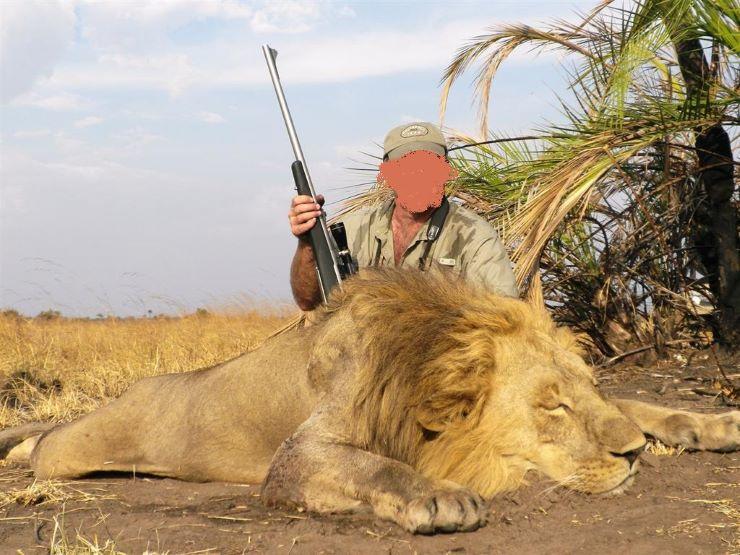
After all the planning and waiting, the hunter may have only a short time to settle the rifle, listen to the PH and make the first shot count. There is little room for error. A wounded lion can turn the next part of the hunt into a dangerous follow-up that nobody wants to make.
Months of preparation and days of work can come down to a few seconds when the responsibility is finally with the hunter.
The shot may be the shortest part of the lion hunt.
The hunt that created that opportunity started long before the hunter ever saw the lion.
Frequently Asked Questions
How Long Should You Allow for a Lion Hunt in Africa?
A lion hunt cannot be planned around the assumption that a suitable mature male will appear during the first few days. Tracks need to be found, baits checked and promising lions assessed, while a lion that looks predictable one day may disappear the next. The time required varies between countries and hunting areas, but enough hunting days need to be allowed for the hunt to develop naturally. When comparing African Hunting Trips, the number of actual hunting days available becomes important when lion is one of the main objectives.
Is It Normal to Spend Several Days Without Seeing a Lion?
Yes. A hunting team may be finding fresh tracks, getting photographs on trail cameras, hearing lions at night or having activity around baits without the hunter seeing the mature male being pursued. In free-range hunting areas, lions can cover considerable ground and may move in and out of the area being worked. Several days without a sighting do not necessarily mean that nothing is happening. The sign gathered during those days may eventually be what helps the team create the opportunity the hunter has been waiting for.
Pierre van Wyk is the co-founder of Game Hunting Safaris and has hunted extensively across southern Africa. He writes from practical hunting experience, with a focus on African big game, dangerous game and the realities of planning a safari.