
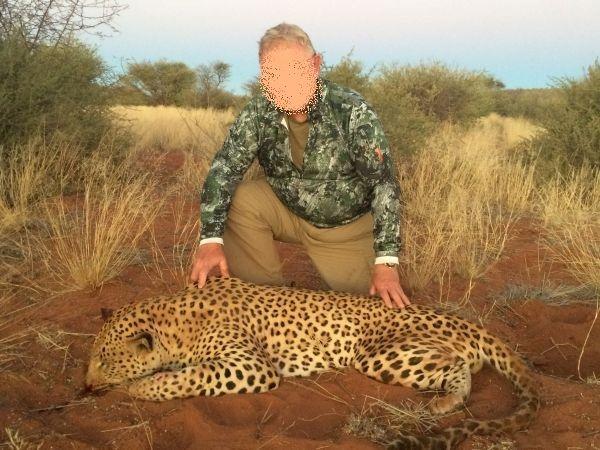
There is no single version of a leopard hunt in Namibia. A hunter following a mature tom through mountain country can face a different hunt from someone pursuing leopard across the country’s large cattle and game farms.
In the mountains, steep ridges, rocky valleys and broken ground influence where leopards travel and how hunters gain access to them. On farmland, roads, water points, livestock, game populations and established leopard territories can provide a different set of clues. The cat is the same. The country it lives in changes how the hunt is approached.
Both environments can hold exceptional trophies, and neither should automatically be considered the easier option. Leopards adapt remarkably well to their surroundings, and an old tom that has spent years avoiding people can be difficult to hunt whether his territory covers a mountain range or a working cattle farm.
That contrast is one of the most interesting parts of Leopard Hunting in Namibia. Choosing where to hunt is not simply a question of which area has leopards. Hunters should understand the terrain, how the cats are located and how the hunt itself is likely to develop.
Namibia also has leopard country that falls outside these two broad environments. Bushmanland, for example, offers flatter sandveld and woodland. For this article, however, the contrast between rugged mountain country and extensive farmland shows just how differently two leopard hunts can develop within the same country.
Why Namibia Produces Two Very Different Leopard Hunts
Namibia's mountain and farmland leopard hunting developed around the same animal, but the country available to that animal can be completely different.
In mountainous areas, a leopard may use rocky ridges, drainage lines and natural passes to move through its territory. The terrain can restrict where vehicles travel and where hunters can easily reach, leaving large sections of country that need to be understood from tracks, trail cameras and other signs of leopard activity.
Farmland creates a different picture. Roads, fence lines, water points and livestock trails can make it easier for a Professional Hunter to build an understanding of where a leopard is moving. That does not make the cat easier to hunt. A tom may cover several properties, change his movements after the slightest disturbance or disappear from an area for days before returning.
Prey also plays a role. Leopards are highly adaptable and will use whatever food sources their territory provides, from naturally occurring game to livestock where the opportunity exists. A tom will go where he can find food, water and enough cover to move without being bothered.
The result is two hunts that may use some of the same basic techniques but require very different knowledge of the country. Finding a leopard is rarely about knowing that cats are present. It is about learning how one mature tom is using that piece of Namibia.
Hunting Leopards in Namibia's Mountain Country
Mountain leopard hunting begins with understanding how a cat moves through country that is difficult for people to cross and access.
A mature tom does not wander randomly across every ridge and valley. He may use dry riverbeds, rocky passes and easier routes between mountains as he moves through his territory. Finding those regular travel routes gives the PH somewhere to start looking for tracks and other signs of an established male.
The difficulty is that much of the country cannot simply be driven and checked. A road may take hunters along the bottom of a valley while the leopard is moving across ridges and through broken country well away from the vehicle. Trail cameras can help build a picture of which cats are using an area, but even identifying a mature tom does not mean he will appear where or when expected.
Baits need to be positioned with the terrain in mind, and getting a leopard onto one may take considerably more work than simply hanging meat in a tree. Roads and trails around the area can be dragged with fresh blood to leave a scent line for a passing cat, while the bait itself needs to be positioned where a leopard can find and feed on it comfortably.

Once a mature tom starts feeding, attention to detail becomes critical. Human scent, fresh tracks, unnecessary vehicle movement or changes around the bait can make an old leopard suspicious. The PH must consider the prevailing wind, the route the cat is using, where a blind can be positioned and how hunters will reach it without advertising their presence.
Mountain country can make the final stages very interesting. A leopard that looks close on a map may be separated from the hunter by a ridge, steep drainage or several miles of rough ground.
That is part of the attraction. Mountain leopard hunting in Namibia is as much about figuring out the country as it is about finding the cat.
Hunting Leopards Across Namibia's Farmland
Farmland leopard hunting can look easier from the outside. There are more roads, more water points and often far better access than hunters encounter in the mountains. The mistake is assuming that better access means an easier leopard.
A tom living across cattle or game country may know that ground well. He can use riverbeds, cover and quiet corners of several properties while crossing roads and farm tracks during the night. Tracks found in the morning can tell the PH that a good male is in the area, but they do not necessarily tell him where that leopard will be the following night.
Fences do little to contain a leopard. Some ranches are divided by ordinary livestock fencing, while others may have game fences around them. Neither represents a barrier to a cat. A mature tom may move freely between neighbouring properties, and his territory can extend across several ranches rather than remaining within the boundaries of one hunting area.
Livestock can also become part of the story. A leopard that has killed cattle, sheep or other stock may already have established routes into and out of areas. Knowing where kills have occurred, where tracks regularly cross roads and where trail cameras photograph the same male helps the PH begin putting those movements together.
Baiting still requires the same attention to detail. A convenient tree beside a road is not automatically the right tree. The leopard needs to feel comfortable approaching the bait, while the hunters need a workable position for the blind and a way of reaching it without turning the area upside down every afternoon.
Farmland also brings something the mountains may not: people going about their normal lives. Farm workers, vehicles, livestock and daily activity can all be part of a leopard's territory. An old tom may tolerate what he considers normal and become suspicious when something suddenly changes.
That is what makes these cats interesting to hunt. The PH is not simply trying to find a leopard on a farm. He is trying to work out the routine of one tom without giving that leopard a reason to change it.
Finding Leopard Sign Is Different in Each Area
Before a leopard can be hunted, the PH needs to know which cats are using the area. This is where mountain country and farmland can begin telling different stories.
Farmlands provide plenty of places to look for spoor. A tom crossing a road during the night leaves something the trackers can inspect the following morning. Trail cameras can then help establish whether the same male is regularly using a particular route, water point or section of the property.
Mountain country can leave larger gaps in that information. A leopard may spend much of his time moving through rocky country where tracks are difficult to see. The PH may need to concentrate on sandy riverbeds and other places where a cat is more likely to leave readable spoor.
Kills, bait activity and trail-camera photographs add more pieces to the puzzle. A photograph can confirm that a mature tom is present, but what matters is whether the PH can begin establishing a pattern. One picture taken three weeks ago is less useful than repeatedly finding the same cat moving through an area.
Baits can also become part of that information-gathering process. A bait that has been untouched for days tells one story. One visited by females, younger males or hyena tells another. When a suitable tom begins feeding regularly, the PH can start learning when he arrives, which direction he approaches from and how comfortable he is around the site.
The advantage on farmland is often the amount of information available. Mountain country may provide fewer clues, which makes every good track, photograph or bait visit that much more important.
Neither guarantees the leopard will cooperate.
Knowing that a mature tom is there and knowing when he will make his next move are two different things.
Does Mountain Country Produce Better Leopards?
It is easy to assume that a leopard living in remote mountain country must somehow be a better trophy than one living across Namibia's farmland. It is not that simple.
A mature tom is a mature tom regardless of whether his territory covers mountains or cattle country. Age, genetics, prey availability and the individual animal all matter, and exceptional males sought on African Leopard Hunts can come from either environment.
Farmland can provide excellent conditions for leopard. Natural game may be plentiful, livestock can provide another food source, and established males may hold productive territories for years. Mountain cats live under a different set of conditions, but difficult terrain alone does not make them larger or more mature.
What matters to the hunter is identifying the right male. A large track or one impressive photograph may get everyone's attention, but the decision should be based on as much information as the hunting team can gather.
There is also a difference between a difficult leopard to hunt and a better leopard to hunt. A tom living deep in inaccessible mountain country may require considerably more work to locate, but that does not automatically make him a superior trophy to an old male moving between cattle ranches.
The better question is not whether mountain or farmland Namibia produces the better leopard. It is whether the hunting area consistently holds mature males and gives the PH enough country to find and hunt them.

Hunting Area Size Matters More Than the Label
Calling a hunt a mountain or farmland leopard safari only tells part of the story. Hunters should also establish how much country the outfitter has available to hunt.
Two outfitters may both hold leopard permits, but the amount of hunting country available to them can be different. One operation may have access to an extensive block of neighbouring properties, while another may be working a much smaller area. That matters when baits need to be spread across likely leopard routes and a tom is moving through a territory that does not follow property boundaries.
This can be important on farmland. A leopard may cross several ranches during his normal movements, but the hunting team can only work the country where they have permission to hunt. Having more ground available gives the PH more places to look for tracks, position cameras and establish baits without relying on one cat returning to one small part of his territory.
The same principle applies in mountain country. Thousands of acres on paper do not necessarily mean thousands of acres that can be hunted effectively. Access, roads, terrain and the location of established leopard activity all influence how useful that country is.
That makes hunting area size a question worth asking before booking a leopard hunt in Namibia. As with other Dangerous Game Hunts, the permit matters, but so does the amount of usable country behind it.
The Rest of the Safari Can Be Different Too
A leopard safari can be a long hunt. Much of the work happens before the hunter ever sits in a blind, and days can settle into a routine of checking cameras, looking for tracks and servicing baits. As one PH might describe it, “drag and bait, drag and bait.” Keeping busy during the day can therefore make a big difference to the safari.
Farmland often gives hunters plenty of options. Depending on the property and available species, some of Namibia's most sought-after Plains Game Hunts can be added while the leopard hunt continues in the background. Gemsbok are a natural fit across much of Namibia's ranching country, making Gemsbok Hunts an excellent addition when the day's leopard work has been completed.
Mountain country can offer its own opportunities. Kudu are particularly well suited to broken hills, rocky slopes and thicker valleys, where glassing and stalking can provide a completely different hunt. Kudu Hunts can fill the hours between checking leopard sign and returning to an active bait later in the day.
The leopard should still determine where the safari takes place. But on a hunt that may require days of patience, having something else worth hunting can make those long hours considerably easier to enjoy.
The Leopard Doesn't Know Which Hunt You Booked
Mountain and farmland leopard hunting may look very different on paper, but the leopard gets the final say.
A farmland tom that has been feeding regularly can disappear across a neighbouring ranch the day before the hunter arrives. A mountain leopard that has been difficult to pattern for weeks can suddenly settle onto a bait and return night after night. Neither hunt follows a script.
That is why choosing between the two should not come down to which one sounds easier. When comparing African Hunting Trips built around leopard, the better questions are whether mature toms are using the area, how much country the PH has available to hunt and how well he understands the leopards moving through it.
After that, it becomes a matter of preference. Some hunters will choose the mountains because they want the rough country and isolation. Others will prefer farmland, where a leopard safari can be combined with more opportunities to hunt other species during the day.
Either way, book the country you would still enjoy hunting if the leopard takes ten days to make a mistake.

Frequently Asked Questions
Is mountain leopard hunting better than farmland leopard hunting in Namibia?
Neither is automatically better. Mountain hunts offer rougher, more remote country, while farmland can provide more roads, tracks and opportunities to monitor leopard movement. The quality of the hunting area, mature toms present and knowledge of the PH matter more than the label attached to the area.
Are farmland leopards in Namibia free-ranging?
Yes. Leopards are capable of moving across livestock and game fencing and may use territories extending over several neighbouring ranches. A fence that contains plains game should not be assumed to contain a leopard.
How long should you allow for a leopard hunt in Namibia?
Leopard hunts require time because finding a mature tom, establishing his movements and getting him consistently onto bait cannot be rushed. Current Namibia leopard packages commonly run around 12–14 hunting days, with many outfitters recommending or requiring approximately 14 days.
Can you hunt plains game during a Namibia leopard safari?
Often, yes. Leopard hunting can involve considerable time checking tracks, cameras and baits, leaving parts of the day available for other hunting. Depending on the area and permits, species such as gemsbok, kudu and other plains game can be incorporated into the safari. Current Namibia leopard packages frequently combine leopard with additional plains game opportunities.
About the Author
Pierre van Wyk is the co-founder of Game Hunting Safaris and has hunted extensively across Southern Africa. His writing focuses on practical advice that helps international hunters better understand African hunting before planning their safari.