
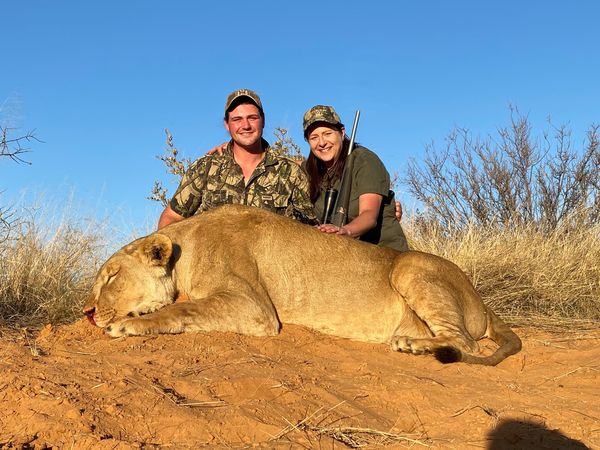
I was given a lioness hunt for my birthday. Yes, a lioness.
At the time, I wasn't entirely sure whether to be excited or terrified. I had enjoyed my share of plains game hunting, but this was different. I had never hunted one of Africa's dangerous game animals, and suddenly I was preparing to pursue a lioness in the Kalahari.
My husband had more confidence in my shooting ability than I did. His encouragement eventually overcame my nerves, and what had started as an intimidating birthday present became the beginning of a hunting adventure I would never forget.
Preparation started weeks before we left. I knew there would be walking involved, so I began doing three-mile walks every second day and added some light weight training in between. As I would later discover, carrying a .375 for several hours through the Kalahari can make you grateful for every bit of preparation you did beforehand.
Lions hold a unique place among Africa's dangerous game, and pursuing one was a considerable step beyond the hunting I had done before. I was about to discover firsthand why Dangerous Game Hunts demand confidence, preparation and complete trust in the Professional Hunter and tracking team beside you.
I didn't know it yet, but this hunt was going to test far more than my shooting.
[DYNAMIC-BLOGTABLEOFCONTENT]
The Kalahari Desert: A Dream Playground for Hunting in South Africa
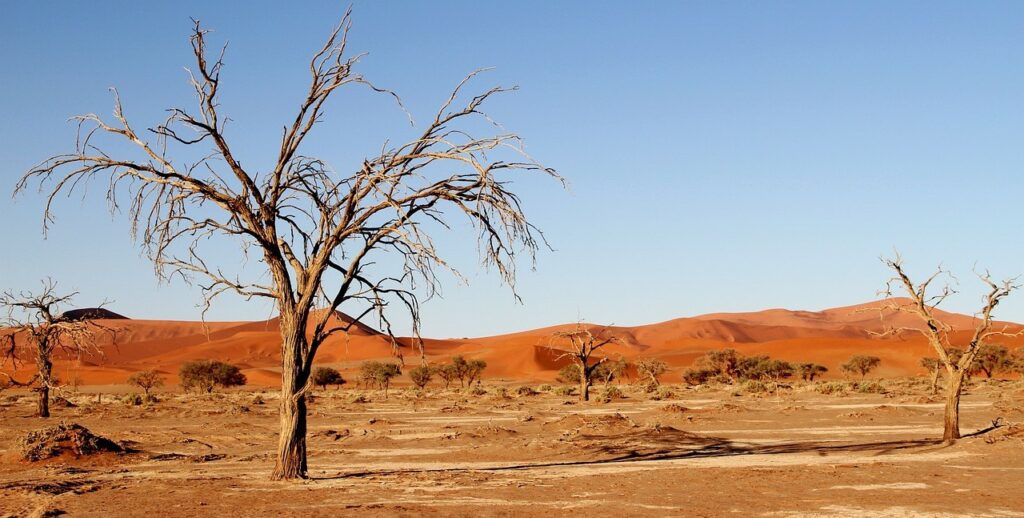
The Kalahari has a character all its own. Vast open spaces, red sand and sparse vegetation stretch across the landscape, with hardy trees and thorny cover breaking up the otherwise open country. It is a beautiful place, but in the heat of the day, it can also be unforgiving.
This was where my lioness hunt would take place. The remote country of the Northern Cape provides a dramatic setting for Hunting in South Africa, and as we arrived in the Kalahari, the reality of what I was about to do was beginning to sink in. Somewhere out there was the lioness I had come to hunt.
After a long drive to the Northern Cape region of South Africa, we arrived at our destination in the Kalahari and were warmly welcomed. Our room was beautiful, as was the air conditioning that we immediately turned to maximum, as the desert heat could be overwhelming at times. We wasted no time settling in before heading out to scout the area and begin our Lion Hunting in South Africa adventure.
The Lion Hunting Safari Gets Underway
When we set out, the trackers took their usual position on the front of the hunting vehicle, watching the ground ahead for spoor. It wasn't long before they found what we were looking for.
The tracks belonged to a female.
Seeing the size of that first track changed something for me. Until then, I had been preparing, travelling and talking about hunting a lioness. Now there was one somewhere ahead of us, and we were going to follow her on foot.
We climbed out of the vehicle and the hunting party came together. Our primary PH led the hunt, accompanied by two trackers, while my son Keenan, who is also a PH, carried a .458 as backup. The PH carried his .500 Jeffery, and I had the rifle I would be relying on, my faithful .375.
Suddenly, that .375 felt a little more serious in my hands.
The trackers followed the spoor while we moved through the Kalahari on foot. The heat was intense, and every step brought with it the possibility that the lioness could be somewhere ahead. Eventually, we found her standing in the shade beneath a tree. This was it.
The sticks went up, and I moved into position. I placed the rifle on them and tried to settle myself, but I could feel the adrenaline taking over. In all the excitement, I pulled the shot.
I knew immediately that it had not gone as planned.
The bullet had only caught the side of her neck, drawing some blood but failing to deliver the clean shot I had intended. The lioness bolted, disappearing from sight and leaving us with a situation no hunter ever wants to create.
My PH remained calm. There was no drama and no hesitation. We now had a responsibility to follow her and finish what I had started.
The trackers moved onto the spoor, looking for tracks, disturbed vegetation and any sign of blood that could help establish her direction of travel. There wasn't much blood to follow, which made their ability to stay on the trail even more important.
Following a Wounded Lioness
From that moment, the hunt had changed completely. We were no longer following a lioness we hoped to find. We were following one we had to find.
The trackers took over, working patiently through the spoor and looking for the smallest signs of where she had gone. There was very little blood, so much of the follow-up depended on their ability to read tracks and disturbances in the vegetation that I would never have noticed myself.
Following a wounded lioness also changes the way everyone moves. The possibility of finding her at close range was always there, and the entire hunting party needed to remain alert. My PH and son were ready with the backup rifles, while the trackers continued working ahead of us. We followed her for more than two and a half hours.
The Kalahari heat and thorny vegetation made every mile harder, and the .375 that had felt perfectly manageable at the start of the day became noticeably heavier as the hours passed. I remember being particularly grateful for the walking and weight training I had done before the safari.
We caught glimpses of her several times, but never for long enough to create a safe opportunity. She would appear through the vegetation and then disappear again almost immediately. At one point, I genuinely began to wonder who was tracking whom.
Eventually, we found her beneath a thorn tree, almost completely hidden and watching us. This time, I knew I had to get it right.
The sticks went up again. I settled the rifle, controlled my breathing and found her through the scope. I exhaled and squeezed the trigger. The shot went exactly where it needed to.
After everything that had happened since that first opportunity, there was an enormous sense of relief. We took a quiet moment to show our respect for a magnificent animal before the emotions of the day finally began to sink in.
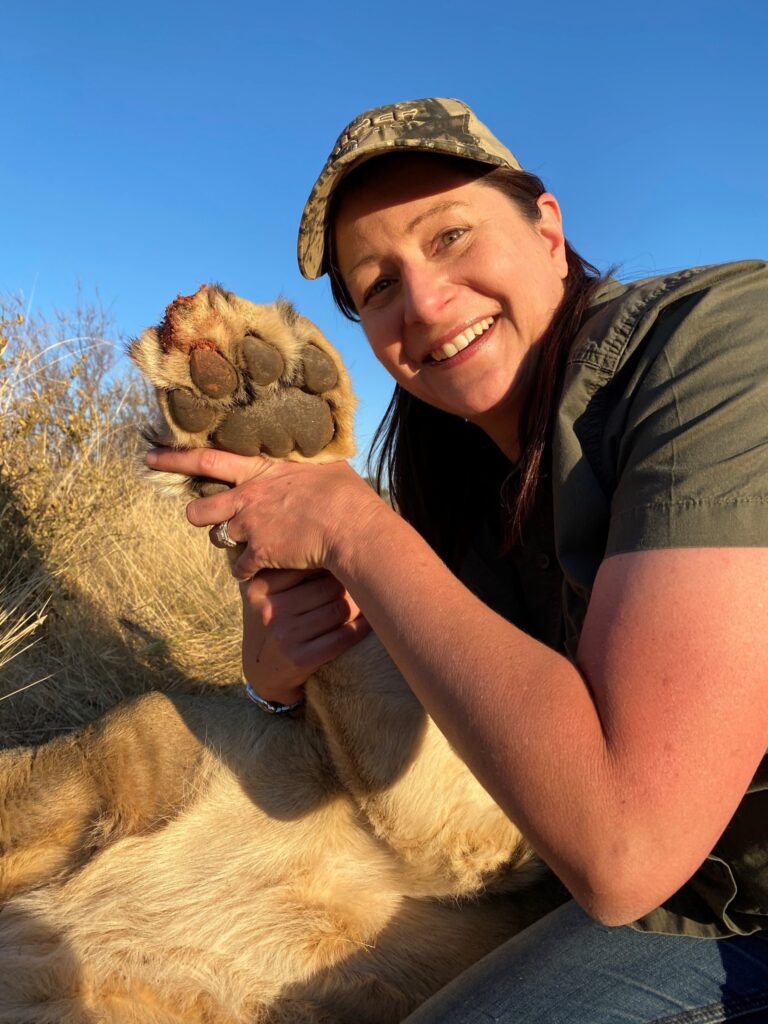
A Woman Hunting Dangerous Game
Sitting around the fire that evening, the conversation turned to women in hunting. It felt particularly relevant after the day I had just experienced. I had started this journey unsure whether I was ready to hunt a lioness, and I ended it knowing that I had been tested in ways I had never expected.
Hunting has traditionally been seen as a male-dominated pursuit, and dangerous game perhaps even more so. But more women are stepping into the hunting world, developing their skills and becoming increasingly confident in the field. Some begin with plains game, as I did, while others eventually decide to take on the additional challenges that come with hunting Africa's dangerous game.
What mattered to me that day was not proving that a woman could hunt a lion. I had nothing to prove to anyone. The challenge was personal. I needed to control my nerves, trust the people around me and, after making a poor first shot, accept responsibility for putting things right.
That experience taught me more than a perfect hunt ever could have.
Women considering Big Five Hunting or other dangerous game should never feel that these hunts are beyond them simply because hunting has historically been dominated by men. Preparation matters. Shooting ability matters. Fitness and confidence matter. Above all, knowing your own limitations and hunting alongside an experienced Professional Hunter and tracking team matters.
I began that safari wondering whether I was ready to hunt a lioness. By the time we sat around the fire that night, I had my answer.
A Birthday Present I Will Never Forget
I had started this safari wondering whether I was ready to hunt a lioness. What followed was certainly not the straightforward hunt I might have imagined, but perhaps that is why I remember it so clearly.
I made a poor first shot, spent hours following the lioness through the Kalahari and was given a second opportunity that I knew I could not waste. I learned how quickly a hunt can change and how important it is to trust the Professional Hunter and trackers beside you when it does.
Hunters interested in Lion Hunts across Africa will find very different destinations, hunting methods and challenges to consider. My own lioness hunt, however, will always be about one particular day in the Kalahari and the lessons I carried home with me.
My husband gave me a lioness hunt for my birthday.
At first, I wasn't entirely sure it was a present I wanted. It became one I will never forget.

Frequently Asked Questions
Is lion hunting legal in South Africa?
Yes, lion hunting is legal in South Africa when conducted in accordance with applicable national and provincial regulations and permit requirements. Hunters should work with a licensed Professional Hunter and reputable outfitter and confirm the current regulations, permits and trophy import requirements that apply to their particular safari.
Can American hunters import a lion trophy from South Africa?
Import eligibility depends on the type and origin of the lion and current U.S. wildlife regulations. American hunters should confirm the latest requirements before booking a hunt, as not every legally hunted lion in South Africa will necessarily qualify for import into the United States.
How physically demanding is a lion hunt in South Africa?
The physical demands vary according to the hunting area and how the hunt unfolds. Hunters may spend considerable time walking and tracking, particularly if fresh spoor is followed through difficult terrain. My own hunt involved more than two hours on foot after the first shot, and carrying a .375 through the Kalahari heat quickly made me appreciate the physical preparation I had done beforehand.
What rifle caliber is commonly used for lion hunting?
The appropriate caliber will depend on local legal requirements and the hunter's rifle experience. The .375 H&H is a widely used dangerous-game caliber and was the rifle I carried on this hunt. Whatever rifle is chosen, hunters should be completely comfortable shooting it accurately from sticks and under pressure before arriving in Africa.
Why is an experienced Professional Hunter so important on a lion hunt?
A Professional Hunter is responsible for far more than simply finding the animal. Reading tracks, assessing the situation, managing the hunting party and making decisions when circumstances change all require considerable field experience. My own safari demonstrated this firsthand when the first shot did not go as planned and we had to follow the lioness on foot.
What should hunters consider before booking a lion hunt in South Africa?
Hunters should understand exactly what type of hunt is being offered, where it will take place, how the lion population is managed and which regulations apply. Safari length, hunting method, trophy export eligibility and the reputation of the outfitter should all be discussed before booking. International hunters should also confirm whether the resulting trophy can legally be imported into their home country.
Reviewed by Pierre van Wyk
This article has been reviewed by Pierre van Wyk, founder of Game Hunting Safaris and an African hunting professional with more than 30 years of hunting experience across Southern and East Africa. Having pursued members of the Big 5 and Dangerous 7, including lion, Cape buffalo, hippo, and crocodile, Pierre combines extensive field experience with a deep understanding of dangerous game hunting, wildlife conservation, and African safari planning.
Growing up in South Africa's Eastern Cape, Pierre developed a lifelong passion for ethical, sustainable hunting and African wildlife. Together with his wife Tamlyn and their family, he has spent decades hunting and exploring Africa's most iconic destinations while helping international hunters better understand African hunting safaris.
Learn More About Pierre & The GHS Team