
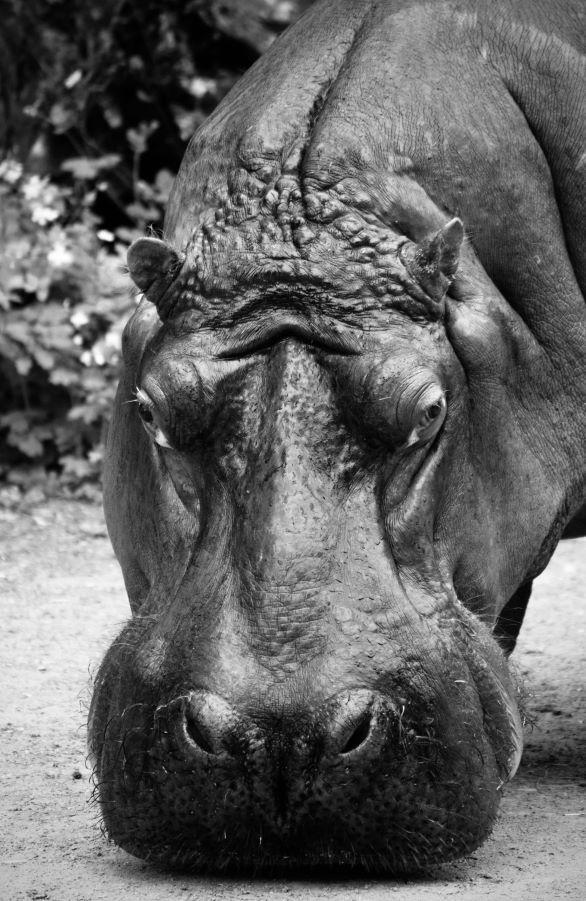
Hippo hunting changes considerably depending on whether the animal is encountered on land or remains partially submerged in water. Visibility, shot placement, shooting stability, animal behaviour and trophy recovery all differ between the two situations.
A hippo on land presents more of its body, but it may be moving towards water and can cover ground surprisingly quickly. In water, the hunter may see little more than the eyes, ears and nostrils, leaving a much smaller target and little margin for error. Within Big Game Hunting, few hunts change as dramatically according to whether the animal is encountered on land or in water.
This article compares the practical differences between these two situations using field observations from hippo hunting in Namibia and other African waterways. Hunters comparing destinations, prices and available safaris can visit our dedicated Hippo Hunts page.
[DYNAMIC-BLOGTABLEOFCONTENT]
Key Takeaways
- Hippos are found in central and southern Africa.
- They are semi-aquatic, living in fresh water streams, swamps, lakes, and rivers.
- Precise shot placement is paramount to ensure a successful hippo hunt.
- Hippos can be hunted on land or in the water.
- Hippo trophy judging involves measuring the tusks, with tusks 30 inches and over considered exceptional.
- Traditionally hippos were hunted for their hides and meat, while modern day trophy hunters are targeting the hippo for its ivory tusks.
- Hippo retrieval can be challenging, with it being quite light in the water, and an extreme weight on land – be prepared!
- Hippo hunts assist in conservation, as well as providing employment for local communities, reducing poverty, while providing protein sources for needy communities.
Shot placement when Hippo Hunting in Africa
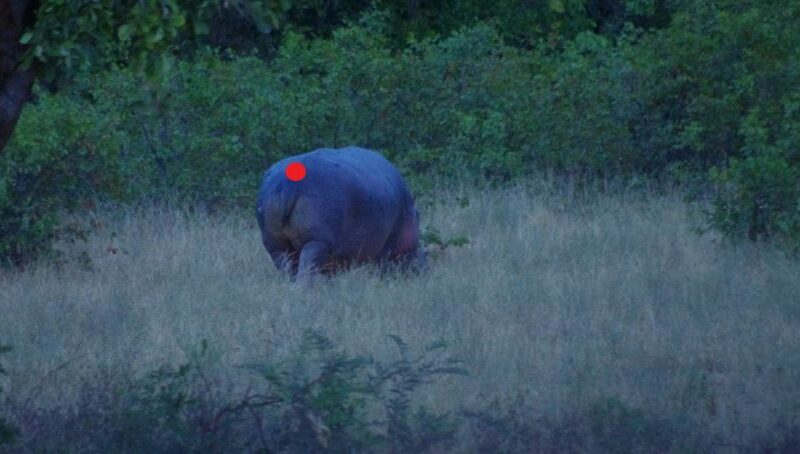
Before comparing the two situations, the hunter must understand how the available target changes when a hippo is on land or partially submerged. A body shot may be available on land, while a hippo in water normally presents a far smaller visible target. Our dedicated hippo shot placement guide explains the principal aiming points and shooting angles in greater detail.
Hunting Hippo on Dry Land
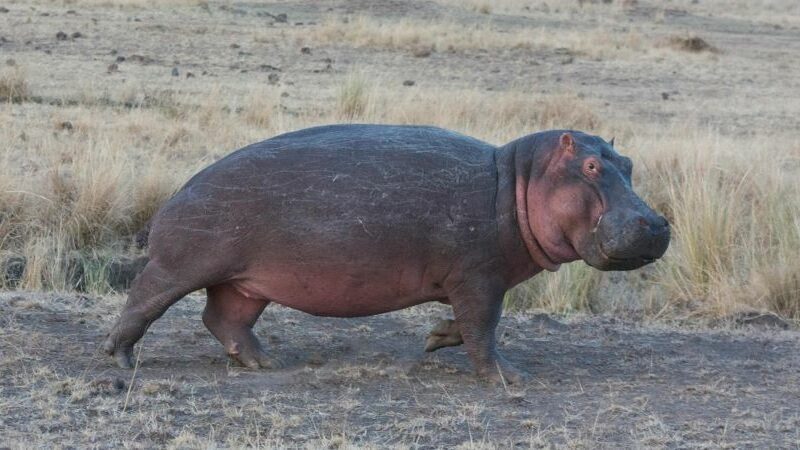
Hippos, at some point during the day, unless the African temperatures are too hot, will exit the waterway to spend some time on the nearby embankments doing a little sunbathing.
Hippos are quite territorial, so the hunter may have some time to set up a temporary blind and wait for the right moment. Depending on the terrain, a traditional hippo hunting walk and stalk method can be conducted. When on a hippo hunt remember there is a temperature difference between the water and the land which can cause a light breeze. When considering land vs water hippo hunts, be sure to approach the Hippo from a downwind position.
Following Hippos on Nighttime Feeding Routes
Hippo’s will usually leave the safety and coolness of the water to go feed on lush green grasses. Once the pod of Hippos has identified a sustainable food source, the Hippo will choose a path and make use of the same path every evening to head off or return from the feeding grounds.
Once the hunter has identified a suitable Bull Hippo, an ambush can be set up along the pathway. The hunting safari team members will need to rise early in the morning and be in position by at least 03h30 and wait for the Hippo to amble past and into position. Assuming everything goes as planned, the hunter may then have an opportunity at the selected bull as it returns towards the water.
Crop-Raiding Hippos After Dark
I have never personally conducted a hippo hunt on this basis, but I understand that this type of hunt is highly specialized.
While struggling to locate a hippo out of the water in Namibia in 2022, the local chief told the outfitter that a group of hippos was destroying crops at night. We were invited to track them, although in hindsight, I was glad that we did not pursue that option. Tracking hippos in darkness is not high on my bucket list.
For hunters considering this alternative method, the basic process can be summarized as follows:
- A thorough reconnaissance of the fields is required, identifying and marking every entry and exit point.
- The team should estimate how many hippos are entering the crop fields and determine which routes they use.
- Crop-raiding hippos generally arrive after dark, with the timing influenced by moonlight and local conditions.
- The animals may stop before entering the fields to check for unfamiliar sounds, movement or scent.
- Night-vision equipment or binoculars may help the professional hunter assess the animals and identify a suitable mature bull.
- Any approach must be slow, controlled and conducted entirely under the professional hunter’s direction while the team listens for the sound of hippos feeding.
- Before illuminating the area, the team must ensure that nobody is positioned between the hippos and their routes back to the water.
- Once disturbed, a hippo may follow its established escape route, remain in position briefly or move towards the source of the light. The team must therefore be prepared for the situation to change quickly.
Being responsible for the spotlight would not be my first choice. If the person holding it moves or loses control at the wrong moment, an already dangerous situation can deteriorate rapidly.
This would not be my preferred method of hippo hunting. Several tons of animals moving through crops in darkness, combined with my poor night vision, is not my idea of fun. I would choose life.
Under these conditions, there may also be very little time to assess trophy quality safely. The professional hunter’s judgment and control of the situation remain essential.
I am happy to advise that this method of Hippo hunting would not be my first choice. Having tons of flesh charging around in the darkness, combined with my poor night vision, is not my chosen choice of fun. I would choose life.
In the above situation, there would be no time at all for Hippo trophy judgement as one’s life would definitely be in the balance.
Judging a Mature Hippo Bull
The SCI (Safari Club International) minimum score is 50 using Method 12. Measurements provide a recognized standard, although every hunter may judge the quality and character of a mature bull differently.
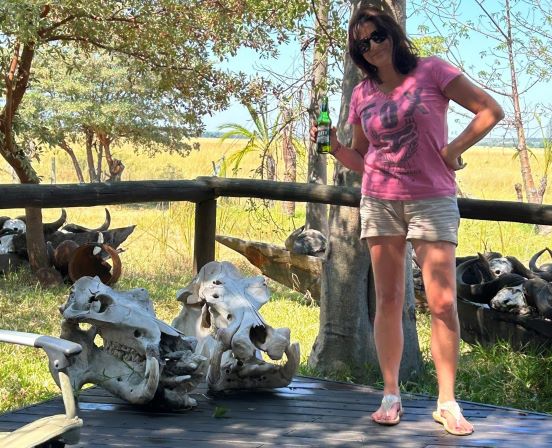
However, the tusk is removed from the jaw bone and are measured. Tusks of thirty inches and over are considered exceptional. It is however difficult to get an estimate on tusk size, it is not like going to the dentist and saying, open wide. Additionally, in a pod, the biggest Hippo may actually be a female.
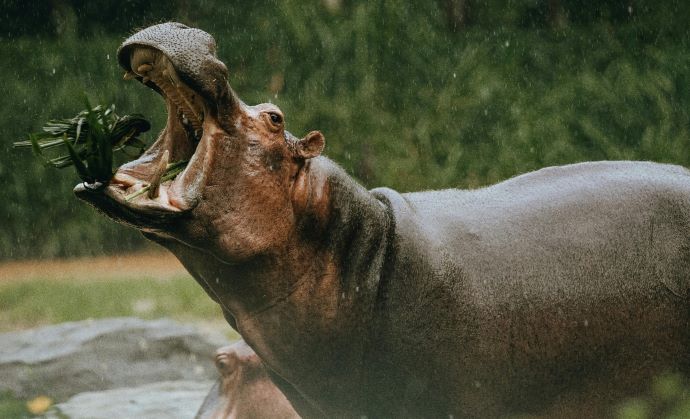
As a general rule, large tusks will push into the mouth and create bulges. Hippo do not always give the “yawn” allowing the hunter a chance to get a peek at the ivory. A hippo’s yawn can be a territorial display and a warning to rival bulls.
If the hunter can clearly see more than eight inches sticking out when the Hippo yawns, the Hippo should be a good trophy. This would have to be discussed and an opinion obtained from the professional hunter. Not everyone can accurately judge eight inches of visible tusk at a distance, so the professional hunter’s assessment remains important.
Finding a Mature Bull in Deep Water
Hunting a bull Hippo in the water is a totally different experience to hunting Hippo on land. Every single dynamic relating to the hippo hunt is different.
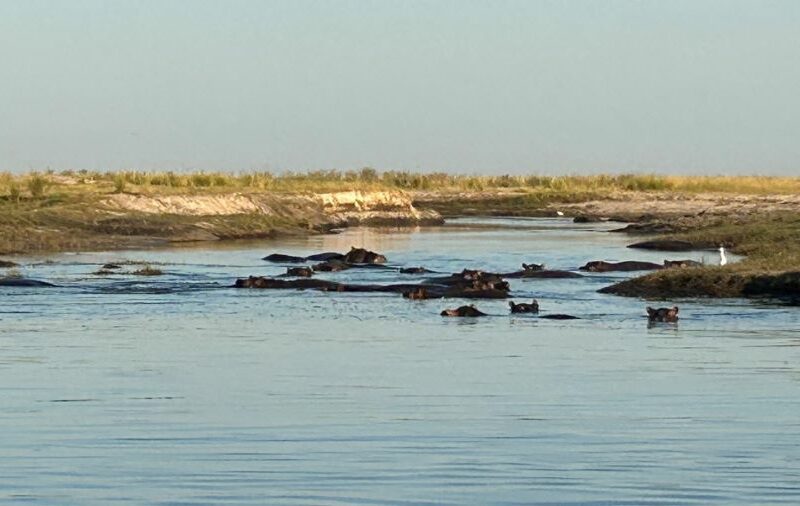
The reality is, that since Hippo spend the majority of their time in the water during daylight hours, unless exceptionally lucky, the Hippo will be targeted under the cloak and protection offered by the water. This will specifically apply if the hippo hunts are taking place during the wet season, or in the months following the heavy rains.
A Bull Hippo in the water will surround himself with all the members of the pod, which will be the Hippos “harem” of cows and youngsters, also referred to as the family group.
A distance away from the pod, normally a couple of hundred yards depending on the water conditions will be groups of younger Hippo bulls. The younger Hippo bulls in these bachelor groups are not large enough, or strong enough to take on the Bull Hippo who holds command of his pod.
When glassing the waters and focusing on the group of younger Hippo bulls, be on the look out for a trophy bull. Often, these older Hippo bulls just “do not have any fight left” and choose not to challenge the dominant bull in the pod.
When glassing the pod of Hippos, the hunter after a while will notice a couple of things. Firstly, not all the Hippos belonging to the pod are visible at one time. There will always be a bunch of Hippos who will be walking along the bottom and out of site. Hippos do not swim but walk. Hippos under water can hold their breath for long periods of time, thus making it a challenge to determine just how many Hippos are in the water. They bob up and down and appear in random places withing the circumference of their territory. This will apply when the Hippos are in large volumes of water, such as the Caprivi Strip (Zambezi Region) in Namibia, or when Hippo hunting in Mozambique on Lake Cahora Basa. There are many other waterways and lakes in Africa with similar hippo hunting conditions.
The second factor that the hunter will notice is that while glassing and looking for the bull, it is not such an easy task to identify the trophy Hippo bull.
The hunter is going to have to spend many hours glassing Hippo pods and waiting for the famous “yawn.” It will also be recommended to traverse the river banks and do some “reconnaissance” and see how many other pods of Hippo are in the area.
Planning the Shot When a Hippo Is in Water
In the majority of African countries, taking the first shot at the Hippo while in the water will count as a shot taken against the license, whether the bullet hits the Hippo or not.
Because of the water and the flow, it will not be possible to follow up on a blood trail. So, if you pull the trigger, the hunter needs to pay.
Miss the brain, which is slightly larger than an apple by an inch or two and it will be unlikely that the Hippo will be found. A hippo, like when Cape Buffalo hunting can “eat lead.” But, using the correct caliber firearm and mastering Hippo shot placement, the Hippo will be yours.
The secret to successful hippo hunts in the water is knowing the target area is small and being in a position that provides stability. Sneak up on the pod and take your time, making sure you have a good rest for the rifle. There is no room for error.
Ensure that your rifle of choice is a zero for the exact shooting distance.
Recovering a Hippo and Preparing the Trophy
Recovering a Hippo hunted in the water, or land can be a nightmare and a logistical challenge of note.
The Hippo, when in the water is remarkably light and can be towed by a small Makoro, with a tiny 30HP motor. Getting the heavy carcass loaded is another story.
Even with a strong winch, and with the help of the local community team, it is a challenge.
When dragging a Hippo onto land, being the landing area from the water, do not attempt to strap the rope to the head of the Hippo. The carcass will “dig in” the result will be an unnecessary waste of time. Remember, these same waters are infested by Crocodiles, so the sooner the carcass is recovered the better.
When managing the head, it is best to leave the skull to soak in a salt brine liquid for a few days before being sent to the Taxidermy. The skull, if overboiled will crack, which will not assist your skull mount.
The skin of the Hippo is very thick, up to 2.5 inches in places. The skin must be removed quickly else the fat will go rancid in hot temperatures which will ruin the leather. Crosscut the underside and proceed to salt the hide. The hide at all times must be well aired.
I always tell hunters, it is the responsibility of the hunter to ensure that the trophy is properly overseen, salted and prepped, not the skinners or professional hunters. The hunter’s role, while observing must ensure that the trophy is done justice by managing the process and checking on it for the duration of the hunting safari.
Land or Water: Two Very Different Hunts
Hunting a hippo on land and hunting one in water may involve the same species, but the conditions are entirely different. Visibility, animal movement, shot selection and recovery all change according to where the opportunity develops.
Neither situation should be rushed. The professional hunter must assess the animal, its position, the available shooting angle and its proximity to deep water before allowing the hunt to continue.
Hunters comparing this hunt with other available African Hunting Trips should consider not only the destination and price, but also whether the hunting area is likely to produce opportunities on land, in rivers or across larger lakes.
Frequently Asked Questions
Is It Better to Hunt a Hippo on Land or in Water?
Neither situation is automatically better. A hippo on land normally presents more of its body, but it may be moving and attempting to return to water. A hippo in water may remain relatively stationary, but only a small portion of its head may be visible. The professional hunter will determine whether the available position and shooting angle provide a responsible opportunity.
Does Hippo Shot Placement Change Between Land and Water?
Yes. A hippo standing fully on land may provide access to the heart-and-lung area, depending on its angle. In water, the body is normally submerged and the visible target is much smaller. Hunters should study hippo shot placement and follow the professional hunter’s instructions before taking any shot.
What Happens After a Hippo Is Shot in Water?
A hippo shot in water may sink before resurfacing, making recovery slower and more complicated than recovery on land. Water depth, current, shoreline access, boats and the equipment available to the safari team can all influence the recovery process.
Does Hunting on Land or Water Affect the Cost of a Hippo Safari?
The location of the final opportunity does not normally determine the complete safari price. Costs are influenced more by the destination, trophy fee, safari length, permits, concession fees, transfers and other species included. Our African Hunting Safari Prices guide explains the main expenses hunters should compare before booking.
Author: PC van Wyk