
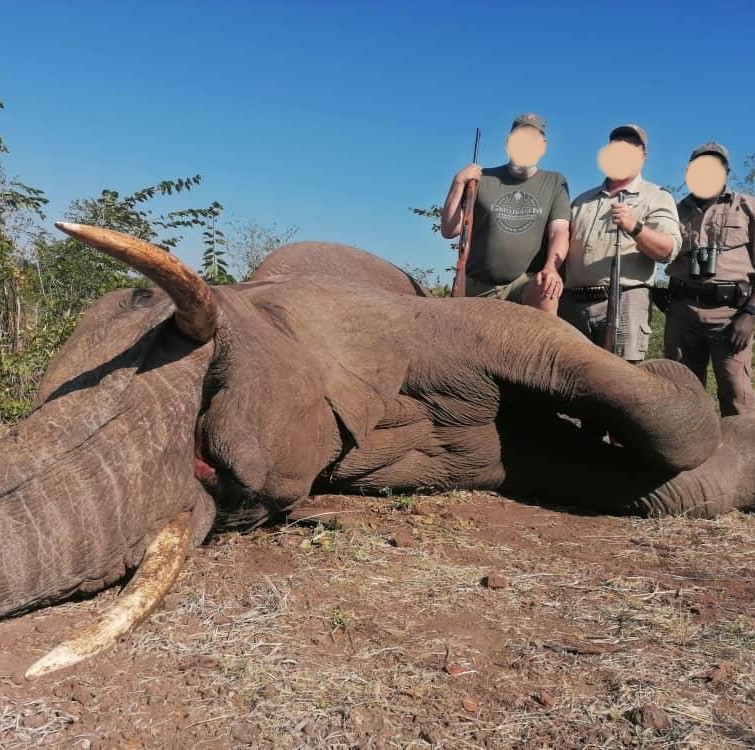
Big bull elephants have always held a special place in Big Game Hunting. Their sheer size, intelligence and ability to move silently through thick bush make them unlike any other dangerous game species in Africa. Success is rarely measured by the distance of the shot, but rather by the miles walked, the fresh spoor followed and the teamwork between the hunter, Professional Hunter and trackers that eventually brings everyone within range.
Zimbabwe has earned its reputation as one of the continent's premier destinations for Elephant Hunting in Zimbabwe, where vast wilderness concessions and experienced tracking teams allow hunters to pursue mature bulls on foot in truly wild country. Unlike hunts that unfold over a few hours, elephant hunting is often a patient pursuit that begins with a single fresh track and may continue throughout the day before the first glimpse of the bull.
Tracking an elephant demands constant attention to detail. Fresh spoor may begin the hunt, but it is the countless signs left behind as the bull moves through the bush that allow experienced trackers to stay with him hour after hour.
[DYNAMIC-BLOGTABLEOFCONTENT]
It Starts With One Fresh Track
A successful elephant hunt often begins before sunrise, when roads, dry riverbeds and well-used game trails still hold the fresh spoor left during the night. Trackers move slowly, searching for the clean edges of a footprint, freshly broken vegetation or damp dung that suggests a mature bull has passed only hours before.
Finding tracks is only the first step. Before deciding whether to follow them, the Professional Hunter and trackers study the spoor carefully. The diameter and depth of the footprint help estimate the bull's size and weight, while the spacing between tracks can indicate the elephant's pace. Fresh dung, feeding sign and broken branches provide further clues about how recently the bull passed and whether he is likely to be feeding, travelling or moving towards water.
Not every set of tracks is worth pursuing. Older spoor may lead to a bull that is now miles away, while smaller tracks may belong to younger elephants that are not the objective of the hunt. Years of experience allow skilled trackers to build a surprisingly accurate picture from signs that most hunters would simply walk past.
Once the decision has been made, the vehicle is left behind. From that point forward, every mile is covered on foot.
Because Zimbabwe's hunting concessions are so extensive, Professional Hunters often rely on more than a single tracking team. Additional scouts may search different areas for fresh spoor, while local community members can provide valuable information on where mature bulls have recently been seen. Together, this helps focus the search across an immense wilderness.

Reading More Than Footprints
Once a fresh track has been chosen, the footprints become only one part of the story. Experienced trackers are constantly looking ahead and around them, reading dozens of small signs that reveal how the bull is moving through the bush.
Elephants leave evidence almost everywhere they go. Freshly stripped bark, branches broken well above head height, trampled vegetation and damp dung all help confirm that the bull remains close. During the dry season, trackers also pay close attention to waterholes and dry riverbeds where elephants regularly dig into the sand to reach underground water. Fresh mud on the bull's tracks or around recently disturbed digging sites can reveal just how recently he passed through the area.
Water often influences the direction of the hunt. A mature bull may spend hours feeding before making his way towards a river, spring or waterhole, particularly during the hotter months. Understanding those daily patterns helps the Professional Hunter and tracking team anticipate where the spoor is likely to lead rather than simply following every footprint.
No single sign tells the whole story. It is the combination of spoor, feeding sign, water sources and years of experience that allows Zimbabwe's trackers to stay with a mature bull across country where most people would quickly lose the trail.
The Elephant Sets the Pace
A mature bull rarely travels in a straight line. He may spend hours feeding through mopane woodland before drifting towards thicker jesse bush or making his way towards water. At other times, he may cover considerable distance in a surprisingly short period, forcing the hunting party to maintain a steady pace simply to stay with him.
Professional Hunters constantly balance speed with caution. Walking too slowly risks losing ground, while moving too quickly increases the chances of making unnecessary noise or overlooking important sign. Every decision depends on what the spoor and surrounding bush are revealing.
The pressure can increase when a bull is travelling with purpose. Unlike fences on private ranches, elephants have no understanding of hunting concession boundaries. A mature bull may move from one concession to another, enter a photographic area or cross into a national park where hunting is not permitted. Professional Hunters are constantly aware of these boundaries and may adjust the pace of the hunt when a bull is moving towards areas where they cannot legally continue the pursuit.
This is where planning becomes especially important. Hunting teams often know the natural travel corridors between feeding areas and water, allowing them to anticipate where a bull is likely to go next rather than simply following behind him. Good judgement can save valuable time and prevent opportunities from being lost.
Closing the Distance
Finding a mature bull is only part of the challenge. Closing the final distance often requires the greatest concentration of the entire hunt, as elephants rely on an exceptional sense of smell, acute hearing and an uncanny ability to detect movement long before they are seen.
The pace changes almost immediately. Conversations stop, hand signals replace spoken instructions and every member of the hunting party becomes focused on the same objective. The Professional Hunter constantly checks the wind while looking for the safest route through the bush, using termite mounds, dry drainage lines, thick jesse and natural folds in the terrain to remain concealed.
The final approach is also influenced by how the hunter intends to take the shot. Hunters planning a traditional heart-and-lung shot with a scoped bolt-action rifle often require a clear view of the bull's shoulder and may be comfortable shooting from a slightly greater distance. Others choose to hunt in the traditional African style with a double rifle and open sights, planning for a close-range brain shot. Those different objectives influence the distance, angle and pace of the approach, with the Professional Hunter positioning the hunting party to provide the safest and most ethical opportunity. Hunters wanting to learn more about these techniques can also read our guide to Elephant Shot Placement.
It is not unusual to hear the elephant before seeing him. The crack of a branch, the low rumble of feeding or the sound of sand being thrown over the body can all signal that the bull is close. Even then, the first sighting is often no more than the flick of an ear, the curve of a back above the brush or a glimpse of ivory through the vegetation.
Every approach is different. Some bulls remain relaxed and continue feeding, allowing the hunting party to close the distance slowly. Others become alert, lifting their trunks to test the wind or turning towards an unfamiliar sound. A single careless movement at this stage can bring hours of careful tracking to an abrupt end as the bull slips silently back into the jesse.

Sometimes the Bull Wins
Not every elephant hunt ends because the bull outsmarts the hunting party. Sometimes the hunter reaches the final approach and discovers that standing within close range of a wild elephant is very different from how it was imagined back home.
Watching a mature bull feed only a few yards away is an unforgettable moment. The size, the silence and the knowledge that there is no fence between hunter and elephant can be overwhelming, even for experienced hunters who have pursued dangerous game elsewhere. It is not unusual for someone to decide that they are not completely comfortable with the shot or that they would rather wait for another opportunity.
An experienced Professional Hunter will always respect that decision. No ethical hunt should ever pressure a client into taking a shot they are not confident in or continuing an approach that no longer feels right. There will always be another track to follow, another bull to pursue and another opportunity to hunt.
Sometimes the elephant wins because the wind changes. Sometimes he wins because the country favours him. And sometimes he wins because the hunter chooses not to take the shot. There is no shame in that. Recognising your own limits is part of responsible dangerous game hunting, and many hunters return better prepared after experiencing just how different a close encounter with a wild elephant can be.
Long After the Spoor Has Faded
Every elephant hunt begins with fresh spoor, but no two tracks ever tell the same story. The wind changes, the bush reveals and conceals, and every mature bull makes decisions long before the hunting party ever catches a glimpse of him. That uncertainty is part of what has made Zimbabwe one of Africa's most respected elephant hunting destinations.
Whether planning future hunting safaris to Africa or simply learning more about elephant hunting, understanding how a hunt unfolds is just as important as knowing the destination or the rifle being carried. Success is built on teamwork, patience and allowing the bush to dictate the pace rather than trying to force the hunt.
Long after the spoor has disappeared beneath the next breeze, it is rarely a single shot that defines the memory. It is the miles walked beside experienced trackers, the quiet moments when everyone stops to read a fresh sign, and the privilege of following an old bull that has survived decades in Zimbabwe's wild country that stay with you long after the safari has ended.
Frequently Asked Questions
How long does it take to track an elephant bull in Zimbabwe?
There is no fixed timeline. Some mature bulls are found within a few hours of picking up fresh spoor, while others may be tracked throughout the day without offering a safe shooting opportunity. Wind, terrain, the bull's movements and hunting concession boundaries all influence how long the pursuit lasts.
Why are experienced trackers so important during elephant hunting?
Experienced trackers do far more than follow footprints. They interpret broken vegetation, feeding sign, fresh dung, water sources and subtle changes in the bush to predict where a mature bull is heading. Their ability to read these signs often makes the difference between losing the spoor and staying with the elephant throughout the hunt.
How close do hunters usually get before taking the shot?
The final distance depends on the hunting method, the terrain and the type of shot being planned. A hunter using a scoped bolt-action rifle for a heart-and-lung shot may stop farther back than someone hunting with a traditional double rifle for a close-range brain shot. In every case, the Professional Hunter determines when it is safe and ethical to shoot.
What happens if the elephant detects the hunting party?
A mature bull may quietly move away, circle downwind or disappear into thick cover before offering a shot. In many cases, the tracking team simply returns to the spoor and continues the hunt. Sometimes the opportunity is lost completely, which is one of the realities of pursuing truly wild elephants.
Do all elephant hunts end with a successful shot?
No. Wind direction, changing conditions, hunting concession boundaries or the hunter's own decision not to take the shot can all bring the hunt to an end without harvesting the bull. Experienced Professional Hunters will never pressure a client into taking a shot that is unsafe or beyond their confidence level.
Why is Zimbabwe considered one of Africa's premier elephant hunting destinations?
Zimbabwe combines vast wilderness concessions, experienced Professional Hunters, highly skilled local tracking teams and a long tradition of tracking mature bulls on foot. Together, these factors have helped establish the country as one of Africa's premier destinations for fair-chase elephant hunting.
What makes Zimbabwe different from other elephant hunting destinations?
Every elephant hunting destination has its own character, but Zimbabwe has built its reputation on tracking mature bulls on foot across large, unfenced wilderness areas. Rather than relying on vehicles, success often depends on experienced Professional Hunters, exceptional local trackers and the ability to follow fresh spoor for miles. Hunters comparing destinations can also explore our Hunting Trips pages to better understand how elephant safaris differ across Africa.