
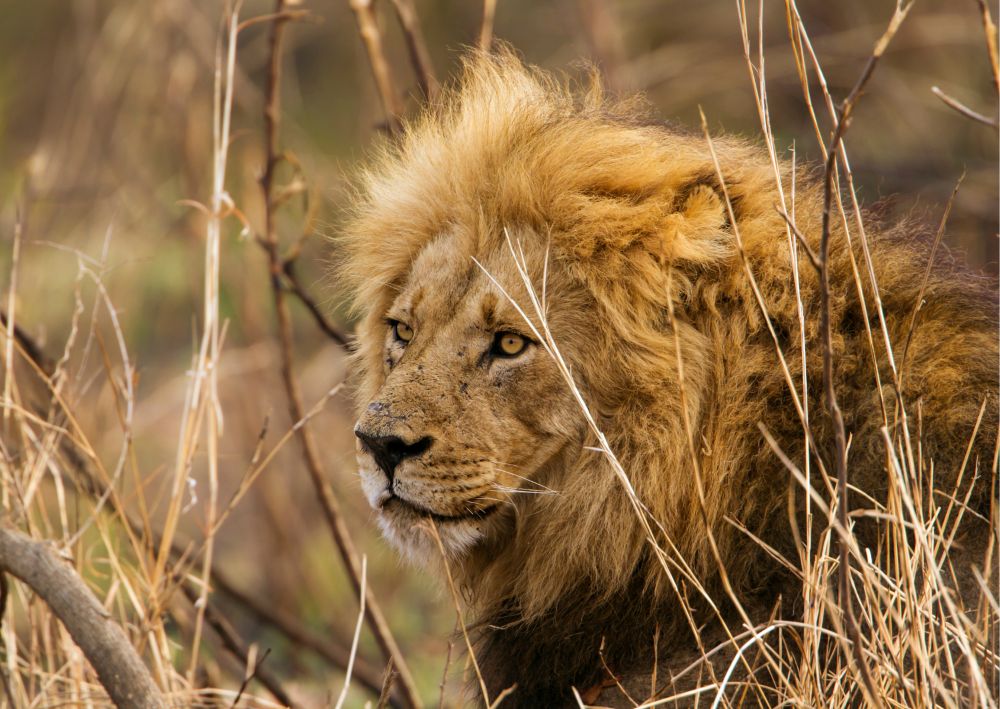
Hunters often speak about "hunting the Big Five" as though it describes a single African hunting experience. Nothing could be further from the truth.
The Cape buffalo, elephant, lion, leopard and rhinoceros share a famous name, but almost nothing else. One hunt may begin with fresh spoor crossing a dusty road at first light. Another may already be underway weeks before the hunter arrives in camp. One demands endless miles on foot through wild country, while another rewards the discipline to remain completely still until a single opportunity presents itself.
The Big Five were grouped together because they were historically regarded as Africa's most dangerous animals to hunt on foot. What has kept hunters fascinated for generations, however, is something entirely different. Each animal demands its own pace, its own strategy and its own way of thinking.
That is why completing the Big Five is not simply about hunting five famous animals. It is about mastering five completely different hunts. Hunters considering a Big Five Hunting Safari often discover that choosing the destination is only one part of the decision. Understanding what each hunt demands is what truly prepares you for the challenge ahead.
[DYNAMIC-BLOGTABLEOFCONTENT]
The Tracker's Hunt
There is a reason experienced buffalo hunters spend so much time looking at the ground.
Long before anyone catches a glimpse of a bull, the hunt has already begun. Fresh spoor becomes a silent conversation between the trackers and the Professional Hunter. The shape of a track, the moisture in disturbed soil, the direction of a broken blade of grass or the age of dung all help build a picture of animals that may still be hours ahead.
Unlike other dangerous game hunts, success rarely comes from waiting for opportunity to arrive. Buffalo hunting rewards those willing to follow it. The trackers read the story left behind, while the Professional Hunter studies the wind, the terrain and the behaviour of the herd, constantly deciding whether to press forward, slow down or circle ahead.
As the distance closes, the pace changes. Every step matters. Thick jesse bush, mopane woodland or riverine cover can hide a mature bull only yards away, turning a careful stalk into one of the closest encounters in African hunting. The final approach often feels less like searching for an animal and more like entering its world.
Long before modern rifles, rangefinders and GPS, buffalo earned a reputation for punishing mistakes. Tracking an old bull on foot became one of Africa's defining hunting traditions, demanding patience, discipline and absolute trust in the people reading the ground ahead.
Perhaps that is why so many hunters choose Cape buffalo as their first dangerous game animal. They arrive expecting a test of courage and close encounters with Africa's Black Death, but many leave talking about the trackers, the spoor and the hunt itself. That is what makes Cape buffalo hunting so distinctive. Success is built from reading the ground beneath your feet long before anyone begins searching the horizon.
The Hunt Measured in Miles
Some hunts are remembered for a single moment.
Elephant hunting is often remembered for the ground covered before that moment ever arrives.
A mature bull may travel enormous distances, crossing sand, woodland, floodplains and thick bush as he moves between feeding areas and water. Finding the right elephant is rarely about simply locating a herd. It is about following the right tracks, judging age, understanding behaviour and accepting that today's spoor may lead far beyond where anyone expected to finish the day.
There is a steady pace to elephant hunting that differs from almost every other African safari. Hours may pass with little conversation as trackers move steadily forward, occasionally stopping to study the ground or listen for branches breaking ahead. There is an old saying among elephant hunters that you should be prepared to walk a mile for every pound of ivory. Whether or not the numbers hold true, the message certainly does. The challenge is not simply physical endurance but maintaining concentration after mile upon mile when the next bend in the trail could suddenly reveal the bull everyone has been searching for.
When the opportunity finally comes, everything slows down. The long walk gives way to careful judgement, quiet communication and absolute confidence in the approach. Those final minutes carry extra weight precisely because of everything that came before them.
Perhaps that is why following elephant tracks through wild Africa remains one of hunting's greatest ambitions. Few pursuits demand the same combination of endurance, patience and determination before the opportunity finally presents itself.
Elephant Hunts are remembered for far more than the shot itself. They are defined by the miles willingly walked to earn the opportunity.
The Hunt That Starts Without You
Most hunts begin with the hunter. Lion hunting often begins before the hunter ever reaches Africa.
Professional Hunters may spend days checking territories, preparing bait sites, studying spoor and learning the movements of mature males long before the safari officially starts. By the time the hunter arrives in camp, the first chapter of the hunt has often already been written.
Unlike tracking buffalo or following elephant spoor across miles of wilderness, lion hunting rewards preparation and patience. Every decision made before the hunt influences the opportunity that may eventually present itself, making lion hunting as much about careful planning as it is about the final stalk.
When the moment finally comes, it is often close, deliberate and over in seconds. There is little room for hesitation. Days of preparation suddenly give way to complete focus as hunter and Professional Hunter work together during the final approach.
That long tradition helps explain why lion hunting occupies such a unique place in African hunting history. Many of the photographs and stories that shaped the world's image of the African safari featured Professional Hunters carrying heavy double rifles, cordite smoke drifting through the bush and lions encountered at close quarters. While equipment, regulations and hunting methods have evolved, the tradition and respect surrounding the hunt remain.
Lion Hunts remain one of Africa's defining hunting traditions, connecting today's hunter with the people, wild country and traditions that helped shape the classic African safari.

The Hunt of Endless Doubt
Some hunts reward confidence.
Leopard hunting teaches you to live with doubt.
Every hunter sitting in a blind eventually asks the same questions. Did the leopard feed last night? Will he return? Is he already nearby? Has he seen something that doesn't look right? Or has he simply decided not to come?
Unlike any other member of the Big Five, leopard hunting is often defined by what cannot be seen. Hours may pass with nothing to suggest the hunt is unfolding, yet a mature tom could already be watching from the shadows, studying every movement before deciding whether to reveal himself or disappear without a sound.
That uncertainty demands extraordinary discipline. The temptation to move, whisper or believe the opportunity has passed is often strongest at precisely the wrong moment. As the days pass, the uncertainty becomes mentally exhausting. Every visit to the bait raises new questions rather than providing answers, while every quiet evening in the blind gives doubt another opportunity to creep in. Hunters quickly discover that leopard hunting tests the mind every bit as much as it tests patience.
Success belongs to hunters who understand that patience is not simply waiting. It is remaining completely committed when doubt begins to creep in.
There is a reason leopard hunting has earned such a legendary reputation throughout Africa. Success is rarely achieved through persistence alone. It comes from respecting an animal that almost always knows more about the encounter than the hunter does. Even after days of careful planning, the leopard still decides whether the hunt continues.
Leopard Hunts remain one of Africa's greatest tests of patience, discipline and humility. In the end, success rarely belongs to the hunter who refuses to doubt, but to the one who learns to live with it until the leopard finally makes a mistake.
The Hunt Few Hunters Will Ever Know
Some hunts are remembered for the challenge.
Others are remembered for the trust placed in the hunter.
Rhino hunting is one of them.

Long before a hunter sees a rhinoceros, there is usually an awareness that this opportunity is unlike any other in Africa. Strict regulations, limited availability and carefully managed quotas mean that very few hunters will ever pursue a rhino. Those who do quickly realise they are taking part in something far rarer than simply another dangerous game hunt.
From the moment everyone leaves camp that morning, the atmosphere feels different. There is still spoor to follow, wind to consider and a careful stalk to plan, but an unspoken respect surrounds the hunt from beginning to end. Everyone involved understands the significance of the animal they are pursuing and the responsibility of doing everything correctly. The mood is quieter, more deliberate and measured, not because the hunt is easier, but because the opportunity itself is exceptional.
Perhaps that is why many hunters describe rhino hunting differently from every other member of the Big Five. The anticipation is not driven by uncertainty, endurance or tradition alone. It is shaped by the understanding that this may be the only time in their lives they are entrusted with such an opportunity.
When the moment finally comes, it carries a weight that extends well beyond the shot itself. The memories are not built solely around the stalk or the trophy, but around the quiet appreciation of having shared time with one of Africa's most iconic animals under circumstances that very few hunters will ever experience.
Rhino Hunts remain among Africa's rarest hunting privileges. More than any other member of the Big Five, they remind hunters that the greatest opportunities are not simply earned. Sometimes, they are entrusted to you.
Which Hunt Calls to You?
Every hunter finishes this journey with a different answer. Some are drawn to following the spoor of an old buffalo bull. Others dream of the miles walked behind elephant tracks, the tradition surrounding a lion hunt, the patience demanded by a leopard, or the rare privilege of hunting rhino. There is no right place to begin. Only the hunt that speaks to you.
The Big Five has never been about five animals.
It has always been about five different ways of testing the hunter.
Five different lessons.
Five different memories.
Five completely different hunts.
Now, only one question remains: Which hunt will become your story?

Every Big Five Hunt Begins With Questions
Every Big Five hunter starts in exactly the same place. Not in Africa, but with questions. Choosing where to hunt, how to plan your safari and which species to pursue first are all part of the journey.
Whether you've already decided which hunt calls to you or you're still weighing your options, the answers below cover some of the questions hunters ask most often before taking that first step.
Which Big Five animal should I hunt first?
There is no single answer because every hunter is looking for something different. Many experienced Professional Hunters recommend Cape buffalo as a first dangerous game animal because it introduces hunters to tracking, close-range encounters and dangerous game hunting without the complexity of planning a complete Big Five safari. Others may be drawn to elephant, lion or leopard based on the style of hunting that appeals most to them.
Is it possible to hunt all the Big Five on one safari?
Yes, although very few hunters complete all five species during a single trip. Time, available quota, hunting seasons and budget usually determine whether hunters pursue one species or build their Big Five over several safaris. Many hunters find that taking this approach allows them to appreciate each hunt on its own merits rather than rushing from one species to the next.
Which Big Five hunt changes hunters the most?
Every hunter will answer that question differently. Leopard hunting often demands the greatest patience and mental discipline, buffalo hunting tests fieldcraft and tracking ability, elephant hunting challenges endurance, while lion and rhino each present their own unique demands. Difficulty depends as much on the hunter's strengths as the animal being pursued.
How long does it take to complete the Big Five?
Some hunters achieve the Big Five over several weeks, while others take decades to complete the journey. There is no timetable. For hunters, the memories created during each individual safari become more important than finishing the collection itself.
Which African countries offer the best opportunities for Big Five hunting?
The answer depends on which member of the Big Five you intend to pursue. Zimbabwe, Tanzania, Mozambique, Namibia and South Africa each offer different strengths depending on the species, hunting methods and style of safari you are seeking. Hunters planning their safari should compare destinations carefully before deciding where to begin.
Do I need a different rifle for every Big Five animal?
Not necessarily. Hunters may successfully pursue multiple members of the Big Five with the same dangerous game rifle, although calibre selection should always comply with the legal minimums of the country being visited and suit the species being hunted. Your Professional Hunter can advise on the most appropriate rifle for your safari.
How much does a Big Five hunting safari cost?
The cost varies significantly depending on the species, destination, duration of the safari and trophy fees. A buffalo hunt differs substantially from a lion or elephant safari, while pursuing multiple Big Five species naturally increases the overall investment. If you're comparing options, our African Hunting Safari Prices guide explains what influences the cost of a safari and what you should expect when planning your budget.
Should I book directly with an outfitter or use a hunting safari broker?
Both approaches can work. Hunters who already know a trusted outfitter may choose to book directly, while those comparing multiple countries, species and operators often benefit from working with an experienced hunting safari broker. If you're still deciding where to begin, our Hunting Trips page is a good starting point because it compares destinations, species and safari options across Africa before you narrow your choices.