
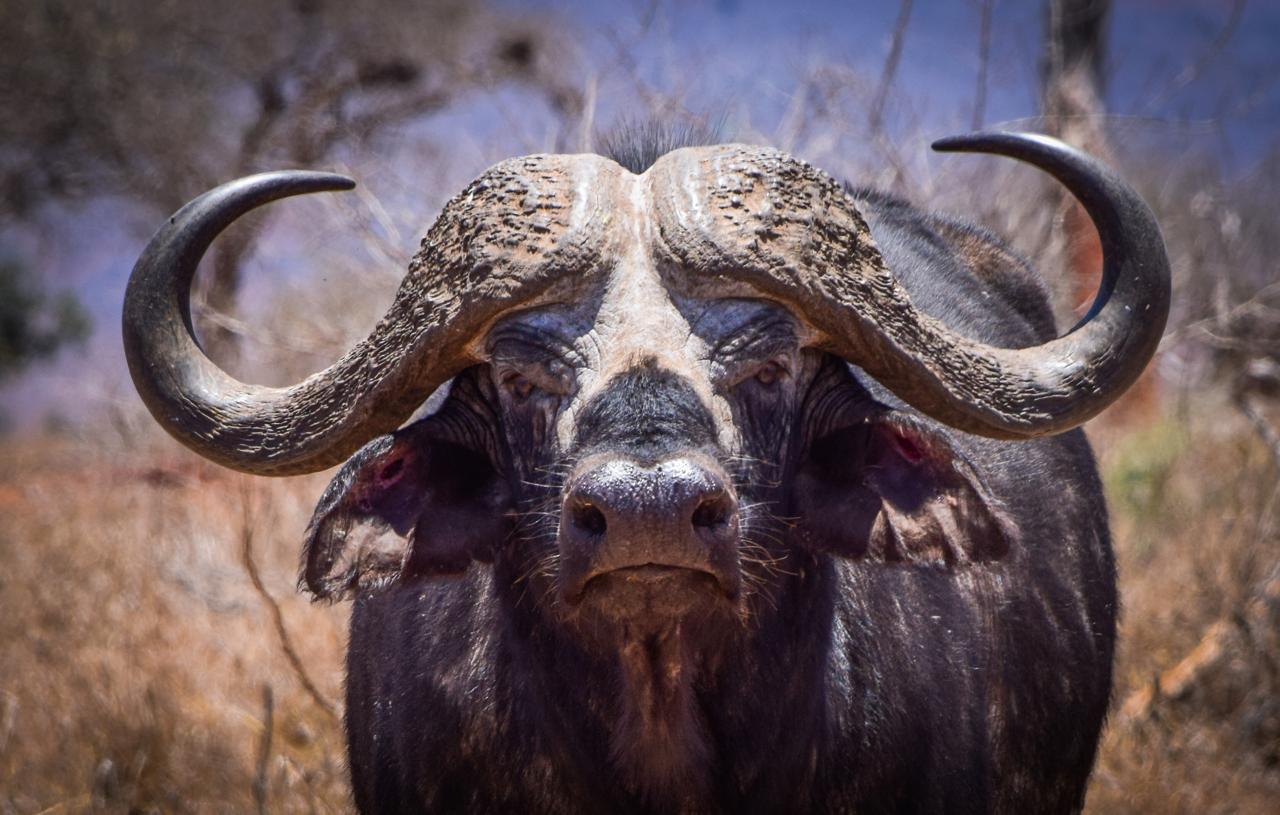
The Weeks Before Your First Free-Range Buffalo Hunt
This isn't another article about rifles, calibres or trophy measurements. It's about everything that happens before a hunter ever gets the opportunity to shoulder his rifle.
Nobody really prepares you for the weeks before your first free-range buffalo hunt. For years you've imagined the moment.
You've watched old safari films and modern buffalo hunting videos. You've seen the charges, the dust, the heavy bosses, and the professional hunter quietly raising the shooting sticks before whispering, "Take him."
One day, you tell yourself, that'll be me. Slowly, the dreaming turns into planning.
Flights are researched. Rifles are chosen. You quietly begin putting money aside each month, building towards the day your boots finally touch African soil. Somewhere along the way you convince your wife that, yes, this really is a once-in-a-lifetime opportunity.
Eventually the safari is booked and the countdown begins. For a while, everything is exactly as you imagined it would be.
Then your professional hunter sends you photographs of the country you'll actually be hunting. Not endless buffalo herds stretching across the plains. Dark karongas. Thick riverine bush.
Places where you can barely see thirty yards ahead. Places where an old dagga boy disappears because that's exactly how he's survived for all these years.
You stare at the photographs for a long time. Then, almost without realising it, your thinking begins to change. Up until now you've been wondering what size buffalo you'd like to hunt. Now there's only one question running through your mind.
What if we don't even find him?
The Buffalo You Came to Hunt Isn't Standing With the Herd
It's one of the first realities that catches experienced African hunters by surprise.
For years you've watched documentaries showing thousands of buffalo spread across East Africa's endless plains. Tanzania has more Cape buffalo than anywhere else on the continent, so it's easy to imagine that somewhere amongst those vast herds stands the old dagga boy you've travelled halfway around the world to hunt.
Surely finding him can't be that difficult. Then your professional hunter smiles.
"The buffalo you're looking for left those herds years ago."
Hunters dreaming of Cape buffalo hunts often picture large breeding herds spread across open country, but the old dagga bulls most experienced hunters pursue rarely spend their days there.
Old dagga bulls don't become old by following the crowd. Long before they earn their heavy bosses and battered appearance, they drift away from the breeding herds in search of something far more valuable than company. Peace.
They spend their days in places few people ever enter. Thick riverine bush. Deep, shaded karongas. Places where visibility is measured in yards instead of hundreds, where the midday sun barely reaches the ground, and where an old bull can spend the hottest hours of the day completely undisturbed.
In Masailand, the deeper you move into these forgotten pockets of bush, the quieter everything becomes. The sound of cowbells slowly fades. Motorbikes disappear into the distance. Even the Maasai herders have little reason to venture into these tangled ravines.
That's exactly why an old dagga boy chooses them. By the time you arrive in camp, your professional hunter isn't searching for buffalo. He's searching for the place where one old buffalo spent the night.
There may be thousands of buffalo in Tanzania, but only one matters.
That's what makes buffalo hunting in Tanzania so different from almost anywhere else in Africa. Success isn't measured by the number of buffalo you see, but by your ability to follow one old dagga boy into his world.

Before the World Wakes Up
Long before first light, the camp slowly begins to stir. The glowing embers from last night's fire are coaxed back to life, coffee mugs quietly replace dinner plates, and hunters drift towards the warmth, jackets zipped against the cool Masailand morning.
Some mornings there's plenty of conversation. Stories are shared, laughter breaks the silence, and everyone seems relaxed. On other mornings, the camp is unusually quiet. Faces disappear into steaming mugs of coffee as each hunter sits alone with his own thoughts.
Some are thinking about the work waiting back home. Some are thinking about the families they've left behind. Others are thinking about one thing only.
Will today be the day?
Nobody asks the question. They don't need to.
Somewhere beyond the glow of the campfire, hidden deep inside the karongas, an old dagga boy is getting ready for another day exactly as he has for years. The only difference is that this morning, someone is trying to find him.
Beside the fire, the Maasai trackers quietly tighten their bright red shúkàs against the morning chill. They aren't thinking about buffalo horns or trophy measurements. They're thinking about time.
They know the buffalo drank during the night. They know where he is likely to have crossed.
They also know that every minute they sit beside this fire is another minute closer to the Maasai cattle moving towards the same waterholes.
Once that happens, the story written during the night begins to disappear. Fresh spoor becomes trampled spoor. Clear tracks become confusion.
As the first pale light reaches the horizon, coffee mugs are quietly set aside, rifles are checked one last time, and the hunting vehicle eases out of camp.
The objective isn't simply to find a buffalo. It's to reach yesterday's story before Africa has a chance to erase it.
Entering His World
Eventually, one of two things happens. You intercept the old dagga boy before he reaches the karongas... ...or he gets there first. If he wins that race, everything changes.
The open country disappears behind you as the light fades beneath the thick riverine canopy. Thorn branches brush against your shoulders, game paths become little more than narrow tunnels through the bush, and visibility shrinks from hundreds of yards to only a few. Without anyone saying a word, the pace slows. Every footstep is deliberate. Every movement suddenly matters.
This is where old dagga boys grow old.
He's walked these karongas for years. He knows every winding game trail, every escape route, every patch of thick cover where he can stop unseen, and every gap in the vegetation where the wind carries danger towards him.
You've entered his territory.
Standing inside a karonga for the first time is nothing like watching buffalo on television. The bush is far thicker than most hunters ever imagine. In places it's difficult to see more than a few yards ahead, and lifting a rifle into position isn't always as simple as it looked back home on the shooting range.
It's also the moment you truly appreciate the rifle in your hands. Not because you're expecting danger behind every bush, but because you suddenly understand that if an old dagga boy appears at close range, there may be only seconds to react and very little room to manoeuvre.
Then another thought quietly crosses your mind. This old bull isn't hiding because he's afraid.
He's here because he wants to be left alone. He left the breeding herds years ago. The constant movement, the noise, and the competition no longer interest him.
Deep inside the karongas he has exactly what he wants, shade, solitude, and the freedom to live on his own terms. You're not trying to pull a buffalo out of the bush.
You're trying to find an old survivor in the one place he's chosen to disappear. This is his world, you're the visitor.
You Know He's There
Nobody needs to say a word.
The tracker simply slows his pace before dropping quietly to one knee. A few steps ahead, the professional hunter raises a hand and the line comes to an effortless stop. Nobody asks why. After only a few days in the bush, everyone already understands what that small gesture means.
You still haven't seen the buffalo, but every instinct tells you he's close.
The bush feels different now. Bird calls that faded into the background only moments ago suddenly seem louder, every breath sounds heavier, and the silence beneath the tangled canopy of the karonga carries a weight of its own. Somewhere ahead, hidden amongst the thorns, an old dagga boy is standing exactly where he wants to be.
The tracker reaches towards a fresh pile of buffalo dung and gently breaks it apart with the tip of his stick. It's still warm, soft, almost sludgy, and before he even looks up, everyone already knows what the answer will be. When he finally nods towards the professional hunter, there is no celebration, only quiet certainty.
The buffalo isn't far ahead.
A few moments later the smell reaches you. It's a heavy mix of ammonia, damp earth, crushed vegetation and buffalo, lingering beneath the trees long after the old bull has moved on. Mixed into it is the scent of cattle that crossed these same roads at first light, a reminder of why leaving camp before dawn was never just tradition, it was part of the hunt.
Your eyes drift back to the ground where deep hoofprints climb out of the sandy floor of the karonga before disappearing straight through a wall of thorn. There is no game path to follow because old dagga boys rarely waste time looking for the easiest route.
They simply make their own. Until now you've been following spoor, reading the story he left behind during the night.
Now...
You're following the old bull himself.
The Hunter Begins to Change
By now you've probably replayed the ending of this hunt a hundred times in your mind. Somewhere ahead you'll find the old bull, quietly close the distance, watch the professional hunter ease the shooting sticks into position, and finally take the shot you've been dreaming about for years. Later that evening you'll be back around the campfire, reliving every moment while everyone else listens.
It's a good plan. The only problem is that the buffalo has absolutely no idea it exists.
He doesn't know you've travelled halfway around the world to hunt him. He doesn't know you've spent years saving for this safari, and he certainly doesn't know your return flight leaves in a few days. Every morning he wakes with exactly the same objective he's had for years: survive today, just as he survived yesterday.
If the wind changes, he'll quietly slip back into the bush. If something doesn't feel right, he'll simply stop and wait. If he hears a sound he doesn't like, he'll disappear into the cover until the world feels safe again. Every decision he makes is driven by the same instinct that has kept him alive long enough to become the old dagga boy you've come to find.
As the days pass, that realisation slowly begins to change you. You stop wondering how the hunt is supposed to end and start paying attention to the things that really matter. The direction of the wind becomes more important than the size of his horns. Fresh spoor tells you more than photographs ever could. Every bend in the karonga suddenly holds possibility, and every step forward demands your complete attention.
Without ever noticing exactly when it happened, you've stopped thinking like a tourist with a hunting licence. You're beginning to think like a buffalo hunter. The buffalo hasn't changed.
You have.
The Question That Won't Leave You
By now, the routine has become familiar. Long before sunrise you're back around the campfire with a mug of coffee warming your hands while the Maasai trackers quietly study the wind and discuss where the old dagga boy may have crossed during the night. Before long the vehicle is moving once again, heading towards yesterday's waterholes in search of fresh spoor.

The signs couldn't be better. Fresh dung, deep hoofprints pressed into the sand, bark polished smooth where an old bull rubbed his shoulders after leaving the water, and mud still clinging to the side of a tree all tell exactly the same story.
He's close. So close, in fact, that it feels impossible he can be far ahead.
Yet somehow... He disappears again.
Not because he's trying to outsmart you, but because this is simply how an old dagga boy has survived for years. One swirl of wind, one unfamiliar sound, or one instinct that something isn't quite right is all it takes. The bush closes behind him and, within seconds, it's as though he was never there.
As the days begin slipping by, another battle quietly takes shape. This one has nothing to do with the buffalo. It takes place entirely inside your own head.
You never say the words out loud, but they follow you everywhere—while cleaning your rifle, lying awake before dawn, or standing in front of the bathroom mirror at three o'clock in the morning.
What if I go home without the buffalo I've dreamed about for years?
Once that question finds its way into your mind, the others aren't far behind. Should I have booked a longer safari? Should I have spent a day hunting plains game instead of following the same buffalo? Should we push deeper into the karongas tomorrow, or should we back out sooner and trust that another opportunity will come?
Every experienced professional hunter knows there comes a point where enthusiasm must never replace judgement. Buffalo hunting is dangerous enough without allowing frustration to make decisions for you. Forcing your way through tangled cover where visibility has disappeared, or taking a shot simply because time is running out, serves nobody—not the hunter, not the professional hunter, and certainly not the buffalo.
Sometimes the hardest decision isn't to keep pushing. It's having the patience to walk away, trust the wind, trust the trackers, and believe that tomorrow may offer the opportunity that today never did.
The buffalo isn't counting hunting days.
Only you are.
The buffalo wasn't hunting against you. He was hunting against time, just as he had every day of his life. Every decision he made, where to drink, when to move, when to stand still, when to disappear into the karongas—was simply another day survived. The only difference was that your time was running out long before his was.
Somewhere Along the Way, the Inches Stop Mattering
It's funny how your thinking changes.
Before the safari, it's easy to become fascinated by photographs. You spend hours comparing heavy bosses, wide spreads and trophy measurements, wondering whether your buffalo will break forty-two inches... forty-four... perhaps even forty-six. Like most hunters, you imagine the moment ending with a tape measure.
Then Africa quietly changes the conversation.
After days of following the same spoor, watching the trackers patiently read the ground, and wondering each morning whether today will finally be the day, something shifts almost without you noticing.
You've stopped thinking about inches.
The old dagga boy has beaten you to the water before daylight. He's slipped into the karongas ahead of you. He's caught your scent when you thought the wind was perfect, disappeared when you were convinced you had him, and reminded you, day after day, exactly why he has survived for so many years.
Somewhere along the way, this hunt stops being about score. It becomes personal.
It's one of the reasons so many hunters return to hunting in Tanzania. The trophies may bring them to Africa the first time, but it's the experience of following one old buffalo on his own terms that keeps drawing them back.
Now, more than anything else, you simply want the chance to meet him on equal terms. Not because he's the biggest buffalo in Tanzania, but because he's become your buffalo.
Africa has a remarkable way of giving every hunter the buffalo he needs, even if it isn't always the buffalo he imagined. He's the one whose spoor you've followed for days. The one who's kept you awake at three o'clock in the morning.
The one who's quietly taught you that free-range hunting has very little to do with certainty, and everything to do with earning an opportunity.
If that moment finally comes, you won't be thinking about tape measures. You'll be looking into the eyes of an old survivor that has already taught you more about Africa than any photograph ever could.
The Hunt You Never Practised For
Back home, you did everything right.
You spent evenings at the shooting range. You practised from sticks until mounting the rifle became second nature, experimented with different ammunition, checked your zero countless times, and probably fired well over a thousand rounds preparing for this safari.
None of it was wasted. But standing in the shade of a dark karonga, another realisation quietly begins to sink in. You never really prepared for this. The shooting range taught you how to shoot accurately.
It could never teach you patience.
It couldn't teach you to trust a tracker reading spoor that's almost invisible to everyone else. It couldn't teach you how to keep believing after four days of following the same buffalo without a single clear opportunity. And it certainly couldn't prepare you for standing only a few yards from an old dagga boy, knowing that the bush may never allow the perfect shot you imagined back home.
There are no neatly trimmed shooting lanes here. Thorn branches catch on your clothing, visibility disappears after only a few yards, and opportunities appear and vanish in seconds. Sometimes the professional hunter has time to quietly unfold the sticks.
Sometimes he doesn't. Sometimes the only opportunity you'll ever get is the one Africa chooses to give you. Oddly, there's a sense of calm that comes with accepting that. You stop trying to control the hunt.
Instead, you begin concentrating on the things you can control, your discipline, your judgement, your patience, and your ability to make the right decision when the opportunity finally arrives.
That's when you realise something, you weren't practising to shoot from sticks, you were practising to shoot well. By now you understand something that no shooting range could ever have taught you.
The rifle was never the difficult part. The real challenge was finding one old dagga boy that had spent years perfecting the art of not being found, and then earning the opportunity to meet him on his terms. That was the hunt all along.
The First Glimpse
When it finally happens, it isn't anything like you imagined.
The tracker suddenly slows, takes two quiet steps, and drops to one knee. A few yards behind him, the professional hunter quietly raises a hand, bringing everyone to an effortless stop. Nobody says a word because nobody needs to. After days of following the same old dagga boy through the karongas, everyone recognises the change immediately. The bush has become quieter, the trackers have become more deliberate, and every instinct tells you the buffalo is close.
You search the tangled wall of thorn ahead but see nothing. Then you hear it, a soft splash. It's the unmistakable sound of fresh urine striking the sandy floor of the karonga. The tracker doesn't even glance in your direction because he already knows the old bull is only seconds ahead. Your mouth suddenly feels dry as the sounds of the bush seem to disappear around you. Somewhere beyond that wall of thorn stands the buffalo you've travelled halfway around the world to find.
Then the bush comes alive. A branch flicks forward, another bends out of the way, and without warning a heavy crash tears through the thorns as something enormous powers into the darkness. You instinctively shoulder your rifle, but before your mind has time to catch up, it's over.
Too late.
All you manage to catch are the dark hindquarters of an old dagga boy disappearing into the thickest bush you've ever hunted. There is no heavy boss, no sweeping horns and not even a glimpse of his head—just a flash of black melting into even darker shadows before the karonga swallows him once again.
Silence settles over the bush. The tracker smiles quietly to himself before the professional hunter turns towards you with a knowing grin.
"Well... at least we know we're not chasing a ghost."
You smile, but you're not entirely convinced. All you've really seen are black shadows disappearing into thicker shadows. You've smelt him, followed his spoor, stood over his warm dung and now watched him vanish before your eyes without ever really seeing him at all.
The old dagga boy is finally real.
And somehow...
You wouldn't change it for the world.

When the Moment Finally Comes
Then, one morning, everything changes.
It doesn't begin with shouting or excitement. In fact, it's almost the opposite.
The tracker slows his pace before quietly dropping to one knee. A few steps behind him, the professional hunter walks forward, studies the spoor for a moment, and then looks into the tangled wall of thorn ahead. Nobody says a word because nobody needs to. After days of hunting together, everyone understands what this silence means.
You've been here before. Fresh spoor and warm dung. The unmistakable smell of buffalo hanging beneath the trees. The difference is that this morning feels somehow... different.
Somewhere ahead, hidden amongst the thick karongas, stands the old dagga boy you've spent the better part of a week following. He isn't a photograph anymore. He isn't a tape measure or a set of trophy statistics discussed around campfires back home.
He's simply an old survivor.
The wind brushes across your face. The trackers glance at one another before giving the slightest nod. Nobody celebrates. Nobody assumes anything. Experience has taught them that nothing is certain until the buffalo is standing in front of you. The professional hunter quietly turns towards you. For a moment, neither of you speaks.
Then he says the two words you've been waiting to hear since you first started dreaming about Africa.
"Let's go." What happens next... Is your story to write.
What the Old Dagga Boy Leaves Behind
Years from now, you probably won't remember exactly how many miles you walked through the karongas. What you'll remember are the moments that quietly stitched the hunt together: the campfire before daylight, the smell of buffalo hanging beneath the trees, the Maasai tracker smiling over fresh spoor, and the silence that seemed to settle over the bush whenever you knew the old bull was close. You'll remember the morning you realised the wind mattered more than the rifle in your hands, and the nights you stood awake at three o'clock in the morning wondering whether tomorrow would finally be the day.
If you're lucky, you'll also remember the moment those questions quietly disappeared. Not because the hunt became easier, but because you did. Somewhere between the first fresh spoor and the first glimpse of an old dagga boy, your understanding of hunting began to change. You stopped chasing inches, stopped searching for certainty, and stopped expecting Africa to unfold according to your plans. Instead, you learnt that every opportunity in wild Africa must be earned, never expected.
The old dagga boy never knew your name. He never knew how many years you saved to stand in his world, or that your flight home was waiting only days away. He simply lived another day the only way he knew how—watching the wind, trusting his instincts, and surviving in a place that had taught him those lessons over many years.
Yet somehow...He changed yours.
Perhaps that's why hunters return to Africa. Not because they're searching for another buffalo, but because they're searching for the feeling they found while following the first one.
Before You Book Your Buffalo Hunt
The story may be over, but if you're seriously considering a free-range buffalo hunt in Tanzania, these are probably the questions you'll still be asking yourself.
Why is buffalo hunting in Tanzania considered some of Africa's best?
There are plenty of places in Africa where you can hunt Cape buffalo, but Tanzania has earned its reputation for a very different reason. This is one of the few countries where hunters can still spend days tracking genuinely free-range buffalo across enormous wilderness concessions, following fresh spoor through riverine bush, open woodland and dry river systems without fences or artificial boundaries shaping the hunt.
The experience is rarely about seeing large numbers of buffalo. Instead, it's about finding one old dagga bull that has survived years of predators, droughts and hunting pressure by trusting his instincts. Every track tells part of his story, and every mistake gives him another opportunity to disappear into a country he knows far better than you ever will.
That's why so many experienced hunters describe buffalo hunting in Tanzania as one of Africa's greatest tracking safaris. Success isn't measured by how many buffalo you see. It's measured by whether you can earn a chance at the one that matters.
How many days should I allow for a free-range buffalo hunt?
If your goal is to experience authentic free-range buffalo hunting rather than simply filling a tag, patience is one of the most valuable things you can bring to Africa.
Most Tanzanian buffalo safaris are planned around 10 to 14 hunting days, depending on the concession, licence and whether you're combining buffalo with other species. Those extra days aren't there because buffalo are rare. They're there because mature dagga bulls rarely make mistakes.
Some mornings you'll cut fresh spoor within minutes of leaving camp. Other days you'll spend hours following one old bull only to lose him when the wind shifts or he disappears into thick cover. That's simply part of hunting a truly wild animal on his own terms.
Longer safaris also remove some of the pressure that builds when every sunrise feels like another opportunity slipping away. As your professional hunter will tell you, buffalo hunting has never rewarded impatience.
Why are old dagga bulls so much harder to hunt than breeding herd buffalo?
Old dagga bulls have already learnt the lessons that younger buffalo are still discovering. Long before they develop the heavy bosses and scarred appearance hunters admire, they leave the breeding herds and begin living a far quieter, more solitary life.
Instead of following hundreds of other buffalo across open country, they spend their days in thick riverine bush, shaded karongas and tangled cover where visibility is measured in yards rather than hundreds of metres. They know the safest escape routes, understand how to use the wind, and rarely stay in one place longer than necessary.
That's what makes hunting an old dagga bull so different. You're no longer looking for a herd. You're following one experienced survivor that has spent years perfecting the art of staying alive.
How far are you prepared to walk for one old dagga bull?
The honest answer is simple. As far as it takes.
Some mornings you may find fresh spoor within a mile of camp. On others, you might cover many miles before breakfast, only to spend the rest of the day weaving through thick bush without ever catching sight of the buffalo you've been following.
That's the nature of free-range hunting.
The distance itself isn't what makes buffalo hunting difficult. It's the constant concentration. Reading spoor, watching the wind, climbing in and out of dry riverbeds, pushing through thorn thickets and knowing that one careless step could undo hours of patient tracking.
Experienced professional hunters often smile when clients ask how far they'll walk. The better question is whether you're prepared to keep walking when your legs begin telling you to stop but the tracker quietly points at another fresh hoofprint disappearing into the bush.
Why is patience the most important skill on a buffalo hunt?
Every experienced professional hunter has seen the same thing happen.
As the safari draws to a close, hunters begin thinking about flights home, days remaining and opportunities that feel like they're slipping away. That's exactly when poor decisions become most dangerous.
Buffalo hunting rewards patience far more often than urgency. Forcing your way through thick cover, ignoring the wind or taking a shot through a narrow gap simply because time is running out rarely ends well.
Professional hunters understand that the buffalo isn't thinking about your return flight. He's simply doing what has kept him alive for years. Sometimes the safest and smartest decision is to back out, trust the trackers and begin again the following morning.
It doesn't always feel like progress.
But very often, it's exactly what creates the opportunity you've been waiting for.
What rifle calibre is recommended for Cape buffalo hunting?
Few topics generate more discussion around African campfires than rifle calibre, but the answer is usually simpler than many first-time hunters expect.
Most professional hunters recommend proven dangerous game calibres such as the .375 H&H Magnum as the practical minimum, with larger calibres like the .416 Rigby, .404 Jeffery or .458 Lott also being popular choices. More important than calibre, however, is confidence in your rifle and your ability to place a bullet accurately under pressure.
Buffalo are incredibly tough animals, and good shot placement will always matter more than chasing bigger numbers on a cartridge box. Before travelling to Africa, spend time practising from shooting sticks, because that's how most opportunities present themselves in the field. Understanding proper Buffalo Shot Placement is one of the most important preparations you can make before stepping into the African bush.
Can I combine buffalo hunting with other dangerous game in Tanzania?
Absolutely.
Many hunters choose to combine buffalo with species such as lion, leopard, crocodile or hippo, depending on the hunting area, available licences and current regulations. Tanzania remains one of Africa's classic dangerous game hunting destinations, allowing hunters to experience multiple iconic species during a single safari.
Combining hunts often makes good use of the time spent in camp and gives hunters the opportunity to experience different styles of hunting, from tracking buffalo on foot to waiting over rivers for crocodile or hunting leopard over bait.
Your professional hunter can advise which combinations are available in the concession you'll be hunting.
How do I plan my first African hunting trip?
Planning your first African hunting trip usually begins long before you board an aircraft. Choosing the right outfitter, understanding what is included in the hunt, selecting suitable rifles and preparing physically all play an important role in ensuring the experience lives up to the dream.
Just as importantly, arrive with realistic expectations. African hunting isn't measured only by the animals taken. It's measured by the people you meet, the places you walk and the experiences that stay with you long after you've returned home.
If this article has taught anything, it's that the memories you'll treasure most often have very little to do with inches on a tape measure.
They begin with the first fresh spoor.