
13-Day Dwarf Buffalo, Sitatunga & Forest Game Safari in Gabon
Booking Season: 2026
Hunt Difficulty: Difficult

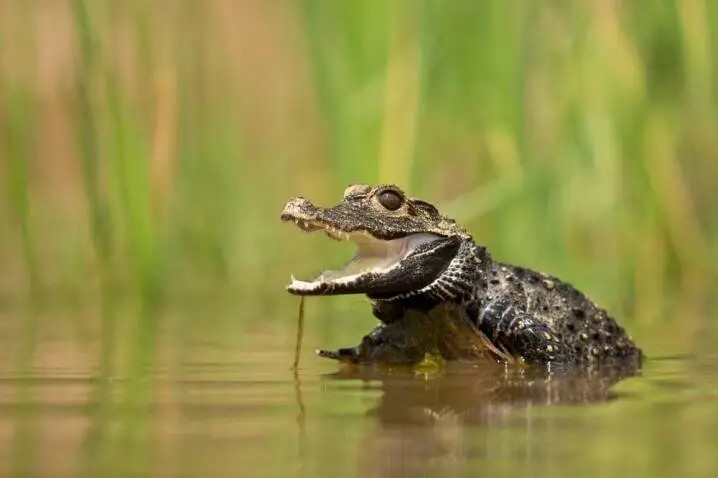
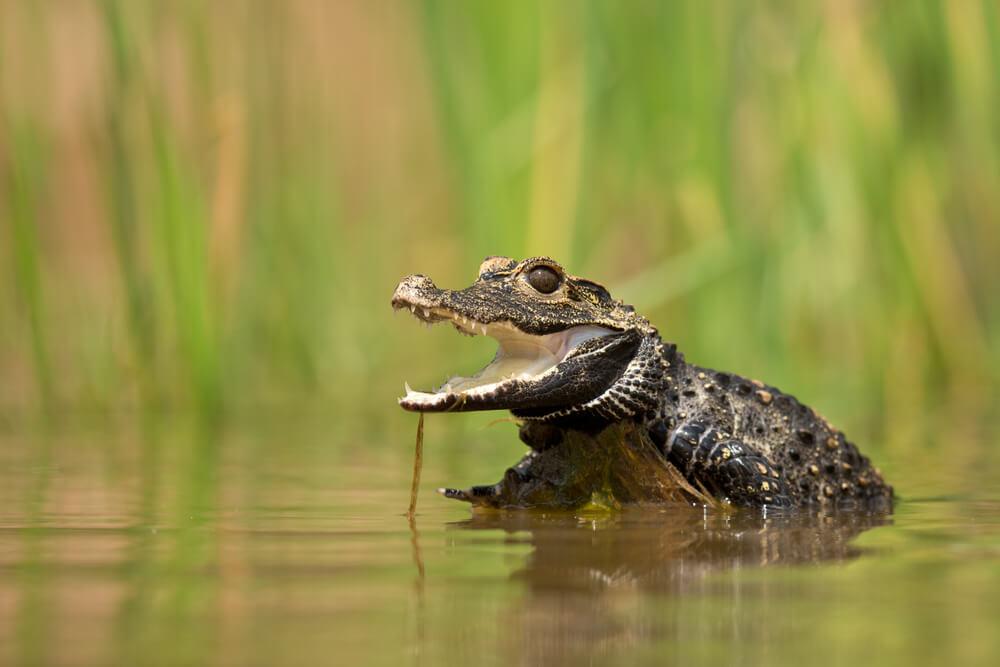
Dwarf crocodile hunting in Gabon sits within a very specific part of African safaris—one defined not by open rivers or large crocodiles, but by dense rainforest, limited visibility, and highly controlled hunting conditions. Within the broader structure of hunting in Gabon, safaris are shaped by forest species and the environment they occupy. The dwarf crocodile is part of that system, existing in remote waterways where access is limited and encounters are unpredictable.
This is not traditional crocodile hunting. It is a specialized pursuit that reflects how hunting in Central African rainforest differs from more familiar safari environments.
Available Dwarf Crocodile Hunts
13-Day Dwarf Buffalo, Sitatunga & Forest Game Safari in Gabon
Booking Season: 2026
Hunt Difficulty: Difficult
10-Day Gabon Duiker and Forest Game Safari
Booking Season: 2026
Hunt Difficulty: Difficult
The dwarf crocodile is a forest-adapted crocodilian found across Central and West Africa, but its behavior in Gabon reflects some of the least disturbed habitat remaining on the continent. In practical terms, that matters more than its size. In Gabon, these crocodiles are tied to low-energy water systems—slow-moving jungle rivers, swamp margins, and flooded forest corridors where water and vegetation blend into a single, layered environment. These are not open riverbanks or exposed sandbars. They are shaded, enclosed spaces where visibility is limited and movement is restricted, both for the animal and the hunter.
Unlike Nile crocodiles, which are often encountered along predictable basking areas, dwarf crocodiles spend most of their time within cover rather than on its edge. They use root systems, submerged timber, and undercut banks as natural shelter, remaining concealed through daylight hours and becoming active primarily at night. In many cases, they are present without being visible, moving through water and vegetation in ways that leave little obvious sign. This behavior changes the structure of the hunt entirely.
Encounters are rarely built around spotting an animal at distance. More often, they occur at close range and with little warning, sometimes first detected through subtle displacement in the water or a slight movement in the vegetation rather than a clear visual. Even when a dwarf crocodile is located, it may only be partially exposed, with branches, roots, or shadow obscuring a clean shooting lane.
For U.S. hunters accustomed to open-country spot-and-stalk or even more traditional African safaris, the adjustment is immediate. The hunt becomes less about locating game from afar and more about operating effectively within tight terrain—reading sign at close range, moving quietly over uneven and often unstable ground, and reacting quickly when a brief opportunity appears. The difficulty is not simply in finding the animal. It lies in functioning within an environment where visibility is restricted, footing is uncertain, and timing is compressed. That combination is what defines dwarf crocodile hunting in Gabon. Not the species alone, but the conditions it inhabits.
Within the broader category of crocodile hunting in Africa, dwarf crocodile hunting occupies a very narrow position. Both geographically and in terms of how these crocodile hunts are conducted, it differs significantly from the more familiar crocodile safaris found elsewhere on the African continent.
Most crocodile hunts take place in southern and eastern Africa, where Nile crocodiles are pursued along large, open river systems. These environments allow for a more structured approach. Visibility is greater, access points are defined, and hunting methods often follow predictable patterns shaped by the behavior of animals that regularly use exposed banks.
Gabon presents hunters with a different set of conditions. In Gabon, hunting takes place in equatorial rainforest concessions where terrain—not the species—determines how everything unfolds. Movement is slower, access is more complex, and visibility is consistently limited. Game is not absent, but it is distributed across large, intact areas where encounters are less frequent and less predictable. For American hunters researching crocodile hunting in Africa, this distinction is important. Gabon is not positioned as a primary destination for crocodile hunts in the conventional sense. It does not compete with countries where crocodile is the central focus of the safari.
Instead, Gabon functions as a rainforest hunting system, where species like dwarf crocodile exist within a broader ecological context. Hunts are structured around time in the field rather than a single objective, and the experience is shaped as much by environment as by the species being pursued. This carries through to how safaris operate. There is a greater reliance on local trackers who understand how to interpret subtle movement in dense terrain. Encounters tend to be fewer, but more immediate when they occur. The pace is slower, and the emphasis shifts toward positioning, patience, and awareness at close range.
For U.S. hunters, the adjustment is both logistical and practical. Travel typically involves multiple stages before reaching remote concessions, and once in the field, expectations change quickly. This is not a high-volume hunting environment, nor is it one built around predictability. But that is precisely where its value lies.
Gabon does not offer the most accessible crocodile hunting safaris in Africa, but it remains one of the least pressured environments where crocodiles can still be pursued under natural conditions. What it offers instead is a setting where the landscape remains largely intact, where pressure is low, and where the hunt unfolds on the terms of the environment rather than the convenience of access.
Most crocodile hunts in Africa follow a familiar structure. Hunts are typically conducted along large river systems where visibility is open, access points are established, and animals can be patterned with some consistency. Setups often involve waiting over bait or positioning along known banks, with time to observe, judge distance, and prepare for the shot.
Gabon does not operate that way.
In the rainforest, visibility collapses to a matter of meters, and encounters are rarely anticipated in advance. There are no predictable basking areas or clean shooting lanes. Movement is slow, reactive, and shaped entirely by terrain. When a dwarf crocodile is encountered, it is often at close range and without warning—detected through subtle movement or sound rather than clear visual confirmation.
The difference is immediate. What is structured and methodical elsewhere becomes compressed and instinctive in Gabon, where success depends less on setup and more on the ability to read the environment and react under pressure in dense rainforest conditions similar to those encountered during many Central African dangerous game hunts.
In Gabon, the terrain takes over. It controls how you move, what you can see, and how quickly things unfold. There’s no stepping back to glass an area or plan a long approach. Most of it happens close—and often faster than expected.
Moving through the forest is slow by necessity. River edges, swamp margins, and narrow game trails become the only practical routes, and even those can be difficult to follow. The ground shifts underfoot in places—often soft and waterlogged—and visibility is rarely more than a few meters, especially under dense canopy where light struggles to break through. You’re not looking for clear tracks. Instead, it comes down to small signs—disturbed mud, a ripple where there shouldn’t be one, a slight movement in thick cover that doesn’t quite belong.
As the light drops, the atmosphere changes. Dwarf crocodiles tend to move more at night, and that’s when most encounters happen. Even then, seeing clearly isn’t guaranteed. Light reflects off water, shadows break up outlines, and vegetation gets in the way. You might pick up just enough to know something is there, but not always enough to take your time. When an opportunity comes, it doesn’t last long.
Distances are short, but the conditions rarely are. Branches, angles, and partial visibility all come into play. There’s usually only a moment to get set and take the shot before the chance disappears. Waiting too long often means watching it slip back into cover. That’s really the difference here. It’s not about distance or clean setups—it’s about handling tight situations, reading what’s in front of you, and reacting when it matters.
Conditions in Gabon place different demands on equipment than most African safaris. Constant humidity, limited visibility, and close-range encounters all influence how gear performs in the field.
Rifles are typically set up for reliability rather than distance. Shots are taken at close range, often through partial cover, where quick handling matters more than magnification. Optics can fog or lose clarity in humid conditions, particularly when moving between open air and dense canopy. Footwear and movement are equally important. Ground conditions shift quickly, from firm river edges to soft, waterlogged sections where footing becomes uncertain. Quiet movement is essential, as sound carries differently in dense forest and can alert animals at close range.
For hunters traveling from the United States, these factors often come as an adjustment. Equipment that performs well in dry, open environments may behave differently in rainforest conditions, requiring a more practical and simplified approach in the field.
Due to the close-range nature of rainforest hunting and the limited visibility inside dense cover, hunters are strongly encouraged to study proper crocodile shot placement before undertaking a dwarf crocodile safari in Gabon.
The difficulty of dwarf crocodile hunting in Gabon is not defined by the animal itself, but by the environment it inhabits. Everything about the hunt is shaped by conditions that limit visibility, compress reaction time, and remove predictability.
In dense rainforest, sightlines are restricted to a matter of meters. Vegetation closes in from all sides, and even along water systems, clear openings are rare. Unlike river-based crocodile hunts elsewhere in Africa, there are no consistent access points where animals can be anticipated. Movement patterns are irregular, influenced by subtle changes in water level, cover, and pressure within the habitat.
This creates a hunting scenario where encounters are infrequent, but immediate when they occur. There is little buildup and often no warning. An animal may appear within close range and disappear just as quickly, leaving only a narrow window to react. In those moments, positioning matters as much as accuracy, and hesitation often means the opportunity is gone.
Compared to other crocodile hunts, this is a low-frequency pursuit that demands sustained focus. Success is measured less by opportunity count and more by the ability to respond effectively when conditions finally align.
Seasonal timing in Gabon influences crocodile hunts primarily through its effect on terrain rather than on the presence of the animal. Dwarf crocodiles remain within their habitat year-round, but the conditions under which they are encountered shift with rainfall, water levels, and ground cover.
During drier periods, movement becomes more manageable. Trails are firmer underfoot, water systems are more defined, and tracking conditions improve as sign becomes easier to interpret. Even slight reductions in vegetation density can make a noticeable difference in visibility, which in rainforest hunting is always limited to begin with.
As water levels rise, access to certain areas can become more restricted. Swamp systems expand, riverbanks soften, and routes that were previously navigable may become difficult to traverse. At the same time, these changes can alter how animals move within the environment, redistributing activity across a wider area.
In this context, timing is less about targeting a specific season and more about understanding how environmental conditions affect access, movement, and visibility. In rainforest hunting, even small changes in these factors can influence how the hunt unfolds.
Dwarf crocodiles are rarely the sole focus of a hunt in Gabon. Instead, it exists within a broader safari structure where the environment defines the experience and multiple forest species contribute to the overall objective.
Hunts are typically conducted in large rainforest concessions where species diversity is high, but visibility is limited. As a result, safaris are not built around a single animal in the way they often are in more open regions of Africa. Instead, they are shaped by time in the field, movement through different habitats, and the cumulative opportunities that arise across the duration of the hunt.
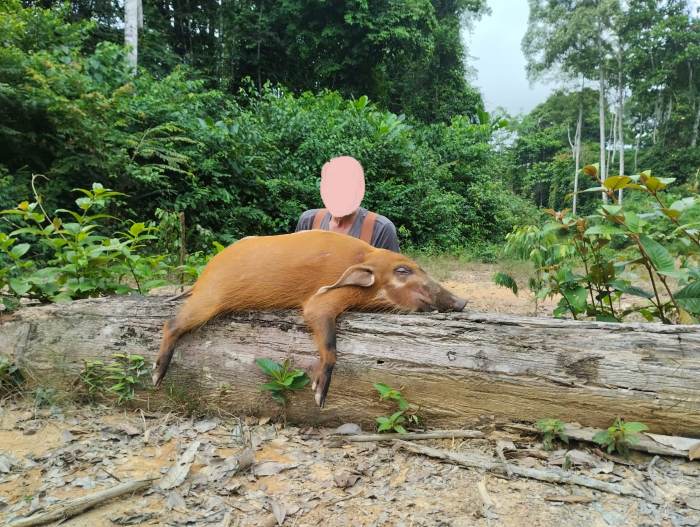
Dwarf crocodile hunts represent one element of a wider system that may also include forest antelope, red river hog, and other species adapted to dense cover. Each contributes to the experience in a different way, but all are tied to the same underlying conditions—restricted visibility, close-range encounters, and a reliance on tracking rather than observation.
Crocodile hunts in Gabon are not structured around volume or predictability, but around the integrity of the environment and the way in which wildlife exists within it.
Dwarf crocodile hunting has remained a specialized pursuit within African safaris, largely due to the environments where the species occurs. Unlike Nile crocodile, which is widely distributed across accessible river systems, dwarf crocodile are limited to dense forest regions where hunting conditions are more restrictive.
This is further shaped by how concessions are structured. Large areas of intact habitat are maintained with relatively low hunting pressure, and safari operations are not designed around high-volume species. As a result, crocodile encounters are less frequent and rarely form the primary focus of a hunt.
This limited exposure contributes to the rarity of the experience. For most hunters, crocodile hunting in Africa is associated with river-based safaris. In contrast, Gabon represents a much smaller segment of the market—one defined by terrain, access, and the need for specialized tracking in dense environments.
That combination keeps dwarf crocodile hunting in Gabon firmly within the category of niche safaris, where opportunity exists, but only within a broader and less predictable hunting system.
Hunting in Gabon operates within a structured and tightly controlled system, designed to balance access with long-term conservation. All safaris take place inside licensed concessions, where activity is regulated through defined quotas and overseen at a national level. Dwarf crocodile exists as part of the broader ecosystem rather than as a primary, high-volume species. Opportunities to hunt it are limited, not only by habitat and accessibility, but also by how wildlife management is structured across the country. The emphasis remains on maintaining low overall pressure within large, intact rainforest areas.
For international hunters, including those traveling from the United States, this system provides clarity. Permits, documentation, and in-country logistics are handled through professional operators, ensuring that hunts are conducted within legal parameters and aligned with established conservation policies. The result is a model where access is controlled, opportunities are limited, and the integrity of the environment remains the priority.
Dwarf crocodile hunts are best suited to hunters who already have experience in Africa and are looking for something beyond conventional safari formats. This is a hunt that appeals to those interested in rainforest environments, where visibility is limited, movement is slower, and success depends more on awareness than on opportunity volume. It also fits naturally into safaris that combine multiple forest species, where the overall experience is shaped by time in the field rather than a single objective.
For U.S. hunters in particular, it represents a different kind of challenge. The logistics are more involved, the conditions more demanding, and the pace less predictable than what many are used to in southern Africa. That shift is part of the appeal, but it also requires the right expectations.
This is not positioned as a primary crocodile hunt. It is part of a broader, low-pressure safari built around one of the last remaining large-scale rainforest systems in Africa.
Dwarf crocodile hunting in Gabon is best understood within the wider context of rainforest hunting as a whole. The species is present, the habitat remains largely intact, and the conditions are among the most demanding found anywhere on the continent. At the same time, the hunt is not defined by volume, predictability, or frequency of encounters.
Its value lies in the environment itself—where visibility is limited, encounters are close, and success depends on the ability to operate effectively in tight, complex terrain. The experience is shaped as much by what cannot be seen as by what is eventually encountered.
For hunters willing to adapt, it offers something increasingly rare: a hunt that takes place on the terms of the landscape, not the convenience of access.
Can you hunt dwarf crocodile in Gabon?
Yes, dwarf crocodile can be hunted in Gabon within licensed concessions under strict government regulation. All hunts operate under defined quotas and professional supervision, ensuring compliance with national wildlife management policies. Opportunities are limited, and the species is typically encountered as part of a broader rainforest safari rather than as a standalone objective.
Is Gabon a top destination for crocodile hunting in Africa?
No, Gabon is not considered a primary destination for crocodile hunting in Africa. Most structured crocodile hunts take place in southern and eastern Africa, where Nile crocodiles are pursued in open river systems. Gabon differs in that it offers a rainforest hunting environment, where dwarf crocodile may be encountered alongside other forest species within a more complex and less predictable setting.
How difficult is dwarf crocodile hunting in Gabon?
Dwarf crocodile hunting in Gabon is considered highly challenging due to the terrain and hunting conditions rather than the size of the animal. Dense vegetation limits visibility, encounters occur at close range, and opportunities are often brief. Success depends on tracking ability, positioning, and the ability to react quickly in confined environments where clear shooting lanes are not always available.
What makes crocodile hunting in Gabon different from other African safaris?
Crocodile hunting in Gabon takes place in dense rainforest rather than open river systems. This creates a fundamentally different experience, where visibility is restricted, movement is slower, and encounters are less predictable. Instead of planned setups along riverbanks, hunts are shaped by terrain, requiring close-range awareness and the ability to respond in real time.
How rare is dwarf crocodile hunting in Africa?
Dwarf crocodile hunting is considered one of the more specialized and less commonly pursued forms of crocodile hunting in Africa. The species is limited to forested regions of Central and West Africa, and structured hunting opportunities are far fewer than those for Nile crocodile. In countries like Gabon, it exists within a tightly controlled system and is typically encountered only as part of a broader rainforest safari.
Can American hunters travel to Gabon for a crocodile hunt?
Yes, American hunters regularly travel to Gabon for hunting safaris, including opportunities to pursue species like dwarf crocodile. Travel typically involves international flights followed by in-country transfers to remote concessions. Most outfitters assist with permits, logistics, and firearm import procedures or provide rifle hire, making the process manageable despite the remote nature of the destination.
Search from our range of Hunts across various popular destinations in Africa.
Book Your Hunt