Designed by Hunters, for Hunters

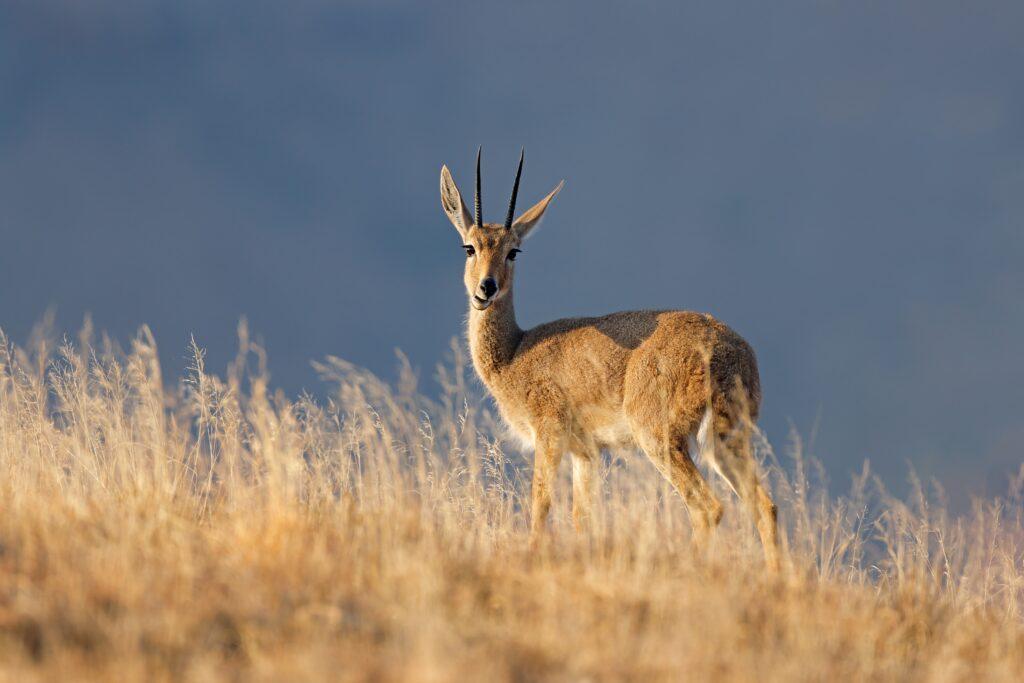
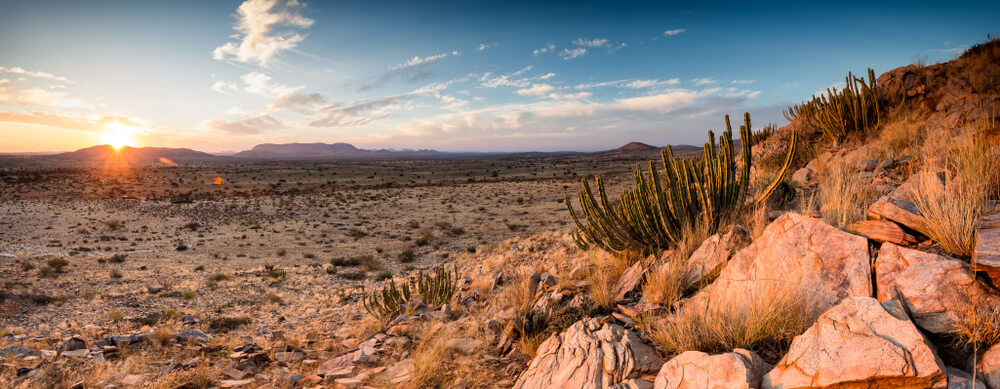
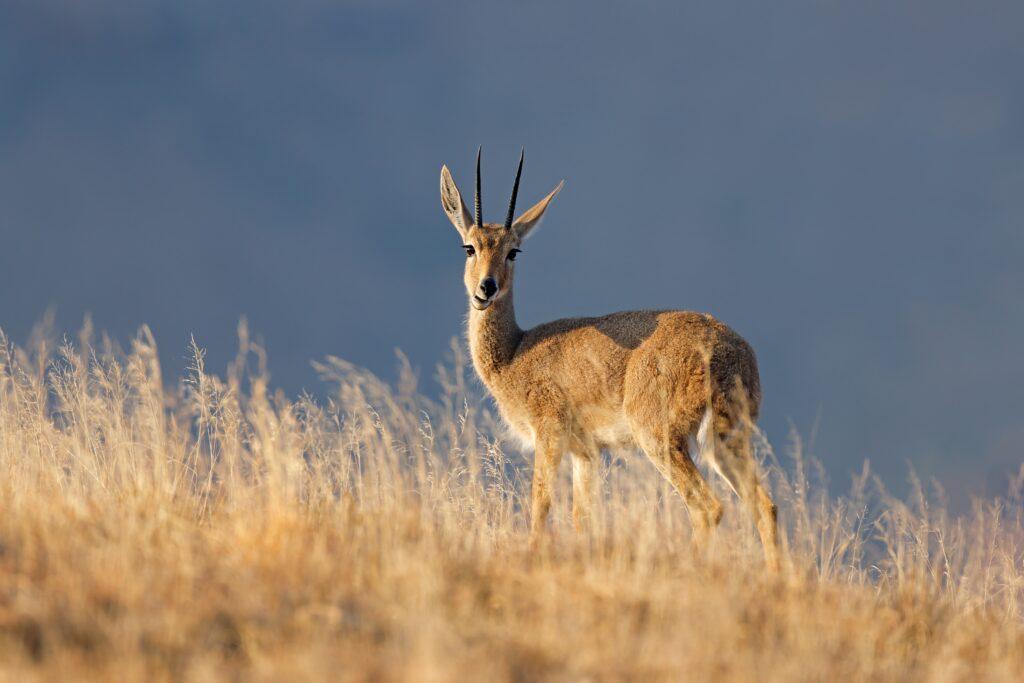
Most hunters picture South Africa as a land of thornveld, river valleys and open plains. While those landscapes define many South African hunting safaris, pursuing a Gray Rhebok, also widely known as the Vaal Rhebok, reveals a very different side of the country. Here, steep mountain slopes, rolling grasslands and constant wind create one of Africa's most distinctive spot-and-stalk safaris.
Success has little to do with driving from one valley to the next. Vaal Rhebok are mountain antelope, living in open country where they rely on exceptional eyesight and elevated ground to detect danger long before a hunter comes within range. Reaching a mature ram often demands careful glassing, patient stalking and a willingness to climb into terrain that few other South African plains game inhabit.
The mountains dictate the pace of the hunt. Hours may be spent glassing distant ridgelines before a suitable ram is found, while every approach must be carefully planned to make use of folds in the terrain, changing wind and the limited cover available. A successful stalk is often the result of patience and sound decision-making rather than speed.
Those prepared to tackle steep terrain and earn every opportunity will find Vaal Rhebok hunting unlike almost any other antelope hunt in South Africa. It is a hunt defined as much by the mountains as by the animal itself.
Vaal Rhebok rarely sit at the top of a first-time visitor's hunting list. Yet among experienced plains game hunters, they are widely regarded as one of South Africa's finest mountain trophies. Their appeal has little to do with size and everything to do with the challenge of pursuing a mature ram across open country where every movement can be detected from hundreds of yards away.
Unlike hunting in thick bush, there is little opportunity to recover from a mistake. Every stalk must be planned around the terrain, the wind and the ram's position on the mountain. Even after locating a suitable trophy, reaching shooting distance often demands patience, physical effort and the discipline to abandon an approach that is no longer working.
A mature Vaal Rhebok is respected not because it is easy to hunt, but because it isn't. Success comes from reading the mountain correctly, making good decisions and taking advantage of the brief opportunities that the terrain allows. That combination of challenge and fair chase is what draws hunters back to South Africa's high country.
South Africa's Vaal Rhebok country lies high above the valleys and bushveld that many visiting hunters associate with an African safari. Rolling mountain grasslands, rocky ridges and steep slopes create a landscape where visibility stretches for miles, allowing both hunter and game to see across vast areas of open country.
This terrain shapes every aspect of the hunt. Mornings often begin by climbing to elevated vantage points where hunters and their Professional Hunter spend time behind binoculars, carefully searching distant hillsides for a mature ram. Once one is located, the real work begins. Every stalk must use the folds of the mountain, changing wind and natural contours to remain out of sight.
Unlike many Plains Game Hunts, opportunities can develop at considerably longer distances. Hunters should arrive confident shooting from stable field positions, while a flat-shooting rifle and quality optics provide a real advantage when conditions demand a longer shot. Equally important is being prepared for the physical side of the hunt. Reaching the best vantage points and completing a successful stalk often involves several climbs across steep mountain terrain, making a reasonable level of fitness an advantage.
Although the country can appear open and forgiving from a distance, the mountains have a way of testing both judgement and patience. One careless movement on an exposed slope or a sudden shift in the wind can bring an otherwise perfect stalk to an end.
A mature Vaal Rhebok ram is not judged by size alone. Good horn length matters, but experienced hunters and Professional Hunters also look for strong bases, symmetry and the signs of a ram that has survived several seasons in demanding mountain country.
Judging trophy quality can be difficult at long range. Heat shimmer, uneven light and the angle of the ram on a distant slope can all affect how the horns appear through binoculars. Time behind the spotting scope is therefore important, particularly when several animals are feeding or resting together and the hunter must identify the right ram before beginning a stalk.
What makes a mature Vaal Rhebok especially significant is the country in which he has survived. These rams spend their lives using height, visibility and open terrain to remain beyond danger. Closing the distance on one requires the hunter and Professional Hunter to overcome the very advantages that have kept him alive.
That is why the trophy carries such respect among experienced plains game hunters. The horns may be elegant rather than imposing, but they represent a hunt in which judgement, patience and physical effort all played a part.
A mature Vaal Rhebok ram is not judged by horn length alone. Experienced hunters and Professional Hunters also look for strong bases, symmetry and the overall character of an older mountain ram that has spent years surviving in demanding terrain.
Judging trophy quality can be challenging from a distance. Heat shimmer, changing light and the angle of a ram standing on a distant slope can all influence how his horns appear through binoculars or a spotting scope. Taking the time to evaluate several animals before beginning a stalk is often part of the hunt.
Every mature ram represents years of surviving in open country where visibility is his greatest defence. Reaching one requires the hunter and Professional Hunter to overcome the same advantages that have allowed the ram to avoid danger season after season.
Although Vaal Rhebok may never be the largest trophy in a collection, they are often among the most respected. Many are taken by experienced plains game hunters who have already pursued Africa's more familiar species and are looking for something that demands a different style of hunting. A mature mountain ram tells a story of careful planning, difficult stalks and country that cannot be conquered in a vehicle.
That is why Vaal Rhebok continue to hold a special place in many trophy rooms. They represent more than a successful shot. They represent a hunt that had to be earned.
South Africa remains one of the finest destinations for Vaal Rhebok hunting because it combines healthy populations, experienced Professional Hunters and mountain country perfectly suited to traditional spot-and-stalk hunting. Success is earned through careful planning, patient glassing and making the most of brief opportunities when the terrain finally allows a stalk to come together.
Whether pursued as the highlight of a dedicated mountain safari or combined with Black Wildebeest Hunting in South Africa, a mature Vaal Rhebok remains one of Africa's most respected mountain trophies. Hunters who add one to their collection are rarely motivated by horn length alone. They are drawn by the challenge, the country and the satisfaction of earning a trophy that relatively few visiting hunters ever pursue.
Vaal Rhebok are typically hunted during South Africa's annual hunting season, when the cooler months provide comfortable temperatures and excellent visibility across the mountains. Hunting conditions are generally at their best once the summer rains have passed and the grass begins to shorten, making it easier to locate and assess mature rams.
Because Vaal Rhebok are hunted in open mountain country, hunters often prefer flat-shooting calibres capable of accurate shots at longer distances. Popular choices include the .243 Winchester, .25-06 Remington, .270 Winchester, 7mm Remington Magnum and .30-06 Springfield, paired with quality optics and a hunter who is confident shooting from practical field positions.
Vaal Rhebok are widely regarded as one of South Africa's more challenging plains game species. Their excellent eyesight, preference for open mountain terrain and habit of occupying elevated ground demand careful glassing, patient stalking and a reasonable level of physical fitness.
Yes. Vaal Rhebok are frequently hunted alongside Black Wildebeest, Mountain Reedbuck, Blesbok, Springbok and other Eastern Cape species. Combining several species allows hunters to enjoy a varied mountain safari while making the most of their time in South Africa. If you are planning a multi-species safari, our Hunting Trips page provides an overview of hunting opportunities across Africa.
Vaal Rhebok are primarily found in South Africa's high-altitude grasslands, with the Eastern Cape and Free State among the country's best-known destinations. These mountainous landscapes provide the terrain, visibility and hunting conditions that have made Vaal Rhebok one of South Africa's most respected mountain trophies.
Search from our range of Hunts across various popular destinations in Africa.

Book Your Hunt