Designed by Hunters, for Hunters

Botswana is best known among international hunters for elephant, Cape buffalo and vast stretches of genuinely wild African country. Yet the same river systems, floodplains and woodland that support its dangerous game are also home to impressive plains game, including mature waterbuck bulls that can become an unexpected highlight of a safari. Hunters exploring Waterbuck Hunts across Africa may not immediately think of Botswana, but pursuing an old bull here offers something distinctly different: the opportunity to hunt one of Africa's most striking antelope in the heart of classic big-game country.
Waterbuck are naturally drawn to areas where reliable water and suitable grazing come together, making Botswana's riverine habitat and seasonal floodplains particularly rewarding places to search for mature bulls. Early mornings may be spent glassing open areas and woodland edges before the heat pushes animals towards heavier cover, while fresh tracks along sandy riverbeds can provide the starting point for a careful stalk. As with so much hunting in Botswana, the landscape and the animals sharing it are an important part of the story.
For American and international sportsmen planning to Hunt in Botswana, waterbuck fit naturally into a safari that may also include Cape buffalo, elephant and other sought-after species. They may not be the animal that first brings a hunter to Botswana, but that can quickly change when a heavy, mature bull appears along a riverbank or steps unexpectedly from the woodland. In a country where every day in the bush can produce something different, a waterbuck taken when the opportunity presents itself can become one of the safari's most memorable trophies.
Botswana has never been promoted as Africa's primary waterbuck destination, and that is part of what makes hunting them here interesting. The attraction lies less in pursuing a single species and more in the opportunity to hunt a mature, free-ranging bull across large wilderness areas where animals move naturally and every encounter develops on its own terms.
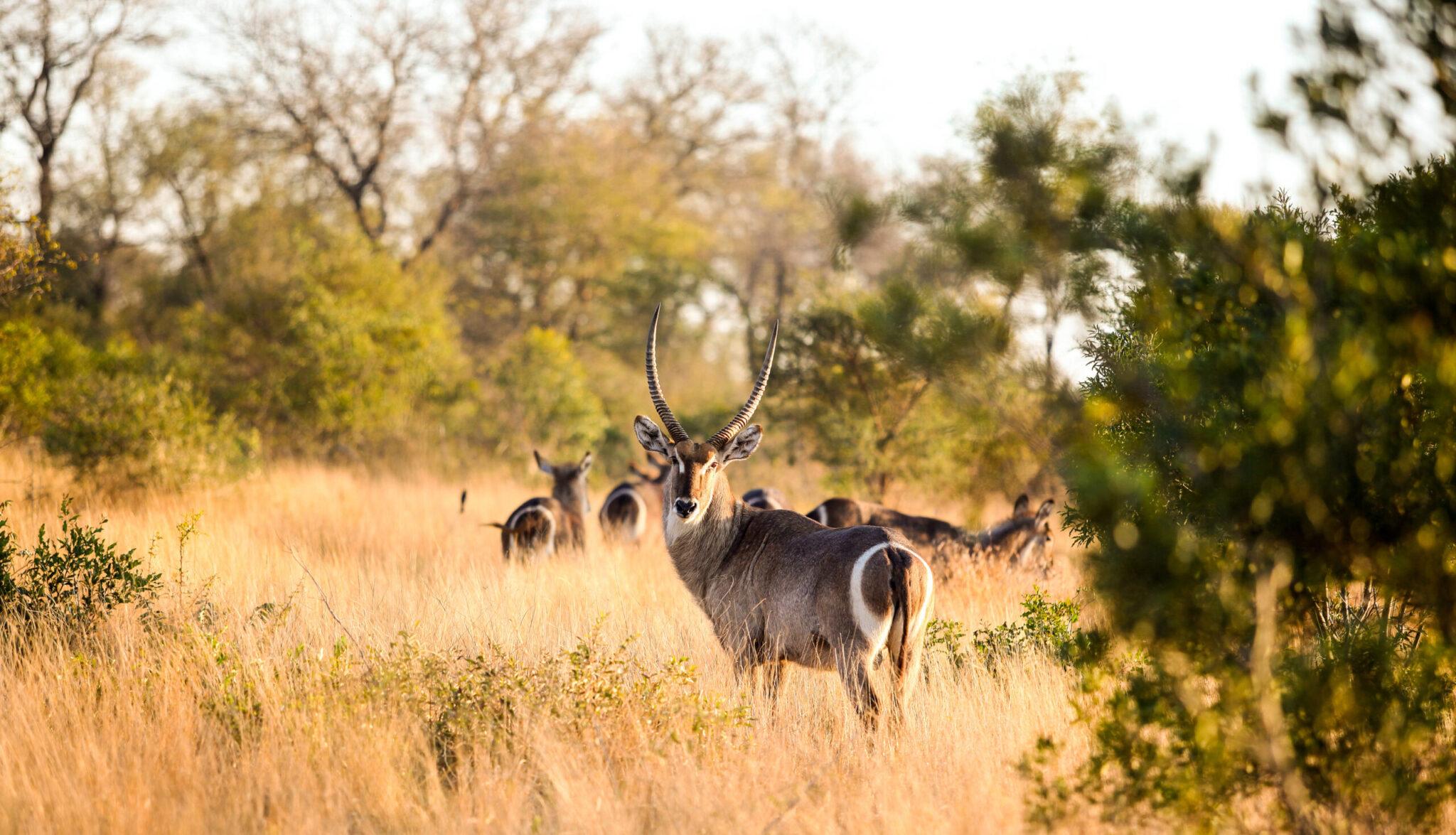
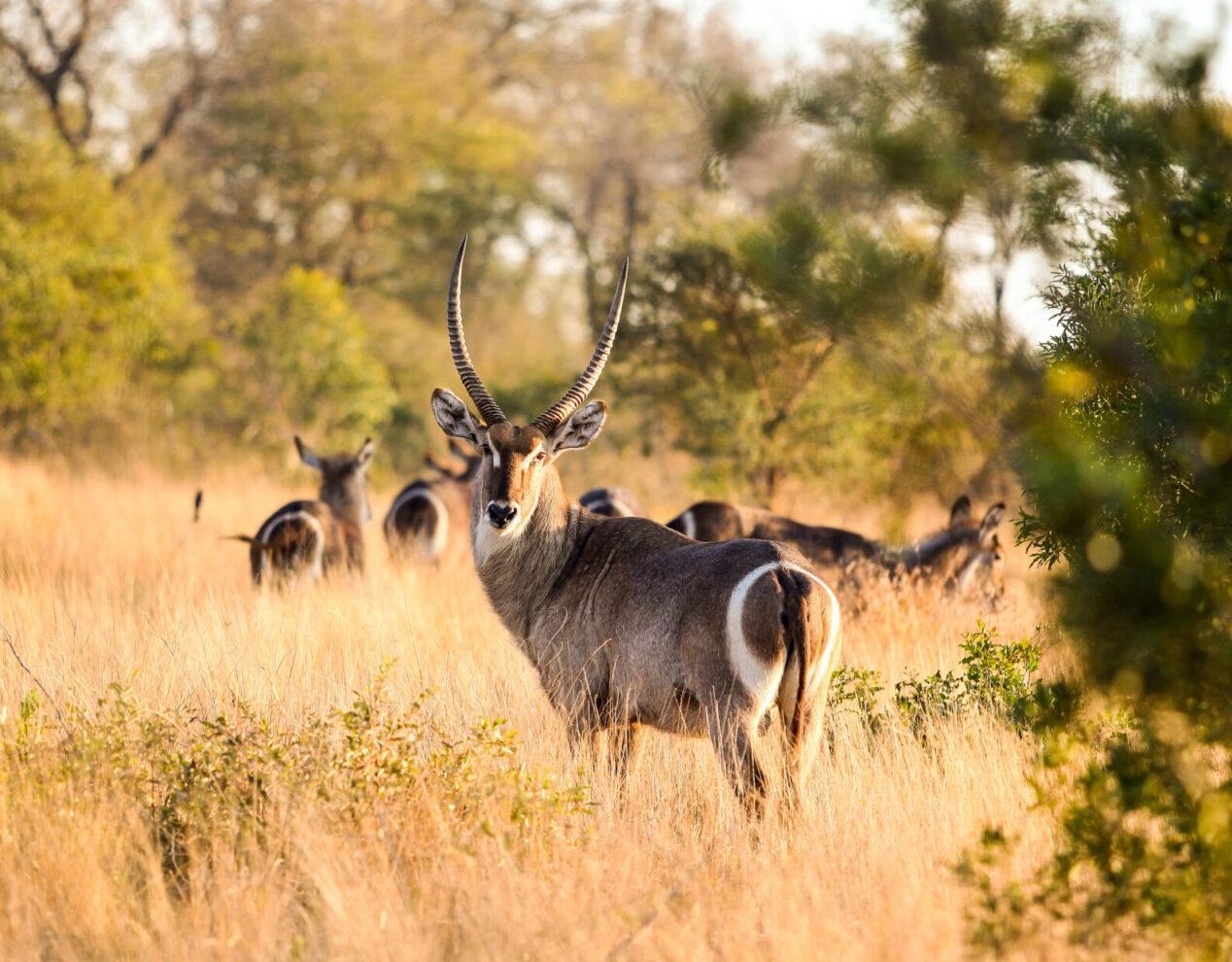
Good bulls can be impressive animals, with heavy bodies, thick necks and long, sweeping horns that make an old waterbuck instantly recognisable. Trophy quality matters, but a Botswana waterbuck is often remembered just as much for where it was hunted. Following tracks through riverine woodland or spotting a mature bull across an open floodplain brings a completely different character to the hunt than pursuing the same species on a smaller, intensively managed property.
The surroundings add another dimension. Elephant tracks may cross the same sandy riverbed being followed for waterbuck, while buffalo, plains game and other wildlife can appear without warning. It is this sense of hunting within a complete African ecosystem that gives Botswana its appeal. A mature waterbuck taken in such country represents more than horn length alone; the wilderness, the stalk and everything encountered along the way become part of the trophy.
Waterbuck are rarely far from reliable water, and much of the hunt revolves around understanding how mature bulls use the river systems, floodplains and surrounding woodland throughout the day. Early mornings can be particularly productive, with bulls moving into more open areas to feed before temperatures begin to rise. Glassing from a distance allows hunters to cover large stretches of suitable habitat without disturbing animals unnecessarily, while fresh tracks along sandy riverbeds and well-used game trails can reveal where a bull has moved during the night.
As the morning warms, waterbuck often retreat towards thicker riverine cover and shaded woodland, where spotting an old bull becomes considerably more difficult. A glimpse of horn through the trees or movement along the edge of a clearing may be all that gives him away. Once a suitable bull is located, the wind becomes critical, and the final approach can involve using vegetation, riverbanks and changes in the terrain to close the distance without being detected.
This is also country shared with some considerably larger animals. Old dagga boy buffalo may spend time in the same riverine woodland and around permanent water, meaning tracks followed in search of waterbuck can just as easily cross those of a solitary bull or small bachelor group. It is one of the realities of Buffalo Hunting in Botswana and adds another dimension to pursuing plains game in genuine dangerous game country. Hunters and Professional Hunters remain aware of what may be ahead, particularly when following spoor through thick cover where visibility can quickly disappear.
The hunt is often a mixture of patience and opportunity. A morning spent searching promising waterbuck habitat may produce nothing more than distant sightings, while the next bend in a river or opening in the woodland can suddenly reveal a heavy old bull standing completely unaware of the hunting party. In Botswana, that uncertainty is part of the appeal. The waterbuck is the objective, but the wilderness surrounding the hunt ensures that no two days in the field unfold in quite the same way.
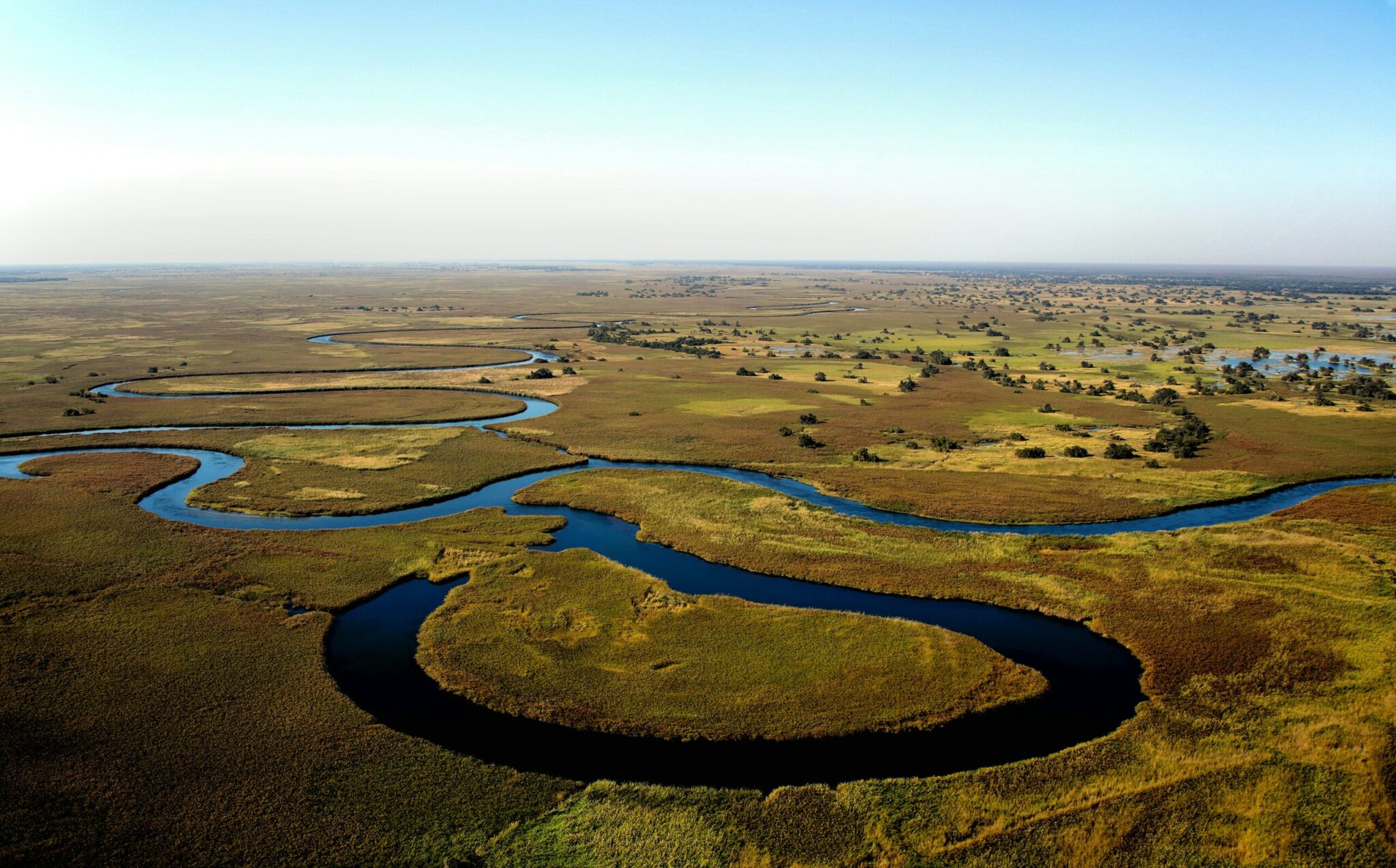
Waterbuck hunting in Botswana is closely tied to the country's wetter northern regions, where permanent rivers, floodplains and riverine woodland provide the habitat these animals prefer. This is very different country from the dry Kalahari landscapes farther south, and hunters specifically interested in waterbuck should consider the location and habitat of a concession carefully when planning their safari.
These northern wilderness areas are also part of what has made Botswana famous for dangerous game. Elephant move through many of the same broader ecosystems, and a safari built around Elephant Hunting in Botswana can sometimes provide the opportunity to add a mature waterbuck when the right bull is encountered. The two hunts may be very different, but sharing the same vast wilderness gives the safari a character that is difficult to reproduce elsewhere.
Waterbuck can also complement a broader plains game safari, with each day shaped by the habitat, fresh tracks and whatever opportunities the bush presents. A hunter may leave camp with one objective in mind and return having spent the day pursuing something entirely different. That flexibility is part of the attraction of hunting Botswana's wild country, where a mature waterbuck encountered beside a river or along the edge of a floodplain can become far more than simply an additional trophy on the safari.
Yes. Botswana may not be as widely known for waterbuck as some other African destinations, but mature free-ranging bulls can be hunted in suitable areas, particularly where permanent water, riverine woodland and floodplain habitat come together. The attraction is the opportunity to pursue waterbuck as part of a genuine wilderness safari in some of Africa's most celebrated big-game country.
Waterbuck are most closely associated with Botswana's wetter northern regions, where permanent rivers, floodplains and riverine woodland provide suitable habitat. Hunters interested specifically in waterbuck should confirm that the concession they are considering supports a healthy population, as conditions vary considerably between Botswana's northern waterways and the much drier Kalahari regions farther south.
Waterbuck can be hunted free range across large wilderness concessions where suitable habitat and populations occur. In these areas, bulls move naturally according to water availability, grazing, seasonal conditions and hunting pressure, often sharing the broader landscape with elephant, Cape buffalo and other plains game.
Yes, depending on the concession, available quota and the safari being booked. Waterbuck inhabit some of the same broader northern ecosystems used by elephant and Cape buffalo, making it possible to include a mature bull on certain dangerous game safaris. Hunters should always confirm the available species and quota for their specific hunting area before travelling.
The best time depends partly on the hunting area and seasonal conditions. As the dry season progresses, animals often become increasingly concentrated around reliable water sources, while thinning vegetation can improve visibility. Early mornings and late afternoons are generally productive periods for locating feeding bulls before they move towards heavier cover during the warmer parts of the day.
Botswana's appeal lies primarily in the setting. Rather than being known as a high-density waterbuck destination, it offers the opportunity to pursue mature bulls in wild country where elephant, Cape buffalo and other African game may occupy the same broader ecosystem. For hunters who value the surroundings and the story behind a trophy as much as its measurements, a Botswana waterbuck can be a particularly rewarding addition to a safari.
Search from our range of Hunts across various popular destinations in Africa.

Book Your Hunt