Designed by Hunters, for Hunters

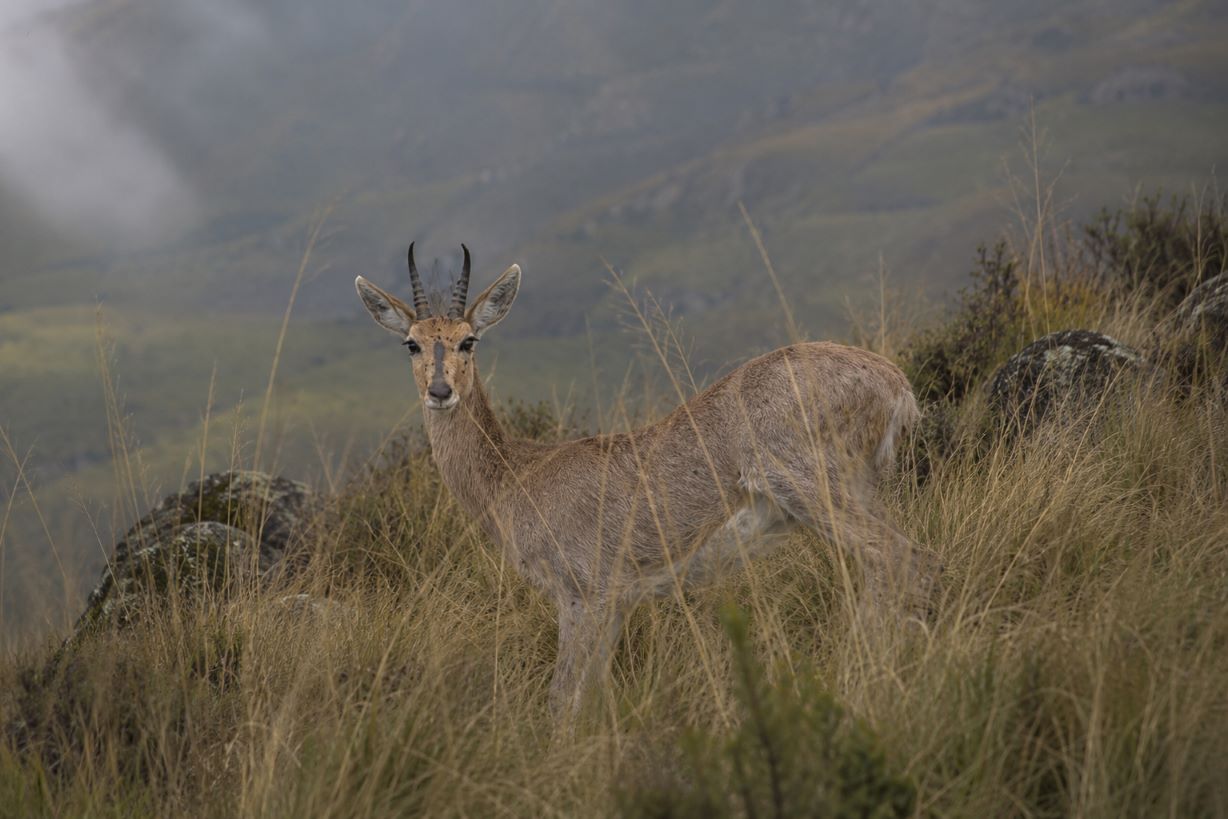
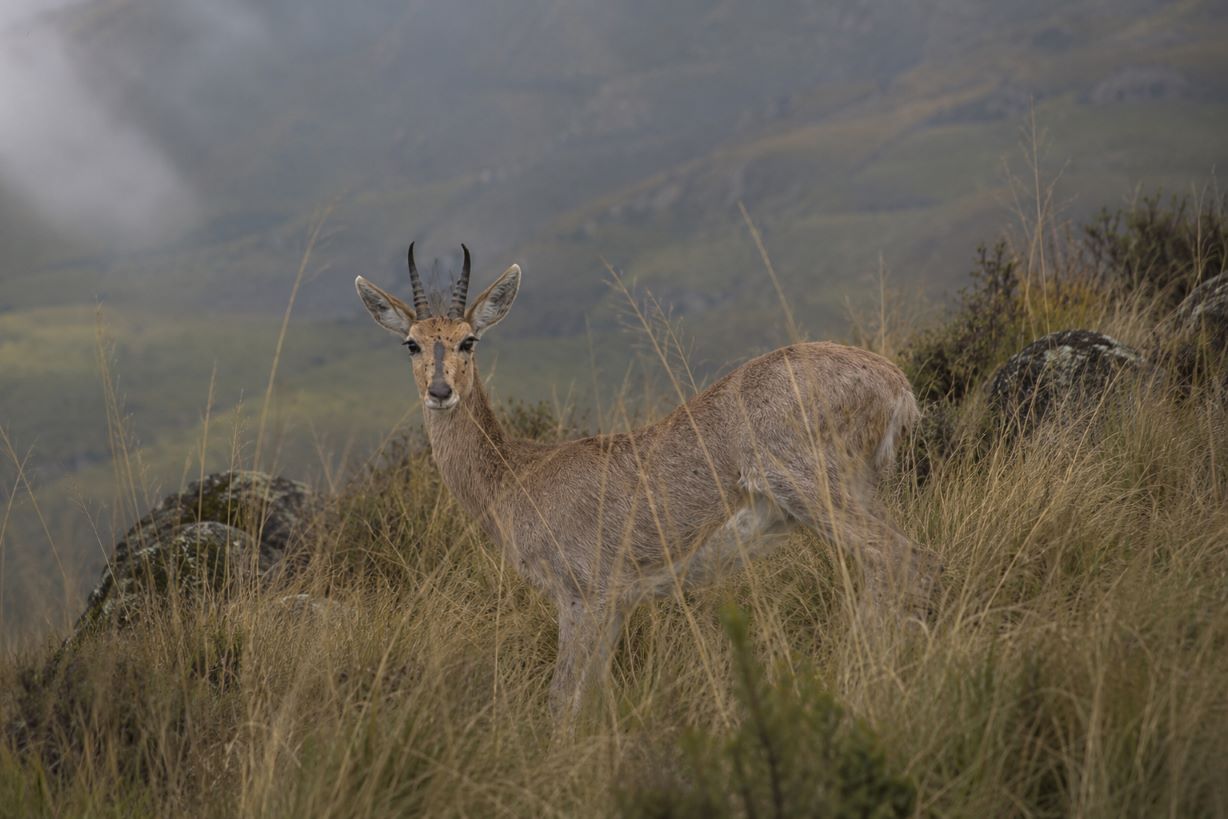
Chandler's mountain reedbuck may never be the animal that first brings an international hunter to Uganda, but for the specialist collector, it can become an important part of the safari. This distinctive East African antelope is generally pursued as part of a broader hunt, often by experienced African hunters looking to add one of the continent's more geographically specialised trophies to their collection.
Hunters considering Hunting in Uganda will typically pursue Chandler's mountain reedbuck alongside other priority species rather than planning an entire safari around a single reedbuck. Success comes from spending time in the right country, glassing carefully and taking advantage of an opportunity when a mature ram is located. The animal may be small, but finding one across Uganda's broken landscapes can make the hunt considerably bigger than the trophy itself.
That is really where its appeal lies. Chandler's mountain reedbuck is a collector's animal, one that may not dominate the safari, but can matter enormously to the hunter who specifically came to Uganda hoping to add it to a carefully built African collection.
Chanler's Mountain Reedbuck (sometimes incorrectly spelled Chandler's Mountain Reedbuck) may never be the animal that first brings an international hunter to Uganda, but for the specialist collector, it can become an important part of the safari. This distinctive East African antelope is generally pursued as part of a broader hunt, often by experienced African hunters looking to add one of the continent's more geographically specialised trophies to their collection.
Hunters considering Hunting in Uganda will typically pursue Chanler’s mountain reedbuck alongside other priority species rather than planning an entire safari around a single reedbuck. Success comes from spending time in the right country, glassing carefully and taking advantage of an opportunity when a mature ram is located. The animal may be small, but finding one across Uganda's broken landscapes can make the hunt considerably bigger than the trophy itself.
That is really where its appeal lies. Chanler’s mountain reedbuck is a collector's animal, one that may not dominate the safari, but can matter enormously to the hunter who specifically came to Uganda hoping to add it to a carefully built African collection.
Chanler’s mountain reedbuck is unlikely to sit at the top of a first-time hunter's African wish list. Its appeal is far more specialised, particularly among collectors who have already hunted extensively across the continent and are beginning to seek regional species and subspecies that cannot be found in every destination.
Uganda gives these hunters the opportunity to add Chanler’s mountain reedbuck as part of a much broader East African safari. It may share the species list with animals carrying considerably more name recognition, yet to the hunter who has specifically been looking for one, successfully taking a mature ram can be every bit as satisfying.
There is also something appealing about hunting an animal that relatively few visiting sportsmen will ever pursue. Chanler’s mountain reedbuck is not about chasing record-book measurements or building an entire safari around a single trophy. It is about being in the right part of Africa, having access to the right habitat and adding a very particular animal to a collection that may have taken decades to build.
Chanler’s mountain reedbuck are associated with elevated, broken country where rocky slopes, grass-covered hillsides and scattered vegetation provide the habitat they prefer. This is terrain that lends itself naturally to glassing, with hunters and their Professional Hunter using higher vantage points to search suitable hillsides before deciding whether an animal is worth approaching.
The landscape is an important part of the hunt. A reedbuck can be difficult to pick out against grass and rock, particularly when lying down or standing motionless among scattered cover. Finding animals often means slowing down and allowing the binoculars to do the work rather than simply covering more ground.
Once a mature ram is located, the terrain begins to dictate the next move. Distance, wind and available cover all influence the approach, turning the pursuit of a relatively small antelope into a careful spot-and-stalk hunt across some impressive East African country.
Hunting usually begins by reaching suitable elevated country and spending time behind binoculars. Chanler’s mountain reedbuck are small animals in comparison with many of the species an international hunter may pursue in Uganda, and picking out a mature ram across a broad hillside can require patient glassing.
Once a ram is located and judged, the Professional Hunter will plan an approach using the folds in the terrain and available cover. Depending on where the animal is standing, the final shot may be taken across relatively open country, making a steady shooting position and confidence at sensible hunting distances important.
American hunters accustomed to pursuing deer, sheep or pronghorn in open country will recognise elements of the approach, but the scale is different. Here, the challenge is often finding a relatively small antelope hidden somewhere within a much larger African landscape.
There is rarely any reason to rush. Time spent behind good optics can save considerably more time on foot, and once a mature ram is spotted, patience with the stalk often creates a far better opportunity than trying to force an approach.
One of the easiest mistakes to make when hunting a small antelope in open, broken country is assuming it will be easy to spot. The opposite can often be true. A Chanler’s mountain reedbuck standing motionless against a hillside can disappear surprisingly well among grass, rocks and scattered vegetation.
This is where good glass makes a difference. Instead of searching for an entire animal, experienced hunters begin noticing smaller details, the curve of a horn, the flick of an ear or a patch of colour that looks slightly out of place. Sometimes the hillside that appeared empty five minutes earlier suddenly produces an animal that was standing there all along.
Once a mature ram is located, the hunt changes quickly. What began as a slow morning behind binoculars becomes a careful stalk, with every fold in the ground suddenly mattering.
Chanler’s mountain reedbuck is typically pursued as part of a broader Uganda safari rather than as the primary reason for travelling to the country. A serious collector may arrive with Nile buffalo as a priority, while others are drawn by Uganda's exceptional Sitatunga Hunts and the opportunity to pursue species that are difficult to find elsewhere in Africa.
The broader species list is where Uganda becomes particularly interesting. Uganda kob, Jackson's hartebeest, Sudan Bohor reedbuck, East African defassa waterbuck and other regional antelope can all add depth to a carefully planned safari. For hunters who have already spent considerable time in Africa, combining these specialised trophies with traditional Plains Game Hunts can turn a buffalo or sitatunga safari into an opportunity to fill several long-standing gaps in a collection.
Chanler’s mountain reedbuck fits naturally into that picture. It may not be the largest animal hunted during the safari, but to the collector who specifically hoped to find a mature ram while in Uganda, its place in the trophy room may carry considerably more significance than its size suggests.
Yes. Chanler’s mountain reedbuck can be hunted in Uganda where suitable populations, hunting areas and quota are available. It is primarily a specialist collector's trophy and is normally added to a broader safari rather than hunted as the sole objective of the trip. Hunters planning African hunting trips that include specialist species such as Chanler’s mountain reedbuck should confirm availability and quota with their outfitter well before travelling.
Uganda offers an interesting selection of species for international hunters, with Nile buffalo and sitatunga often among the more important safari objectives. Depending on the hunting area and available quota, a safari may also include Uganda kob, Jackson's hartebeest, Sudan Bohor reedbuck, East African defassa waterbuck, oribi and other regional antelope. The exact combination should be discussed with the outfitter before booking.
Some hunting areas in Uganda are remote, and reaching camp may involve considerable overland travel after arriving in the country. Road conditions and transfer times can vary between hunting areas and at different times of the season. International hunters should ask their outfitter exactly how the concession is reached, how long the transfer takes and what level of communication and facilities are available in camp.
The challenge is often finding and judging a relatively small antelope across large areas of suitable country. Hunters can expect to spend time glassing hillsides and broken terrain before a mature ram is located. Once an animal is spotted, the terrain, wind and available cover determine the approach, with a steady shooting position important when shots are presented across open country.
Yes, that would be the sensible approach. Hunters hoping to add Chanler’s mountain reedbuck to their safari should discuss it with their outfitter during the planning stages rather than assuming the species can simply be added after arrival. Confirming the species, hunting area and available quota beforehand gives the outfitter an opportunity to plan the safari around the hunter's complete trophy list.
Search from our range of Hunts across various popular destinations in Africa.

Book Your Hunt