Designed by Hunters, for Hunters

Yes, but opportunities are extremely limited.
Rhino hunting in Namibia is one of the most tightly controlled hunting opportunities in Africa and operates very differently from conventional Hunting Safaris in Namibia. Hunters cannot simply choose a hunting area, select dates and book a rhino safari in the usual way.
Only a small number of permits become available, with hunts typically involving older, non-breeding bulls identified as part of established wildlife management programs. Access depends on the specific animal, permit availability and government approval rather than hunter preference or a normal safari schedule.
This is what separates Rhino Hunts in Africa from almost every other African hunting safari. Even with the budget and willingness to hunt one, a suitable opportunity may not be available when the hunter is ready to travel.
Rhino hunting in Namibia operates under a tightly controlled, government-managed system designed to support long-term conservation. Every stage of the process, from permit allocation to the final hunt, is regulated and monitored.
Permits are issued through national wildlife authorities in extremely limited numbers each year. The specific animal is identified in advance, usually an older, non-breeding bull selected by conservation officials based on management needs rather than hunter preference.
Hunts take place under strict supervision and may involve government representatives, rangers, and professional hunters working together. The process includes detailed documentation and compliance requirements, both before and after the hunt.
Access to these permits comes through long-standing relationships with outfitters or conservation bodies. Some permits are allocated directly, while others are sold through controlled auctions, often well in advance.
From a hunter’s perspective, timelines are uncertain and availability is never guaranteed. In reality, these permits are often discussed years ahead of time and only become available under specific conditions.
Rather than booking a hunt, the process is closer to qualifying for an opportunity that may or may not materialize.
Rhino hunting opportunities in Namibia are tied to specific wildlife populations and approved management areas rather than a broad choice of hunting destinations. The location of a hunt therefore depends on where an individual animal has been identified for management and where the necessary permit has been issued.
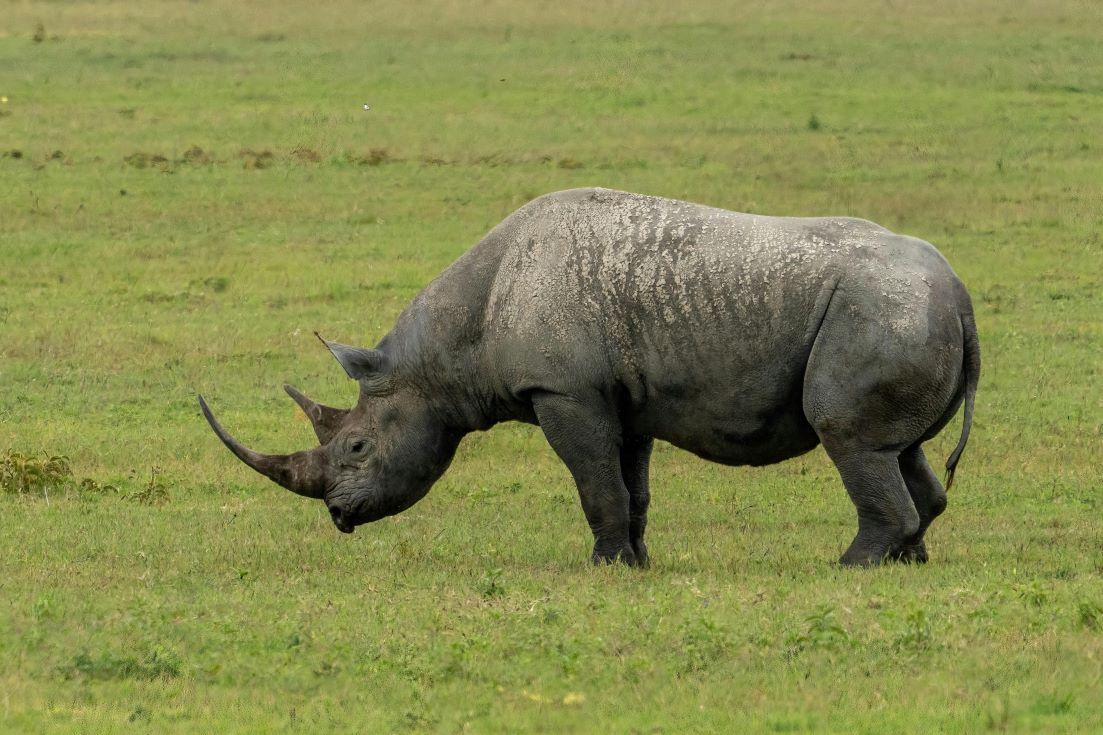
Black rhino opportunities are particularly restricted and are closely connected to Namibia's national conservation and population-management programs. White rhino opportunities, when available, are more commonly associated with managed populations on private land or conservancies.
This means a hunter generally does not choose a region first and then look for a rhino hunt. The available animal, permit and management area determine where the hunt takes place.
Rhino Shot Placement
Understanding shot placement on a rhino is critical, but it is a highly technical subject that depends on angle, positioning, and the specific conditions of the hunt.
Due to the size, anatomy, and density of a rhino, shot placement differs significantly from other dangerous game species and requires precise guidance from an experienced professional hunter.
One of the key challenges is that rhino are not always presented in ideal positions. A charging rhino can be extremely difficult to stop cleanly, as the horn and head position can obstruct a clear shot to vital areas. This makes shot selection and timing critical, especially under pressure.
For a detailed breakdown of shot angles, placement options, and real-world considerations, refer to our guide on rhino shot placement.
Black Rhino vs White Rhino Hunting in Namibia
There is a critical difference between black rhino and white rhino hunting in Namibia, and understanding that difference is essential before even considering this type of hunt. The two are managed very differently, and that directly affects availability, cost, and how a hunter might gain access.
Black Rhino Hunts
As one of Africa's Big Five, black rhino represents one of the rarest opportunities in Big Five Hunting, with extremely limited quota and strict regulation governing every hunt. Only a very limited number of permits are issued each year, typically for older, non-breeding bulls that have been specifically identified by conservation authorities. These animals are selected based on population management needs, not hunter preference.
Access is controlled at a national level and usually comes through established conservation channels, government allocation, or long-standing outfitter relationships. In some cases, permits are sold at international auctions and can reach extremely high prices.
Planning a black rhino hunt in Namibia is rarely a straightforward process. There is no fixed season, no guaranteed availability, and no standard booking path. Even experienced African hunters may spend years without ever being in a position to pursue one.
White Rhino Hunts
White rhino hunting, where available, operates under a less restrictive framework than black rhino, but remains tightly managed and limited. Opportunities are typically linked to specific populations on private land or managed conservancies, often tied to population control or relocation needs and subject to government approval.
Compared to black rhino, availability is somewhat more predictable and access is more likely to come through outfitters rather than national-level allocation. The process is less complex, but still regulated and dependent on timing, location, and approval.
Even so, white rhino hunting should not be viewed as a typical safari option. It remains a specialised hunt where availability depends on circumstance rather than schedule.
Key Takeaway: Is Rhino Hunting in Namibia Realistic?
The distinction comes down to access, not preference. Black rhino hunts are exceptionally rare, tightly controlled, and in most cases simply not available, regardless of budget or experience. Even seasoned Africa hunters may spend years without ever having a realistic opportunity.
White rhino hunts are more attainable, but still limited and dependent on specific conditions such as location, population management needs, and government approval. They cannot be approached like a standard safari booking and are never guaranteed.
Whether rhino hunting in Namibia is actually possible depends less on choice and more on whether an opportunity exists at all. These hunts sit outside the normal safari planning process and are best understood as rare, opportunity-driven experiences rather than something that can be scheduled in advance.
Rhino Darting (Green Hunts) in Namibia
Rhino darting, often referred to as a “green hunt,” is a non-lethal alternative available in Namibia under specific conservation programs. Instead of a traditional hunt, the rhino is darted under veterinary supervision as part of ongoing conservation work, such as tracking, tagging, or relocation. The process still involves tracking and approaching the animal, but the outcome is non-lethal.
Like traditional rhino hunting, these opportunities are tightly controlled and not widely available. Permits, veterinary teams, and conservation authorities are all involved, and availability depends on specific projects and timing. Green hunts can still be expensive due to the logistics and conservation work involved, and they are typically suited to hunters looking for a conservation-focused experience rather than a traditional trophy hunt.
Rhino Darting and the Dangerous Game Hunter
For experienced hunters pursuing Africa’s dangerous game species, rhino darting can provide a way to be involved in rhino conservation when traditional hunting opportunities are not accessible. Because lethal rhino hunts are so limited and tightly controlled, many hunters will never have access to one. In these cases, conservation-based darting programs offer an opportunity to track and work with these animals under professional supervision.
It’s important to note that this represents a different type of experience, focused on conservation and wildlife management rather than a traditional hunt.
What Rhino Hunting Costs — And Why It’s So Expensive
Rhino hunting sits at the very top end of African Hunting Safari Prices, with costs often reaching well into six figures. Pricing is not driven by luxury or trophy value in the traditional sense. Instead, it reflects how limited and tightly controlled these hunts are. Permits are issued in extremely small numbers, and access is tied directly to conservation programs, government oversight, and long-term wildlife management.
A significant portion of the cost is allocated toward anti-poaching efforts, habitat protection, and community-based conservation initiatives. The financial structure behind these hunts supports the broader survival of the species rather than simply facilitating a hunting experience.
The cost reflects access to a rare and highly regulated opportunity rather than the safari itself. Pricing can also vary significantly depending on the specific animal selected. In many cases, older bulls that have been identified for management purposes may differ in cost based on factors such as age, condition, and individual characteristics. Each opportunity is tied to a specific animal within a conservation framework, and that can influence the final cost in ways that are not always comparable to other dangerous game hunts.
Who Rhino Hunting in Namibia Is Actually For
Rhino hunting in Namibia is not suited to the majority of hunters planning an African safari. These opportunities are typically limited to individuals who have both the financial flexibility and the ability to navigate an uncertain timeline. In many cases, hunters pursuing rhino have prior experience in Africa and established relationships with outfitters or conservation programs.
There is often a strong conservation-driven motivation behind the decision, rather than a purely trophy-focused objective. Access is rarely immediate, and the process can take time, coordination, and the right circumstances aligning. For first-time hunters, or those looking for a structured and predictable safari, this is not a practical entry point. Even for experienced hunters, rhino remains an opportunity that arises under specific conditions rather than something that can be planned in advance.
The Conservation Reality
Namibia is widely regarded as one of Africa’s most successful conservation models, and controlled hunting plays a defined role within that system. Rhino hunts are structured around population management rather than opportunity alone. By targeting older, non-breeding bulls that are no longer contributing to the gene pool, these hunts support the long-term stability of the species.
Revenue generated from these permits is significant and directed toward anti-poaching operations, habitat protection, and ongoing wildlife management. In reality, protecting rhino populations requires constant funding and oversight, and this financial contribution plays a measurable role. Local communities benefit through employment, infrastructure, and direct involvement in wildlife protection, creating a system where conservation has both ecological and economic value. The system is tightly regulated at a national level, with strict oversight to ensure that both conservation goals and ethical standards are maintained.
Other Dangerous Game Hunting Options
For hunters considering a dangerous game safari in Africa, it’s important to understand how rhino hunting compares to other available opportunities.
Cape Buffalo Hunts
Cape Buffalo Hunts remain one of the most widely pursued dangerous game opportunities in Africa. They offer a true free-range hunting experience, consistent availability across multiple countries, and the kind of challenge hunters associate with a traditional African safari. For American hunters, buffalo represents a practical and proven entry point into dangerous game hunting.
Elephant Hunts
In select regions, elephant hunts provide a highly structured and conservation-driven experience. These safaris often take place in large wilderness areas and are carefully managed as part of broader wildlife programs. While still regulated, elephant hunts are generally more accessible and predictable in terms of planning compared to rhino opportunities.
Dangerous Game Safaris
Many hunters choose to pursue combination safaris that include species such as buffalo, leopard, and plains game. These hunts offer flexibility in both planning and execution, and allow hunters to experience multiple aspects of African hunting within a single safari. They are widely available, can be planned with greater certainty, and remain a common choice for both first-time and returning hunters.
Hunters interested in dangerous game opportunities in Namibia often also consider experiences such as leopard hunting in Namibia and hippo hunting in Namibia. While these hunts differ significantly from rhino in terms of accessibility and planning, they remain among the most respected dangerous game safaris available in Africa.
Yes, but rhino hunting in Namibia is extremely limited and tightly regulated. Permits are issued for specific animals under government-approved wildlife management programs, with opportunities usually involving older, non-breeding bulls identified for management purposes.
Rhino hunting can cost well into six figures. The final price depends on the specific animal, permit, conservation program and circumstances surrounding the hunt. These are highly regulated opportunities rather than standard safari packages, so there is no single fixed price.
Yes, but black rhino hunting opportunities are exceptionally rare. Only a very limited number of permits may be issued for specifically identified animals, and access generally depends on government allocation, conservation programs or established outfitter relationships.
White rhino hunting can be available in Namibia under approved management programs. Opportunities are generally more attainable than black rhino hunts, but remain limited and depend on the particular population, property, management requirements and government approval.
Rhino hunts are rarely booked like conventional African safaris. Availability normally depends on a specific permit or management opportunity becoming available through an established outfitter or conservation program. Timing can be uncertain, and an opportunity cannot be guaranteed.
Final Verdict: Should You Even Consider Rhino Hunting in Namibia?
Rhino hunting in Namibia sits in a different category from other hunting experiences in Africa. It is shaped less by availability or tradition, and more by the intersection of conservation priorities, regulation, and timing, often in ways that are difficult to predict.
The idea of pursuing rhino carries significant meaning, whether from a conservation perspective, personal experience, or long-term goals within African hunting. At the same time, access is limited, the process is complex, and the opportunity may never present itself. Understanding that balance is essential.
Rather than being something most hunters plan, rhino hunting is an opportunity that occasionally becomes possible under the right conditions. When it does, it comes with a level of responsibility and scrutiny that extends well beyond the hunt itself. The most important step is not deciding when or where to hunt, but understanding how the system works, what role the hunt plays, and whether it aligns with your own expectations and values as a hunter.
Within broader African Hunting Trips, rhino remains one of the most talked-about and least accessible opportunities, requiring a clear understanding of both its reality and significance.
Search from our range of Hunts across various popular destinations in Africa.

Book Your Hunt