Designed by Hunters, for Hunters

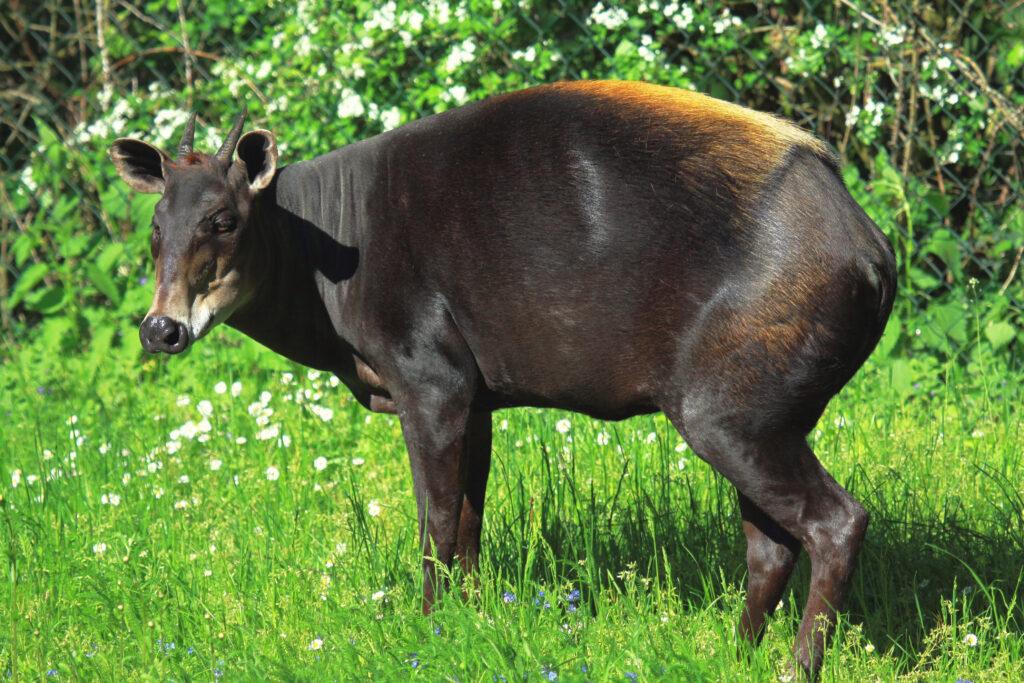
The yellow-backed duiker stands apart from other forest antelope found in Central and West Africa. It is the largest of the duiker species—heavier, more physical, and far less fleeting than its smaller counterparts. When hunting in Gabon, where dense rainforest defines nearly every aspect of the hunting environment, that difference matters.
While many forest species are encountered only briefly and without warning, the yellow-backed duiker occupies a slightly different space. It still lives within thick cover and low-visibility terrain, but its size, movement patterns, and feeding behavior make it one of the few duikers that can be approached with some degree of intent. For hunters—particularly those coming from the United States, where visibility and range often define the experience—this distinction becomes important early.
This is not an open-country hunt. But it is also not purely a matter of chance.
Unlike smaller duiker species, which are often little more than a flash of movement in dense vegetation, the yellow-backed duiker has a physical presence that changes how it is encountered. Adult animals are significantly larger, with a heavier body and more deliberate movement through the forest. They tend to use established paths, feed along edges of thicker growth, and move with less of the erratic, unpredictable behavior typical of smaller antelope.
That does not make them easy to hunt. But it does mean they leave more sign, hold slightly longer in openings, and can sometimes be followed with purpose rather than simply encountered by chance. This places them somewhere between opportunity and intention—never predictable, but not entirely random either.
Compared to similar forest hunts in countries such as Cameroon, where tracking can follow a more structured pattern around key species, yellow-backed duiker encounters in Gabon tend to feel more influenced by conditions than by plan. The environment plays a greater role in how opportunities develop, and while the animal can be pursued with intent, the outcome remains closely tied to movement through dense terrain rather than a fixed approach.
This is one of the most searched—and most misunderstood—questions. Yellow-backed duiker can be pursued more deliberately than many other forest antelope, but always within the limits imposed by terrain and visibility. Tracking is often based on feeding areas, movement corridors, and sign within dense cover.
Progress is slow, and opportunities develop quickly. Shots are typically close, and positioning matters far more than distance. Even so, success is never guaranteed.
Time in the field remains the defining factor. The more ground covered, the greater the likelihood of encountering animals moving naturally within their environment.
Yellow-backed duiker are most often encountered in areas where dense forest transitions into slightly more open ground, or where natural movement corridors concentrate animal activity. They tend to move along established paths, feeding areas, and edges of thicker vegetation where visibility—while still limited—is marginally improved compared to the deepest sections of the forest.
These are not open spaces in the traditional sense. Rather, they are subtle shifts in terrain—changes in vegetation density, slight openings, or natural pathways that allow for movement through otherwise dense cover. Encounters frequently occur when moving between these areas, particularly when animals are feeding or transitioning through the forest.
Even then, visibility remains restricted, and opportunities develop quickly. Understanding these patterns does not make encounters predictable, but it does help explain where and how they are most likely to occur within the broader rainforest environment.
A hunting safari in Gabon is defined first by environment, and only then by species. Time in the field is shaped by dense rainforest—limited visibility, controlled movement, and terrain that dictates how areas are worked. Within that setting, certain animals naturally take priority, particularly those that require sustained tracking and careful positioning in close quarters—most notably species that fall within dangerous game hunts.
Species such as forest buffalo typically set that pace. They influence where time is spent, how concessions are approached, and how decisions are made from day to day. The rhythm of the hunt follows them, and everything else fits around that framework. Yellow-backed duiker sit just below that level.
They are not incidental in the same way as smaller forest antelope, but they also do not drive the direction of the hunt. Instead, they represent a secondary objective—an animal that can be pursued when conditions allow, and encountered while working through the same forest systems required for larger species. For many American hunters, this is an important distinction.
Unlike hunts built around a single target species—or those conducted in more open environments where visibility allows for deliberate selection—a Gabon safari operates within a broader system, where opportunities develop over time rather than on demand. Within that context, the yellow-backed duiker becomes one of the more meaningful animals to encounter—not because it is guaranteed, but because it is earned within the realities of the environment.
All hunting takes place under a single defining constraint: dense, closed-canopy forest. Visibility is limited. Movement is controlled. Progress depends as much on terrain as it does on tracking ability. This gives the yellow-backed duiker slightly more opportunity than smaller species—but only marginally.
For many hunters, the first real encounter happens faster than expected—and is over just as quickly. Encounters are close. Openings are brief. Shots must be taken quickly and cleanly when they present themselves. There is no long-range shooting, no extended glassing, and very little time to adjust once an animal is seen.
For many, this becomes the defining challenge of hunting in Gabon—not finding the animal, but being ready when the moment comes.
Seasonality in Gabon is less about temperature and more about rainfall and forest conditions.
The dry seasons—typically running from June to September and again from December into early February—are generally considered the most favorable periods for hunting. During these windows, movement through the forest becomes more manageable. Ground conditions improve, tracking sign is easier to interpret, and animals tend to concentrate more predictably around feeding areas and movement corridors. In contrast, the wet season introduces heavier vegetation, more difficult travel, and reduced visibility even by rainforest standards, but hunting is still possible year-round.
The key difference is not whether animals are present, but how efficiently areas can be worked and how clearly sign can be followed. For most hunters, timing a safari to align with drier conditions increases overall opportunity—particularly for a species like yellow-backed duiker, where small advantages in visibility and movement can make a meaningful difference.
Rifle selection for hunting in Gabon is shaped almost entirely by environment. Shots are close—often within 20 to 60 meters—and visibility is limited. As a result, maneuverability, reliability, and quick target acquisition matter far more than long-range performance.
Medium-caliber rifles in the .30 class are commonly used, offering a balance between manageable recoil and sufficient stopping power in dense cover. Larger calibers may also be carried, particularly when hunting is combined with dangerous game such as forest buffalo. Optics, if used, are typically low-magnification or driven-style setups designed for fast shooting in tight conditions rather than precision at distance.
But equipment is only part of the equation. In rainforest hunting, shot placement matters far more than caliber selection.
Opportunities are brief. Angles are often partially obscured. And the margin for error is significantly smaller than in open-country hunting. Hunters must be prepared to recognize vital zones quickly and execute without hesitation when a clear window presents itself. Broadside shots are ideal—but rarely guaranteed. Quartering angles, limited visibility, and fleeting movement are far more common, which makes a clear understanding of shot placement for small antelope essential. For a more detailed breakdown of where to aim under these exact conditions—including real-world angles and anatomical references—see our guide on shot placement for small antelope. This is not a shooting environment that allows for adjustment. Execution must be immediate, confident, and precise.
A typical hunting day begins early.
Light comes slowly through the canopy, and movement often starts at first usable visibility rather than sunrise itself. Hunts are conducted on foot, moving steadily through forest systems where animal sign, feeding activity, and terrain features guide decision-making. There is no glassing from distance, no elevated vantage points, and no fixed observation positions. Instead, progress is continuous and deliberate.
Trackers play a critical role, identifying subtle sign—disturbed leaves, tracks, feeding marks—that indicate recent movement. Encounters with yellow-backed duiker happen quickly. Often, the first indication is movement or shape within dense vegetation, followed by a brief window to assess and shoot. Midday may involve slower movement or repositioning depending on conditions, with activity increasing again in the late afternoon.
The defining characteristic of the day is consistency. Ground is covered. Opportunities develop. And over time, exposure increases the likelihood of meaningful encounters.
Success rates for yellow-backed duiker are difficult to define precisely, as they depend heavily on time in the field and the broader structure of the safari.
They are generally more attainable than smaller duiker species, less predictable than open-country antelope, and highly dependent on conditions and opportunity. Success is not measured in simple percentages. It is measured in exposure—time spent moving through the right areas, under the right conditions, with the right expectations. Hunters who arrive expecting certainty will struggle.
Those who understand the nature of the environment tend to value the experience differently.
For many experienced hunters, the yellow-backed duiker represents more than just another species.
It is part of a broader pursuit—one that includes forest antelope, difficult conditions, and animals that require patience rather than precision at distance. They are often sought by collectors and returning hunters looking to complete a forest species list, or to add a more substantial antelope to a rainforest safari. That appeal is not based on ease or volume. It comes from context—the environment, the method, and the rarity of meaningful encounters.
Can you hunt yellow-backed duiker in Gabon?
Yes. Yellow-backed duiker can be legally hunted in Gabon within regulated safari concessions and are commonly included in forest hunting safaris.
How big is a yellow-backed duiker?
Yellow-backed duiker are the largest duiker species, typically weighing between 45 and 80 kilograms (100–175 lbs) with a solid, muscular build.
Where do yellow-backed duikers live?
Yellow-backed duikers live in dense rainforest and forest-edge habitats across Central and West Africa, including large areas of Gabon.
Are yellow-backed duiker dangerous?
No. Yellow-backed duiker are not considered dangerous game, but they can react unpredictably if encountered at close range.
What do yellow-backed duikers eat?
Yellow-backed duikers primarily feed on fallen fruit, leaves, seeds, and other forest vegetation found within dense rainforest environments.
For hunters considering a yellow-backed duiker as part of a Gabon safari, the most important factor is not just the species—but the structure of the hunt itself. Unlike single-species hunts in more open environments, a rainforest safari operates within a broader system. Time in the field is shared across multiple objectives, terrain dictates movement, and opportunities develop gradually rather than on demand.
This makes preparation and expectations critical. Understanding how concessions are structured, what species are realistically encountered, and how forest hunting differs from more familiar environments can make a significant difference in the overall experience. For those looking to explore available options, timing, and how yellow-backed duiker fit into a complete safari plan, it is worth reviewing current Gabon hunting safari options in more detail.
Whether as a primary interest or part of a broader forest hunt, approaching the process with clear expectations ensures the experience aligns with what the environment actually offers.
Search from our range of Hunts across various popular destinations in Africa.
Book Your Hunt