
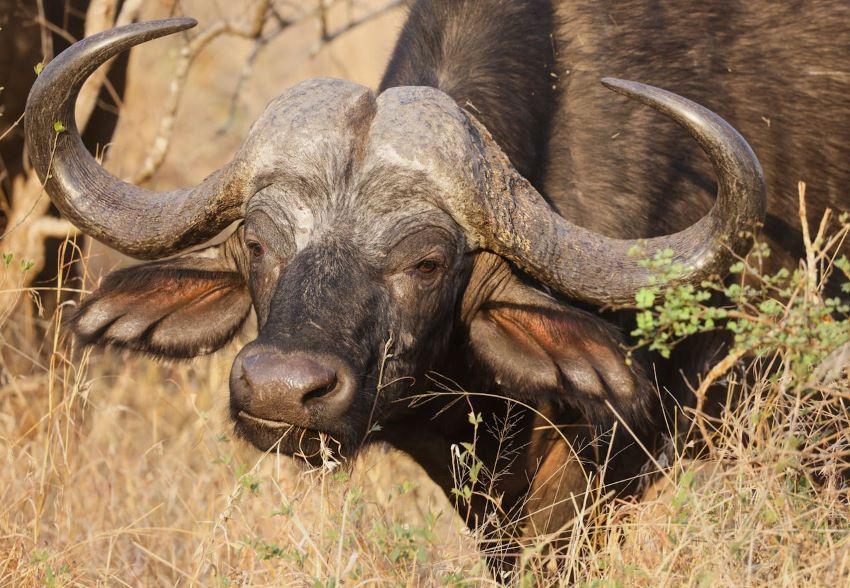
This is the first segment of a two-part guide focused on Cape buffalo hunts in Africa, one of the most challenging and rewarding dangerous game experiences available.
If you are looking to hunt an iconic and formidable species, few compare to the African buffalo. Aggressive, unpredictable, and incredibly resilient, this member of the Big Five is widely regarded as one of the most dangerous animals on the continent, demanding both skill and respect from every hunter who pursues it.
Cape buffalo hunting is often part of a broader dangerous game safari, where hunters may also pursue species such as rhino and leopard. These hunts represent the pinnacle of African big game hunting, requiring careful planning, experienced professional hunters, and a deep understanding of animal behavior. Many safaris, particularly in Southern Africa, combine multiple species into a single experience, allowing hunters to fully immerse themselves in Africa’s wild landscapes.
For those comparing destinations and planning their safari, options like hunting in South Africa offer structured and accessible hunting environments, while other regions provide more remote and traditional experiences depending on your goals.
[DYNAMIC-BLOGTABLEOFCONTENT]
Introduction
- Africa’s buffalo species are as diverse as they are impressive, with four distinct subspecies that include the robust forest buffalo, the West African savanna buffalo, the Central African buffalo, and the iconic southern savanna buffalo, known as the Cape buffalo.
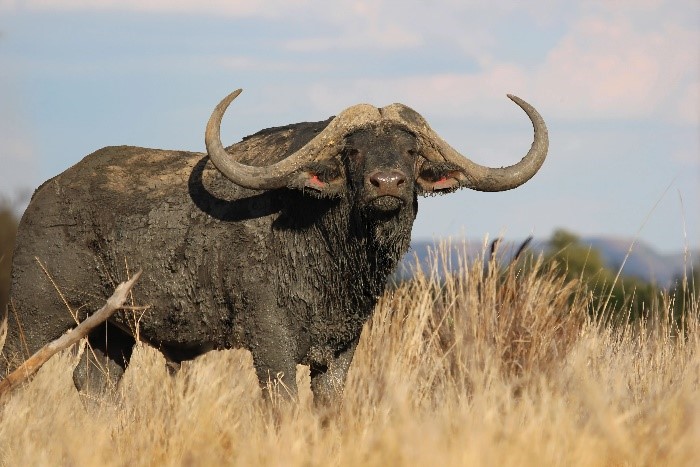
- Savanna buffaloes are often likened to large, cow-like animals, distinguished not only by their size but also by the unique shapes of their horns and their striking range of colors. Typically, these majestic creatures are dark grey or black, though their appearance can vary dramatically—sometimes appearing reddish or even white after indulging in mud baths of those colors.
- The younger buffaloes often sport a reddish-brown coat, adding to their intriguing color palette. On the other hand, the smaller forest buffalo retains its reddish hue throughout its life, a feature particularly notable in certain regions, like western Uganda.
- Both male and female buffaloes possess formidable, ridged horns that either project straight out from their heads or curve downward before sweeping upward. These horns serve a dual purpose as potent weapons against predators and tools for asserting dominance within the herd. Males, especially, engage in intense clashes to establish hierarchy and secure access to vital resources.
- With their diverse colorations and impressive horns, African buffaloes symbolize resilience and adaptability in their natural environment. They are a fascinating subject of study and admiration, embodying the spirit of Africa’s untamed wilderness.
- Cape buffalo are part of Africa’s dangerous game, meaning hunts are conducted under strict safety protocols and often form part of broader dangerous game hunting safaris that include species such as lion, elephant, and leopard.
An Overview of Dangerous Game Hunting
Dangerous game hunting in Africa has evolved over centuries and remains deeply connected to the continent’s landscapes, wildlife management systems, and hunting traditions. Long before modern safari hunting existed, indigenous communities across Africa relied on tracking, observation, and intimate knowledge of animal behavior to survive in often unforgiving environments.
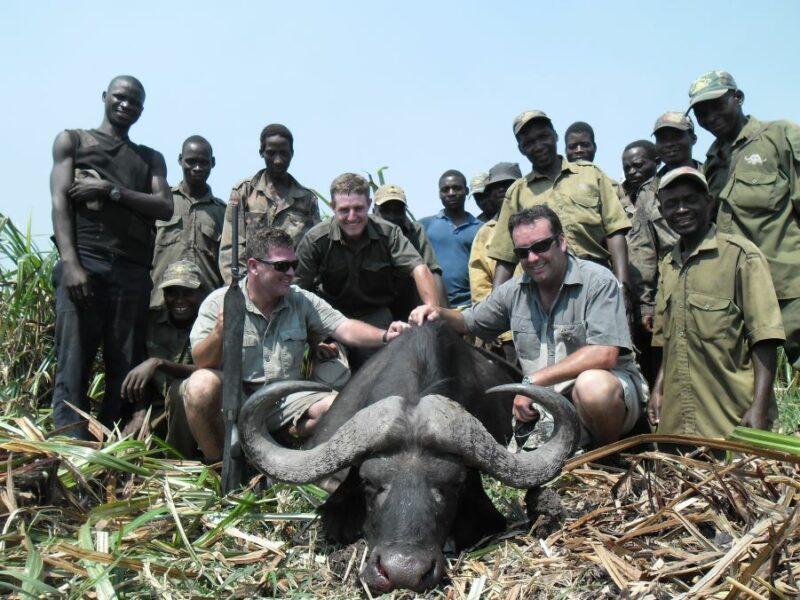
Over time, African hunting safaris developed into structured guiding operations involving professional hunters, trackers, skinners, and local camp staff working together within highly regulated conservation frameworks. Today, dangerous game hunting safaris typically focus on species such as Cape buffalo, elephant, lion, leopard, and hippo hunts across various regions of Southern and Eastern Africa, with Rhino hunts taling place in Namibia and South Africa.
Unlike many other forms of hunting, dangerous game safaris place significant emphasis on preparation, communication, tracking ability, and decision-making under pressure. Hunts often unfold at close range in thick cover where visibility, wind direction, and animal behavior can change rapidly.
Modern dangerous game hunting also plays a role in wildlife conservation and anti-poaching efforts throughout many African hunting areas. In several countries, regulated hunting revenues contribute directly toward habitat protection, local employment, community development, and the long-term sustainability of wildlife populations.
Summarised Key Factors that emerged during the era of the “Great White Hunter”
1. Explorers and Personalities
-
- Famous figures like Theodore Roosevelt, Frederick Selous, and Robert Baden-Powell embodied the Great White Hunter image.
- Their expeditions and writings, filled with big game hunting adventures, were widely publicized and admired.
2. Commercial Interests
-
- The safari industry capitalized on this image, offering organized hunts to wealthy Europeans and Americans.
- Safari companies marketed these trips as prestigious and adventurous, attracting affluent clients eager for the thrill of big game hunting.
Leading to Exploitation
1. Demand for Trophies
-
- People wanted exotic trophies like lion skins, elephant tusks, and rhinoceroses’ horns, fuelling extensive hunting.
- Trophy rooms and museums across Europe and America showcased these prizes as symbols of status and adventure.
2. Ivory Trade
-
- The high demand for ivory in Europe and America led to the mass killing of elephants.
- This trade was highly profitable and significantly reduced elephant populations.
3. Skins and Pelts
-
- Skins of African animals like leopards and zebras were sought after for fashion and decor.
- Commercial hunting for these valuable skins led to severe population declines.
4. Unregulated Hunting
-
- During the colonial era, hunting regulations were either non-existent or poorly enforced.
- Hunters could exploit wildlife populations without any restraint.
Consequences
1. Decline in Wildlife Populations
-
- Overhunting drastically reduced populations of many iconic African species.
- Some species faced near extinction due to excessive trophy hunting and poaching.
2. Ecological Impact
-
- Removing key species disrupted ecosystems and altered the balance of the natural environment.
- Losing large predators and herbivores had cascading effects on other wildlife and habitats.
3. Cultural and Social Effects
-
- The Great White Hunter image overshadowed the rich hunting traditions of Indigenous African peoples.
- Local communities often suffered from wildlife depletion, losing vital resources and cultural heritage.
Modern Reassessment
Today, there’s growing awareness and criticism of the Great White Hunter legacy. Conservation efforts and sustainable game hunting practices are now emphasized to protect Africa’s wildlife for future generations. The focus has shifted from exploitation to conservation, recognizing the importance of maintaining biodiversity and respecting Africa’s natural and cultural heritage.
Interesting Facts to Consider Prior to your Cape Buffalo Hunt
Venturing into dangerous game hunting, especially an African Cape buffalo hunt, requires critical information and understanding of the unique and intriguing facts about these formidable animals.
General Cape Buffalo Facts
- Cape buffalos are members of the Bovidae family.
- Male Cape buffalos are called bulls, and females are referred to as cows.
- Their diet consists almost entirely of grass, making them herbivores.
- Cape buffalos are known for their unpredictable and aggressive nature.
- They are often nicknamed “Black Death” or “Widowmakers.”
Why Shot Placement Matters in Cape Buffalo Hunting
Cape buffalo are often referred to as animals that can “eat lead,” a reflection of their incredible resilience and ability to absorb poorly placed shots without going down. Their heavy bone structure, dense muscle mass, and thick hide make them one of the toughest animals in Africa to hunt.
This is why proper shot placement on Cape buffalo is absolutely critical. A well-placed shot ensures a quick, humane kill, while a poor shot can result in a wounded and extremely dangerous animal capable of charging without warning. Hunters must be prepared for immediate follow-up shots and maintain full awareness during every stage of the encounter.
Understanding anatomy, shot angles, and bullet performance is essential for both safety and ethical hunting. Taking the time to learn correct shot placement not only improves success rates but also ensures respect for the animal and adherence to responsible hunting practices.
Cape Buffalo Physical Characteristics
- Male Cape buffalos typically weigh between 1,100 to 2,000 pounds (500 to 900 kg), while females weigh around 770 to 1,365 pounds (350 to 620 kg).
- They can stand up to 5.7 feet tall (175 cm).
- Cape buffalos are capable of running at speeds of up to 35 mph (57 kph).
- Males generally exhibit darker coloration compared to females, often indicating dominance.
- Male Cape buffaloes often roll in mud, a behaviour that darkens their skin.
- They have thicker necks and shoulders than females.
- Male Cape buffalos possess thicker horns, whereas females typically have longer ones.
- The largest recorded horn from a Cape buffalo measured 64 inches (163 cm) in length and belonged to a female.
- Male Cape buffalos have horns that meet in the middle, forming a tough, solid area known as a boss, which is capable of stopping bullets.
Cape Buffalo Habitat
- Cape buffaloes roam across a wide range of habitats throughout sub-Saharan Africa, including savannas, wetlands, shrublands, grasslands, forests, and even deserts.
Conservation Status of Cape Buffaloes
- Currently, Cape buffaloes are classified as Near Threatened. According to the IUCN, there are approximately 398,000 to 401,000 Cape buffalos remaining in their natural habitats in the wild.
Cape Buffalo Life Cycle
- In the wild, Cape buffaloes can live up to 22 years, but their average life expectancy is around 11 years. In captivity, they can live up to 29 years.
- Cape buffaloes reach sexual maturity between 3 to 5 years of age.
- The gestation period for a female Cape buffalo is between 11 and 11.5 months.
- Female Cape buffaloes usually give birth to one calf at a time, with newborn calves weighing between 66 and 132 pounds (30 to 60 kg).
- Females are responsible for raising the calves, and sometimes adopt orphaned calves.
Cape Buffalo Social Structure
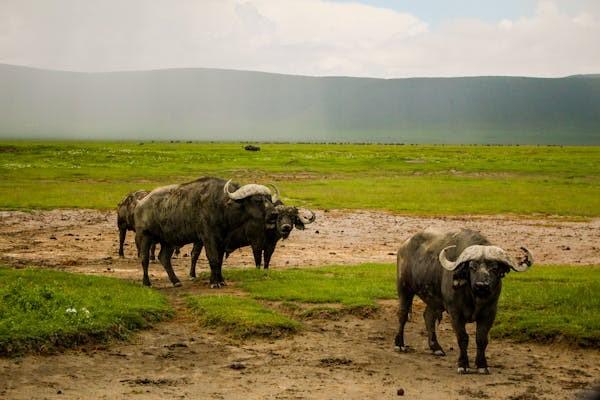
- Cape buffalos are very social and typically form groups of 15-20 individuals called herds.
- Herds consist of related females, their calves, and a smaller number of males.
- Female buffaloes decide the direction in which the herd moves.
- Males often fight each other to establish dominance within the herd.
- During mating season and long migrations, herds can swell to as many as 3,000 members.
- Older males that are no longer reproductive often leave their herd and either live alone or form small groups with other older males.
Cape Buffalo and Natural Enemies
- Lions are the most common predators of Cape buffaloes.
- Cape buffaloes are powerful enough to toss a lion several feet with their horns and are excellent at defending each other.
- Cape buffalos use their horns to impale predators and have been observed actively hunting and killing lion cubs.
- Adult Cape buffaloes have thick, dense ribs that act like armour to protect their vital organs.
- Disease is the most common cause of death among Cape buffaloes due to the dense nature of their herds, allowing diseases to spread quickly.
Cape Buffalo and Humans
- Cape buffaloes are estimated to be responsible for around 200 human deaths per year.
- They are believed to have killed more big game hunters than any other African animal.
- Cape buffalos are considered the most dangerous of the “Big Five” game animals.
- They are known to sneak around and charge hunters from behind, aiming to kill and do not make bluff charges.
More About Cape Buffaloes
- Cape buffalos are territorial animals and rely on their formidable, curved horns for defence and combat.
- With acute senses of smell and excellent hearing, they are highly perceptive creatures.
- Their grazing habits play a critical role in ecosystem balance and promoting plant growth.
- They form strong social bonds within their herds and show a nurturing side when protecting their young.
- Their dung is vital for ecosystem health, providing essential nutrients for plants and insects.
- Conservation efforts are crucial to safeguarding them and their habitats.
- Cape buffaloes have been central figures in African folklore and art for centuries.
A snippet on the African Folklore:
- Cape buffalos, also known as African buffalo, have been a big part of African folklore and art for centuries. These animals, known for their strength and resilience, often symbolize the wild and untamed spirit of Africa.
- In African stories and legends, the Cape buffalo is often seen as a symbol of power and courage. Tales of hunters and buffaloes usually highlight the buffalo’s bravery and toughness, sometimes even showing it outsmarting its hunters. These stories emphasize the buffalo’s strength and determination, teaching lessons about endurance and strategic thinking.
- Cape buffaloes have inspired artists for generations. From ancient rock paintings to modern art, the buffalo is often depicted as a powerful and imposing figure. Its distinctive horns and robust build make it a favourite subject in visual arts. In some cultures, buffalo horns and hides are used in ceremonies and traditional crafts, highlighting the animal’s importance in daily life and cultural practices.
- The Cape buffalo’s presence in folklore and art reflects a deep connection between humans and wildlife in Africa. This bond shows how much these animals have influenced both the cultural and natural worlds, making them central to African traditions and artistic expressions.
Understanding the Cape Buffalo
Cape buffaloes are often called “Black Death” or “Widowmakers,” reflecting their fearsome reputation. They are known for their aggressive and unpredictable behavior, posing a significant threat to both humans and other wildlife. They are responsible for about 200 fatalities annually due to their relentless attacks once they decide to charge hence it is critical that you a true aim under pressure.
For hunters, the appeal lies in the Cape buffalo’s massive build. Male Cape buffalo, known as bulls, weigh between 1,100 and 2,000 pounds (500-900 kg), while females, referred to as cows, range from 770 to 1,370 pounds (350-620 kg). Both genders possess horns, with males featuring a unique, thick “boss” where their horns meet, providing a protective shield on their heads. This makes them highly sought after in big game hunting.
Cape buffaloes are renowned for their intense confrontations with predators such as lions, often hurling them several feet into the air and using their horns to impale them. They also target lion cubs to diminish future threats to their herd. Despite their formidable combat abilities, the Cape buffalo is a highly social animal. They often roam in herds of 10 to 20 individuals, and during migrations or breeding seasons, these groups can swell into massive gatherings. This social behaviour ensures they defend each other collectively, coordinating attacks that can overpower any threat they face.
They play a crucial role in their ecosystem by influencing vegetation growth through their grazing habits, benefiting a variety of other wildlife species. They also contribute to conservation efforts through the economic benefits of dangerous game hunting.
In essence, they embody their ominous nicknames through their size, strength, and aggressive behaviour. They command respect and caution in their natural habitats, rightfully earning their name when hunters talk about dangerous game hunting.
How Cape Buffalo React Under Pressure
One of the reasons Cape buffalo hunting is so respected among dangerous game hunters is how quickly buffalo behavior can change once they become alert or pressured.
A relaxed herd feeding across open ground may suddenly move into thick cover with very little warning. Mature bulls often use wind direction, terrain, and vegetation surprisingly well, slipping into river systems or dense mopane where visibility becomes extremely limited.
Professional hunters pay close attention to subtle behavioral changes inside a herd. The position of older cows, shifting body posture, sudden silence, or repeated staring into cover can all indicate that buffalo are becoming uneasy before the hunter notices anything himself.
Older “dagga boys” are particularly unpredictable. Having spent years surviving predators, drought, and hunting pressure, mature bulls are often cautious, reactive, and extremely aware of movement or scent inside thick bush.
For many hunters, understanding this constant tension between tracking and being detected becomes one of the defining parts of a Cape buffalo safari.
"Dagga Boys"
The solitary older male buffalos, known as “Dagga Boys,” derive their nickname from the African word “dagga,” which means mud. This term reflects their habit of frequently wallowing in mud, which serves as a natural cooling method and helps protect their skin from biting insects.
Dagga Boys typically find themselves in solitary existence after being displaced from their herds by younger, more dominant bulls. This displacement usually occurs as a natural part of the herd’s social dynamics, where younger males challenge older ones for dominance and mating opportunities. As they age and become less able to compete, older bulls often find themselves gradually pushed out to roam independently or in small groups.
Despite their solitary status, Dagga Boys remain formidable animals. They are known for their thick, sturdy horns and their ability to survive independently in the wild. They may occasionally form loose associations with other older males, particularly during times of scarce resources or heightened predator activity, where the benefits of safety in numbers become apparent.
The “dagga” boys, which are older male African buffalo, tend to have the impressive trophy horns. So, in my humble opinion it might be worth while to search for the solitary “dagga boys” on your next big game hunting excursion to find a trophy worth the Roland Ward recognition.
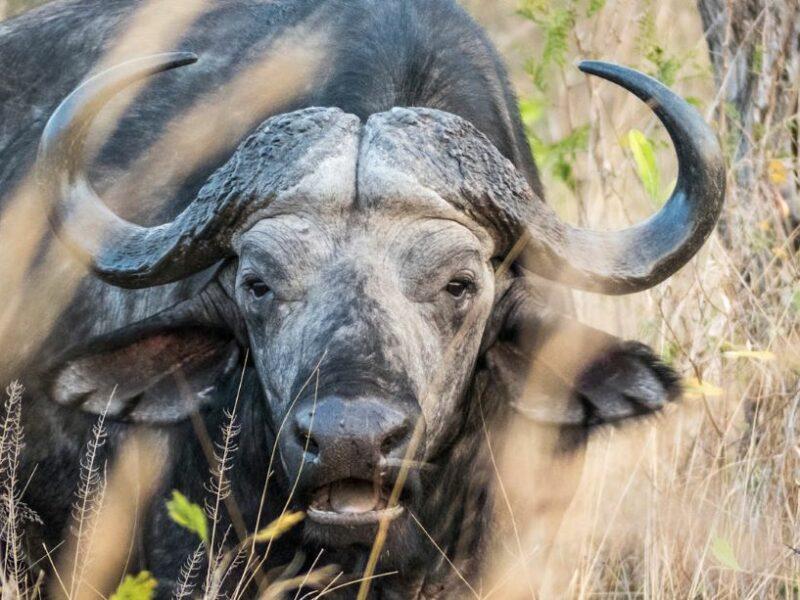
SCI Scoring Cape Buffalo when Big Game Hunting
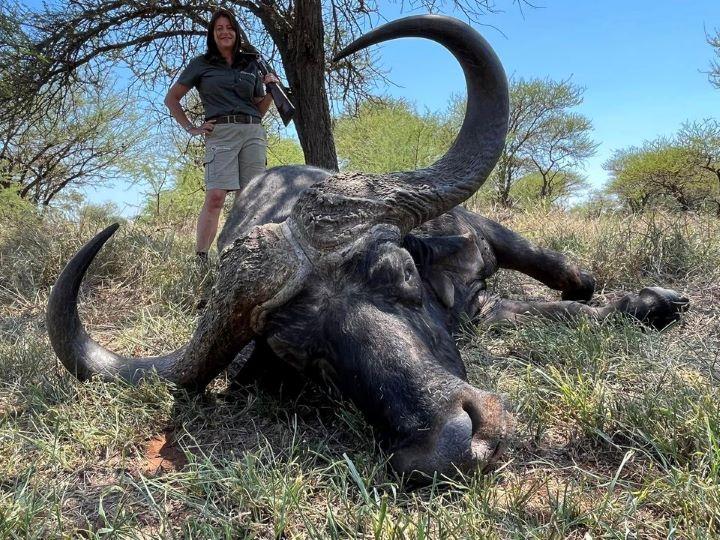
Should you want to measure your Trophy after your African Cape Buffalo Hunt, hunters commonly use two well-known systems: SCI (Safari Club International) and Rowland Ward. SCI is particularly favoured for its comprehensive approach.
SCI scoring canters on key measurements like the bull’s boss, a thick, hardened area on its forehead indicating maturity, and horn spread. A bull with horns wider than its ears by a hand-width (around 34-36 inches) is typically considered over 40 inches in spread, a significant trophy.
Established in 1977, SCI’s Record Book is a respected repository for documenting big-game achievements, verified by Master Measurers for accuracy. Proceeds from SCI’s Record Book and World Hunting Awards fund conservation and anti-poaching efforts, underscoring its commitment to wildlife preservation.
Rowland Ward, in contrast, focuses solely on the widest outside spread of the buffalo’s horns, with a 42-inch spread typically required for entry into its record book. This system promotes sustainable hunting practices that benefit wildlife and local communities alike.
Why Experienced Hunters Value Preparation
One of the biggest differences between Cape buffalo hunting and many other hunts worldwide is the amount of preparation that often happens long before arriving in camp.
Experienced dangerous game hunters typically spend considerable time researching hunting areas, professional hunters, safari structure, firearm requirements, and what is realistically included during a buffalo safari. Much of the success and enjoyment of the experience comes from having clear expectations before the hunt even begins.
This is especially important when planning an international dangerous game safari involving trophy fees, firearm permits, travel logistics, and safari deposits across multiple countries or operators. Understanding how African hunting safari payments and booking protection work beforehand can help hunters avoid unnecessary confusion later in the process.
For many hunters, proper preparation ultimately becomes part of the safari experience itself.
Conclusion
Cape buffalo hunting is rarely remembered as a simple trophy pursuit. For most hunters, the experience becomes defined by the atmosphere of the safari itself — the long hours following fresh spoor through thick bush, the constant awareness required at close range, and the pressure that builds as the distance to a mature bull slowly disappears.
Part of what makes Cape buffalo hunts so demanding is that no two encounters unfold the same way. Wind direction changes, herds become unsettled, shooting lanes disappear, and opportunities often develop far more quickly than expected. This unpredictability is one of the reasons Cape buffalo continue to stand apart within dangerous game hunting in Africa.
For hunters preparing for their first buffalo safari, understanding the realities behind tracking, shot placement, and dangerous game behavior can make a significant difference long before arriving in camp.
For the complete overview of destinations, costs, hunt structure and current opportunities, see our Cape Buffalo Hunts page.
To continue learning more about Cape buffalo hunting in Africa, explore these additional guides:
Continue the hunt in A Guide To An African Cape Buffalo Hunt: Part 2
Learn more about dangerous game encounters in Facing the Ultimate Adversary: Cape Buffalo Hunting in Africa
For hunters, the preparation and knowledge gained before the safari ultimately become part of the experience itself.
Frequently Asked Questions About Cape Buffalo Hunting
What makes Cape buffalo hunting different from other African safaris?
Cape buffalo hunting is considered one of Africa’s most demanding dangerous game experiences because hunts usually unfold at close range in thick cover under constantly changing conditions. Unlike many plains game safaris, hunters often spend hours tracking spoor on foot before getting only a brief shooting opportunity on a mature bull.
What is the best country for Cape buffalo hunting in Africa?
The best destination depends on the type of safari experience a hunter wants. South Africa is popular for accessibility and established safari infrastructure, while Zimbabwe, Mozambique, and Tanzania are widely known for more traditional free-range dangerous game hunting experiences with challenging tracking conditions and larger wilderness concessions.
How dangerous are Cape buffalo compared to other African game animals?
Cape buffalo are widely regarded as one of Africa’s most unpredictable dangerous game species. Wounded buffalo are known for using thick cover intelligently, circling back during follow-up situations, and charging aggressively when pressured. This is why experienced professional hunters place such strong emphasis on shot placement, communication, and disciplined follow-up procedures.
Why do hunters target older “dagga boys” during Cape buffalo hunts?
Older solitary bulls, commonly known as “dagga boys,” are often preferred because they have already passed on their genetics within the herd and typically display heavier horn bosses and stronger trophy characteristics. These mature bulls are also known for their cautious and unpredictable behavior, making them highly sought after during dangerous game hunting safaris in Africa.