
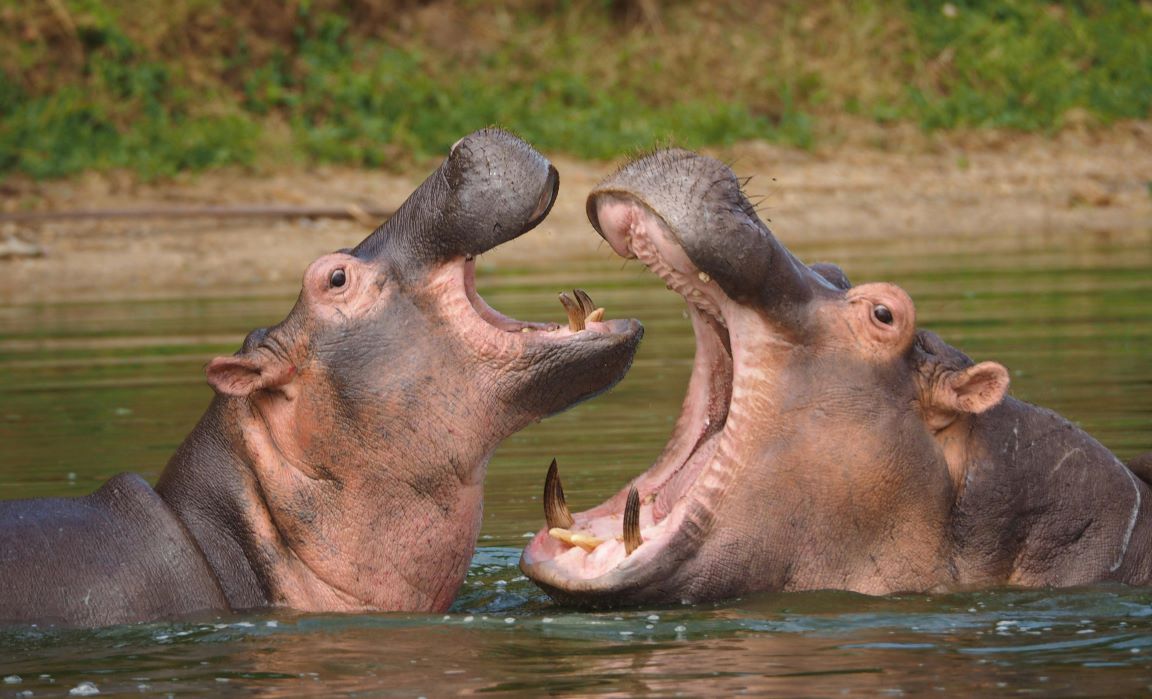
Most hunters picture hippos as slow, lazy animals spending their days submerged in African rivers. That impression disappears remarkably quickly once you begin planning a regulated hippo safari. Few dangerous game hunts demand greater patience, shot placement and discipline than pursuing a mature bull hippo.
Whether encountered in the water or feeding along the riverbank, hippos present challenges unlike almost any other African game animal. Only a small portion of the animal is usually visible, judging angles can be deceptive, and a poorly placed shot often turns a straightforward hunt into a difficult recovery.
For experienced hunters looking beyond the traditional Big Five, Hippo Hunts offer one of Africa's most technical and rewarding dangerous game safaris. They are also frequently combined with Crocodile Hunts, giving hunters the opportunity to pursue two iconic river species during the same safari.
[DYNAMIC-BLOGTABLEOFCONTENT]
Most hunters underestimate the hippo.
From a distance, only the eyes, ears and nostrils are visible above the water, giving the impression that the hunt will be straightforward once the right bull is located. The reality is very different.
Hippo hunting has earned its place among Africa's most respected Big Game Hunting safaris. Whether the bull is standing on a riverbank or lying almost completely submerged beneath the surface, success depends on patience, precise shot placement and disciplined decision-making. A poorly placed shot can quickly turn a controlled hunt into a difficult recovery.
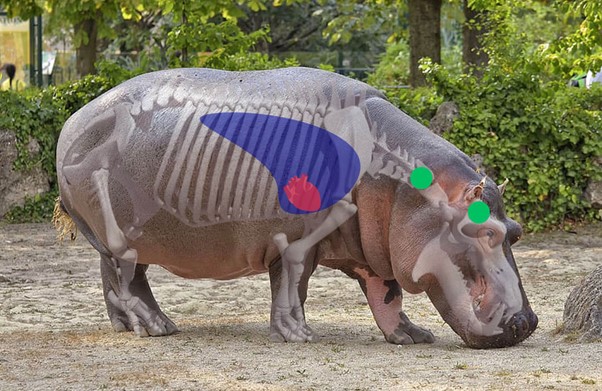
Unlike most African game animals, a hippo may present two completely different shooting scenarios during the same safari. A bull feeding on land offers a conventional heart-lung shot, while a hippo floating in deep water often presents nothing more than a brain shot on a partially submerged head. Understanding the difference before stepping into the field is one of the most important parts of preparing for a successful safari, which is why every hunter should study proper Hippo Shot Placement before arriving in Africa..
Why Trusting Your Professional Hunter Matters
Hippo hunting demands complete trust between hunter and professional hunter.
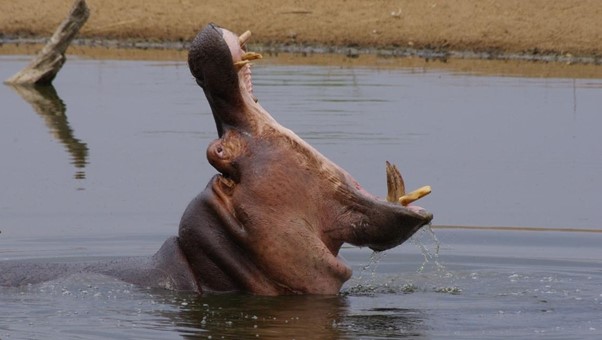
From the bank, a bull may appear to be broadside and perfectly still. Your professional hunter often sees something very different. He notices the slight angle of the skull, the way the head rises with each breath, the distortion created by the water and the position of the animal beneath the surface. Details that seem insignificant can completely change whether a shot is ethical or not.
One of the hardest lessons for experienced hunters is learning not to shoot simply because the animal is visible.
If your professional hunter quietly says, "Wait," there is almost always a good reason. He is not trying to make the hunt more difficult. He is waiting for the one presentation that offers the highest probability of a clean, humane harvest and the safest possible recovery.
That level of teamwork is one of the defining characteristics of a successful hippo safari, and one of the reasons experienced hunters often remember the decisions they didn't make just as clearly as the shot they eventually took.
How Different River Systems Shape a Hippo Hunt
While several African countries offer regulated hippo hunting, most experienced hunters focus on destinations with established free-range river systems and a long history of dangerous game management.
Hunting in Zimbabwe remains one of the classic choices for hippo safaris, particularly along the Zambezi River and Lake Kariba, where mature bulls are regularly pursued in traditional river environments.
For hunters wanting vast wilderness and outstanding dangerous game opportunities, Hunting in Zambia offers exceptional free-range hippo hunting in both the Luangwa and Zambezi ecosystems, with the option of combining hippo and crocodile on the same safari.
Remote concessions make Hunting in Mozambique an excellent option for hunters seeking a true wilderness safari, where hippos and crocodiles naturally share the same river systems and floodplains.
The Zambezi Region has established Hunting in Namibia as one of Southern Africa's premier destinations for regulated hippo safaris, offering beautiful river systems, experienced professional hunters and carefully managed quotas.
Further north, Hunting in Tanzania provides access to some of East Africa's finest dangerous game areas, where hippo are hunted in expansive free-range concessions alongside many of Africa's iconic plains and dangerous game species.
Whichever destination you choose, the finest hippo safaris are almost always conducted in natural river systems where local knowledge, patience and accurate shot placement matter far more than the size of the trophy.
Why Water Levels Matter More Than the Calendar
In most African hunting destinations, the dry season offers the best conditions for hippo hunting. As rivers, channels and floodplains begin to recede, hippos become concentrated into smaller stretches of water, making it easier for professional hunters to locate mature bulls and carefully plan a stalk.
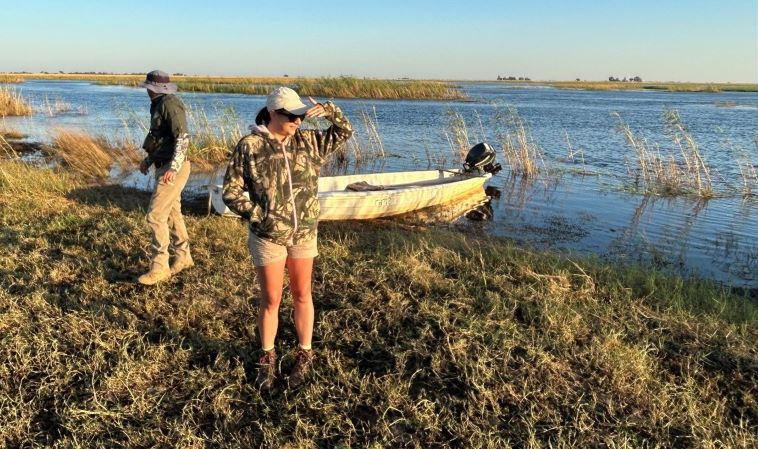
This is particularly noticeable during in Namibia's Zambezi Region. During the annual floods, large areas of the floodplain become interconnected, allowing hippos to disperse across an enormous network of waterways. Once water levels begin to fall, those same animals gradually return to the main rivers and channels, creating far more consistent hunting opportunities.
The dry season also improves visibility along riverbanks, reduces the amount of flooded vegetation and generally makes recovery easier should a hippo enter the water after the shot. While successful hunts can still take place outside the traditional season, most experienced professional hunters prefer planning hippo safaris during the drier months when conditions are more predictable.
Why Hippo Hunting Demands a Different Set of Skills
Many American hunters who travel to Africa have already hunted plains game, Cape buffalo or even members of the Big Five. Rather than simply chasing another trophy, they begin looking for hunts that demand a different set of skills.
Hippo hunting offers exactly that. Success depends less on covering long distances and more on patience, careful observation and understanding how an animal behaves both in and out of the water. Reading conditions, waiting for the correct presentation and placing an accurate first shot become far more important than simply carrying a larger rifle.
Another reason hippo safaris continue to grow in popularity is their versatility. In many African hunting areas, hippos naturally share the same river systems as crocodiles, making it possible to combine a Crocodile Hunt with a hippo safari. In selected destinations, hunters may also add a Cape Buffalo Hunt, creating a dangerous game safari that offers three completely different hunting challenges during the same trip.
For hunters looking beyond the traditional safari itinerary, hippo hunting provides a technical, rewarding and distinctly African challenge that is unlike any other dangerous game hunt.
How Regulated Hippo Hunting Can Support Conservation
Every regulated hippo hunted in Africa is taken under a government-issued quota. These quotas are reviewed annually by wildlife authorities and form part of a broader wildlife management strategy that balances healthy hippo populations with the needs of people living alongside them.
In many river systems, hippos damage crops, overturn fishing boats and become increasingly aggressive as water levels fall during the dry season. Carefully managed hunting helps address these local challenges while generating revenue that supports anti-poaching operations, concession management, employment and surrounding communities.
This means a regulated hippo safari is about far more than harvesting a trophy. It is participation in a conservation model that places measurable value on wildlife and the habitats in which it lives. When wildlife has value, there is a strong incentive to protect both the animals and the vast landscapes they depend on.
Local Communities Can Benefit From a Regulated Hippo Hunt
A successful hippo safari involves far more people than the hunter and professional hunter. Throughout Africa, local communities play an important role by working as trackers, skinners, camp staff and support teams, while their knowledge of the surrounding river systems often proves invaluable during the hunt.
In many hunting areas, the benefits extend well beyond employment. Meat from legally harvested hippos is distributed within surrounding communities, while revenue generated through regulated hunting helps support concession management, anti-poaching initiatives and local development projects. Seeing this first-hand provides a far better understanding of how regulated hunting contributes to both wildlife conservation and the people who live alongside these animals.
A Lesson We'll Never Forget
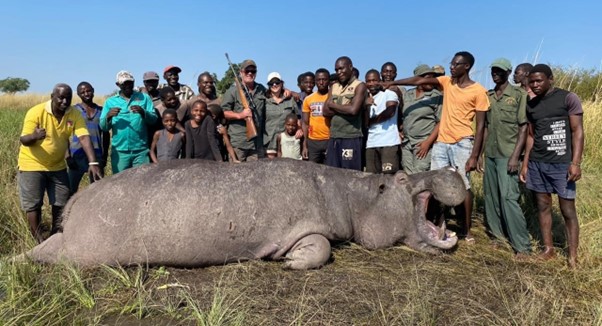
A few years ago, Tamlyn and I were hunting hippo in Namibia's Zambezi Region. Once the bull had been recovered from the river, the local community gathered to process the meat. Every usable part was shared among the surrounding villages, and people worked together with remarkable speed and efficiency.
That evening, we sat around the campfire reflecting on the day's hunt. After a long silence, Tamlyn looked across at me and said,
"Do you realise we didn't just hunt a hippo today? We helped feed hundreds of people."
It was a simple observation, but one that stayed with both of us.
As darkness settled over the village, we could see fires burning in every direction. The smell of hippo meat cooking over open flames drifted through the evening air, while families gathered together and children played nearby. It was a powerful reminder that a regulated hippo hunt means something very different to the people who live alongside these animals than it does to the visiting hunter.
The following morning, we walked back to where the hippo had been processed. Apart from a small blood stain on the ground, there was almost nothing left. Every usable piece of meat had already been distributed or carefully salted and hung to dry, providing food that would last for many weeks.
That safari changed the way we looked at hunting in Africa. It reminded us that a regulated hippo hunt is about far more than a trophy. It supports conservation, contributes to local communities and, in a very real way, provides food where it is genuinely needed.
Can You Hunt Hippo with a Bow?
Yes, hippo can be hunted with a compound bow in certain African countries, provided local regulations permit it. As with rifle hunting, bow hunting laws vary between destinations, so hunters should always confirm the current requirements before booking a safari.
Bow hunting a hippo is an extremely specialised hunt that demands close shooting distances, excellent shot placement and the guidance of an experienced professional hunter. Unlike a rifle hunt, there is little margin for error, making patience and discipline even more important.
Most outfitters recommend equipment in the following range:
- Minimum draw weight: 95 pounds
- Minimum arrow weight: 800 grains
- Fixed-blade broadhead with a cutting diameter of approximately 2 inches
Shot opportunities are generally between 20 and 40 yards, with broadside presentations on land providing the highest probability of a clean, ethical harvest. As with rifle hunting, understanding proper Hippo Shot Placement is essential before attempting a bow hunt.
Why the Hunt Is Remembered Differently
Most hunters remember their first sight of a mature hippo long before they remember the measurements of the tusks.
They remember the silence while waiting for the bull to surface. The quiet conversation with the professional hunter. The uncertainty of watching only a pair of ears and nostrils drifting through the water, knowing the entire animal lies hidden beneath the surface. They remember learning that patience often matters more than confidence, and that sometimes the hardest decision is choosing not to shoot until everything is right.
Perhaps that is why hippo hunting earns such respect among experienced dangerous game hunters. It is not because the hunt is fast or dramatic every minute of the day. It is because every opportunity must be earned through discipline, teamwork and good judgement.
Long after the safari is over, most hunters discover they brought home far more than a trophy. They leave with a deeper appreciation for Africa's great river systems, the people who live alongside them, and one of the continent's most remarkable animals.
If a regulated hippo safari is on your hunting bucket list, take the time to choose the right destination, hunt with an experienced professional hunter and arrive well prepared. The memories that stay with you will rarely be measured in inches, but in the moments that only Africa can provide.
FAQs About What Makes Hippo Hunting Different
Is hippo hunting legal in Africa?
Yes. Hippo hunting is legal in several African countries under government-issued quota systems. Every hunt must be conducted under the supervision of a licensed professional hunter and comply with the wildlife regulations of the country where the safari takes place.
Is a hippo really considered dangerous game?
Yes. Hippos are widely regarded as one of Africa's most dangerous game animals. Although they are not predators, they are highly territorial around water and can react aggressively when they feel threatened or cornered.
What calibre is recommended for hippo hunting?
A minimum .375 calibre is recommended for most hippo hunts, although many experienced hunters prefer larger calibres. Your professional hunter will advise you on suitable rifles based on the country, hunting conditions and whether shots are likely to be taken on land or in the water.
Is hippo hunting physically demanding?
Hippo hunting is generally less physically demanding than mountain hunting or tracking buffalo for many miles. The challenge lies in patience, careful observation and waiting for the correct shot opportunity rather than covering long distances on foot.
Can I combine a hippo hunt with another dangerous game safari?
Yes. Hippo are commonly hunted alongside Crocodile Hunts, as both species occupy the same river systems. Depending on the country and concession, hunters may also combine hippo with Cape buffalo or selected plains game.
How close are most hippo shots?
Most shots are taken at relatively short distances. Depending on vegetation, river conditions and whether the bull is on land or in the water, opportunities commonly range between 20 and 100 yards, with your professional hunter deciding when the presentation is suitable.
How many days should I allow for a hippo safari?
Most dedicated hippo safaris last between seven and ten hunting days, depending on the country, available quotas and whether additional species such as crocodile or buffalo are included in the itinerary.
Why do experienced hunters rate hippo hunting so highly?
Because the hunt rewards patience, discipline and judgement rather than speed or long-range shooting. Every opportunity must be earned, making a successful hippo safari one of the most satisfying African Hunting Trips.
About the Author
Pierre van Wyk is the co-founder of Game Hunting Safaris and has spent many years hunting dangerous game across Southern and East Africa. Having personally hunted hippos in several African countries and worked alongside professional hunters and local communities, he writes from practical field experience to help international hunters better prepare for their own African safaris.