
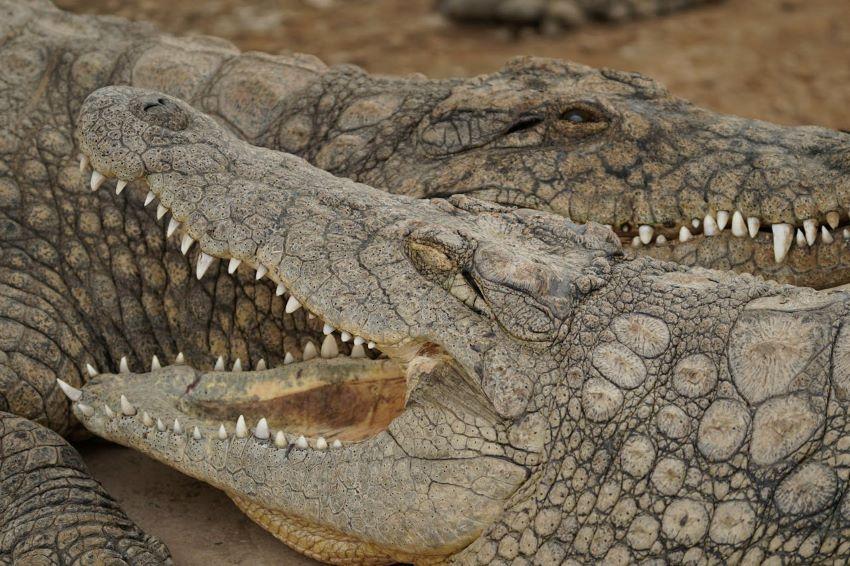
Zambia’s great river systems, wetlands and remote hunting concessions create a demanding setting for crocodile hunting in Zambia. The Luangwa, Kafue and Zambezi systems provide suitable crocodile habitat, but reaching productive hunting areas can involve long road transfers, charter flights and temporary fly camps far from the country’s main towns.
That isolation is part of what distinguishes Hunting in Zambia. Large Game Management Areas surround several national parks, allowing wildlife to move across extensive unfenced landscapes. Crocodile safaris can also be combined with hippo, Cape buffalo and plains game when quota, permits and the hunting area allow.
Zambia’s wetlands support several distinctive antelope species, including Kafue lechwe, black lechwe and sitatunga. Hunters spending time around swamps and river systems may therefore have opportunities extending well beyond crocodile, with carefully planned Sitatunga Hunts offering one of the country’s most specialised additional pursuits.

[DYNAMIC-BLOGTABLEOFCONTENT]
What makes Zambia Unique as a Hunting Destination?
Zambia is a country of more than 290,000 square miles. More than half of this land is classified as pristine wilderness. The Zambian government has successfully zoned hunting blocks around the national parks into Game Management Areas (GMA’s).
Animals can freely move between the national parks and the game management areas ensuring a sustainable supply of game hunting trophies.
Zambia’s terrain is exceptionally diverse: From river valleys, and plateau woodlands found in the interior to extensive flood plains and swamps. In the southwest of Zambia, you will find the Kalahari bushveld. (Below image courtesy of World Atlas). These remote GMAs also support traditional Big Game Hunting in Zambia, with dangerous game and plains game opportunities varying according to the hunting area and available quota.

Why were Game Hunting Areas formed in Zambia?
During the early 1970s, the Zambian government allocated hunting zones on tribal land when safari hunting for big game was becoming extremely popular. There are not any fences between these areas and the national parks. The government aimed to create a “buffer” between areas of human encroachment and the national parks which in effect via the concessions would be managed and controlled by outfitters in Zambia.
These game hunting concessions, of which there are 37, are named after traditional regions, landmarks, or the chiefs in the community areas.
Outfitters in Zambia, otherwise known as safari operators, are allocated certain quotas for game animals. This quota includes a specific number of each species which may be hunted in every season. When applying the allocated quotas to economic feasibility studies, and factoring in the limited game hunting season, this is one of the main reasons that hunting safaris in Zambia can cost a small fortune.
When is the Best Time to Hunt in Zambia?
Zambia’s dry season runs from May through to August. These months are the best months for safari hunting. The heat starts to build in October and when the rains start coming, game hunting camps will commence with the process of shutting down.
Roadways will turn into mud. Streams and rivers will begin to flow cutting off access by road into many of the hunting areas. Rain will continue to fall into late April and from early May big game hunting safaris will commence.
Hunting Safaris and Crocodile Facts
What is the largest crocodile in Zambia?
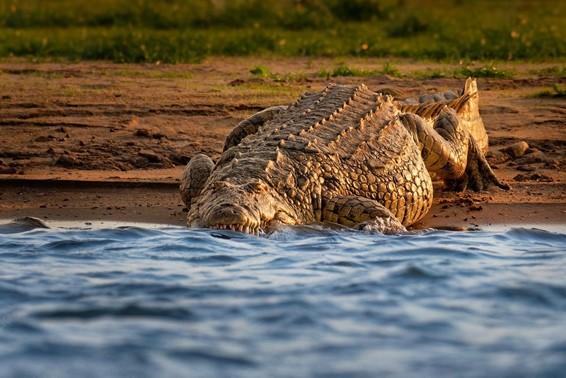
The largest crocodile in Zambia is the Nile crocodile (Crocodylus niloticus) which can grow to over 20 feet in length.
Which is the Best Area to Hunt Crocodiles in Zambia?
The Luangwa and Bangweula Swamps are famous for regularly producing trophy Nile crocodiles, prehistoric monsters of over five meters.
What to Pack when Crocodile Hunting in Zambia?
Before commencing the hunting safari, be aware that Zambia is a high-risk malaria area. Mosquitos kill more than a million people in Africa every year. Be warned and ensure that you are prepared.
Outfitters in Zambia will be sure to supply basic medical kits and it will be worthwhile checking if satellite phones for emergencies are available. If not, pack your own.
Always ensure that you carry your travel documents on your person.
To find out more about what to pack on your hunting safari, check out the section on our FAQ section dealing with it.
Interesting facts about the Nile Crocodile
- The Nile crocodile is native to the continent of Africa and is present in more than 25 countries.
- Crocodiles share a heritage with Dinosaurs. The earliest crocodilian emerged and evolved approximately 95 million years ago.
- The sex of crocodile hatchlings depends on the temperature during the period of incubation.
- Of all reptile species, crocodiles are the most vocal.
- Including all members of the animal kingdom, crocodiles have the strongest bite force per square inch.
- Crocodiles can live up to 120 years old, imagine the tales crocodiles could tell!
- Large Nile crocodiles swallow stones, assisting the crocodile to balance while underwater. These stones are known as gastroliths.
Over the last decades, the hunting of Nile Crocodiles has become so popular that African hunts are geared to specifically target this species. Historically the hunting of crocodiles in Zambia was a byproduct when the big five hunting in Africa, was not the focus. Big game hunters have realized that taking home a trophy Nile crocodile is quite a challenge and not for the faint-hearted.
Crocodile Safari Hunting Packages in Zambia
If a crocodile is the only species the hunter wishes to target on the hunting safari, this hunt can take place over seven days. Often, since the same habitat is shared by these two dangerous game species, the hunting safari will be extended to 10 days and include a trophy hippo.
Crocodile hunting in Zambia takes the hunter into the deepest parts of “The Dark Continent”. The classic hunting safari dating back to the early 1980s, and definitely an all-time favorite includes Cape buffalo hunting in Zambia. Adding a Cape buffalo to the safari hunting trip is always a good option to consider when traveling to such long destinations.
What Influences the Cost of a Zambia Crocodile Safari?
The cost of a crocodile safari in Zambia depends on the hunting area, safari duration, current trophy fees, charter requirements and whether hippo, buffalo or plains game are added to the hunt. Remote concessions may also involve additional transport, permit and camp costs. Our guide to African Hunting Safari Prices explains the principal expenses international hunters should consider before booking.
Camping, Accommodation & Travel
Hunting safaris are Zambia are split over large parts of the country. When it comes to crocodile hunting in Zambia, in general, the waterways, rivers, and swamps are the target areas. International hunters will fly into either one of the four main airports, depending of course on the location of the targeted African Hunts.
By air, the four main ports of entry are:
- Harry Mwanga Nkumbula International Airport, Livingstone
- Kenneth Kaunda International Airport, Lusaka
- Ndola Airport
- Mfuwe Airport
Depending on the location of the crocodile hunting grounds, a domestic charter may be required. By road, 4×4 trucks will be made use of.
When it comes to accommodations, this will depend on whether the camp is accessible during the entire hunting season, or if the hunting lodge will be closed during the rainy season due to access restrictions.
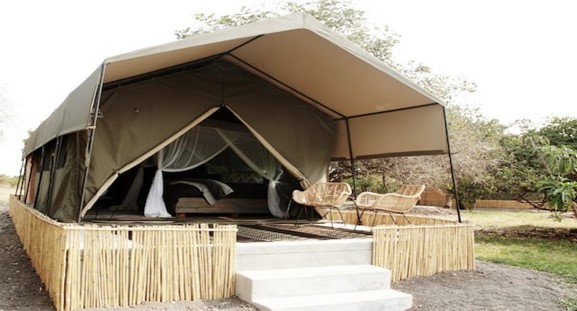
There are three-to-five-star accommodations and services available at the permanent hunting lodges. As crocodile hunting in Zambia will take the hunting safaris to the swampy rivers, temporary “fly camps” will be made use of. While remote, these camps are exceptional with hot water and cold beverages.
Hunting outfitters in Zambia are accustomed to accommodating the requirements of international hunters, including travel logistics, remote camps and extended combination safaris.
Preparation for the Nile Crocodile Hunt: Rifles, Ammunition and Shot Placement
Researching crocodile shot placement and selecting a suitable rifle are essential parts of preparing for the safari.
A crocodile’s tiny reptilian brain is protected by a heavy mass of thick and exceptionally strong bone. Being able to shoot with pinpoint accuracy is critical. The target area is no more than two inches in diameter and is accessible from the front or the side.
Shot Placement from the front, place the bullet between the eyes.
When choosing the broadside shot, aim for the brain as a first choice. Place the bullet above the smile and behind the eye. A direct hit, which is sometimes preferred by hunting outfitters in Zambia, is into the neck, smashing the vertebrae, with a second follow-up bullet into the heart.
Taking a direct first shot into the heart is not the preferred method when hunting a crocodile as the crocodile may slither into the deep swampy water making recovery a challenge.
On a recent crocodile hunting safari in Mozambique, we were introduced to the below tripod shooting unit manufactured by Bog, Death Grip Model. While not a fan at all of shooting sticks, this unit is amazing. Made of carbon fiber, the unit is light and holds the rifle perfectly still and well-balanced. This unit is perfect because crocodile hunting is not extreme physical exertion, and the hunter has time for the perfect shot. Having completed the crocodile hunting safari in Mozambique, the first thing I did on my return was to purchase this unit.

When planning the hunting safari and considering rifle options, any 300-caliber rifle with enough muzzle energy loaded with solids or monolithic tips will work perfectly.
If you are considering adding a Hippo or Cape buffalo to the hunting safari, a .375 being the minimum legal requirement would be recommended.
The Trophy Nile Crocodile: Taxidermy Options
Big game hunting in Zambia for Nile Crocodile can produce world-class crocodile trophies. Be sure to allow space in your trophy room, as in my opinion, only a full mount is an option.
Taxidermists offer some fantastic wall and floor mounts. Point to note: Large crocodiles cannot be used to make boots, handbags, purses, belts, etc. Their skin is just too thick.
If you are considering working the leather, get a second tag, request a discount, and hunt a crocodile that is less than eight feet in length.
If space in your trophy room is a challenge, and there is a great passion for a tiger fishing safari, (also a great add-on when crocodile hunting in Zambia) a smaller mount such as the below could be a consideration (image courtesy of Nico van Rooyen Taxidermy, South Africa).

Rifle Permits and Procedures when Importing Firearms for Crocodile Hunting in Zambia
Crocodile hunting in Zambia requires the hunter to be able to shoot with deadly accuracy up to 100 yards. As such, it is recommended the hunter uses a rifle that he/she is confident shooting and handling.
Before the hunting safari commences, a temporary permit into Zambia will be required. The below documents will be required by the Zambian authorities:
- Certified copy of passport.
- Outfitters in Zambia will need to send through a letter of invitation.
- A return air ticket indicating that the client plans to leave Zambia at the end of the hunting safari.
- A certified copy of the firearm license as proof of ownership.
A completed application form
Planning Your Zambia Crocodile Safari
A successful crocodile safari depends on careful preparation, accurate shooting, suitable river conditions and enough time for the hunting team to locate a mature animal. Hunters comparing current packages, available species and destinations can explore our selection of African Hunting Trips.
Author: PC van Wyk