
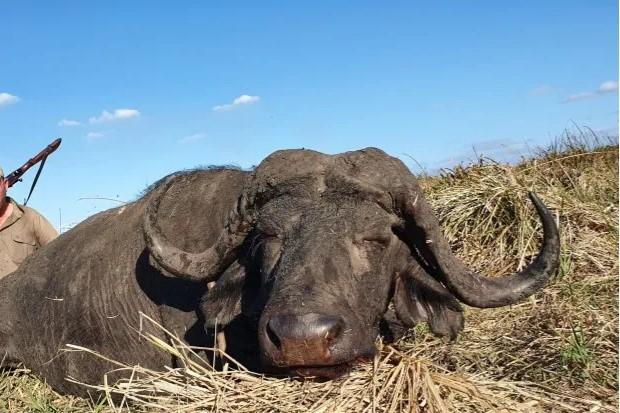
Updated: July 2026
Few animals command the respect of hunters quite like the Cape buffalo. Long before you see the bull, you'll probably notice something else first. The conversations become quieter, the trackers slow their pace and every member of the hunting party begins paying a little more attention to the wind.
That isn't coincidence.
Cape buffalo have earned their reputation through generations of hunters who discovered that these powerful animals rarely make mistakes. Success depends on far more than carrying a suitable rifle. It requires patience, teamwork, careful tracking and the ability to make good decisions under pressure.
Whether you're planning your first Cape Buffalo Hunt or simply want to better understand what separates a successful buffalo safari from an unsuccessful one, this guide explains how experienced professional hunters approach one of Africa's most respected members of Big Game Hunting in Africa.
[DYNAMIC-BLOGTABLEOFCONTENT]
What Makes Cape Buffalo Different
Every African game animal has its own way of surviving.
Impala rely on speed and sharp eyesight. Greater kudu melt into thick bush with remarkable ease, while waterbuck instinctively head for rivers and wetlands when danger approaches.
Cape buffalo are different.
A mature buffalo bull has spent years surviving in a world filled with lions, hyenas and people. It didn't reach old age by being reckless. It survived because it learnt to recognise danger early, trust its senses and make very few mistakes.
That is one of the first lessons a buffalo hunter learns. Long before you ever catch sight of the bull, the buffalo may already know you are there.
He smells the wind, hears a snapped branch that nobody else noticed. He watches movement through the bush long before a hunter realises he has been seen.
Unlike many plains game species, buffalo do not always flee at the first sign of danger. Sometimes they quietly slip away without making a sound. Sometimes they stand perfectly still, allowing the hunting party to walk past. Occasionally they stop, turn and try to understand exactly what has entered their world.
That uncertainty is what makes buffalo hunting so different from almost any other safari. You are not simply trying to get within shooting distance of an animal. You are trying to outthink an animal that has spent its entire life avoiding predators.
Every decision suddenly carries more weight. The direction of the wind, where you place your feet and how quickly you move. Whether you whisper or remain silent, by the time the buffalo finally comes into view, much of the hunt has already been decided.
That is why experienced professional hunters place such importance on fresh spoor, patient tracking and careful teamwork. Success rarely depends on who carries the biggest rifle. More often, it comes down to hundreds of small decisions made correctly over several hours.
Perhaps that is why Cape buffalo have earned so much respect among hunters throughout Africa. A successful buffalo hunt is not remembered simply because of the shot. It is remembered because everything that happened before it mattered just as much.
The Hunt is Won Before You Even See the Buffalo
One of the biggest surprises for first-time buffalo hunters is discovering that the most important part of the hunt often happens before the buffalo is ever seen.
Long before anyone catches a glimpse of heavy bosses disappearing through the bush, dozens of small decisions have already been made. Which direction should the trackers follow? Is the wind beginning to change? Are the tracks from this morning or yesterday? Has the bull slowed down to feed, or is he still travelling?
None of those decisions involve pulling a trigger, yet every one of them influences whether the hunt succeeds or fails.
Experienced professional hunters often say that buffalo hunting is a game of patience rather than speed. Rushing almost always benefits the buffalo. Moving too quickly creates unnecessary noise. Ignoring the wind carries your scent straight to the herd. Following old spoor wastes valuable hours that could have been spent tracking a different bull.
The hunters who enjoy the greatest success are rarely the fastest walkers or the best shots. More often, they are the hunters who trust their professional hunter, move patiently with the trackers and understand that every careful decision increases the chances of finally standing within range of a mature dagga boy.
By the time the buffalo eventually appears, much of the hunt has already been won.
Or lost.
When the Trackers Stop Talking
There is a moment on almost every Cape buffalo hunt that no first-time hunter expects. It doesn't begin when someone suddenly spots the buffalo or points excitedly towards the bush. Instead, it begins so quietly that many hunters don't even realise it has happened until several minutes later.
Up to that point, the hunt has often felt surprisingly relaxed. The trackers have been talking softly amongst themselves as they follow the spoor, the professional hunter has asked the occasional question, and someone in the hunting party may even have laughed at a joke as the tracks wound their way through the bush.
Almost without anyone noticing, the conversation simply fades away.
Nobody asks for silence because nobody needs to. The spoor has become fresher, the buffalo is close, and every member of the hunting party instinctively understands that the hunt has entered a very different stage. The bush seems to change, sounds that barely registered a few minutes earlier suddenly become impossible to ignore. The scrape of a boot against dry grass, the gentle tap of a rifle sling against a belt buckle or the movement of a branch in the wind all seem strangely louder than before. Even your own breathing becomes something you are suddenly aware of.
The trackers are not being quiet because they are nervous. They are quiet because experience has taught them that this is often the point where the buffalo begins hunting them just as carefully as they are hunting him. The bull may be feeding just ahead, standing motionless behind the next patch of thick cover or quietly watching the hunting party without anyone yet realising it.
That silence becomes one of the defining memories of a Cape buffalo hunt. Years later, many hunters struggle to remember the exact distance of the shot or even the precise horn measurements of the bull they eventually took. What they do remember is the moment the trackers stopped talking, because that was the moment they realised they had entered the buffalo's world, where every step, every sound and every decision suddenly mattered.
The Trust Between the Professional Hunter and the Tracker
Most hunters naturally focus on the relationship between themselves and their professional hunter. After all, it is the PH who carries the heavy rifle, gives instructions and ultimately decides when it is safe to move forward.
But there is another relationship unfolding quietly at the front of the hunting party that many first-time hunters never notice. The relationship between the professional hunter and his tracker. Every step the tracker takes is built on trust.
He is the first person following the fresh spoor into thick cover. He is the one reading the tracks, spotting broken branches and quietly interpreting signs that most hunters would walk straight past. More often than not, he is also the first person who will find the buffalo.
Yet he is not carrying the heavy rifle.
If an old dagga boy suddenly bursts from thick jesse at close range, the tracker cannot simply turn and outrun him. He trusts that the professional hunter behind him is already reading the situation, watching the buffalo and prepared to act if everything changes in an instant.
That trust is not built during a single safari. Professional hunters and trackers have spent years, sometimes decades, hunting together. They rarely need long conversations because they already understand how the other person works. A glance, a hand movement or a quiet nod is often enough to communicate what needs to happen next.
Hunters are privileged to witness that partnership.
Without an experienced tracker, many buffalo would never be found. Without complete confidence in his professional hunter, few trackers would willingly follow fresh buffalo spoor into thick cover day after day. It is one of the quiet partnerships that makes African buffalo hunting possible, yet it is rarely noticed until you have walked behind them yourself.
Every Person in the Hunting Pary Has a Different Job
To someone watching from the outside, a Cape buffalo hunt can look surprisingly simple. A group of people quietly follows a set of tracks through the bush until they eventually find the buffalo.
In reality, every person in the hunting party is doing something completely different.
The tracker is reading the ground. Every footprint, broken twig, crushed blade of grass and overturned stone tells part of the story. His job is to find the buffalo and understand where it is going.
The professional hunter is rarely looking at the tracks for very long. His attention is somewhere else entirely. He is watching the wind, reading the terrain, looking ahead into the bush and constantly thinking about what the buffalo might do next. More importantly, he is responsible for the safety of everyone in the hunting party if the situation changes in an instant.
The client has an equally important job. When the opportunity finally comes, there is usually only one person who can take the shot. That sounds simple until you remember something many first-time hunters never consider.
The professional hunter has never hunted with you before. He doesn't know how you react under pressure. He doesn't know whether you'll remain calm when the shooting starts, whether you'll instinctively step backwards, or whether you'll stay focused if a wounded buffalo suddenly turns and comes towards the hunting party.
Just as the hunter is learning to trust the professional hunter, the professional hunter is quietly learning to trust the hunter. That trust isn't built during the first hour of the safari. It develops over days spent walking together, talking around the campfire and sharing small successes long before the buffalo is ever found.
Perhaps that is one of the reasons so many hunters return to the same professional hunter year after year. The relationship becomes more than a booking, it becomes a partnership built on experience, confidence and mutual trust, allowing both hunter and professional hunter to concentrate on.
Why Old Dagga Boys Leave the Herd
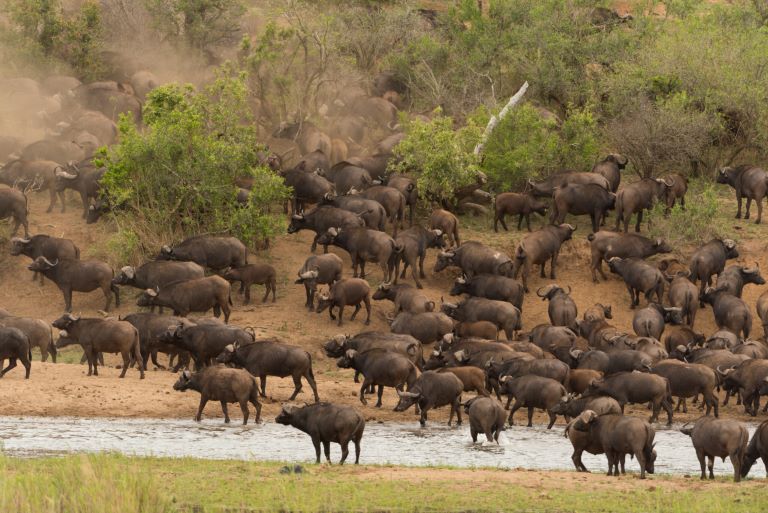
One of the biggest surprises for first-time buffalo hunters is discovering that the old bulls they spend days tracking are often nowhere near the large breeding herds shown in wildlife documentaries. While those impressive herds dominate television programmes, they are not usually where professional hunters look when searching for a mature trophy bull.
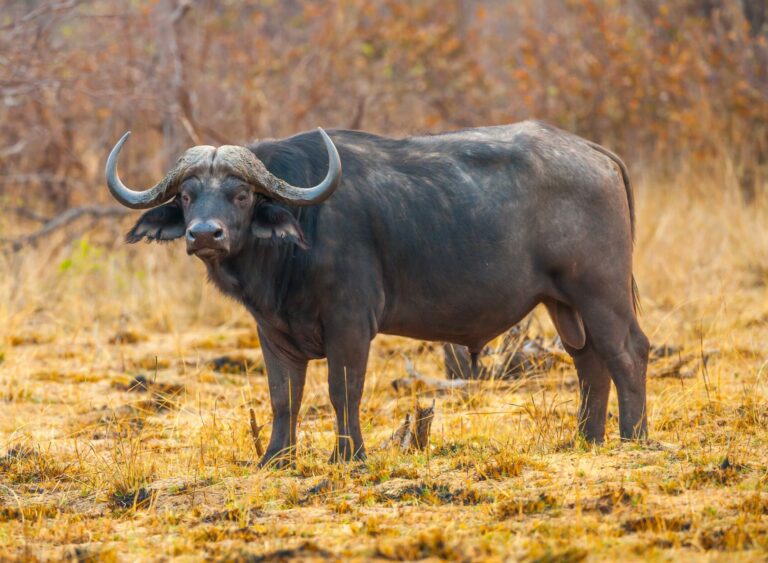
As Cape buffalo grow older, many bulls gradually drift away from the breeding herds and begin spending more time alone or in small bachelor groups. These solitary animals are known throughout Africa as dagga boys, a name that comes from their habit of wallowing in thick mud before standing beneath trees to cool themselves as the mud dries across their hides.
Life changes dramatically for an old bull. He is no longer competing for breeding rights or trying to prove himself against younger rivals. Instead, his days revolve around survival. Years of encounters with lions, droughts, disease and hunters have taught him where to feed, where to drink and, perhaps most importantly, when something doesn't feel right.
That experience makes him a very different animal to hunt.
A young buffalo may panic and run with the herd. An old dagga boy often pauses first. He tries to understand what he has heard, what he has smelled and whether the danger is real. Sometimes he quietly slips away without ever being seen. Sometimes he simply stands motionless, trusting his camouflage and the thick cover around him. On rare occasions, he may even circle downwind to investigate the very people following his tracks.
That is why experienced professional hunters place so much value on age rather than horn measurements alone. Every scar across a bull's boss, every worn horn tip and every cautious step tells the story of an animal that has survived where countless others have not.
When hunters speak about taking an old dagga boy, they are not simply talking about harvesting the biggest buffalo they can find. They are talking about pursuing an animal that has spent a lifetime earning the reputation it carries.
The Longest Hundred Meters in Africa
One of the biggest misconceptions about Cape buffalo hunting is that once the bull has been found, the difficult part is over. In reality, experienced professional hunters will tell you exactly the opposite. Finding fresh spoor and catching up to the buffalo is only the beginning. The final approach is where more buffalo hunts are won or lost than at any other stage of the day.
By the time the hunting party is close, the buffalo has usually chosen the ground to his advantage. He may be standing in thick jesse, feeding quietly beneath mopane trees or resting in cover where visibility is measured in metres rather than hundreds of yards. The hunter's challenge is no longer finding the buffalo, but closing the final distance without being seen, heard or, most importantly, scented.
What appears to be an easy hundred metres on a rangefinder can easily take the better part of an hour. Every few steps the hunting party pauses while the tracker studies the spoor, the professional hunter reads the wind and searches the bush ahead, and everyone quietly reassesses the next move. A fallen branch suddenly becomes an obstacle that cannot be stepped on, while dry leaves that went unnoticed earlier in the morning now sound impossibly loud beneath your boots.
Perhaps the most remarkable part of the entire approach is how little anyone says. By now, the tracker, the professional hunter and the hunter all understand their roles. Communication becomes almost silent, relying on brief hand signals, eye contact and years of shared experience rather than conversation. There is no need for unnecessary words because everyone understands what is at stake.
Years later, hunters may struggle to remember the exact distance of the shot or even the horn measurements of the buffalo they took. What they rarely forget is the final approach, when every step seemed louder than the last and the next opening in the bush could reveal the old dagga boy they had been tracking all morning. Those final hundred metres are where patience, discipline and teamwork quietly replace excitement, long before the rifle is ever raised.
Every Old Bull Has a Story
One of the biggest surprises for first-time buffalo hunters is discovering that the bull everyone in camp becomes excited about is not always the one with the biggest horns.
Before the buffalo ever steps into view, most hunters have already imagined something close to perfection. Wide spread. Heavy boss. Sharp tips. The sort of trophy that looks like it belongs on the cover of a hunting magazine.
Africa rarely works that way.
After several days of tracking, the old dagga boy that finally appears may carry the scars of a lifetime. One horn tip may be broken. His ears may be torn from old fights. Deep scars across his shoulders may hint at encounters with lions, while years of pushing through thornveld have left marks across his face and hide.
To an inexperienced hunter, those imperfections can come as a surprise. To an experienced professional hunter, they are part of the reason the bull deserves respect.
Years later, when the hunter looks at that buffalo on the wall, he is not simply looking at horn measurements. He is looking at the mystery of everything those horns have seen. The fights. The droughts. The lions. The long dry seasons. The mornings when that old bull chose the right wind, the right cover and the right place to disappear.
That is why a battered old dagga boy can mean more than a perfect trophy. Every broken tip, worn boss and scarred hide tells the story of a buffalo that survived long enough to become exactly what hunters travel to Africa hoping to find.
A bull like that is not remembered because he was flawless, he is remembered because he earned his old age.
Why the First Shot is Only the Beginning
One of the biggest misconceptions surrounding Cape buffalo hunting is that everything builds towards a single shot. In reality, experienced professional hunters often view the first shot as the beginning of a completely different phase of the hunt.
Cape buffalo have earned a reputation for an extraordinary will to survive. Even a well-placed bullet may not produce the dramatic reaction many first-time hunters expect. Some bulls run immediately, others continue walking as though nothing has happened, while a few simply stop, turn and look back in the direction of the shot. It is one of the reasons experienced hunters often joke that old buffalo have a remarkable ability to "eat lead."
For first-time dangerous game hunters, the next few seconds can feel strangely surreal. The rifle has just delivered enough recoil to remind you why big bores command so much respect, the smell of burnt gunpowder hangs in the air and, as the smoke begins to clear, the buffalo is...still standing.
Welcome to Cape buffalo hunting.
That is precisely why experienced professional hunters never assume the hunt is over after the first shot. Their attention immediately shifts to the buffalo's reaction. They study the bull's body language, watch how it moves, look for signs that indicate where the bullet struck and decide within seconds whether another shot should be taken. Their objective is not simply to fire again, but to bring the buffalo down as quickly, safely and ethically as possible.
Before any Cape buffalo safari, every hunter should spend time studying proper Cape buffalo shot placement so they understand exactly where the vital organs sit and why experienced professional hunters sometimes recommend waiting for a slightly different angle rather than rushing the shot.
The hunter has an equally important role during these moments. Rather than lowering the rifle to admire the shot, experienced hunters instinctively reload, stay on the sticks and wait for further instructions. Good communication between the hunter and professional hunter becomes even more important after the rifle fires than it was before it.
Only when the professional hunter is satisfied that the buffalo has been recovered safely does the atmosphere begin to change. The tension slowly disappears, conversations return and the hunt that demanded complete concentration only moments earlier gradually becomes another story shared around the campfire.
The Buffalo Never Knew You Were Coming
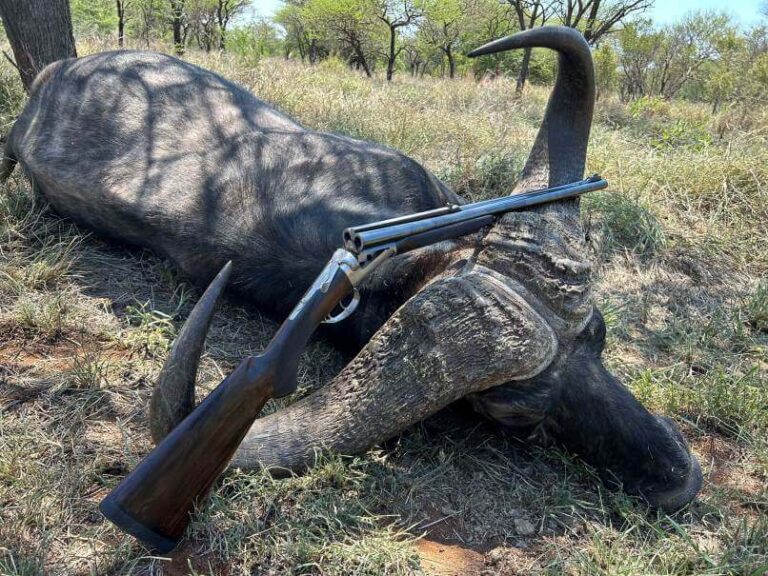
The old dagga boy never knew how long you had saved for the safari. He never knew how many hours you spent at the range, how many conversations you had about Africa or how many miles you travelled to finally stand in his world.
To him, it was simply another morning.
Another day spent moving quietly between patches of shade, stopping to wallow in cool mud before the heat of the afternoon arrived, feeding when he needed to and trusting the instincts that had carried him safely through years of droughts, lions and hunters. Like every day before it, his only objective was to survive until tomorrow.
Perhaps that is why Cape buffalo command so much respect.
Not because they are among Africa's largest animals, and not simply because they are one of the Big Five. They are respected because they demand something different from the hunter. They force you to slow down, pay attention to the smallest details and accept that success cannot be rushed. Every opportunity has to be earned.
Long after the rifle has been cleaned and the trophy has found its place on the wall, most hunters discover that it is not the horn measurements they think about most often. Instead, they remember the silence when the trackers stopped talking, the smell of dust and burnt gunpowder hanging in the air, the final hundred metres through thick bush and the quiet moment when an old bull finally stepped into view.
Perhaps that is why hunters return to Africa, it is rarely about trying to find a bigger buffalo.
It is about hoping, just once more, to walk into the world of an old dagga boy and spend a few unforgettable days playing by his rules.
Questions Every First-Time Buffalo Hunter Asks
Is Cape buffalo hunting suitable for a first-time dangerous game hunter?
Yes, provided you hunt with an experienced professional hunter and arrive well prepared. Many hunters choose Cape buffalo as their first dangerous game safari because it teaches the fundamentals of African hunting, including tracking, reading the wind, shooting from sticks and working closely with a professional hunting team.
How many days should I allow for a Cape buffalo hunt?
Most Cape buffalo safaris are between 7 and 10 hunting days, although longer safaris often provide more flexibility if you're looking for an older dagga boy or planning to combine buffalo with other dangerous game or plains game species.
What calibre do professional hunters recommend?
The legal minimum in many African countries is the .375 H&H, and it remains one of the most respected buffalo cartridges ever developed. Most professional hunters would rather guide a client who shoots a familiar .375 accurately than someone carrying a larger calibre they cannot shoot confidently.
Can I combine a Cape buffalo hunt with other species?
Absolutely. One of the biggest advantages of buffalo hunting is that it combines exceptionally well with other African game. Depending on the country and concession, hunters often add sable, kudu, bushbuck, waterbuck, zebra, eland or even leopard to the same safari.
Which African country is best for Cape buffalo hunting?
There is no single answer because every destination offers something different. Hunters looking for a traditional free-range safari often place Buffalo Hunting in Zimbabwe high on their list, thanks to its long-established reputation for classic dangerous game hunting. Those wanting to hunt vast wilderness concessions are naturally drawn to Buffalo Hunting in Tanzania and Buffalo Hunting in Mozambique, where tracking mature dagga boys across huge unfenced areas remains one of Africa's greatest hunting adventures. South Africa and Zambia also offer outstanding buffalo hunting opportunities, each with their own unique hunting style, terrain and safari experience.
What is a dagga boy?
A dagga boy is an old Cape buffalo bull that has left the breeding herd and now lives alone or with a small group of mature bulls. These old warriors are the buffalo most professional hunters seek because they represent maturity, experience and a lifetime of survival.
What should I expect from my first African hunting safari?
Expect far more walking than shooting. A successful buffalo hunt is built on patient tracking, teamwork and making hundreds of small decisions correctly before the buffalo is ever seen. The shot itself is often the shortest part of the entire safari.
How do I choose the right Cape buffalo safari?
Choose the professional hunter before you choose the trophy. The relationship between hunter, PH and tracker will influence your safari far more than an extra inch of horn. Ask about the hunting area, whether the hunt is free-range or managed, the style of hunting, what species can be combined and what is included in the daily rates.
Where can I find the best African hunting trips?
If you're comparing destinations or planning your first safari, explore our African Hunting Trips to compare hunting areas, dangerous game packages and plains game safaris across Africa. Choosing the right destination is often the first step towards planning a successful Cape buffalo hunt.
About the Author
Keenan van Wyk is a South African dangerous game professional hunter who has guided numerous Cape buffalo safaris across southern Africa. Having spent years tracking old dagga boys alongside experienced trackers and clients, he enjoys sharing practical field knowledge that helps hunters better understand Cape buffalo behaviour, dangerous game hunting and the realities of hunting Africa's most respected game animals.