
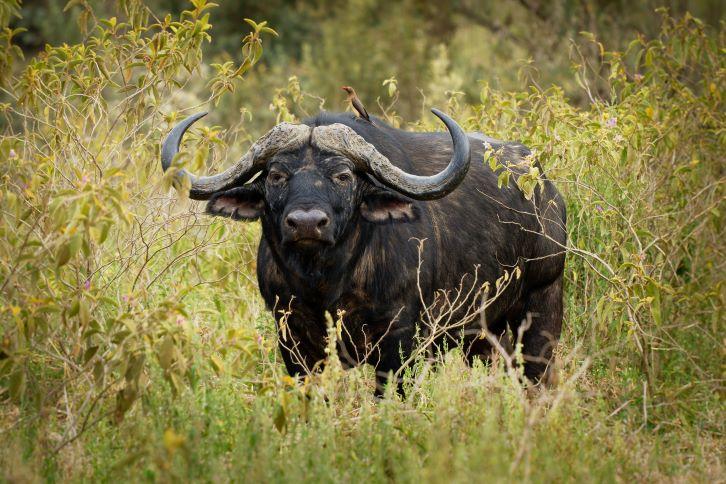
Cape buffalo are not difficult animals to find in Africa. In many parts of Southern Africa, large herds still move through floodplains, river systems, open savannas, and dense bushveld much as they have for centuries. The real challenge is not simply locating buffalo, but understanding how they behave once pressure, danger, or human presence enters the equation.
Professional hunters place enormous importance on reading buffalo behavior correctly. Herd structure, feeding patterns, wind direction, access to water, and even the mood of a dominant bull can influence how a hunt unfolds. A calm herd feeding in open grassland can become unpredictable within seconds if alarmed or wounded.
For hunters planning dangerous game safaris in Africa, reading Cape buffalo behavior and habitat is one of the most important parts of preparation. Learning how breeding herds move, how old Dagga Boys separate from the herd, and where buffalo spend the hottest parts of the day gives hunters a far better understanding of what they may encounter in the field.
Hunters researching Cape buffalo hunts should also understand how terrain and habitat can shape the entire safari experience. Buffalo living in thick riverine vegetation behave very differently from buffalo feeding in open floodplains or semi-arid bush country.
Many hunters preparing for their safari also spend time researching dangerous game hunts in Africa and learning how professional hunters approach close-range encounters with aggressive or wounded game animals.
Across Southern Africa, buffalo remain one of the most respected and unpredictable members of Africa’s Big Five — powerful animals that demand patience, discipline, and respect from every hunter who follows their tracks.
[DYNAMIC-BLOGTABLEOFCONTENT]
Buffalo Behavioral Traits
Cape buffalo are highly social animals and are rarely found alone unless they are old bulls pushed out from the breeding herd. Across Southern Africa, herds can range from a few dozen animals to several hundred, particularly in areas with strong water availability and good grazing conditions.
During our travels through South Africa and Botswana, we’ve had the opportunity to watch massive buffalo herds moving naturally through the wild. In Kruger National Park, one unforgettable afternoon started with what looked like a dark line forming on the horizon near a distant waterhole. As the movement slowly became clearer, we realized we were watching an enormous herd of buffalo advancing across the open veld. Long before the first animals reached the water, more buffalo were still appearing behind them in one continuous wave of black movement stretching toward the horizon.
At the Chobe River in Botswana, after a particularly dry season, we spent an evening watching well over a thousand buffalo spread across exposed floodplain grasslands between the river and our campsite. As the sun dropped behind the Namibian side of the river, the entire herd moved slowly toward the remaining water — one of those moments that reminds you just how powerful and ancient Africa’s wildlife systems still are.
Experiences like these help explain why Cape buffalo hunts remain one of the most respected dangerous game safaris in Africa. Buffalo are not simply large animals moving randomly through the bush. Herds operate within surprisingly structured social systems that influence movement, feeding patterns, defensive behavior, and how hunters approach them in the field.
Hunters researching buffalo hunting in South Africa quickly learn that buffalo behavior changes dramatically depending on herd size, hunting pressure, habitat density, water availability, and the presence of older bulls separated from breeding herds.
Dangerous & Defensive Nature of Cape Buffalo
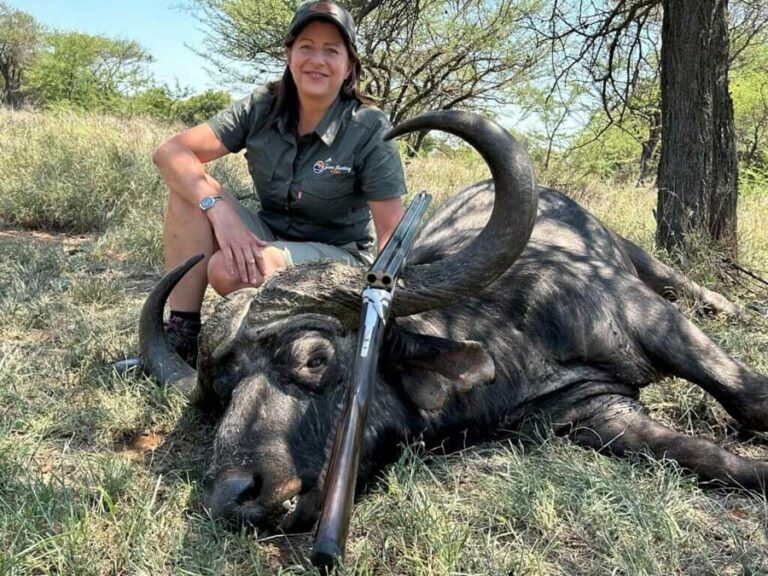
Cape buffalo may appear calm when feeding or resting near water, but experienced PH's regard them as one of the most dangerous animals in Africa. Their reactions can change instantly when pressured, wounded, or separated from the herd.
Few situations on a big game hunt become more serious than a poorly placed shot on a buffalo. A wounded bull will often retreat briefly into thick cover before turning aggressively toward the source of danger. In these close-range follow-up situations, experienced professional hunters place enormous emphasis on accurate shot placement and follow-up shot strategy, as reaction time and bullet placement can determine the outcome within seconds.
Buffalo are also highly defensive animals within herd environments. Hunters focusing only on the target bull can easily overlook nearby herd members reacting to stress, movement, or gunfire. PH's and their team of trackers constantly monitor surrounding animals during close-range encounters, particularly when hunting large breeding herds.
Understanding Cape Buffalo Herd Structure
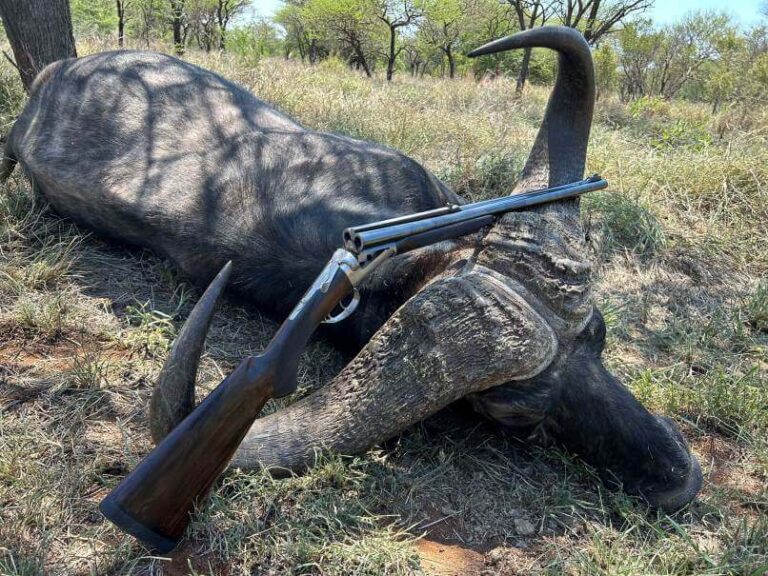
Cape buffalo operate within structured social groups that strongly influence movement patterns, aggression levels, and hunting strategy. Large breeding herds usually consist of cows, calves, and younger animals that remain closely tied to grazing and water sources, while younger bulls often form smaller bachelor herds that move more independently. Older solitary bulls, commonly known as Dagga Boys, are among the most challenging animals encountered during dangerous game hunts in Africa. These mature bulls frequently spend long periods near dense cover and permanent water and are widely known for their unpredictable temperament and willingness to stand their ground when wounded or pressured.
Large breeding herds moving through river systems and open floodplains also attract predators, particularly lions targeting weaker or isolated animals. In several parts of Southern Africa, hunters and guides regularly witness these interactions unfolding naturally around water sources and grazing areas, which is one reason many dangerous game enthusiasts also research traditional lion hunts in Africa when planning extended safaris.
Buffalo Movement, Water and Feeding Patterns
Cape buffalo depend heavily on reliable water access and rarely remain far from permanent water sources for extended periods. During hot conditions, herds often rest in shade or thick cover through the middle of the day before returning to graze during cooler morning and afternoon periods.
Hunters frequently focus tracking efforts near river systems, floodplains, marshes, and heavily used water access routes. Hunters researching free-range buffalo hunting in Tanzania, Zimbabwe or Mozambique quickly discover how strongly buffalo movement patterns are connected to seasonal grazing and water availability.
Buffalo communicate constantly through scent, posture, movement, and vocal sounds, making close approaches exceptionally challenging in dry conditions where visibility and wind direction become critical.
Reading Buffalo Tension and Warning Behavior
Cape buffalo rarely rely on obvious aggression alone. Much of their communication happens through subtle changes in posture, spacing, movement, scent awareness, and herd positioning long before animals visibly react to danger.
Hunters and trackers often pay close attention to nervous herd movement, repeated staring into thick cover, bulls stopping abruptly, or animals repositioning themselves around calves once buffalo become aware of unfamiliar scent or movement nearby. In some situations, mature bulls may remain completely motionless inside dense vegetation while carefully watching the back trail after detecting danger.
These small behavioral changes can develop rapidly in thick bushveld where visibility is limited and buffalo rely heavily on scent and hearing to assess potential threats. Understanding these warning signals is one of the reasons Cape buffalo remain among the most respected and unpredictable dangerous game animals in Africa.
Seasonal Behavior and Hunting Conditions
Cape Buffalo behavior changes throughout the year depending on rainfall, breeding activity, grazing quality, and herd pressure. During breeding periods, bulls become more competitive and aggressive as they move between breeding groups. Increased herd movement during these periods can create excellent tracking opportunities, although hunters and professional hunters alike typically exercise greater caution around mature bulls.
In drought conditions Cape buffalo often concentrate more heavily around permanent water sources, particularly in Namibia, Botswana and other low-rainfall regions of Africa. These environmental changes can dramatically influence tracking conditions, herd density, and hunting strategy throughout the safari season.
Cape buffalo are most commonly found in open savannas, floodplains, grasslands, and woodland areas that provide reliable grazing, water access, and cover during the heat of the day. Seasonal rainfall, drought conditions, and grazing pressure can all influence how herds move between these environments throughout the year.
Buffalo will also use dense vegetation and riverine cover for shade, protection, and security when pressured or disturbed, particularly in areas with heavy predator activity or increased hunting pressure.
Physical Preparation for Cape Buffalo Hunts
Many American hunters preparing for their first Cape buffalo safari underestimate how physically demanding dangerous game hunts in Africa can become once tracking begins on foot. Unlike many plains game hunts for species such as kudu or eland, buffalo hunts often involve following fresh tracks for hours through thick bushveld, floodplains, river systems, and dense thorn country before ever seeing the bull clearly.
In remote wilderness areas such as the Niassa region of Mozambique or parts of Tanzania, tracking conditions can become especially demanding. Hunters pursuing buffalo in these untamed areas may cover long distances through heavy vegetation, soft sand, extreme heat, and isolated terrain where buffalo move constantly between water, shade, and feeding areas. Depending on the season and location, hunters may also contend with tsetse flies, humidity, thick riverine cover, and exhausting daytime temperatures that steadily wear down concentration and physical stamina. Hunters researching traditional buffalo hunting in Tanzania quickly discover how physically immersive and unpredictable these wilderness buffalo hunts can become.
Physical fatigue, dehydration, and adrenaline all influence decision-making once a close-range opportunity finally develops. Cape buffalo hunts rarely unfold from comfortable shooting positions or predictable distances. Visibility changes constantly inside thick cover, and herd movement can force hunters to react quickly while maintaining awareness of surrounding animals and shifting shot angles.
Experienced big game hunters often spend considerable time preparing for these conditions before arriving in Africa, particularly practicing shooting from sticks, controlled offhand shooting, and maintaining composure during fast-moving close-range situations.
Understanding Herd Awareness and Buffalo Behavior
Cape buffalo are highly protective animals with strong herd instincts, particularly around calves and younger animals. Breeding herds can become extremely defensive if they feel threatened, wounded, or pressured inside thick cover.
Hunters focusing only on the target bull can easily lose awareness of surrounding buffalo reacting to movement, scent, or gunfire. In large herds, animals frequently bunch together, overlap one another, or shift positions unexpectedly just before a shot opportunity develops. These constantly changing conditions are one of the reasons experienced professional hunters place enormous importance on patience and shot discipline during Cape buffalo hunts.
Older Dagga Boys separated from breeding herds often behave very differently from herd animals. Mature bulls may remain motionless inside dense brush for long periods, circle downwind after detecting danger, or suddenly reappear at extremely close range after disappearing into cover.
Shot Angles, Positioning and Follow-Up Situations
Successful Cape buffalo hunting is heavily influenced by understanding how buffalo stand, move, and position themselves within the herd before taking a shot. Hunters must constantly evaluate body angle, visibility through brush, nearby animals, and the risk of other buffalo moving into the line of fire as the herd shifts.
Even well-positioned bulls can become difficult targets when partially obscured by grass, branches, or surrounding animals. Hunters often wait patiently for a clean shot angle rather than rushing opportunities inside moving herds.
Few situations in dangerous game hunting become more serious than following a wounded buffalo into thick cover. Wounded bulls are widely respected for their resilience, aggression, and unpredictability, particularly once visibility closes to only a few yards inside dense bushveld. Understanding proper Cape buffalo shot placement becomes critically important during these high-pressure encounters, as shot angle, bullet placement, and herd positioning can all influence how buffalo react once the first shot is taken. Professional hunters and trackers remain under constant pressure during follow-up situations, carefully watching both the wounded animal and nearby herd members reacting to stress, movement, or danger
Predators, Pressure and Environmental Awareness
In many buffalo hunting areas across Southern Africa, lions remain closely connected to large breeding herds and permanent water systems. Hunters and trackers constantly remain aware of their surroundings near river systems, floodplains, and dense vegetation where predators frequently move alongside buffalo.
These predator-prey interactions are part of what makes Cape buffalo one of the most respected dangerous game animals in Africa. Understanding how buffalo react to pressure, protect vulnerable herd members, and move through changing terrain gives hunters a far better appreciation of the realities behind dangerous game hunting long before the first tracks are found in the dust.
Final Thoughts on Cape Buffalo Behavior
Cape buffalo hunting in Africa goes far beyond simply locating animals in thick bush or open floodplains. Herd movement, wind direction, pressure, habitat, and animal awareness can all change the dynamics of a hunt within seconds, particularly once tracking moves into dense cover at close range.
From old Dagga Boys standing silently inside riverine vegetation to breeding herds becoming highly defensive around calves and wounded animals, buffalo constantly test patience, awareness, and the ability to read changing conditions in the field. For many hunters planning their first dangerous game safari, understanding these behavioral patterns becomes one of the most important parts of preparing for the realities of tracking buffalo through wild African terrain.
Hunters wanting a deeper understanding of why buffalo are considered one of Africa’s most respected dangerous game animals should also read Facing the Ultimate Adversary: Cape Buffalo Hunting in Africa, which explores the unpredictability, pressure, and psychology behind close-range buffalo encounters.
Those researching traditional Ultimate Guide to Cape Buffalo Hunting Safaris can also learn more about safari structure, destinations, and what to expect during Cape buffalo hunts across Southern Africa.
Frequently Asked Questions
Why is Cape buffalo hunting considered one of Africa’s most dangerous hunts?
Cape buffalo are widely respected because they are powerful, unpredictable, and highly aware of their surroundings. Tracking buffalo through thick bushveld at close range often places hunters inside dense cover where visibility, wind direction, herd movement, and animal behavior can change rapidly within seconds.
Why do many hunters compare Cape buffalo hunting differently from plains game hunting?
Unlike many traditional plains game hunts that rely heavily on glassing and longer shooting distances, Cape buffalo hunting usually becomes far more physical and psychologically demanding once tracking begins on foot. Hunters often spend hours moving slowly through thick cover where close-range encounters and shifting herd behavior create constant pressure.
Which African countries are best known for traditional Cape buffalo hunting?
Countries such as Tanzania, Mozambique, Zambia, Zimbabwe, Namibia, South Africa, and parts of Central Africa are widely known for Cape buffalo hunting. Hunting conditions vary significantly between regions, ranging from open floodplains and savannas to dense bushveld and remote rainforest environments.
Why do many hunters return to Africa for another Cape buffalo hunt?
Many hunters describe Cape buffalo hunting as mentally exhausting, physically demanding, and very different from most hunting experiences elsewhere in the world. The combination of wilderness pressure, dangerous game tracking, unpredictable encounters, and remote African landscapes often leaves a lasting impression long after the safari itself has ended.