
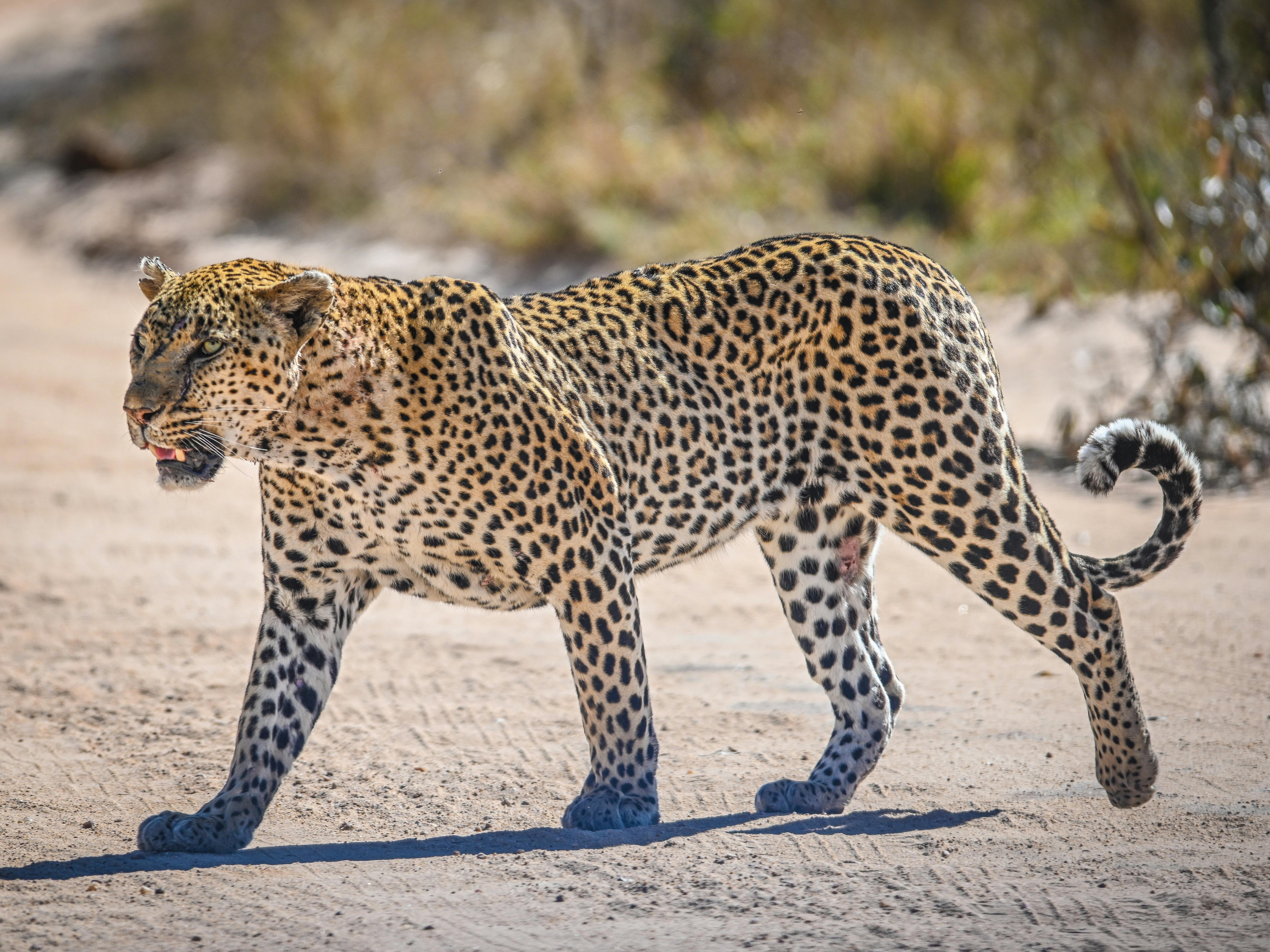
Leopard hunts in Africa are not a test of equipment, marksmanship, or physical endurance. It is a test of restraint, judgment, and mental stamina. More leopard hunts fail quietly than succeed publicly, not because leopards are scarce, but because they expose weaknesses most hunters don’t recognize in themselves.
For American and Canadian hunters accustomed to structured seasons, clear success metrics and constant movement, leopard hunting in Africa can feel disorienting and offtrack.
This is not a hunt you dominate. It is one you endure.
[DYNAMIC-BLOGTABLEOFCONTENT]
Why Leopard Hunts Fail More Often Than They Succeed
Most failed leopard hunts don’t end with mistakes. Read that again. Most leopard hunts don’t end with mistakes.
Rather, they end with nothing happening.
Days pass without sightings, and the bait remains untouched. Cameras show midnight visits that never repeat. Confidence slowly erodes.
The real failure point is psychological. Hunters expect momentum. Leopards operate on indifference. That mismatch creates impatience, rushed decisions, and unnecessary pressure to perform long before a shot is even possible.

The Leopard–Human Chess Match
Leopards do not simply learn terrain, they learn pressure. In areas with repeated hunting activity, leopards adapt their movement, timing, and approach angles specifically to avoid blinds, vehicles, and human scent. This elusive African cat is by no means stupid.
This isn’t instinct alone. Its adaptive behavior is shaped by repeated exposure to hunters over time that has leopard engaging in this intelligent and rather unpredictable behavior.
Why “The Perfect Bait” Is a Myth
Bait quality matters far less than bait logic. Leopards respond to placement, not perfection.
A perfectly hung bait in the wrong terrain, wrong wind corridor, or wrong escape context will be ignored indefinitely, whether hunters want to admit it or not.
The bottom line? Leopards choose safety first. If a bait feels exposed or forces commitment too early, they will bypass it without hesitation.
Time Is the Real Trophy Cost
Leopard hunts are paid for in hours of silence. Sitting motionless in a blind, night after night, with no feedback, is the real price of admission.
Hunters who succeed are not the most aggressive or experienced at the task. Rather, they are the most tolerant of inactivity and the frustration that goes along with it. Those who cannot endure boredom eventually force action, and leopards punish impatience relentlessly.

What No One Warns You About
Leopard hunting includes long stretches of sitting still, questioning your life choices, and becoming intensely familiar with the sound of your own breathing.
At times, you’ll convince yourself the leopard is watching you. Alternatively, you’ll then convince yourself it has left the concession entirely! I am not lying when I tell you that both these thoughts will feel equally true at 2:00 am!
At some point, you may also become emotionally invested in the bait, not because it matters, but because it is the only thing that has changed in three days!
The Invisible Hunt: Reading What You Never See
Most information in a leopard hunt comes from absence, not presence. No tracks. No visits. No movement. These are not failures, they are signals, speaking loudly and clearly and now just need to be read.
Experienced teams read negative space carefully. A bait left untouched tells a story. A leopard that visits once and never returns tells another. Believe it or not, in leopard hunting, nothing happening is still data.
Why Plains Game Experience Can Work Against You
Plains game hunting rewards movement, adjustment, and pursuit of trophies. Leopard hunting demands the opposite: stillness, delayed gratification, and blind trust in preparation.
North American hunters often arrive with strong field skills but underestimate how different African leopard hunts are from anything they have experienced at home.
This mismatch causes highly experienced hunters to struggle more than expected. They aren’t unskilled, they’re fighting the hunt instead of surrendering to its structure and going with the natural flow of the leopard hunting process. Within Big Game Hunting, few pursuits require the same combination of inactivity, trust and emotional control as waiting for a mature leopard.
Decision Windows: The Three Seconds That Matter
When a leopard finally appears, everything compresses into seconds. Distance, posture, angle, light, and shot viability must be processed instantly.
Most mistakes happen after the leopard is visible, not before. Hesitation, overconfidence, or rushed judgment in these brief moments define success or long-term regret.
In those critical few seconds, everything comes down to preparation and execution. Understanding leopard shot placement and how animals react under pressure can make the difference between a successful hunt and a lost opportunity.
Leopard Size, Sex, and Aging: Where Most Hunters Misjudge
Judging the quality of a leopard is notoriously difficult. Body mass, head shape, tail thickness, gait, and confidence must be evaluated simultaneously, and almost instantly, often in low light and under rising pressure.
Many hunters regret shots taken too quickly, not because the leopard was small, but because they lacked context. Experience and restraint matter more than measurements.
Why Concessions Matter More Than Countries
Country reputation is a blunt instrument. While many hunters researching hunting in Namibia focus on the country itself, leopard success depends far more on micro-conditions such as prey density, terrain structure, historical hunting pressure, and human activity.
Two concessions in the same country can produce dramatically different outcomes. Successful leopard hunters choose places, not flags. Hunters researching leopard hunting in Namibia often discover that concession quality has a greater impact on success than the country itself.
The same principle applies to leopard hunting in Zimbabwe, where neighboring concessions can produce vastly different leopard activity and age structures.

Ethics Under Pressure
Ethical leopard hunting can be extremely challenging at times. In fact, ethical leopard hunts are hardest when the opportunity finally appears. Passing over marginal animals, declining risky angles, and trusting professional judgment all require discipline under extreme pressure.
The urge to take the shot is so powerful, and often so wrong.
When You Should Not Book a Leopard Hunt
There are times when booking a leopard hunt is simply a bad decision. These include factors such as poor quota timing, unrealistic expectations, declining success history, or misaligned concessions.
When these factors come into play, walking away from a leopard safari opportunity can be the most responsible choice a hunter makes.
What a Successful Leopard Hunt Actually Looks Like
A successful leopard hunt is rarely dramatic. It is quiet, controlled, and deeply personal. It rarely involves a chase or a visible struggle; Instead, it’s a case of intense preparation aligning with an opportunity.
Those who succeed understand that leopard hunting rewards discipline, not force.
Why Leopard Hunting Is the Final Dangerous Game Test
Leopard hunting occupies a unique space in African dangerous game hunting. Hunting this highly dangerous and extremely intelligent African cat offers no chase, no escalation, and also no visible contest. Instead, it demands patience, silence, and acceptance of uncertainty.
For American and Canadian hunters especially, it represents a departure from familiar rhythms and expectations. Those who succeed rarely describe the moment of the shot as the “highlight.” They speak instead of the waiting, the doubt, and the discipline it took to remain still when doing nothing felt completely wrong.
Most leopard hunters don’t fail because they did something wrong, they fail because they discover they don’t enjoy waiting in the dark with their thoughts. Leopard hunting is widely regarded as one of the most complex and demanding pursuits in Africa, often considered the ultimate test within dangerous game hunting. To better understand how leopard fits into this broader category, explore our guide to dangerous game hunts in Africa, where we break down the challenges, expectations, and realities of hunting Africa’s most formidable species.
Is a Leopard Hunt Right for You?
Leopard hunting is not for everyone. Nor should it be. These dangerous game hunting safaris are also not decided on a whim, or shouldn’t be anyway.
Who Leopard Hunting Is Not For
This hunt is not suited to hunters who require constant movement, daily confirmation of progress or predictable outcomes. It may also be a poor fit for anyone working with a tightly compressed schedule or treating leopard as merely another box to check.
A Pre-Hunt Self-Assessment Every Leopard Hunter Should Answer Honestly
Before booking a leopard hunt, every hunter should answer the following questions honestly, not optimistically:
Am I prepared to sit multiple nights with no visible activity?
Can I accept passing on a leopard that does not meet ethical or maturity standards?
Do I trust professional judgment in low-light, high-pressure decisions?
Am I comfortable returning home without a leopard if conditions never align?
Can I sit absolutely still while my mind invents problems that do not exist?
Am I ready for the consequences of harvesting a leopard?
If any of these questions cause hesitation, that hesitation demands attention. Leopard hunting amplifies mindset, it does not correct it. Acknowledge that hesitation and work through the reasoning behind it.
Hunters still comparing species, destinations and safari formats can explore current African Hunting Trips before deciding whether leopard is the right challenge for their next safari.
Author
Pierre brings more than three decades of African hunting experience, with firsthand exposure to dangerous game hunts across multiple African countries. His writing focuses on the strategic, psychological, and ethical realities of hunting in Africa, offering North American hunters insight that goes beyond gear lists and marketing narratives, and down to the real-life nitty-gritty topics and questions.