
Updated: July 2026
What to Expect from your Hunting Trip to Tanzania
Planning your first Hunting Trip to Tanzania is unlike planning a safari anywhere else in Africa. From vast unfenced hunting concessions and legendary dangerous game areas to remote charter flights and government hunting regulations, Tanzania offers a style of safari that rewards preparation as much as patience. Understanding what to expect before you arrive helps ensure you make the most of one of Africa's most respected hunting destinations.
For American sportsmen, Hunting in Tanzania represents the opportunity to hunt truly wild country where every day unfolds differently. A morning may begin tracking Cape buffalo through miombo woodland, glassing open plains for magnificent antelope or waiting patiently over bait for a mature leopard. Beyond the hunting itself, travelling through Tanzania introduces visitors to spectacular landscapes, rich wildlife and one of Africa's oldest safari traditions.
This guide explains what you can expect before, during and after a Tanzania hunting safari, from travel arrangements and hunting regions to the species available, local regulations and practical advice that will help you plan with confidence.
[DYNAMIC-BLOGTABLEOFCONTENT]
Tanzanian Geography
Tanzania at a Glance
The Tanzanian currency is the Shilling. Available notes include 500, 1000, 2000, 5000, and 10,000 Shillings.
Dodoma is the capital city, while Tanzania’s national animal is the giraffe.
The national language is Swahili, although English is widely utilized in foreign trade and higher education institutions.
Climate
When planning your Tanzania hunting trip, it’s recommended to pack accordingly, and the climate will depend on the area in which you find yourself.
In the highland regions, that border Malawi, Mozambique, and Zambia, the temperature ranges from 50–68 degrees Fahrenheit regardless of the season. The summer season runs from November to February, with temperatures starting in the high 70s and reaching the high 80s. The coldest time is from May to August when temperatures range from 55–68 degrees. The remainder of Tanzania is relatively moderate, with average temperatures never dropping below 20 degrees.
In Southern, Central, and Western Tanzania the rain peaks from October to April, while in areas north of Lake Victoria and along the East coast regions rainfall peaks twice a year, from March to May and again from October to December.
The seasons can be summarized as:
- A short, dry season in January and February, with the rainy season starting in March;
- March to May is an extended rainy season, mostly made up of afternoon showers when both humidity and temperatures are at their highest;
- The longer dry season runs from June to October, and this is the best season for any game hunting safaris;
- A short, rainy season in November and December, these showers are lighter and not as predictable;
- Monsoons occur in affected island and coastal areas from July to October.
Popular Safari Hunting Places in Tanzania and the Landscape
Selous Game Reserve
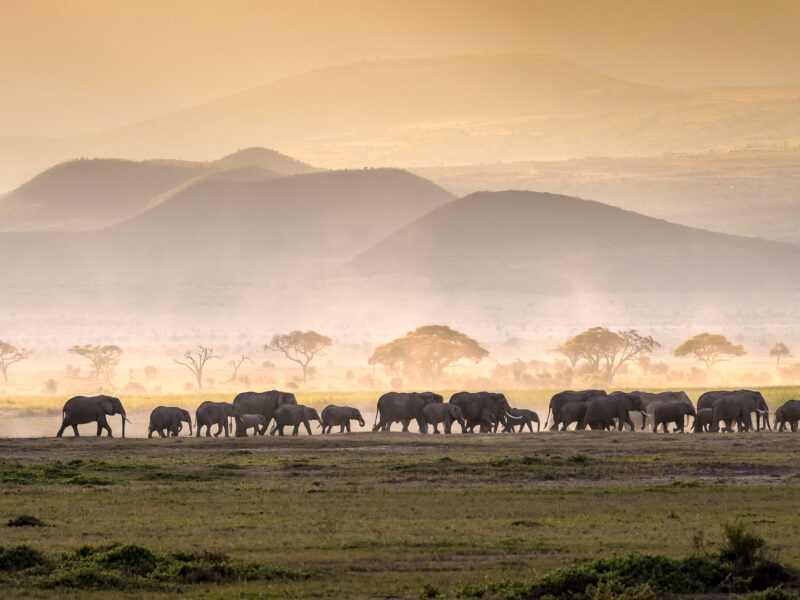
This reserve is one of the largest protected areas in Tanzania and allows a hunter an authentic hunting safari in Tanzania as human interference within the reserve is minimal. Inside the park, the landscape varies from Miombo–type woodland and dense forest to bush, open plains, and even rocky outcrops. Three of Tanzania’s rivers flow through this park, with wildlife heading to them like flies to honey.
The reserve is known for big cats, elephants, buffalo, crocodiles, hippos, and Puku.
Kizigo Central Region
Characterized by woodland, rocky mountains, open savannah, and patches of riverside thickets, this area is home to sable, roan, Greater Kudu, and probably one of the most prized game hunting safari trophies, the lion. It provides the perfect balance of African plains game, big game hunting, and dangerous game options.
Maasailand
The region of Maasailand includes Lake Manyara and Losimingor Mountain, as far down as the Tarangire National Park. Landscapes endemic to this region are acacia bush, open plains, areas of thick thorn bush, and rocky outcrops. It is home to many game hunting options, including Grant’s and Thompson’s gazelle, lesser kudu, gerenuk, Cape buffalo, lion, leopard, Kirk’s Dik–Dik, Coke’s hartebeest, and steenbuck.
Ugalla and Moyowosi Game Reserves
Animals to Hunt in Tanzania
There are a large number of wildlife options to target on Tanzania hunting trips, from the king of the jungle to endemic species. With this and many options between, there is a trophy to satisfy every game hunter’s taste and bucket list!
Hunting Lion in Tanzania
The mighty African lion can be hunted throughout Tanzania from Selous to the Maasailand. Western Tanzania is said to have the best lion specimens for big game hunting in Tanzania with large-bodied, black-maned lions waiting for you to prove your hunting mettle. The maneless lions of Southern Tanzania are known to track the hunters tracking them, confirming their lack of fear towards humans and turning the hunters into prey!
Lions older than six-years are hunted, with night hunting prohibited. Lion hunting in Tanzania requires a CITES permit, with a minimum 21–day hunting permit. If you want to take your trophy to America, you must ensure that you hunt your lion in an area with conservation concessions to meet the requirements of US Fishing and Wildlife Services (USFWS).
Buffalo
Hunting Elephant in Tanzania
A large population of elephants call the southern, central, and western areas of Tanzania home. Elephant hunting in Tanzania requires a CITES permit from your home country and a 21-day hunting permit to be issued by the Tanzanian government. Hunters are only allowed to target elephant bulls. Tusks cannot be heavier than 33 pounds or longer than 59 inches. It is illegal to export elephant trophies to the EU or America.
Hunting Buffalo in Tanzania
The Maasailand hunting blocks are widely regarded as some of Tanzania's finest buffalo country. Vast open plains, dry river systems and scattered acacia woodland create ideal habitat for large herds, while the changing terrain demands a patient and methodical approach. Unlike hunting in dense bush, Cape Buffalo Hunts in Maasailand often involve carefully glassing from elevated vantage points before using the landscape, riverbeds and sparse cover to close the distance on mature bulls.
During the dry season, buffalo regularly move between grazing areas and reliable water sources, creating excellent tracking opportunities. Success depends on reading the wind, using the terrain effectively and stalking within range without alerting the herd, making Maasailand one of Tanzania's classic buffalo hunting destinations.
Hunting Sitatunga in Tanzania
These antelopes are swamp-dwelling and endemic to Tanzania, Gabon, Kenya, and the DRC. Sitatunga is a semi–aquatic antelope and will spend most of its life in areas like the Okavango Delta where their webbed-like hooves enable them to move swiftly in dense swamp waters.
Sitatunga Hunts involve getting hands-on and sometimes muddy, as most sitatunga hunting is done from the water using traditional “mocorro” canoes made from logs. These tiny canoes allow only the hunter, their PH, and two spotters. Making your shot is made more challenging by having to take it from standing up in your canoe.
Forest sitatunga hunts use Pygmies as trackers and employ hunting dogs to keep the target occupied until you can take your shot.
Permits and Laws when Hunting in Tanzania
- When hunting in Tanzania certain laws and regulations need to be complied with, and these can change at short notice.
- Tanzania offers 10, 16, and 21-day hunting permits.
- If your hunt is shorter than the permit period, you still require the relevant permit. For example, if your hunt is 7 days, you will need a 10-day permit.
- All Tanzania hunting safaris involve a government scout to ensure that there aren’t any laws broken. Once the hunt has been completed the license is signed.
- If the hunt is cleared, plans will be started for the trophy process.
- The official hunting season starts on 1 July and ends on 31 December but can be extended until 31 March.
- Hunters can only hunt for animals for which they have a license, with the license in their name.
- Trophy hunting must be completed during daylight hours.
- Hunting from a vehicle is not permitted, and a hunter must be at least 200 yards from the vehicle before firing.
- Using bait for lions and leopards is allowed as long as the bait is licensed.
Things to Remember
- All visitors to Tanzania require a valid passport that is valid for six months after their return home. Most foreign visitors require visas, and the Tanzanian Electronic Visa Application System is used for this purpose.
- Ensure that Tetanus vaccinations are updated, and if cholera is active, take precautions. Take preventative measures against malaria, such as medications and using mosquito repellents.
- Visitors are highly discouraged from taking photos of military and police buildings or bases as well as border posts and to have their passports on them at all times.
- Wardrobe and behavior in Tanzania are conservative. Keep your dress code modest, without shorts and sleeveless shirt options for women when traveling outside the resort.
- Plastic bags are illegal in Tanzania.
- Don’t travel within 30km of the border with Mozambique (Mtwara region) due to potential terrorist and bandit activity.
Traveling to and in Tanzania
The main airports into and out of Tanzania are the Julius Nyerere International Airport in Dar es Salaam and Kilimanjaro International Airport near Arusha. These airports are responsible for many chartered flights that are a safe and convenient way to travel within Tanzania.
American Airlines offers flights from JFK directly to Kilimanjaro International and from Dallas via Zanzibar.
Things to Do and Places to see around Tanzania
Tanzania big game safaris offer exceptional hunting experiences in this beautiful country, with an array of tourism activities to sweeten the pot.
Serengeti National Park
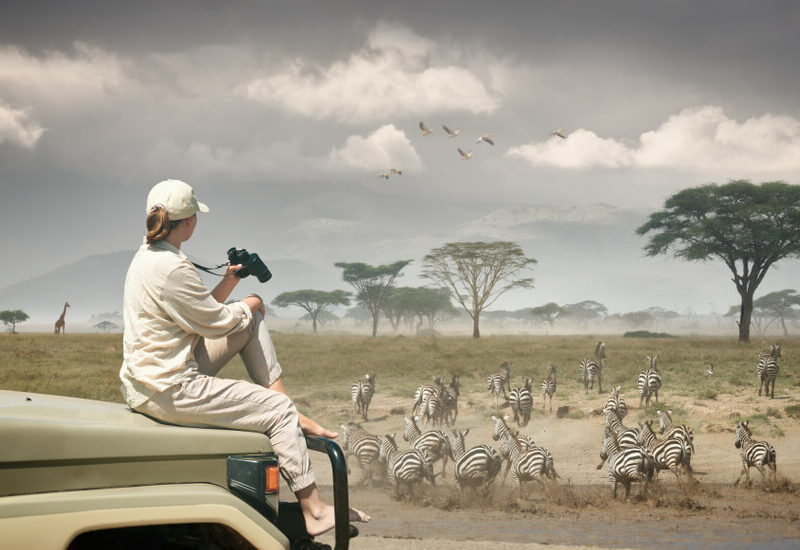
This world-famous park is known for its epic animal migrations that have inspired and spawned many a documentary series. Most notable is the wildebeest migration, where millions of animals stream across the Serengeti, searching for water and grazing areas during and after the rains.
Ngorongoro Conservation Area
Oldupai Museum
College of Arts at Bagamoyo
The Rock
Pemba Island
If you or your traveling companies need a change of scenery after your hunting safari, then Pemba Island is for you. Roughly 30 miles off the coast of eastern Tanzania, Pemba Island boasts resorts, snorkeling, and year-round sunshine! Average temperatures in the capital city Chake rarely fall below 80º Fahrenheit, except in the rainy months. Pemba Airport services flights directly to and from Arusha, Dar es Salaam, and Zanzibar.
Tanzania as a Hunting Destination
With its expanses of open plains, forest woodland, sprawling savannahs, swamp areas, and rocky outcrops, a hunting safari in Tanzania offers a diverse landscape with an equally diverse array of animals and hunting opportunities. Whether you’re looking for a prime trophy lion, antelope mount, or even a crocodile and elephant; Tanzania can provide these choices and more. If you’re lucky enough a trophy reminder will bring back great memories for years to come.
And let’s not forget about the other amazing tourist opportunities and outings available. With charter and official flights at the ready, you can see all that this diverse African kingdom has to offer, whether you are game hunting on the plains or looking for a quick change to some island scenery.
Tanzania offers sights celebrating the history, art, culture, food, and naturally, its spectacular wildlife and natural landmarks. It is an open treasure chest waiting for you to discover a wide variety of beautiful gems while hunting in Tanzania.
Tanzania Leaves a Lasting Impression
Few hunting destinations combine wilderness, wildlife and tradition quite like Tanzania. Every safari unfolds at its own pace, from tracking dangerous game through vast miombo woodlands to glassing open plains for some of Africa's most respected antelope. It is a country where patience, preparation and good fieldcraft are rewarded, and where every hunting day brings something different.
Beyond the trophies themselves, Tanzania offers a deeper appreciation for Africa's wild places. The vast landscapes, experienced professional hunters and remarkable diversity of wildlife create the type of safari that remains with you long after the journey home. Whether your goal is dangerous game, premium plains game or a combination of both, Big Game Hunting in Tanzania continues to set the benchmark for authentic African safari hunting.
For those prepared to venture into one of Africa's last great wilderness hunting destinations, Tanzania delivers exactly what generations of sportsmen have travelled across the world to find, a genuine hunting safari built on tradition, respect for wildlife and unforgettable days in the African bush.
Frequently Asked Questions
What makes Tanzania different from other African hunting destinations?
Tanzania offers one of Africa's last truly wild hunting environments, with vast unfenced concessions where wildlife moves naturally across enormous landscapes. Unlike many destinations, safaris often involve charter flights into remote camps, experienced professional hunters and traditional fair-chase hunting that has changed very little over the decades. It is this combination of wilderness, scale and hunting tradition that continues to set Tanzania apart.
How many hunting days should I allow for a safari in Tanzania?
The answer depends on the species you intend to hunt. Plains game safaris generally require fewer hunting days, while dangerous game species such as lion, leopard and elephant are governed by minimum government licence periods. Allowing enough time not only satisfies legal requirements but also gives your professional hunter the flexibility to hunt patiently rather than rushing opportunities.
Can I combine dangerous game and plains game on the same safari?
Yes. One of Tanzania's greatest strengths is the opportunity to combine dangerous game with exceptional plains game during the same safari. Many concessions hold healthy populations of buffalo alongside species such as kudu, sable, roan, eland and waterbuck, allowing a well-planned safari to produce a remarkably diverse trophy collection.
Is Tanzania a good choice for a first African hunting safari?
Tanzania can certainly be an excellent first safari, provided you understand the style of hunting involved. The country is best suited to sportsmen looking for authentic wilderness hunting rather than short, highly structured packages. With experienced professional hunters guiding every step of the safari, many first-time visitors leave with not only outstanding trophies but also a lasting appreciation for one of Africa's most respected hunting destinations.