
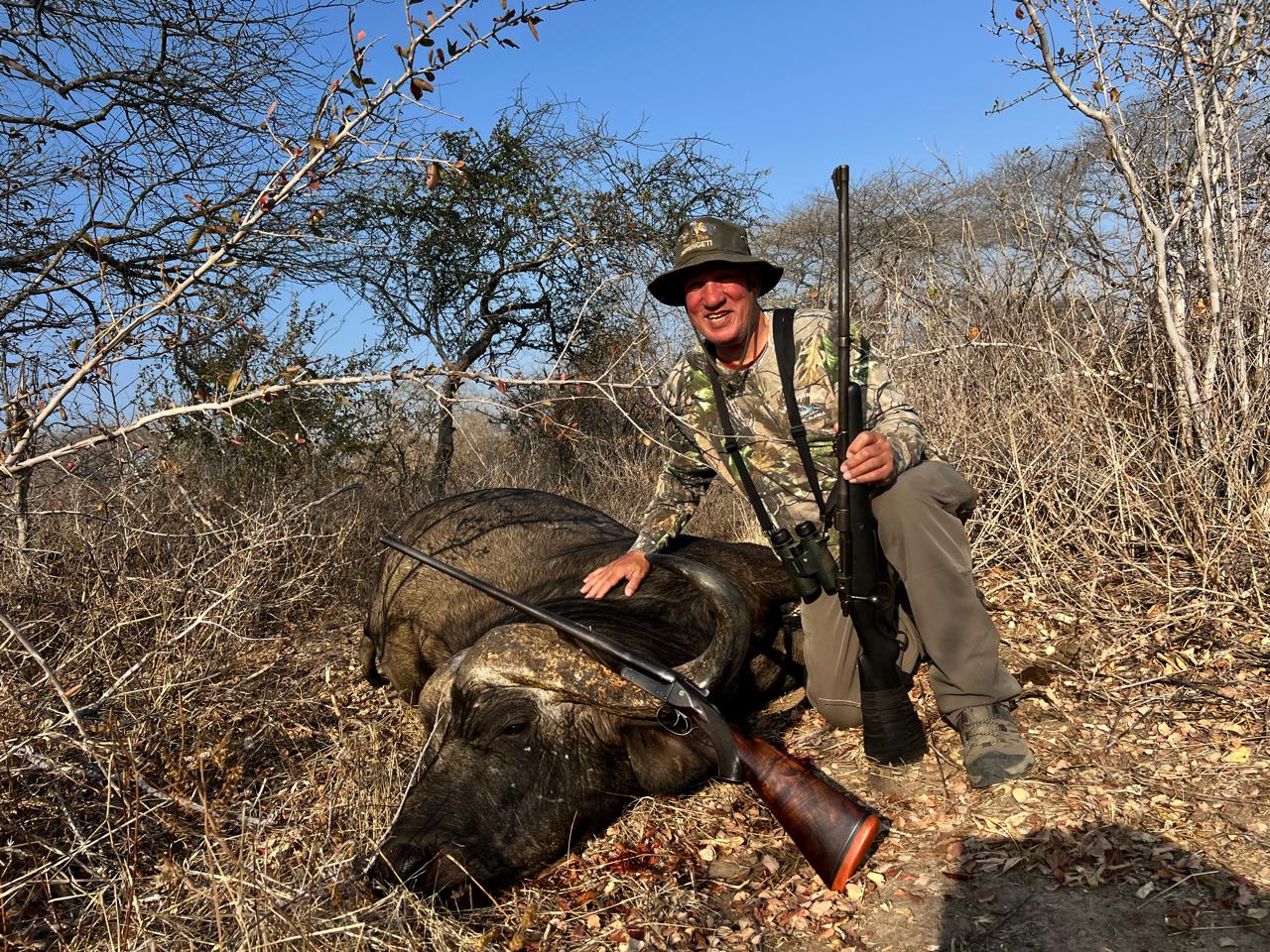
For American hunters searching for a traditional East African Cape buffalo safari, hunting safaris in Tanzania still represent one of the last places where dangerous game hunting safaris feel genuinely wild, unpredictable, and heavily dependent on traditional tracking methods rather than managed hunting systems. Vast hunting concessions, low hunting pressure, long days on foot, and free-range buffalo moving naturally across remote country all form part of the experience.
Lunda Nkwambi is one of those areas. Situated along the eastern border of the Kizigo ecosystem, the concession combines thick riverine bush, dry sandy riverbeds, scattered Baobab country, and strong buffalo populations that spend much of their time moving through dense cover.
This is not the kind of hunt built around short drives between fenced camps and controlled sightings. Much of the hunting is done on foot, following fresh spoor through heat, dust, thorn, and tsetse flies while trackers slowly piece together the movement of bulls through the concession.
And when a mature bull suddenly stops, turns, or disappears into thick brush at close range, the conversation quickly changes from trophy measurements and safari brochures to wind direction, shooting lanes, and staying calm under pressure.
For hunters wanting a realistic look at free-range Cape buffalo hunting in Tanzania, Lunda Nkwambi offers a strong example of what traditional dangerous game hunting in East Africa still looks like today.
[DYNAMIC-BLOGTABLEOFCONTENT]
Key Takeaways
Tanzania remains one of Africa’s premier destinations for free-range dangerous game hunting safaris, particularly for hunters searching for a traditional East African Cape buffalo experience. Large hunting concessions, low hunting pressure, and tracking-based safaris continue to attract American hunters looking for something more physically and mentally demanding than shorter, more managed hunts elsewhere in Africa.
In areas such as Lunda Nkwambi, buffalo are hunted on foot through riverine bush, dry sandy riverbeds, thorn country, and tsetse fly areas where fresh spoor, wind direction, and patience all play a major role in the hunt. Cape buffalo hunting in Tanzania is also tightly controlled through government-managed concession systems designed to support sustainable hunting quotas across vast free-range ecosystems. For international sport hunters, the appeal lies in the realism of the experience itself — long days tracking buffalo through remote country, close-range encounters in dense cover, and the unpredictability that still defines dangerous game hunting in East Africa today.
Cape Buffalo Hunting Licenses in Tanzania
Cape buffalo hunting in Tanzania is structured around different safari license durations, with most dangerous game hunts operating on 10-day, 16-day, or 21-day safari packages depending on the species being hunted and the hunting area involved.
For hunters focusing specifically on Cape buffalo, longer safaris often provide more flexibility, particularly when tracking mature Dugga boys across large free-range concessions. Extended safari licenses may also allow hunters to combine Cape buffalo hunts with additional dangerous game or plains game species depending on quota availability and concession regulations.
Hunting Concessions and Buffalo Management in Tanzania
How Tanzania Differs from Other Buffalo Hunting Destinations
Compared to countries such as South Africa, Cape buffalo hunting in Tanzania is less structured and far more dependent on traditional tracking methods across large wilderness concessions. Hunters may spend long days following fresh spoor through thick bush and river systems before getting an opportunity on a mature bull.
Zimbabwe also offers highly respected free-range buffalo hunting safaris, particularly in remote unfenced areas where tracking and close-range encounters form a major part of the experience. Tanzania, however, is often associated with the classic East African safari style — longer safari durations, large tented camps, and vast hunting blocks where hunters may go days without seeing another vehicle.
For many American hunters, the choice between destinations often comes down to budget, safari style, available hunting days, and how physically demanding they want the overall dangerous game experience to be.

Tracking Cape Buffalo in Lunda Nkwambi
Tracking Cape buffalo in Tanzania is rarely easy, particularly when hunting older Dugga boys that spend much of their time moving through thick river systems and isolated pockets of cover away from the main breeding herds. While large buffalo herds can often be located relatively quickly due to the amount of spoor and ground disturbance they leave behind, Professional Hunters will usually pay close attention to smaller groups of mature bulls moving separately along riverbanks and water sources.
For hunters wanting the classic old East African buffalo experience, this is where the real work often begins. Early mornings start with trackers searching for fresh spoor in sandy riverbeds before temperatures rise and movement becomes more difficult. As the day heats up, the combination of thorn bush, dust, humidity, and relentless tsetse flies can quickly wear hunters down, especially when tracking bulls through thick cover for hours at a time.
In areas of Tanzania, big Dugga boys stay close to water during the dry season, moving between feeding areas and river systems while avoiding pressure from larger herds. Following these older bulls often means slower, more deliberate tracking through dense bush where visibility changes constantly and shooting opportunities may appear without warning.
Some outfitters may choose to follow large buffalo herds where opportunities can come more quickly, particularly for hunters focused on harvesting a representative bull. But hunters specifically searching for old solitary bulls or smaller bachelor groups will often spend far more time working riverbanks, studying fresh tracks, checking water access points, and carefully following spoor through thick country where the hunt becomes far more unpredictable.
Tracking old buffalo bulls through Tanzania also means moving through true Big 5 country where encounters with other dangerous game are always possible. Fresh spoor from lions, leopards, and elephant are commonly found along the same riverbeds and water access points used by buffalo, which is one reason Tanzania remains so respected for traditional dangerous game hunting safaris. Hunters interested in pursuing additional Big 5 species often combine Cape buffalo hunts with:
- lion hunting safaris
- leopard hunting safaris
- elephant hunting safaris
depending on concession quotas, license duration, and available hunting areas.
Terrain and Shooting Distances in Lunda Nkambi
The terrain in Lunda Nkwambi is thick, dry, and often deceptively difficult to move through quietly. Sections of riverine bush are broken by sandy riverbeds, thorn country, scattered clearings, and Baobab trees that dominate parts of the landscape. During the dry season, the ground is covered in brittle leaves, seed pods, and dead brush that make silent movement extremely difficult once hunters leave the softer sand of the river systems.
For American hunters accustomed to more open shooting conditions, visibility inside the thicker river systems can come as a surprise. Buffalo may be heard long before they are seen, and mature bulls can disappear into cover remarkably quickly despite their size. In many situations, shooting opportunities happen suddenly at close range with only small windows through the brush available for a clear shot.
While occasional shots may present themselves across more open riverbeds or clearings, much of the hunting in Lunda takes place at distances well under 50 yards. In thick cover, hunters may find themselves shooting at less than 20 yards where calm decision-making and accurate shot placement become critical.
And when a mature bull suddenly stops, turns, or melts into thick cover at close range, everything changes very quickly. At that point, nobody is thinking about trophy photos, safari brochures, or what part of Africa the buffalo is standing in. Your focus shifts entirely to the wind, the brush in front of you, and whether that bull is about to break, circle, or come back through the cover.
A Cape buffalo’s nature does not change because of borders, concessions, or hunting systems. If a wounded bull decides to charge, he is not thinking about Tanzania, Zimbabwe, or South Africa — he is thinking about hooking, stomping, and gouging you into the dirt.
Best Rifle Calibers for Cape Buffalo Hunting in Tanzania
Choosing the right rifle for Cape buffalo hunting comes down to the type of terrain being hunted, expected shooting distances, and how comfortable the hunter is with heavier recoiling dangerous game calibers under pressure.
In areas such as Lunda Nkwambi, where much of the hunting takes place in thick riverine bush and close shooting conditions, Professional Hunters still favor proven dangerous game calibers such as the .375 H&H, .416 Rigby, .416 Remington, and various .458 calibers capable of delivering reliable penetration on mature buffalo bulls at short range.
For hunters expecting occasional shots across dry riverbeds or more open clearings, a low-powered scope mounted on a .375 or .416 can work well. In thicker cover where visibility changes quickly and follow-up shots may need to happen fast, hunters may prefer open sights or compact red dot optics that allow quicker target acquisition at close distances.
The reality with Cape buffalo hunting in Tanzania is that shots are often much closer and faster than many first-time dangerous game hunters expect. One moment trackers may be slowly following fresh spoor through thick brush, and the next a mature bull appears through a small opening in the bush with only seconds to react calmly and place the shot correctly.
Regardless of caliber choice, proper buffalo shot placement remains far more important than simply carrying the biggest rifle in camp. Cape buffalo have earned a reputation for “eating lead,” and while hunters absolutely need enough stopping power for dangerous game, success often comes down to the hunter’s ability to stay calm, shoot accurately, and handle pressure in thick close-range conditions where opportunities develop very quickly.
Many traditional dangerous game hunters still favor classic double rifles chambered in legendary calibers such as the .470 Nitro Express, .500 Nitro Express, and even the massive .600 Nitro Express. These heavy, slower-moving calibers have built their reputation over generations of dangerous game hunting by delivering tremendous stopping power at close range where things can go wrong very quickly.
Professional Hunters would rather see a hunter carrying a rifle they can shoot confidently and accurately under pressure than a heavier caliber they struggle to control once adrenaline takes over in thick bush. When following wounded buffalo through dense cover, confidence in the rifle, familiarity with the setup, and the ability to shoot straight under pressure often matter more than chasing excessive caliber size alone.
Best Time for Cape Buffalo Hunting in Tanzania
The best time for Cape buffalo hunting in Tanzania is during the dry season between July and late September when vegetation begins to thin out and buffalo concentrate more consistently around permanent water sources. During these months, tracking conditions along the sandy river systems become far more manageable, allowing trackers to identify fresh spoor more easily while reducing some of the difficulties created by thick seasonal vegetation.
Dry conditions also improve visibility inside the riverine bush where many buffalo encounters take place. Even so, the heat, dust, and tsetse flies remain part of the experience, particularly during long days tracking mature bulls through thick cover.
One advantage of hunting areas such as Lunda Nkwambi is accessibility. Unlike some remote Tanzania hunting concessions requiring expensive private charter flights, hunters can normally access the area via regional flights into Dodoma followed by a scenic road transfer through rural villages, river systems, and traditional farming areas where daily life still moves at a slower East African pace.
For American hunters, the journey into camp forms part of the safari experience itself. Travelling through remote countryside before eventually arriving at traditional tented camps overlooking the river systems adds to the feeling that you are entering a genuinely wild hunting area far removed from cities, paved roads, and modern distractions.
At night, the atmosphere changes completely. Lions can often be heard calling in the distance while buffalo, elephant, and other game move through the surrounding river systems under cover of darkness.

Plains Game Hunting Opportunities in Tanzania
While Cape buffalo remain the primary focus for many hunters visiting Lunda Nkwambi, the area also offers excellent opportunities for plains game hunting in Tanzania, particularly for hunters wanting to combine dangerous game with specialty or endemic East African species not commonly found elsewhere on the continent.
Depending on concession quotas and safari duration, hunters may encounter species such as Lesser Kudu, Fringe-Eared Oryx, East African Impala, Gerenuk, and various gazelle species while moving through the concession. The combination of dry river systems, thorn country, open clearings, and thicker riverine bush supports diverse plains game hunting opportunities across the region.
Traditional Safari Camp Life in Lunda Nkwambi
After long days tracking Cape buffalo through heat, dust, thorn bush, and river systems, hunters return to traditional East African safari camps designed more around practicality and comfort than unnecessary luxury. Accommodations in Lunda Nkwambi typically consist of comfortable safari tents with proper beds, hot water, solar electricity, and shaded sitting areas overlooking the surrounding bush.
Part of the appeal for many American hunters is the authenticity of the experience itself. Evenings are often spent around the fire discussing tracks, buffalo behavior, missed opportunities, and the following day’s hunting plans while listening to lions calling in the distance and other game moving through the nearby river systems after dark.
Unlike some heavily commercialized safari operations, camps in areas such as Lunda Nkwambi still retain much of the traditional East African safari atmosphere many hunters travel to Tanzania specifically to experience.

Conclusion
For hunters searching for a traditional East African Cape buffalo safari, Lunda Nkwambi still offers the kind of dangerous game experience many people imagine when they think about old Africa — long tracking days, thick river systems, close-range encounters, and buffalo moving freely across vast unfenced country.
This is not a rushed or highly structured hunting environment. Success often depends on patience, tracking ability, staying calm under pressure, and being prepared for long days in difficult conditions where mature bulls can disappear into thick cover without warning.
For many American hunters, that unpredictability is exactly what makes Cape buffalo hunting in Tanzania so respected among dangerous game hunters worldwide.
Frequently Asked Questions About Cape Buffalo Hunting in Tanzania
Is Tanzania good for Cape buffalo hunting?
Tanzania is widely regarded as one of Africa’s premier destinations for traditional free-range Cape buffalo hunting. Large hunting concessions, low hunting pressure, experienced trackers, and vast unfenced wilderness areas continue to attract hunters searching for an authentic East African dangerous game safari.
What caliber rifle is best for Cape buffalo hunting in Tanzania?
Professional Hunters recommend proven dangerous game calibers such as the .375 H&H, .416 Rigby, .416 Remington, and various .458 calibers for Cape buffalo hunting in Tanzania. The best rifle, however, is usually the one the hunter can shoot accurately and confidently under pressure in thick close-range conditions.
How much does a Cape buffalo hunt in Tanzania cost?
Cape buffalo hunting prices in Tanzania vary depending on safari duration, hunting concession, included species, trophy fees, and travel logistics. Longer safari licenses often allow hunters to combine buffalo with additional dangerous game or plains game species across larger hunting areas.
Can you combine Cape buffalo hunting with plains game hunting in Tanzania?
Yes. Hunters combine Cape buffalo hunting with plains game hunting in Tanzania, particularly on longer safari licenses. Depending on the concession and quota availability, hunters may pursue species such as Lesser Kudu, East African Impala, Fringe-Eared Oryx, Gerenuk, and various gazelle species during the same safari.
About the Author
Pierre van Wyk is the co-founder of Game Hunting Safaris and has travelled extensively throughout Tanzania visiting some of the country’s best-known hunting regions, including Lunda Nkwambi, the Selous ecosystem, and Maasailand. Through years of working directly with outfitters, Professional Hunters, and international clients, Pierre has gained firsthand experience with traditional East African dangerous game hunting and free-range Cape buffalo safaris across Tanzania.