
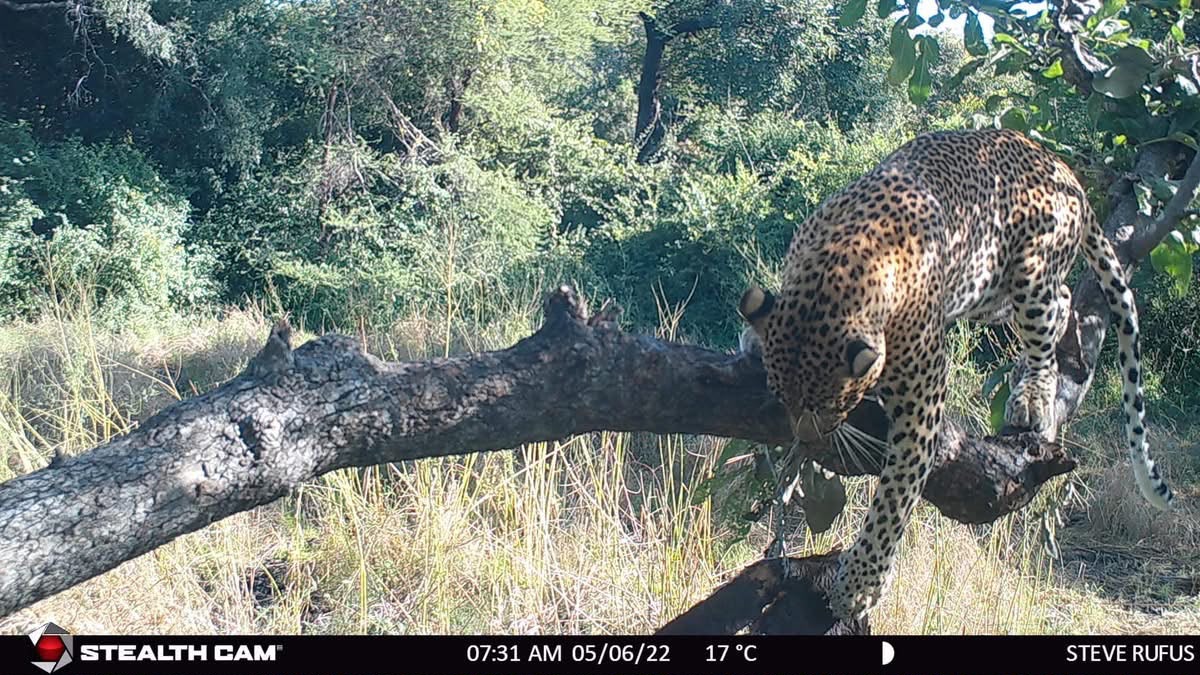
A single trail-camera photograph proves one thing: a leopard was there.
For an experienced hunting team, the useful information begins when that leopard starts appearing again. The time he arrives, how often he returns, how long he stays, which direction he approaches from, and what changes from one night to the next begin to reveal a pattern.
This pattern helps a professional hunter decide whether a bait is becoming worth serious attention, whether more time is needed, or whether the picture is less promising than one impressive photograph makes it seem.
But trail cameras have limits. They can show the hunting team what happened while nobody was watching; they cannot guarantee what the leopard will do tonight, explain every change in behaviour, or replace the judgement required before a hunt is committed to a particular cat.
On leopard hunts, the value of a trail camera is not the photograph itself. It is what the hunting team learns from a sequence of photographs over time.
One Photograph Is Evidence, Not a Pattern
A trail-camera photograph of a leopard on bait gets everyone's attention. But one photograph tells the hunting team little beyond a simple fact: the cat was there at that moment.
The value starts building when the same leopard appears again.
Repeated photographs allow the professional hunter to compare the cat's rosette pattern, body shape and other recognizable features to determine whether the same animal is returning. The timestamps then begin to add another layer: when he arrives, how frequently he visits and whether those visits are starting to fall into a recognizable window.
That distinction matters. A leopard that appears once at 2:00 a.m. is interesting. A mature tom returning to the same bait over several nights, with his arrival times beginning to show a pattern, gives the hunting team something they can start working with.
Patterns can differ dramatically between hunting areas. In parts of Bushmanland, for example, a leopard may become comfortable enough to visit a bait during daylight. This is a reason why leopard hunting in Namibia can produce different patterns from one area to another. In other areas, movement may consistently occur much closer to dawn or dusk.
The objective is not to discover some universal timetable for leopard behaviour. It is to understand that particular leopard, on that particular bait, in that particular area.
This becomes important where the cat must present a legal opportunity during hunting hours. A leopard can be feeding regularly and still offer the hunter little if every visit occurs outside the usable window.
And even a strong pattern is not a promise.
A tom that has arrived at roughly the same time for three nights can do something completely different on the fourth. Another animal may disturb the bait. Human activity may change. Or the leopard may simply change his routine for reasons the hunting team never sees.
That is why an experienced professional hunter does not hunt the timestamp.
He uses repeated evidence to decide when the pattern has become strong enough to act on.
Is It the Same Leopard Coming Back?
When several leopards are using the same area, the first question is not simply whether a leopard has returned. It is whether the same leopard has returned.
That matters as decisions start moving quickly once a suitable tom begins feeding regularly. A hunting team may be checking several baits, comparing photographs and deciding where to concentrate its time. A rushed identification can create exactly the wrong kind of confidence.
The most useful clue is usually the leopard’s rosette pattern. Like a fingerprint, the arrangement of spots and rosettes helps distinguish one animal from another when photographs show the same side of the body clearly enough. Scars, ear damage and other recognizable features can provide additional clues. The PH will also look at the cat’s overall build.
Mature toms tend to carry a heavier, more solid frame, with a noticeably thicker neck and more mass through the shoulders than females or younger males. Those features are supporting evidence, not proof of identity on their own.
But one good photograph is not enough reason to become careless.
Camera angle, distance, posture and poor light can make the same leopard look surprisingly different from one image to the next. A cat standing square to the camera can appear heavier than the same animal stretched out or quartering away. A partial photograph may hide the very rosettes the PH would normally use for comparison.
Experienced leopard hunters look for agreement between several clues across several photographs rather than trying to make the entire decision from one image.
And if the evidence does not line up, there is nothing wrong with waiting for another visit.
The pressure to act increases quickly when a leopard settles onto a bait. Identifying the wrong cat, or assuming two different cats are one animal, can affect every decision that follows.
The purpose of the camera is to reduce uncertainty, not encourage the hunting team to make a faster decision than the evidence supports.
Timing Matters — Until the Leopard Changes It
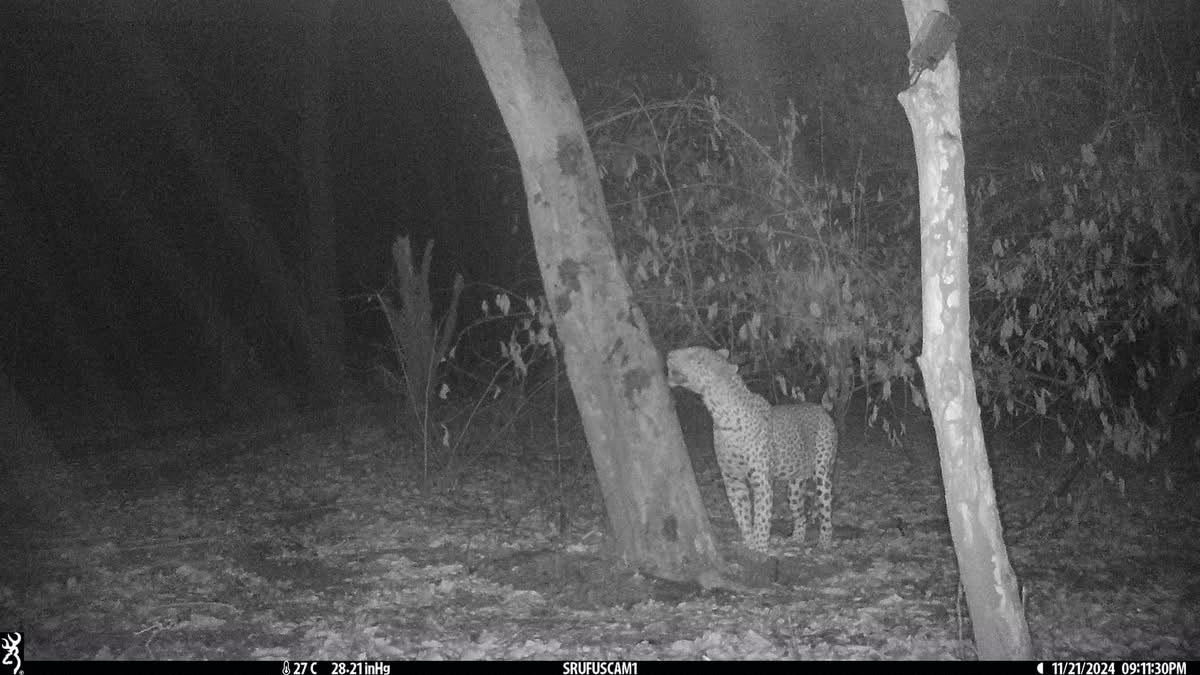
The timestamp on a trail-camera photograph is a useful piece of information.
A tom that visits a bait at 1:00 a.m. for three nights is telling the PH something different from a tom that begins arriving at 5:30 a.m. or feeding well into daylight. The leopard may be using the same bait, but the hunting opportunity is not the same.
What the PH wants to see is not simply activity. He wants to understand whether that activity is beginning to form a pattern that can realistically be hunted.
This becomes important in countries where leopard hunting is restricted to daylight hunting hours. In Tanzania, for example, hunting between sunset and sunrise is prohibited. A tom can therefore be feeding consistently and still offer no legal opportunity if every visit falls in the middle of the night. On leopard hunting in Tanzania safaris, a change in the cat’s timing is just as important as the fact that he is feeding at all.
A leopard that begins appearing closer to first light, remains at the bait longer, or starts arriving before darkness may suddenly present the hunting team with a different situation.
Timestamps can also create false confidence.
A tom that arrives within twenty minutes of the same time for several nights can suddenly shift his routine. Weather may change. Another leopard or hyena may interfere. Vehicles or people may have moved through the area. The cat may feed elsewhere. A mature tom is not dependent on a bait for an easy meal. He is more than capable of taking his own prey, feeding elsewhere and returning only when it suits him. Sometimes there is no obvious explanation at all.
That is why the PH watches the trend rather than betting the hunt on a single time.
A pattern helps decide when to hunt a leopard. It never guarantees when the leopard will arrive.
Frequency Matters More Than One Good Photograph
A single visit tells the hunting team that a leopard has found the bait. Repeated visits begin to show whether that bait is becoming part of the tom’s routine.
That distinction matters when several baits are being monitored at the same time. One may produce a striking photograph and then nothing for three nights. Another may be visited steadily, even if the photographs themselves are less dramatic. The second bait may ultimately deserve more attention.
Frequency helps the PH judge how much confidence to place in what he is seeing. A tom that returns regularly is giving the team more information to work with: more photographs, more time stamps, more opportunities to confirm identity and more evidence of how committed he appears to that bait.
Repeated visits also give the PH better photographs, helping him assess the tom’s age and maturity before a shot is considered.
But frequency should not be treated like a scorecard.
A mature leopard can miss a night, kill his own prey, feed somewhere else and return later. A gap in camera activity does not automatically mean he has left the area or abandoned the bait.
What matters is the broader pattern.
If one bait keeps producing the same tom while others remain inconsistent, that can influence where the hunting team spends its time and attention. If the visits become less frequent, the PH must decide whether the pattern is weakening or whether the leopard is simply behaving like a leopard.
Frequency helps show how important a bait may have become to the cat. It does not make the cat dependent on it.
What Is the Leopard Actually Doing at the Bait?
A photograph of a leopard beside a bait does not tell the PH much on its own. What matters is how the cat is using that bait.
There is a difference between a tom that passes through, investigates for a few seconds and disappears, and one that settles in, feeds properly and returns with increasing confidence.
The camera can help the hunting team see that difference. A visit does not always mean a feeding visit. Leopards are naturally inquisitive, and a tom may approach simply to investigate the bait, scent the area or check what has changed. The PH therefore pays attention to whether the cat feeds, how long he stays and whether that behaviour is repeated on later visits.
A leopard that spends only a short time at the bait may still be interested, but the pattern is not yet strong enough to read much into. A tom that repeatedly stays longer, feeds well and returns over several nights is giving the PH a much clearer picture of how comfortable he has become.
Approach behaviour also matters.
Some cats come straight in. Others hang back, circle, approach from different directions or spend time watching before committing to the bait. If that behaviour changes from one visit to the next, the PH may start asking why.
Has another leopard been there?
Has a hyena disturbed the bait?
Has the site been visited too often by vehicles or people?
Has the tom simply become more cautious?
The camera may not answer those questions, but it can show that something has changed.
Photographs become more than proof of presence. They start showing the hunting team how the leopard is behaving around the bait, not just whether he was there.
This behaviour can influence what happens next.
A tom that feeds confidently and stays at the bait gives the PH more evidence that the bait is becoming part of his routine. A cat that appears briefly, changes his approach repeatedly or stops feeding properly may require more patience before the hunting team commits to a plan.
The camera records the visit. The PH must decide what the behaviour means.
What the Camera Cannot Explain
A trail camera records what happened in front of it. It does not necessarily explain why it happened.
A tom that has been feeding confidently may suddenly decide to arrive later, stay for less time or disappear altogether. Another leopard may have moved through. A lion or hyena may have disturbed the site. Vehicles, people, weather or changes around the bait may have altered his behaviour. He may simply have killed his own prey somewhere else.
Sometimes the photographs provide clues. A hyena appearing shortly before the tom stops visiting may be significant. A second leopard using the same bait may change the picture. A sudden increase in caution after human activity around the site may also give the PH something to consider.
But coincidence is not proof.
The camera only captures part of what is happening in the hunting area. It cannot show where the leopard spent the rest of the night, what he encountered away from the bait or why he made a particular decision.
The PH has to resist explaining every change simply because a camera recorded something unusual.
Trail cameras are good at showing the hunting team what changed. They are much less reliable at telling them why.
When Camera Evidence Changes the Hunt
Trail cameras do not make the decisions on a leopard hunt. They give the professional hunter information to make them.
By the time a hunting team has watched the same tom return, compared his photographs, studied his timing and seen how he behaves around the bait, the picture is more useful than any single image could ever be.
That information can help decide which bait deserves attention, whether the cat appears mature enough to consider, when a sit may be worthwhile and when the better decision is simply to wait.
It can also prevent the hunting team from committing too early.
Pre-baiting can represent a meaningful cost before the hunter ever reaches camp. An outfitter may be running baits for days or weeks, replacing meat, checking cameras and monitoring several sites before the safari starts. In some areas that may also involve taking bait animals specifically for the leopard hunt.
On a recent GHS safari arranged with Shamwari Safaris, the outfitter charged about $750 for pre-baiting, while taking a hippo specifically for bait added about $4,000. For an international hunter travelling to Africa, trail-camera photographs provide a way to see whether that investment is producing useful leopard activity before the safari even begins.
For hunters considering Big Five hunting, that kind of preparation matters. On a leopard safari, a significant amount of work may already be underway before the client steps off the aircraft.
That matters on serious African hunting trips, where time, opportunity and good judgement are all limited resources. A trail camera cannot remove uncertainty from leopard hunting, but used properly, it can reduce the amount of guessing.
The camera provides the evidence. The professional hunter decides what to do with it.
Frequently Asked Questions About Trail Cameras on Leopard Hunts
Can a trail camera tell whether a leopard is mature enough to hunt?
Trail-camera photographs can help the PH assess a tom's apparent age and maturity by comparing his overall build, neck, shoulders and other physical characteristics across repeated images. They should not
be treated as a substitute for professional judgement. Camera angle, posture and image quality can all make the same leopard appear different.
Does a leopard returning to the same bait every night mean he will keep coming?
No. Repeated visits establish a useful pattern, but they do not make the leopard predictable. A mature tom may kill his own prey, feed elsewhere, encounter another predator or simply change his routine. The PH uses the pattern as evidence, not as a guarantee.
Why do outfitters use several leopard baits at the same time?
Several baits allow the hunting team to identify where suitable toms are active and compare activity between sites. Trail cameras help determine which baits are receiving repeat visits, which cats are using them and where the team's time may be best spent.
Are trail cameras useful before the leopard hunter arrives in Africa?
Yes. During pre-baiting, cameras allow the outfitter and PH to monitor activity while baits are being maintained before the hunter reaches camp. This can show whether suitable leopards are visiting, how regularly they are returning and whether baits deserve greater attention before the safari starts.
Does a leopard have to feed on the bait for the camera information to be useful?
No. A leopard may investigate a bait without feeding. Its arrival time, direction of approach, length of visit, repeated appearances and behaviour around the site can still provide useful information. However, a tom that repeatedly feeds and spends time at the bait gives the PH a much stronger pattern to work with.
About the Author
Pierre van Wyk is the founder of Game Hunting Safaris and has spent years working with professional hunters, outfitters and clients across Africa. His focus is on practical, honest hunting information that helps hunters make better decisions before they ever step into camp.