
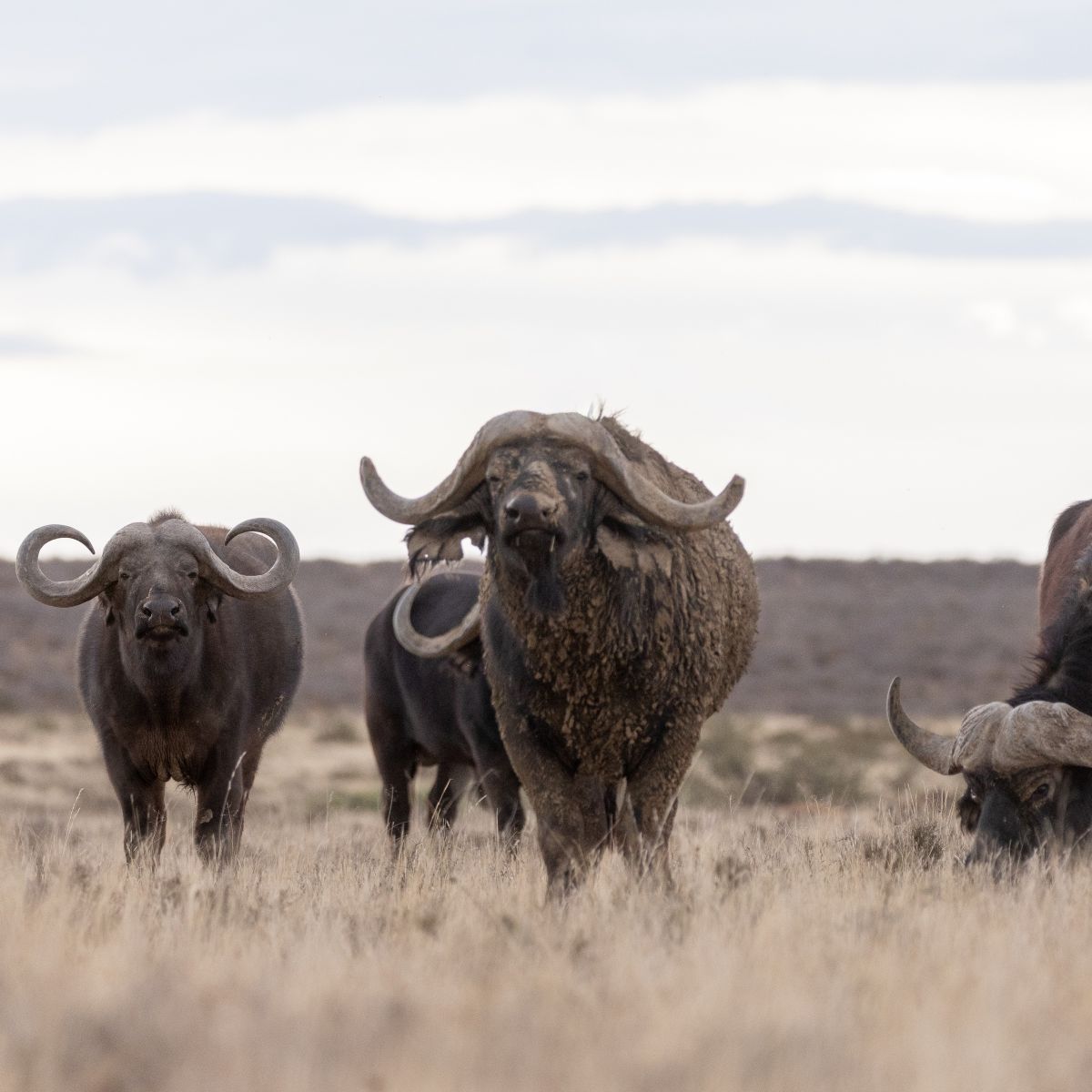
A buffalo herd that has not detected the hunting team is one problem.
The same herd after a cow catches movement, the wind shifts or the animals leave at a run can become a completely different hunt. Before that moment, the professional hunter may be reading normal buffalo movement: where the herd is feeding, how quickly it is travelling, where the wind allows an approach and where a mature bull might separate enough to offer a shot.
Once the herd becomes alert, those assumptions change.
The buffalo may cover more ground, move into thicker brush, bunch more tightly or simply refuse to settle long enough for the hunting team to work into position. Following harder does not necessarily solve the problem. It can make it worse. That is a reality of a Cape buffalo hunt that is difficult to appreciate until you have followed a herd that already knows something is behind it.
On a buffalo hunt, getting closer is not always progress.
Sometimes the better decision is to stop, give the herd breathing room and hunt it again when the pressure has dropped.
Did the Herd Know You Were There?
A buffalo herd moving away does not automatically mean the stalk has been blown.
Buffalo move for all sorts of reasons. They may be feeding toward water, shifting into shade, following other animals in the herd or simply changing direction as they work through the country. The PH must first work out whether the buffalo are moving normally or reacting to danger.
A herd that continues feeding, stops regularly and drifts through the bush is giving the hunting team a different picture from buffalo that suddenly bunch together, break into a run or travel hard without settling.
The distinction matters because the response will be different.
If the herd is simply moving, the hunters may continue tracking and look for another opportunity to work into position. If the buffalo have detected the hunting team, following immediately behind them may only pressure them. And the bull the hunters are after does not need to be the animal that detects them.
In a large herd, buffalo are spread over a wide area, facing different directions and moving through different wind currents. A cow on the edge of the herd may catch movement or scent long before a bull deeper inside the group knows what has happened.
One buffalo can change the behaviour of the whole herd.
The rest of the herd does not necessarily know what caused the alarm. They are reacting to the behaviour of the animals around them. Once that warning spreads, the hunting team may be dealing with a herd that is moving first and assessing the danger afterwards.
Hunting a herd can be difficult. The hunting team is not only trying to stay hidden from the bull they want. They must avoid being exposed by every animal between themselves and that bull.
Sometimes the Buffalo Aren’t the Animals That Ruin the Stalk
A buffalo stalk can unravel even when the buffalo themselves have not detected the hunters.
Other game sharing the same concession may be the first animals to react. An impala that catches movement, a zebra that becomes suspicious or a group of wildebeest that suddenly leaves can change the mood of the entire area.
Baboons can be troublesome as they often have the advantage of height, watching from trees, rocks or elevated ground and reacting to movement long before the buffalo have seen anything themselves. The buffalo may not know exactly what caused the disturbance. They only know that something around them has changed. That can be enough to make animals lift their heads, bunch together, alter direction or begin moving before the hunting team has reached the position they wanted.
For the PH, this creates another layer of judgement.
In some concessions, the disturbance can even come from the hunters themselves in ways they did not expect. On buffalo hunting in Tanzania safaris, for example, tsetse flies can be relentless. A hunter who is concentrating on the herd may instinctively swat at a fly or brush one from his face, creating exactly the kind of sudden movement that nearby game may notice.
The wind may still be right for the buffalo. The hunters may still be hidden from the herd. But if other animals between them and the buffalo become alarmed, continuing the stalk may simply increase the chance that the disturbance spreads.
Sometimes the professional hunter can wait and let the area settle. Sometimes the only option is to change direction, make a wider circle and try to approach from somewhere else.
And sometimes the opportunity is simply gone.
The buffalo do not have to see the hunters for the stalk to become more difficult.
A successful approach is about more than closing the distance. The hunting team must move through the entire landscape without creating enough disturbance to change the behaviour of the herd.
Following Harder Can Make the Hunt Worse
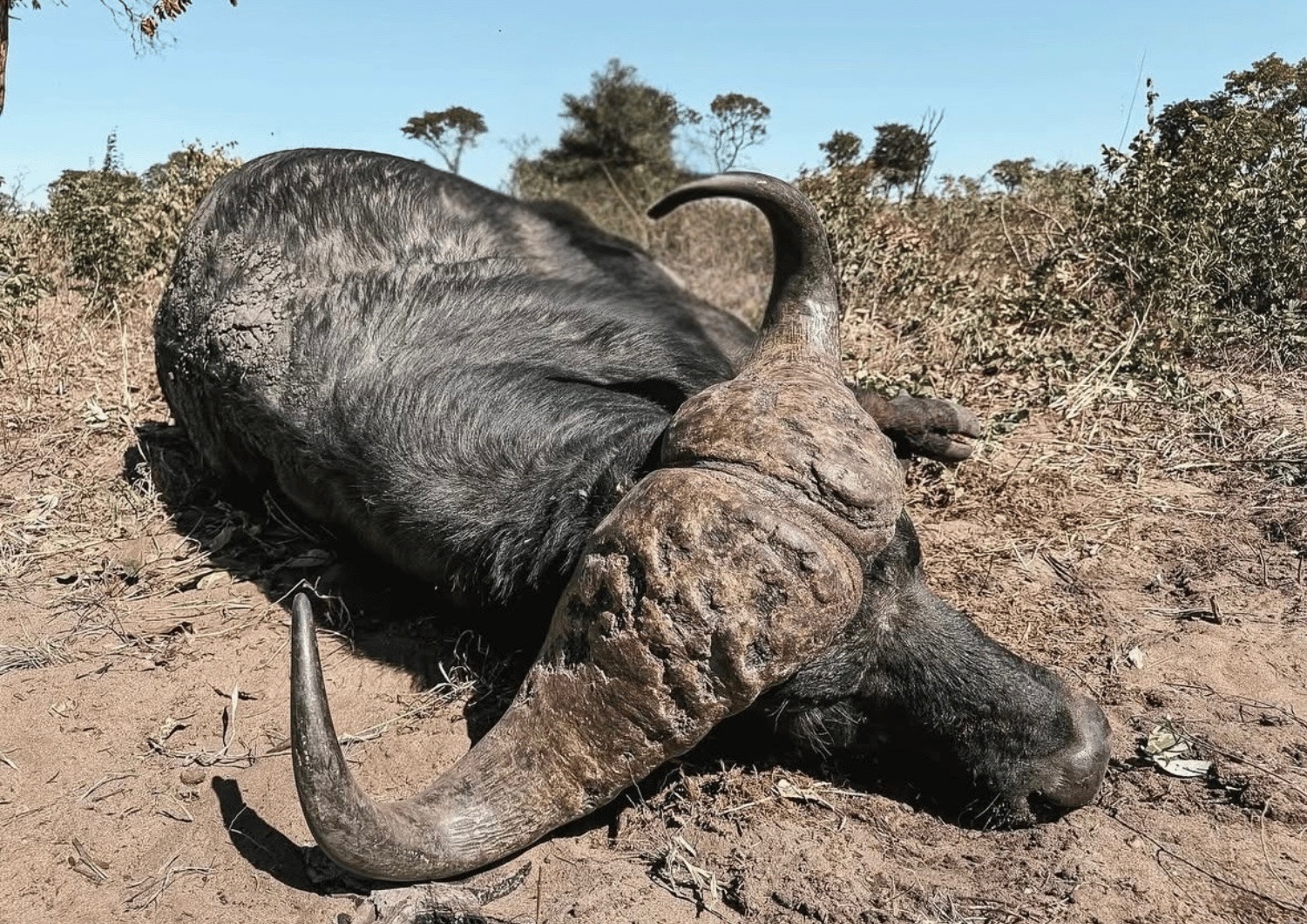
Once a buffalo herd has been bumped, the temptation is to stay on it. The tracks are fresh, the herd may only be a few hundred yards ahead, and everyone knows the buffalo are there. If the safari is already several days old, the pressure to keep moving can become difficult to ignore.
Continuously pushing an unsettled herd can turn one bad stalk into a pattern. The buffalo move, the hunters catch up, the herd detects something again and moves farther. Before long, the hunting team is no longer reading normal buffalo behaviour. They are simply bumping the same herd through the country.
That usually helps the buffalo more than it helps the hunters.
The pressure becomes more difficult to manage when the hunter starts counting the days left in the safari. A missed opportunity on day two feels different from the same mistake with only two or three hunting days remaining. That is often when patience becomes most difficult to maintain.
A good PH must separate the pressure on the calendar from the pressure being applied to the herd. If the buffalo remain unsettled, following may only keep them moving. The better option may be to stop, give them room, make a wide circle or try to anticipate where they are going rather than remaining on their tracks. This may mean losing contact with the herd for a while. Sometimes it means leaving them completely and returning later in the day or the following morning.
Giving buffalo breathing room is not the same as giving up on them.
It can be the decision that gives the hunting team another genuine stalk instead of simply continuing the same failed one.
The PH is not only managing the buffalo. He is also managing the hunter’s urgency.
Finding the Herd Again Does Not Reset the Hunt
Relocating a buffalo herd after it has been bumped can feel like a victory.
The trackers are back on fresh spoor, the buffalo are somewhere ahead and the hunting team has another opportunity to close the distance. But finding the herd again does not mean the hunt has returned to where it started.
The buffalo may still be unsettled.
They may be moving faster than before, staying closer together or using thicker cover. Animals on the back of the herd may also be stopping and looking behind them more often, making another approach more difficult than the first. The terrain may have changed as well. A herd that was feeding in relatively open country when first found can move into dense bush, reeds or broken ground where the wind becomes harder to manage and the PH has fewer options for getting around them.
Even when the hunters manage to regain contact, the bull they want may now be buried among cows, calves and other bulls. That matters as seeing the bull is not the same as having a shot at the bull. The PH still needs a clear identification, a safe shooting angle and enough separation from the rest of the herd before the hunter can take the shot.
Trying to manufacture that opportunity by pushing closer can start the same cycle again. Sometimes the better decision is to stay where you are, watch the herd settle and wait for the animals to create the opportunity themselves.
Relocating the buffalo gives the hunting team another chance. It does not erase the pressure that got them there.
Terrain Changes How the Hunt Is Managed
I have hunted buffalo in both Namibia’s Caprivi and Mozambique, and the contrast between the two areas is a good reminder that the same species can create different stalking problems.
On one buffalo hunt in the Caprivi, the difficulty was not thick cover. It was the lack of it. The herd was out on open floodplain, with little between our hunting party and the buffalo.
To close the distance, the trackers and hunters bunched tightly together as we moved, forming what was jokingly called a “skilpad” — a tortoise. Instead of several separate human shapes moving across the open ground, the group presented one compact, unfamiliar outline.
It was not a trick that made the buffalo unaware of danger. Wind, pace and movement still mattered. It was simply a practical response to a stalking problem where there was almost nowhere conventional to hide.
Buffalo hunting in Namibia can require a different approach from hunting the same species in thicker country. In parts of Mozambique, I have experienced almost the opposite problem. The Marromeu and Coutada country can hold large buffalo herds across wetlands, floodplains and swamp country.
There may be plenty of buffalo to find, but getting close to one mature bull inside a herd of hundreds creates its own problem. Animals are spread over a large area, moving through different wind currents and watching in different directions. The hunting team may have to work around water, cutgrass, open ground and large numbers of buffalo before the right bull is ever in a position to shoot.
On buffalo hunting in Mozambique safaris, managing the herd can therefore be as important as finding it. A poor approach can disturb far more than one bull and turn a promising situation into another long tracking job.
The country changes the problem, but the principle remains the same: the PH must manage pressure without creating more of it.
Managing Pressure Once the Herd Knows You Are There
The best buffalo stalks are not always the ones where the hunters keep moving forward.
Sometimes progress means circling for better wind, waiting for the herd to settle or walking away and trying again later. The decision depends on what the buffalo are doing, what the terrain allows and how much pressure the hunting team has already created.
That judgement becomes especially important on serious African hunting trips, where every hunting day matters and the temptation to force an opportunity can grow as the safari progresses. A good PH knows when to close the distance and when another step forward may cost the hunting team more than it gains.
Buffalo hunting is not simply about getting closer. It is about managing pressure until the right opportunity presents itself, or a bull finally makes a mistake.
Frequently Asked Questions About Hunting Alert Buffalo Herds
Should you keep following a buffalo herd after it has been bumped?
Not always. If the herd is still unsettled, following immediately can keep pressure on the buffalo and push them farther into difficult country. A PH may decide to stop, circle, wait for the herd to settle or return later rather than continue the same failed stalk.
How can a PH tell whether buffalo are moving normally or reacting to hunters?
The PH looks at the broader behaviour of the herd. Buffalo that continue feeding, stop regularly and drift through the area present a different picture from animals that bunch tightly, run hard or continue travelling without settling. The distinction helps determine whether to keep tracking or back out.
Can one buffalo really alert the whole herd?
Yes. The bull being hunted does not need to detect the hunters himself. A cow or another animal on the edge of the herd may catch scent or movement first, and the rest of the buffalo can react to that warning even if they do not know exactly what caused it.
Why is Cape buffalo hunting considered part of Big Five hunting?
Cape buffalo is one of Africa’s traditional Big Five species, alongside lion, leopard, elephant and rhino. Its reputation comes from the difficulty of hunting mature buffalo at close range, the judgement required before the shot and the consequences of getting that decision wrong. Hunters comparing the broader category can read our guide to Big Five hunting.
Is it sometimes better to leave a buffalo herd and try again later?
Yes. Giving a herd time to settle can create a better opportunity than repeatedly pushing the same animals. Depending on the wind, terrain, time of day and how the buffalo are behaving, the PH may decide that returning later that day or the following morning offers a better chance of making a clean stalk.
What should a first-time American buffalo hunter understand about hunting a herd?
American hunters may arrive in Africa more accustomed to hunting individual animals or smaller groups. A buffalo herd creates a different problem because dozens of animals may be watching, moving and reacting at the same time.
The hunter must trust the PH, control unnecessary movement and accept that backing out of a stalk can sometimes be the better decision. On a buffalo hunt, patience is often just as important as closing the distance.
About the Author
Pierre van Wyk is the founder of Game Hunting Safaris and has hunted Cape buffalo in both Namibia’s Caprivi and Mozambique. He works closely with professional hunters, outfitters and clients across Africa, with a focus on practical hunting information that helps hunters make better decisions before and during their safari.