• Designed by Hunters, for Hunters

    The Best Leopard Hunting Destinations in Africa

    October 11, 2024
    The Best Leopard Hunting Destinations in Africa

    Updated: June 2026 

    Few African hunting experiences demand as much patience, preparation, and discipline as Leopard Hunts. Widely regarded as one of the ultimate challenges in Dangerous Game Hunting, pursuing a mature leopard is seldom about covering the most ground or pulling the trigger the quickest—it is about understanding the animal, trusting your professional hunter, and being ready when a brief opportunity finally presents itself.

    Unlike Cape buffalo or elephant, leopard hunting is often a waiting game. Days can be spent checking bait sites, reading spoor, studying trail camera activity, and allowing an old tom to become comfortable before the hunt reaches its defining moment. When that opportunity finally arrives, everything happens quickly, making preparation and patience just as important as accurate shooting.

    Across Africa, leopard hunting is available in several outstanding destinations, each offering its own hunting style, regulations, terrain, and traditions. Whether you're planning your first leopard safari or comparing countries for your next dangerous game adventure, understanding those differences will help you choose the destination that best matches your hunting goals.

    In this guide, we'll compare Africa's leading leopard hunting destinations, explain the different hunting methods available, discuss trophy expectations, and help you choose the right leopard hunting safari.


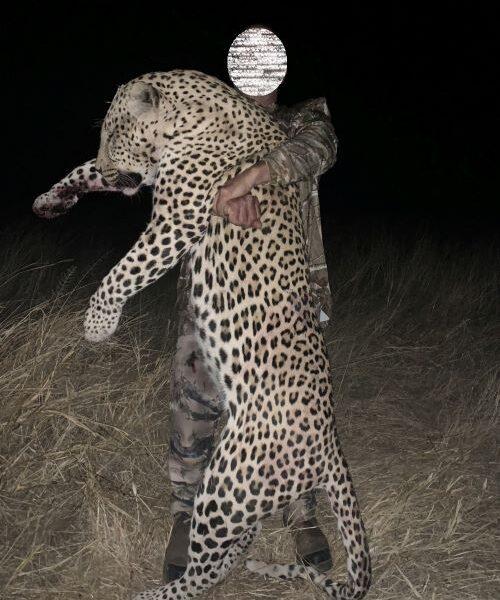
    man holding the leopard he shot.

    [DYNAMIC-BLOGTABLEOFCONTENT]

    Key Takeaways

    • Leopard hunts are widely regarded as one of Africa's greatest dangerous game challenges, demanding patience, preparation, and precise shot placement.
    • Zimbabwe, Mozambique, Namibia, Tanzania, and Botswana each offer unique leopard hunting experiences, with different regulations, hunting methods, and safari styles.
    • Most leopard hunts rely on baiting and blind hunting, while selected areas in Zimbabwe, Mozambique, and Botswana also permit hunting with hounds.
    • Choosing the right destination depends on more than trophy quality, factors such as hunting methods, safari length, regulations, and budget all play an important role.
    • Successful leopard hunting is built on patience, careful planning, and waiting for the one opportunity that may define the entire safar

    Why the Leopard Is Africa's Most Elusive Trophy

    When looking at the other dangerous game hunting options like lion, crocodile, and buffalo; why do hunters always seem to return for the leopard in particular? In the early days of the African hunting safari, leopards were seen as a highly exclusive (and elusive) trophy because their population wasn’t the biggest, and their shy, slinky nature gave them an air of rarity and exclusivity. To successfully hunt a leopard was a prime manner for the hunter to prove their skills (and let’s face it, masculinity) while capturing a trophy not many others would have.

    Some of the biggest and most renowned names in the history of hunting had their share of leopard hunting tales, including Frederick Selous, Bunny Allen, and Theodore Roosevelt, among others. Hunting leopard, an animal that posed and continues to pose a challenge to hunters, also contributes to the thrill and rush of the hunt; giving hunters a sense of walking in the boot prints of the famed figures who came before and left a trail across Africa for others to follow.
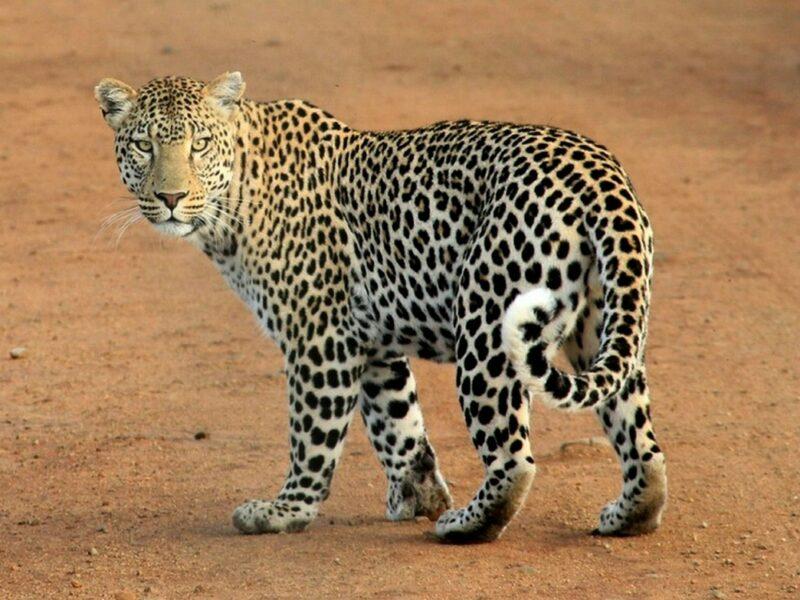
    single young leopard

    Five Top Spots for Leopard Hunting in Africa

    Africa has many game hunting destinations, but some stand out more than others depending on what you’re looking for. Leopard hunting is available in almost all of the continents’ hunting territories, provided they have leopards; deciding factors in your African leopard hunting decision can range from climate, time of year, budget, etc.

    Tanzania: The Dangerous Game Hunting Mecca of Africa

    One of Africa’s most dangerous and sought-after targets can be found in many of the concession areas around Tanzania, including the famed Selous, Rungwa, and Masailand territories. Leopard hunting in Tanzania is restricted to daylight hours, and like other dangerous game, leopards in Tanzania may not be hunted with a bow. No nighttime or hunting with artificial light is allowed.

    Only male leopards may be hunted and must meet the minimum size requirement of a nose-to-tail base measurement of 4.9 feet. Due to Tanzania’s hunting license laws; leopards may only be hunted on a full 21-day permit, even if the hunt itself is only 10 or 15 days, the full 21-day permit must be applied and paid for. When it comes to firearms, a minimum caliber of .375 is the order of the day and expanding tip bullets are recommended.

    Zimbabwe: Leopard hunting at its roots

    Leopard hunting in Zimbabwe is an experience that could take the hunter well into the famous Zambezi area. Zimbabwe is known for its “raw” wilderness, and hunters should be prepared to handle a more rugged environment. Hunting grounds in Zimbabwe can either be state-owned, tribal, or privately owned; with the classification impacting the regulations surrounding leopard hunting as the body in charge, makes the rules.

    On state land, no artificial light or night hunting is allowed, tribal grounds allow for both of these, and when it comes to private land it’s up to the owner. Tribal and private concessions also allow for the use of hounds when hunting leopards, but a check with the owner is a strong suggestion. Regardless of the concession, all hunting parties must be accompanied by a representative or member of Zimbabwean National Parks, another note is that no leopard wearing a collar or tag may be hunted.

    Namibia: Hunting a leopard in the Land of Sand

    What do you get when you combine expanses of uninhabited land and one of the most shy and elusive creatures on Earth, the answer, is an African leopard hunting safari needing a solid duration of 14–21 days. But then again, the reward is worth the effort. Dangerous game hunting, particularly leopard, is favored in Namibia due to its land layout and stable well-managed conservation efforts.

    Leopard hunting in Namibia requires a strong effort to be as invisible as possible, as leopards are highly attuned to “unnatural” sounds, and one slip-up will send the target streaking off into the sunset. Namibia’s hunting season runs from February to November and hunting during the start or ending months could require some extra planning due to the present weather patterns. Due to its fair-chase principles, Namibia does not allow for leopards and other dangerous game hunting targets to be hunted with a bow, the usage of artificial light is also prohibited, and no animal may be shot from the vehicle.

    Mozambique: Leopard Hunting on the Continent’s Wildside

    This southeast African country offers an experience harking back to the traditional dangerous game hunting expeditions of old. Hunting leopards in Mozambique occurs across various hunting areas like the Cohora Bassa, Niassa, and Marromeu regions. Leopard hunts in Mozambique typically last 14–21 days depending on whether or not other species are included. And with Mozambique’s tropical climate, leopards can be hunted during the dry and the wet seasons, as long as reasonable and relevant planning is involved.

    Leopard hunting in Mozambique is regulated by the government to ensure no over-exploitation of the species and to regulate conservation efforts. Both bow and rifle hunts are available in the country, as long as the prescribed stipulations are followed; leopards are also allowed to be hunted at night and with the use of artificial light.

    Botswana: Leopard Hunting at Its Best

    Leopard hunting in Botswana is not for the faint-hearted, with this cunning, elusive, and majestic African cat being a challenge to hunt. Not only that, but pound for pound, they are seen as the most dangerous wounded animal in Africa.

    Botswana’s hunting season runs from April to September, with the best time for leopard hunting recommended from July to September. Leopard hunting in Botswana is available throughout the country, from the famous Kalahari Desert to the beautiful Okavango Delta, alive with fauna and flora, making it a prime dangerous game hunting destination.


    Selecting the best destinations for leopard hunting depends on quota availability, habitat, and hunting pressure.
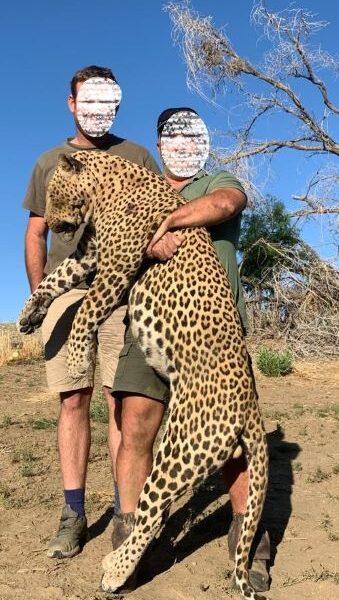
     

    Two men posing with a leopard that they hunted
    This magnificent leopard was hunted in Namibia.

    Leopard hunting with Hounds

    Three of the top four African leopard hunting destinations offer the opportunity to hunt a leopard with hounds. The practice of leopard hunting with hounds (and hound hunting in general) dates back hundreds of years and provides an enjoyable and unique experience to hunters looking for something different.

    Zimbabwe

    Leopard hunting with hounds was a practice initiated in 1980s Zimbabwe, and became a legalized method in 1996, with hound hunting only taking place on privately owned hunting grounds, and not on state or tribal land.  These private land concessions are spread across the country and include a variety of landscapes from bushveld and rocky outcrops to woodland-type areas all suited to and supporting leopard populations.

    Mozambique

    In Mozambique, leopard hunting with hounds is typically restricted to the nighttime period, especially in areas where the tsetse fly is prevalent. The tsetse fly is host to a parasite, that if passed on to dogs can be fatal. Much like neighboring Zimbabwe, leopard hunting with hounds occurs across Mozambique, most often on private hunting concessions.

    Botswana

    Leopard hunting with hounds has a high success rate in this popular dangerous game hunting destination. Again, this dangerous African cat is not to be messed with, and the hounds distract its attention while the hunter aligns for the perfect shot ensuring a clean and humane kill.

    Considerations when Hunting with Hounds

    Hunting a leopard with hounds is a “specialized” form of dangerous game hunting, and as such, more consideration is needed when looking at planning and cost.

    These hounds are trained from a young age, often starting with small predators, and are not released onto cold trails. This training takes years, and once a hound is properly trained, there’s no going back to other species. Due to this and the “exclusivity” of these hunts, the cost is therefore increased. While it could seem ridiculous to others, this increased cost is well justified considering the training, accommodation, transport, food, and maintenance costs involved in keeping these dogs ready for action.

    Is Leopard Hunting with Hounds ethical?

    Often the topic of conversation surrounding these hunts includes concerns for the safety of these dogs and how “right” it is for leopards to be hunted in this manner. Truthfully, these hunts make use of hundreds of years of history relying on the innate conflict and confrontation between the feline and canine species; leopards will try their luck with one or two hounds; but when faced with a pack, they typically seek the nearest tree to wait out. Once the leopard is in the tree (much like it would be if it were baited) the hunter takes their shot, hounds don’t bother with the shot animal and when well controlled, don’t pose a risk to the trophy either.
    Africa Doesn't Owe You a Leopard

    One of the first lessons experienced leopard hunters learn is that Africa doesn't owe you a leopard.

    No matter how good the concession, how experienced the professional hunter, or how carefully the bait sites are prepared, wild leopards remain completely unpredictable. A mature tom may visit a bait for three consecutive nights before disappearing without a trace, while another may ignore every bait in the area only to appear where nobody expected him. That uncertainty is not a flaw in leopard hunting, it's what makes it one of Africa's greatest hunting challenges.

    Many first-time hunters arrive expecting the leopard to follow the itinerary. Experienced hunters know better. Leopard hunting rewards patience, discipline, and the willingness to trust the process, even when nothing seems to be happening. Sometimes success comes after hours in the blind. Sometimes it comes after days of checking bait sites and following fresh sign. And sometimes, despite everyone's best efforts, Africa simply has other plans.

    When the moment finally arrives and an old tom steps silently into view, every hour of waiting suddenly makes sense. That's why a successful leopard hunt is remembered for far more than the trophy itself, it's remembered because nothing about it was ever guaranteed. 


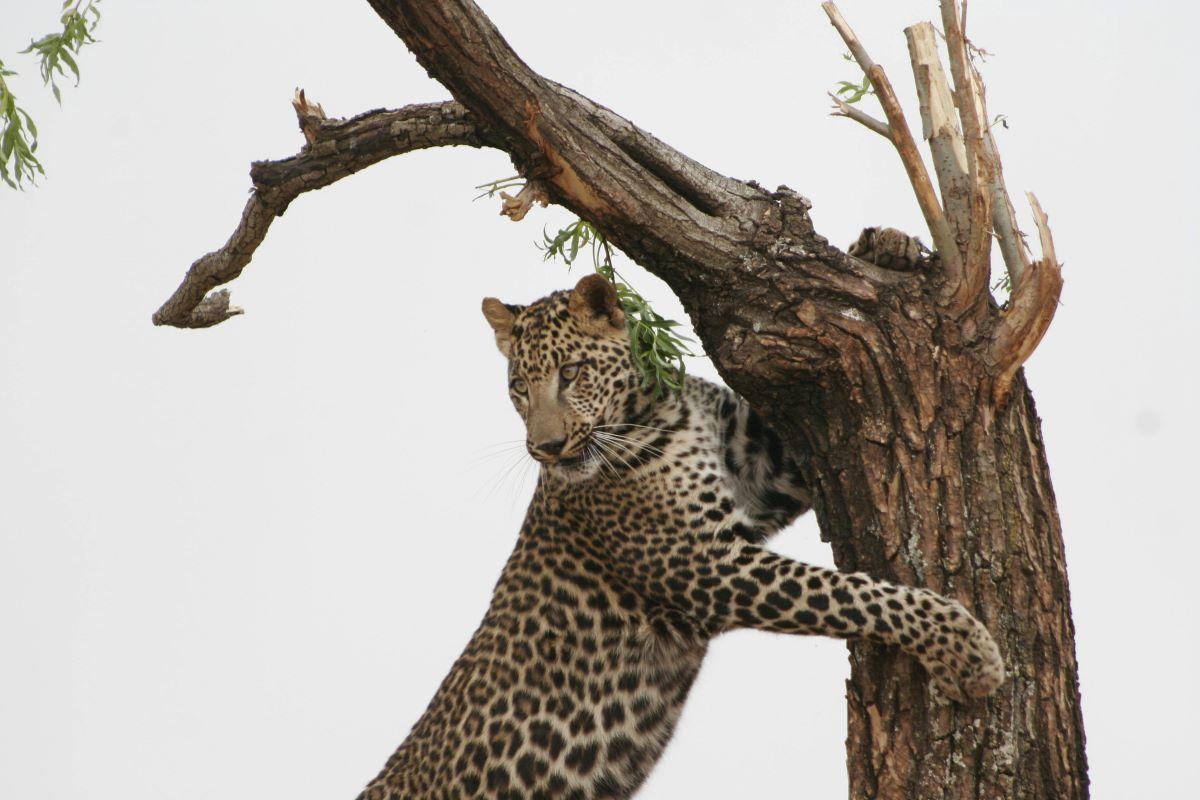
    Close up of a leopard lying in a tree

    Why Leopard Hunts Take 14 - 21 Days 

    One of the biggest surprises for first-time leopard hunters is just how much of the safari happens before they ever sit in a blind. Leopard hunting is a process built around patience, with days often spent checking tracks, selecting suitable bait sites, dragging bait to create scent trails, monitoring trail cameras, and waiting for a mature tom to become comfortable returning to feed. Only once that pattern has been established does the hunt enter its final and most exciting stage.

    The emotional challenge is something few hunters truly appreciate until they experience it themselves. After spending days dragging bait through the bush, checking empty bait sites at first light, and watching trail camera images reveal that a leopard visited only minutes after everyone left, frustration can begin to creep in. It's perfectly normal. Experienced professional hunters know that rushing the process rarely ends well, and the most successful leopard hunters are usually those who remain patient, trust their PH, and allow the hunt to unfold naturally.

    When a mature tom finally commits to a bait and silently appears beneath the blind, every early morning, every dragged bait, and every hour of waiting suddenly has a purpose. That's why successful leopard hunts are remembered not only for the trophy, but for the journey that made earning it so rewarding.

    What makes a good Leopard Hunting Trophy? Let’s a look at the Books…

    Unlike other hunting targets, a leopard’s body size alone doesn’t guarantee its trophy quality. When looking at the SCI and Rowland Ward scoring systems, the measurement of the skull is the determining factor. SCI requires a minimum of 14 inches, and RW calls for 15 and of an inch (to be technical). For those who operate in metric units, 32cm is considered the minimum requirement for the trophy.

    It’s worth noting that in most destinations mentioned above, only male leopards may be hunted unless special quotas are given.

    Hunting a Leopard – The Approach and Shot

    Hunting Methods and Practices

    Aside from leopard hunting with hounds, everyday leopard hunts involve stalking and baiting. Trail cameras and guides are employed to track leopard activity and scout for possible bait sites, these sites can be near a watering hole or popular hunting/feeding ground.

    Once the bait site is secured, a temporary blind is built and the waiting game begins. All bait needs to come from a licensed hunt and leopards are known to be very fond of zebra. Hunting a leopard through bait and blind is a lesson in patience and waiting for the right moment, it also requires hunters to be as invisible as possible.

    When baiting for a leopard, the general rule is that the bait animal needs to be killed on the same licensed hunt as the leopard. Some outfitters do offer the option of pre-baiting sites, so whether you want to do it yourself or have a helping hand is up to you and the local rules and regulations.

    Shot Placement and Accuracy

    The leopard’s uniquely patterned coat comes in handy as a means of camouflage in the bush; unfortunately for hunters, this feature can also affect the accuracy of their shot placement, especially if the target is in motion at a bait site or on the move.

    It is said that one of the best ways to ensure  accurate leopard shot placement is to isolate a particular rosette over the vital organs and aim for that specific marking. For this purpose, ensure you have a decent scope fitted to your rifle and practice this shot well.

    African leopard hunting standards regarding caliber are fairly equal across the board with a .300 size being the minimum requirement. Leopards aren’t the largest of animals and when compared to other targets, have soft bodies that don’t require a large caliber (like a .416) or a hard expanding bullet. Their bodies are lower-slung than that of the body of a lion, and aiming for the spot 1/3 of the way up the leg is a good option for striking the heart. On the off chance of facing the leopard straight on, the middle of the chest presents the best opportunity, while head or neck shots should be left to the professionals.

    It should however be noted that the minimum legal requirement for leopard hunting in some countries is a .375 caliber rifle.

    While many dangerous game hunting participants are warned about wounded buffalo, wildebeest, or rhino; the leopard is also known to be a dangerous liability if not felled on the first shot. Given their speed and ability to hide in plain sight, the leopard has all the advantages when fleeing an unsuccessful shot. Wounded leopards have been known to lay low in bushes, brush, or trees and pounce on unsuspecting hunters following their trail.

    In leopard hunting, the first shot needs to seal the deal.

    Bow Hunting

    Of the destinations discussed above, only Zimbabwe, Botswana, and Mozambique allow the bow hunting technique to be used when hunting a leopard in their respective concessions, in Zimbabwe it’s restricted to tribal and private land. While Namibia and Tanzania allow for Bowhunting, dangerous game cannot be hunted in this manner. When looking at the requirements and regulations involved in Bowhunting, the standards across Africa are very similar when compared.

    Leopards are considered to be large game and the bow requirements are as follows:

    • Draw mass and kinetic energy rating of 60 – 70 pounds
    • Arrow point grain category of 40
    • Arrow weight of 500 – 600

    Bow hunting often requires a separate permit that comes at an extra cost and can sometimes require special permission from the government’s wildlife and conservation departments or the land owner.

    Shot Placement on Leopard - Side View

    How to Prepare for an African Leopard Hunting Safari

    Hunting a leopard is a marathon, not a sprint and as such, hunters need to focus on and train their physical and mental endurance. Tracking (and trekking) after a leopard through the wilderness for days on end while climbing hills and dealing with whatever the African climate throws at them can take a toll on the hunter’s morale and patience. Keeping both the physical body and the mind in shape is highly important on these hunts, there will be miles of walking, there will be hills and vast sandy plains and there will be close shots and even closer misses (if you’re unlucky). But the main part is to trust yourself and your PH or guide, you’ve earned your African leopard hunting opportunity.

    Frequently Asked Questions About Leopard Hunting

    Whether you're planning your first leopard safari or comparing destinations for your next African adventure, these are some of the questions we hear most often from hunters considering a leopard hunt.

    Which African country offers the best leopard hunting?

    There is no single "best" destination, only the one that best matches your hunting goals. Zimbabwe, Mozambique, Namibia, Tanzania, and Botswana all offer outstanding leopard hunting opportunities, with each country differing in hunting methods, regulations, terrain, safari duration, and overall hunting experience.

    Why do leopard hunts usually last 14–21 days?

    Leopard hunting is built around patience rather than constant action. Time is needed to establish productive bait sites, monitor trail cameras, study leopard movement, and allow mature toms to feed confidently before a hunt begins. Rushing this process almost always reduces the chances of success.

    What is the success rate of a leopard hunt?

    Success depends on many factors, including the quality of the hunting concession, the experience of the professional hunter and trackers, weather conditions, leopard activity, and the hunter's patience. While no ethical outfitter can guarantee success, careful preparation and realistic expectations significantly improve your chances.

    Can I combine a leopard hunt with Cape buffalo or plains game?

    Absolutely. Many hunters choose to combine leopard with Cape buffalo, crocodile, or a selection of plains game species. Combining hunts often makes better use of safari time and provides a more diverse African hunting experience.

    Why are only male leopards hunted?

    Wildlife authorities across Africa generally restrict hunting to mature male leopards as part of responsible conservation management. Protecting females ensures healthy breeding populations and helps maintain sustainable leopard populations for future generations.

    What calibre is recommended for leopard hunting?

    While legal minimums differ between countries, most experienced professional hunters recommend a quality .300 calibre rifle or larger with premium expanding ammunition. Always confirm the legal requirements for the country where you'll be hunting before travelling.

    How close are most leopard shots?

    Most leopard shots are taken from a blind overlooking a bait site and are typically between 50 and 100 yards. These relatively close distances make shot placement far more important than long-range shooting ability.

    Is leopard hunting more difficult than Cape buffalo hunting?

    They're challenging for completely different reasons. Buffalo hunting is an active pursuit involving tracking and stalking, while leopard hunting demands patience, discipline, and the mental endurance to wait for a single opportunity that may last only a few seconds.

    What happens if a leopard is wounded?

    A wounded leopard is widely regarded as one of Africa's most dangerous animals. Follow-up work is carried out with extreme caution by the professional hunter and hunting team, making accurate first-shot placement one of the most important aspects of any leopard hunt.

    Can I hunt leopard with a bow?

    Yes—but only in certain African countries and under specific regulations. Zimbabwe, Mozambique, and Botswana all offer opportunities for bow hunting leopard in selected hunting areas, while other countries prohibit bow hunting for dangerous game.

    What surprises first-time leopard hunters the most?

    For most hunters, it's not seeing the leopard—it's everything that happens beforehand. Checking bait sites before sunrise, dragging fresh bait through the bush, studying trail camera images, and waiting patiently in a blind all become part of the experience. When an old tom finally appears, every hour invested suddenly feels worthwhile.


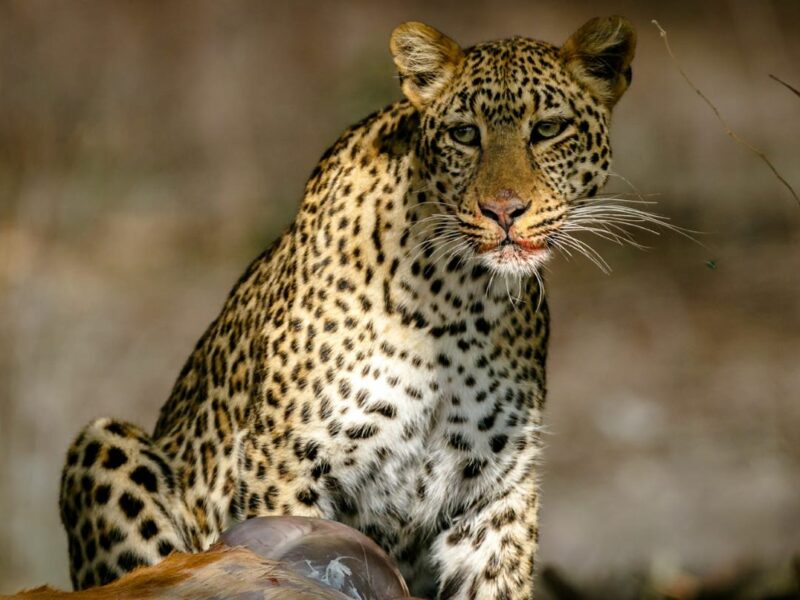
    Close up of sitting leopard with its kill in the foreground

    Planning Your Leopard Hunting Safari

    Choosing where to hunt leopard in Africa is only the first step. Whether you're drawn to the wild concessions of Zimbabwe, the traditional safaris of Tanzania, the remote wilderness of Mozambique, or the fair-chase hunting of Namibia, selecting the right destination and outfitter can make all the difference to your experience.

    If you're ready to start planning your African adventure, explore our Hunting Trips or speak with the Game Hunting Safaris team. We'll help you compare destinations, understand current regulations, and find the leopard hunting safari that best matches your hunting goals, budget, and expectations. 

    Author: A. Baker