
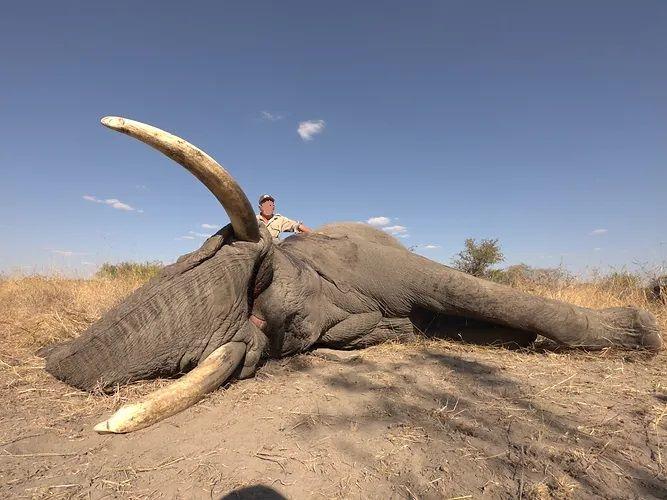
Botswana holds one of the largest elephant populations anywhere in Africa. The 2022 KAZA Elephant Survey estimated approximately 131,900 elephants in Botswana, representing well over half of the elephants counted across the wider Kavango Zambezi Transfrontier Conservation Area.
Those numbers help explain why Botswana remains such an important destination for elephant hunting in Botswana, but population size tells only part of the story. These figures are estimates rather than a fixed headcount.
Elephants move freely across enormous areas of northern Botswana and through the wider KAZA landscape, including across international borders into neighboring Zimbabwe, Namibia and Zambia. Numbers within areas can therefore change as elephants move in response to water, food and seasonal conditions.
Despite the number of elephants living in the country, relatively few are hunted each year. Hunting takes place under government quotas within designated areas, and finding elephants does not necessarily mean finding a mature bull suitable to hunt. Tracking, judging bulls and knowing when to walk away remain important parts of the safari.
Botswana's significance therefore comes from an unusual combination: a large free-ranging elephant population, extensive wild country and limited hunting opportunities. Understanding how those pieces fit together explains much of what makes Botswana different from other destinations offering Elephant Hunts in Africa.
[DYNAMIC-BLOGTABLEOFCONTENT]
A Huge Elephant Population Does Not Mean a Huge Hunting Offtake
Seeing an estimated elephant population of more than 130,000 can create the impression that Botswana must hunt large numbers of elephants each year. The reality is very different.
Botswana controls elephant hunting through annual quotas, and the number taken can be considerably lower than the number available under those quotas. In 2023, Botswana's internal elephant quota was 312 animals, while the recorded total offtake was 167. Against an estimated national population of between 120,000 and 144,000 elephants used in Botswana's 2024 CITES assessment, that represented little more than one tenth of one percent of the population.
The figures also help put Botswana's elephant hunting industry into perspective. Large elephant numbers do not translate into unlimited hunting opportunities. Quotas are allocated to specific hunting areas, and only a limited number of elephant safaris are available in any season.
That matters when Hunting in Botswana. A country may hold an enormous elephant population, but the hunt still depends on having quota in the right area, finding mature bulls using that area and allowing enough time to hunt them properly.
It is one of the unusual things about Botswana. Elephants may be abundant, while the opportunity to hunt one remains comparatively limited.

Large Elephant Numbers Do Not Make the Right Bull Easy to Find
Botswana's elephant numbers can create another misconception. Seeing elephants regularly does not mean finding the bull you came to hunt will be straightforward.
A hunting concession may hold plenty of elephant, but much of what a hunter encounters can be breeding herds, younger bulls or animals that simply do not meet the age and trophy expectations agreed with the Professional Hunter. The job is not to find an elephant. It is to find the right elephant.
That can mean starting with tracks found early in the morning and following them for hours before getting a proper look at the bulls ahead. Sometimes the tracks lead to animals worth spending more time on. Sometimes one look is enough for the PH to turn around and start again.
Conditions can change quickly. Elephants may move considerable distances during the night, particularly when water and feeding areas are spread across large country. Wind can ruin an approach, thick bush can make judging a bull difficult, and a group that looked promising from a distance may contain nothing worth pursuing once the hunter finally gets close.
The ability to pass elephants is therefore just as important as the ability to find them. An experienced PH is looking at age, body size, tusk development and the individual bull rather than simply trying to put a hunter in front of the first elephant carrying good ivory.
This is where the hunting area begins to matter more than Botswana's national population figure. Elephant movement, water, vegetation and the number of mature bulls using an area can have more influence on a ten-day safari than knowing how many elephants were estimated across the country several years earlier.
Botswana may give you plenty of elephants to look at. It still makes you hunt for the one you came for.
Why the Hunting Area Matters in Botswana
Choosing an elephant hunt in Botswana is not simply a matter of finding an outfitter with quota. The location of that quota can change the hunt.
Northern Botswana holds some of the country's best-known elephant country, particularly around the wider Chobe, Linyanti and Okavango systems. Permanent water, established movement routes and Botswana's connection with neighboring Namibia, Zimbabwe and Zambia allow elephants to move through an enormous landscape rather than remain within individual hunting areas.
The Kalahari presents a different picture. Water is widely scattered, distances are greater and elephants can travel considerable distances as conditions change. Bulls using an area during one part of the season may move elsewhere as water and food availability change, including across the border into Namibia.
That makes local knowledge particularly important. When an outfitter recommends hunting a particular area in May, August or October, the decision should not be based only on where elephants were seen during the previous season. Rainfall, water availability, vegetation and recent elephant movement can all influence where bulls are likely to be when the safari takes place.
There is inevitably an element of judgement involved. Nobody can guarantee where a free-ranging elephant will be several months from now. A good Professional Hunter can, however, look at historical movement, current conditions, water and reports from scouts to decide where the hunt has the best chance of coming together.
Scouts can also become particularly important before and during a safari. Knowing that bulls have recently moved into an area, finding fresh tracks around water or hearing that elephants have crossed from neighboring country can save valuable hunting time. Equally, information that was accurate a week earlier may already be outdated by the time the hunter arrives.
A Botswana elephant hunt therefore needs to be planned around more than the country's elephant population or the availability of quota. The right area at the right time can matter just as much as the number of elephants in Botswana.
Elephant Hunting Is Only One Part of Botswana's Wildlife Management
Botswana's elephant population is not managed for hunting alone. Most elephants will never form part of a hunting quota, and decisions surrounding them also involve protected areas, rural communities, agriculture, tourism and the problem of people and elephants sharing the same landscape.
That becomes important in northern Botswana, where communities can live close to areas carrying large numbers of elephants. Crop damage, competition for water and encounters between people and elephants are realities that cannot be understood simply by looking at a national population estimate.
Regulated hunting forms one part of the larger management system. Quotas are set by government and allocated to specific areas, including community-managed wildlife areas where hunting can generate revenue from animals living alongside local people.
The amounts involved can be significant. Botswana's government reported that community hunting quotas generated approximately P42.9 million during the 2024 hunting season, with a further P15.6 million generated through special elephant quotas for elephant conservation and community-led projects in elephant range.
That does not mean hunting provides a simple answer to every problem created by a large elephant population. It does show why Botswana's elephant hunting policy needs to be understood as part of a broader wildlife-management system rather than simply as the sale of a limited number of elephant permits.
For the hunter, the important point is straightforward. An elephant hunting quota exists within a bigger relationship between wildlife, habitat and the people who live alongside it.

What Makes Botswana Different From Other Elephant Destinations?
Botswana is not the only country offering elephant hunting, and having Africa's largest elephant population does not automatically make it the right destination for every hunter.
Zimbabwe, Namibia and Tanzania can all offer excellent elephant hunting, but the conditions can be different. Some areas have lower elephant densities, thicker cover or require more time simply to locate suitable bulls. Even within Namibia, hunting elephant in the Zambezi Region can be different from following widely scattered bulls through the Kalahari or Bushmanland.
Botswana's advantage is the combination of large numbers of free-ranging elephants and extensive hunting country connected to much larger wildlife areas. In the right area and at the right time of year, a hunter may see plenty of elephant while still spending days looking for a mature bull worth pursuing.
That distinction matters. A good elephant hunt is not measured by how many elephants you see. It is measured by whether the country, hunting area and time available give you a fair opportunity to find the bull you came for.
Botswana deserves consideration when comparing Elephant hunts across Africa, not simply because of how many elephants it holds, but because of the type of elephant hunting those populations can provide.
Give an Elephant Hunt Enough Time
Botswana may hold enormous numbers of elephants, but free-ranging bulls do not work to a hunter's schedule. A promising group of bulls can move out of an area overnight, fresh tracks may take most of a day to follow, and several days can pass before the right elephant is found.
The number of hunting days should therefore reflect the area and the type of hunt being booked. Saving money by shortening a safari can become an expensive decision if the hunter runs out of time just as good bulls begin moving into the area.
This becomes even more important when elephant forms part of a broader Big Five Hunting safari. Buffalo, leopard or other species also require time, and losing several days to one animal can quickly change the rest of the hunt.
Enough time does not guarantee an elephant. It simply gives the PH and hunter a fair opportunity to work through the country rather than being forced by the calendar to make decisions they would rather not make.
Planning an Elephant Hunt in Botswana
A Botswana elephant safari should begin with more than asking who has quota available. The hunting area, time of year, recent elephant movement, number of hunting days and the type of bull being sought all need to make sense together.
Ask where the quota is located. Ask how elephants normally use that area during the proposed hunting dates. Find out how much walking may be involved and what happens if the bulls move into neighboring country. Most importantly, be realistic about what you expect from the hunt.
It can also make sense to have a second or third species in mind. An elephant may take most of the safari to find, or the right bull may be taken on the third morning. Having buffalo or selected plains game available can give the remaining hunting days a purpose without putting pressure on the elephant hunt itself. After travelling all the way to Botswana, there is little reason to spend the rest of the safari sitting in camp if other good hunting opportunities are available.
Our African Hunting Trips include very different elephant safaris across the continent, and Botswana is a good example of why the country alone should never make the decision. The right safari is the one that matches the hunter with the right area, enough time and a realistic opportunity at the elephant he came to Africa to hunt.

Frequently Asked Questions About Elephant Hunting in Botswana
How many elephants are there in Botswana?
The 2022 KAZA Elephant Survey estimated approximately 131,900 elephants in Botswana, although this should not be treated as a fixed number. Elephants move across large areas and between Botswana and neighboring countries, particularly within the wider KAZA landscape. Population estimates can therefore change between surveys and seasons.
How many elephants are hunted in Botswana each year?
Only a small proportion of Botswana's elephant population is hunted each year. In 2023, the country's internal elephant quota was 312 animals, while the recorded total offtake was 167. The number hunted can therefore be considerably lower than the annual quota.
Is elephant hunting legal in Botswana?
Yes. Regulated elephant hunting is legal in Botswana and takes place within designated hunting areas under government-issued quotas. The availability of elephant quota varies between hunting areas and seasons, so a safari needs to be arranged around confirmed quota rather than simply added after arriving in the country.
Where are elephants hunted in Botswana?
Elephant hunting takes place in designated hunting areas, particularly across parts of northern Botswana and other areas where quota is allocated. Conditions vary considerably between areas. Permanent water, seasonal movement, vegetation and proximity to neighboring wildlife areas can all influence where elephants are found during a safari.
How many days should I allow for an elephant hunt in Botswana?
There is no single number that suits every hunt. The hunting area, time of year, elephant movement and whether other species are included all need to be considered. A free-ranging mature bull may be found early in the safari or require days of tracking and searching, so allowing enough hunting time is generally more important than trying to save several daily rates by shortening the safari.