
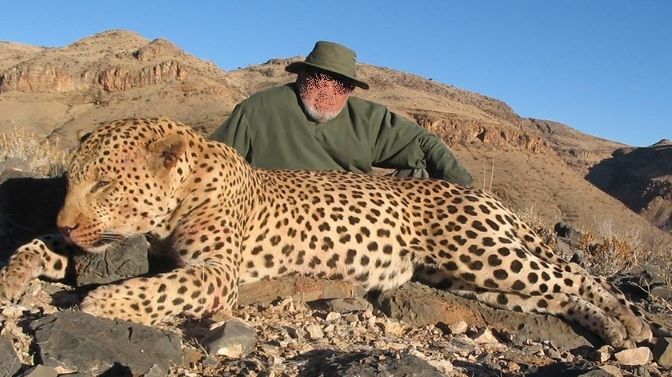
Namibia does not always look like obvious leopard country. Much of the landscape is dry and immense, with rugged mountains, rocky escarpments, open farmland and riverbeds that may remain without flowing water for much of the year. Yet hidden within these seemingly unforgiving landscapes lives one of Africa's most adaptable predators. A mature leopard can move through this country almost unnoticed, leaving little more than a track in the sand or a territorial scrape to confirm that he was ever there.
That ability to remain unseen is part of what makes Leopard Hunts so fascinating. Success is rarely built around simply finding an area with leopards. It comes from understanding how an individual cat uses the landscape, recognising the signs he leaves behind and gradually piecing together movements that may take place almost entirely under the cover of darkness. In Namibia, experienced Professional Hunters and trackers have learned to read those clues across landscapes that can differ dramatically from one hunting area to the next.
This is also what gives Leopard Hunting in Namibia its distinctive character. The country does not offer one type of leopard hunt or one landscape in which the same strategy can simply be repeated. A tom moving through broken mountain country may behave very differently from one occupying farmland or following a dry river system. The challenge is not simply knowing that a leopard is there. It is learning enough about an animal you may never see in daylight to eventually put yourself in the right place when he finally makes a mistake.
In leopard hunting, the animal often reveals his story long before he reveals himself.
Why Leopards Thrive in a Country That Looks So Unforgiving
At first glance, parts of Namibia appear almost too harsh to support a predator as secretive as the leopard. Rainfall can be unpredictable, permanent water is limited across large areas, and prey may be scattered across enormous landscapes. Yet these conditions highlight one of the leopard's greatest strengths: its ability to adapt.
Leopards do not depend on a single type of habitat. Rocky mountains provide caves, ledges and broken terrain, while dry riverbeds create natural corridors through otherwise open country. Thick vegetation along drainage lines offers cover, and areas supporting healthy populations of kudu, warthog, baboon and smaller antelope provide the prey needed to sustain resident cats. A mature tom may use several of these habitats while moving through a territory far larger than the landscape initially suggests.
Namibia's varied terrain also supports another of Africa's remarkable spotted cats, although in a unique way. Cheetah generally favours more open country where their extraordinary speed can be used to advantage, while leopard are masters of broken terrain, river systems and heavier cover where stealth matters more than outright pace. This contrast is part of what makes hunting Cheetah so different from pursuing leopard, despite both predators occupying parts of the same country.
For the leopard hunter, this adaptability creates both opportunity and frustration. Country that appears empty during daylight can become remarkably active after dark. A dry riverbed crossed repeatedly during the day may hold the fresh tracks of a mature tom the following morning, while a rocky ridge that seemed lifeless at sunset may have provided cover for a leopard watching everything below. Namibia produces exceptional leopard hunts, not because these cats are easy to find, but because they have become extraordinarily good at living in landscapes where remaining unseen is often their greatest advantage.
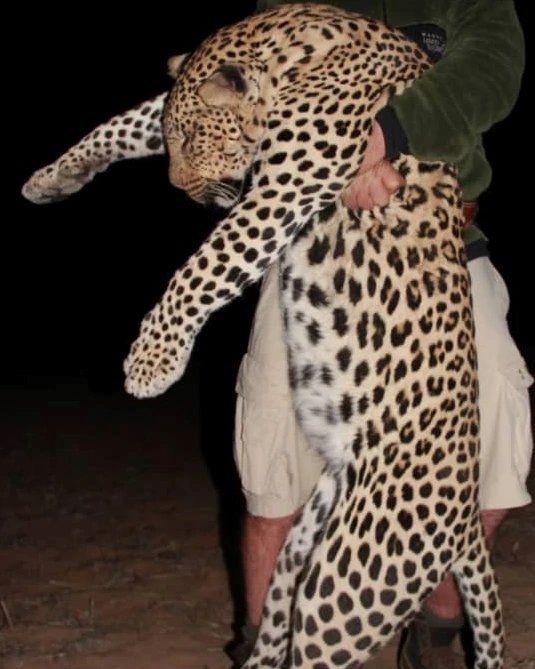
The Leopard You Rarely See
One of the realities of leopard hunting is that an area can hold excellent cats while appearing almost completely devoid of them. A hunter may spend days travelling the same roads and walking dry riverbeds without seeing any leopard activity. Then, overnight, fresh tracks appear in the sand and reveal that a mature tom crossed the same country only hours earlier.
That invisibility is part of the leopard's success. Mature males can move considerable distances under the cover of darkness, using drainage lines, rocky ridges and thicker vegetation to travel through their territories while attracting remarkably little attention. Their presence is often discovered indirectly: a fresh scrape beside a track, spoor crossing a road, the remains of a kill or a trail-camera photograph taken while everyone in camp was asleep.
This changes the way a leopard hunt is understood. Seeing the animal is often one of the final pieces of the puzzle rather than the beginning. Long before a hunter ever lays eyes on a mature tom, the Professional Hunter and trackers may already know that he is moving through the area and have begun to understand where he travels.
A set of tracks found shortly after sunrise may be the only evidence the leopard leaves behind before disappearing once again into thousands of acres of wild country. Yet to an experienced tracker, those few marks in the sand are far from insignificant. They are the first clues in a hunt where success often depends on learning as much as possible about an animal determined never to be seen.
Reading a Leopard Without Seeing Him
Knowing that leopards are present in an area is one thing. Identifying a particular mature tom and beginning to understand how he moves through the landscape is something entirely different. In Namibia, much of that knowledge is built from evidence left behind rather than sightings of the animal itself.
A single track confirms that a leopard passed through. Repeated tracks along the same dry riverbed or crossing point begin to reveal something more. Direction of travel, the location of territorial scrapes and repeated signs along familiar routes gradually help trackers build a picture of how a particular cat is using his territory. What initially appears to be a collection of unrelated clues can, over time, begin to reveal a pattern.
Even then, assumptions can be dangerous. A large track may suggest a mature male, but trail-camera photographs can provide a clearer picture of the leopard responsible. Cameras positioned at strategic locations may eventually reveal a heavy-necked old tom travelling through the area, while at other times they show that several different leopards are using the same broader landscape. Suddenly, the hunt is no longer about finding a leopard. It becomes about understanding one animal.
This is where experienced trackers become invaluable. Intricate details that mean little to an unfamiliar eye can help determine whether spoor is fresh, whether a leopard is travelling regularly through an area or whether he simply passed through once and may not return for days. Each new sign adds another piece to a puzzle that is constantly changing as the leopard moves through his territory.
Eventually, an animal that has remained almost completely invisible begins to develop an identity. The hunting team may know where he tends to cross, which routes he appears to favour and where his movements have been recorded repeatedly, yet still never have seen him with their own eyes.
In leopard hunting, understanding the animal often begins long before the animal allows himself to be seen.
Namibia Doesn't Produce One Type of Leopard Hunt
One of Namibia's strengths as a leopard hunting destination is the sheer variety of country in which these cats are found. A leopard moving through rugged mountains and rocky escarpments lives in a very different landscape from a tom occupying open farmland crossed by dry riverbeds and pockets of thicker cover. The species is the same, but the way the hunt unfolds can be remarkably different.
In remote wilderness areas such as Bushmanland, leopard behaviour can sometimes create opportunities to hunt or encounter cats during daylight hours. In quieter country with limited human disturbance, leopard may be more willing to move during the day, particularly when conditions are favourable. Tracking fresh spoor can therefore become an important part of the hunt, with the possibility that the cat being followed is still moving somewhere ahead.
Farmland leopards can present a different challenge. Cats living around working farms have adapted their movements to human activity and may rely heavily on the protection of darkness. A mature tom can move considerable distances during the night before disappearing into thick cover or rugged terrain as daylight approaches, leaving tracks and other signs as the only evidence of where he has been.
In wild areas such as Bushmanland, another factor enters the equation: other predators. Spotted hyena and other scavengers share the same landscape, and their presence can influence everything from bait activity to what happens after a shot. On one of our clients' hunts, a leopard was wounded late in the day, and darkness made it unsafe to continue tracking. When the hunting team recovered the cat the following morning, hyenas had already found the leopard and badly damaged much of the trophy. It was a harsh reminder that in wild Africa, the hunting party is not always the only one following what happened the night before.
Terrain and hunting pressure add further variables. Mountainous country provides countless places for a leopard to disappear, while dry river systems can become natural travel corridors linking different parts of a territory. A strategy that works in one area cannot simply be transferred unchanged to another. Successful leopard hunting requires an understanding of the individual cat, but also of the landscape and circumstances in which he has learned to survive.
That variety is one of the reasons leopard hunting across Namibia remains so interesting. There is no single formula that defines the hunt. In one area, fresh tracks may lead to an exciting daylight pursuit; elsewhere, the entire strategy may revolve around understanding the nocturnal movements of a mature tom that seems to vanish with every sunrise.
Choosing the right leopard safari therefore involves more than simply asking whether an area holds good cats.
Why Namibia Remains an Exceptional Leopard Hunting Destination
Namibia's reputation for leopard hunting has been built on more than simply having good populations of cats. The country's diverse landscapes and long hunting tradition have also helped establish Namibia Hunting Safaris among the most respected options for international sportsmen visiting southern Africa. As one of the most elusive species associated with Big Five Hunting, the leopard presents a challenge unlike any of Africa's other iconic game animals.
Namibia adds to that challenge through the extraordinary variety of landscapes in which leopard survive and the knowledge of Professional Hunters and trackers who have learned to read those environments and understand an animal that can live remarkably close to people while remaining almost completely unseen.
No two leopard hunts are quite the same. One may revolve around the nocturnal movements of a farmland tom that appears repeatedly on trail cameras but rarely during daylight. Another may begin with fresh tracks in the remote wilderness of Bushmanland and develop into an entirely different style of hunt. In each case, success depends on adapting to the leopard rather than expecting the leopard to follow a predictable pattern.
Perhaps that is what Namibia does particularly well. It offers the opportunity to pursue mature leopard across genuinely different environments, each presenting its own challenges and demanding a different approach. The final opportunity may last only a few seconds, but everything learned about the cat and the country leading up to that moment is what ultimately defines the hunt.
Frequently Asked Questions About Leopard Hunting in Namibia
Why is Namibia considered such a good destination for leopard hunting?
Namibia combines healthy leopard habitat with an extraordinary variety of hunting environments. Mature toms can be found in rugged mountain country, dry river systems, remote wilderness and working farmland. Each environment presents a different challenge, which is why experienced Professional Hunters and trackers rely heavily on local knowledge and an understanding of how individual cats use a particular area.
Can leopard be hunted during daylight in Namibia?
In some of Namibia's more remote wilderness areas, including Bushmanland, leopard may be encountered or tracked during daylight under the right circumstances. In other areas, particularly farmland where cats have adapted to regular human activity, mature toms may be considerably more nocturnal. The hunting method and strategy therefore depend heavily on the area and the behaviour of the individual leopard.
Can I combine a leopard safari with other hunting in Namibia?
Yes. A leopard safari can often form part of broader Hunting Trips in Namibia, with opportunities to pursue plains game or other available species depending on the hunting area, season and permits. Hunters considering a combination safari should plan their priorities carefully, as leopard hunting can require considerable flexibility once a mature tom has been identified.
How does cheetah hunting in Namibia differ from leopard hunting?
Although both species occur in Namibia, the hunts can be remarkably different. Cheetah generally favour more open terrain and rely heavily on speed, while leopard use stealth, darkness and heavier or broken cover to remain concealed. Hunters interested in Cheetah Hunting in Namibia will therefore encounter a different hunting challenge from pursuing a mature leopard.
What makes a mature leopard so difficult to hunt?
A mature tom has often survived for years by avoiding unnecessary risk. He may travel considerable distances at night, change his movements without warning and use terrain and cover exceptionally well. Even when his presence has been confirmed through tracks or trail-camera photographs, understanding when and where he may appear again remains one of the greatest challenges of leopard hunting.
About the Author: Pierre van Wyk is the co-founder of Game Hunting Safaris, working with experienced Professional Hunters and outfitters across Africa to help international sportsmen plan authentic hunting safaris in some of the continent's finest hunting destinations.