
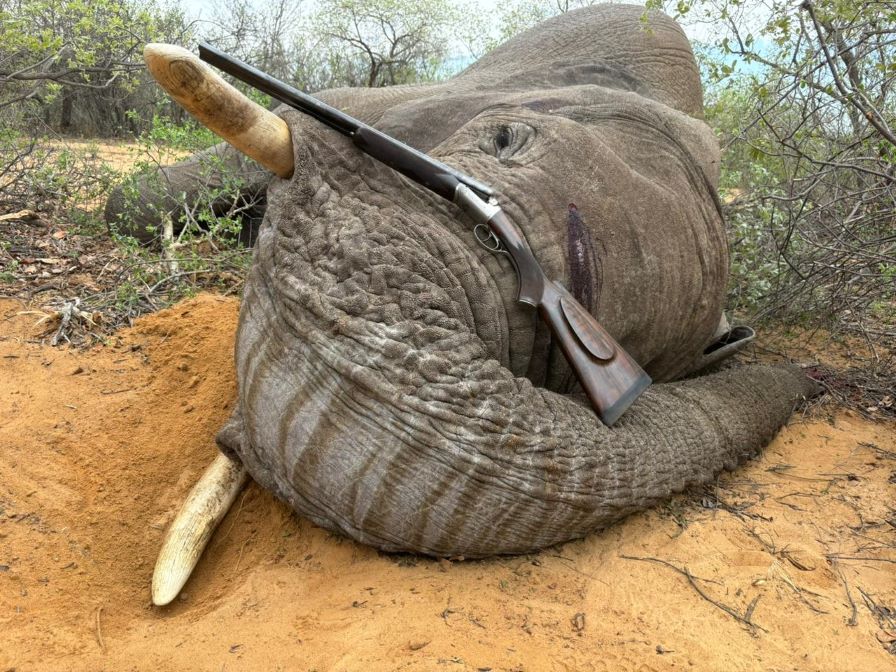
Discover why Zimbabwe has earned its reputation as one of Africa's greatest elephant hunting destinations. Learn how vast wilderness areas, experienced professional hunters and a rich hunting tradition continue to attract serious elephant hunters from around the world.
Some countries offer excellent elephant hunting. Zimbabwe helped define what many hunters still consider the traditional African elephant safari.
Ask Professional Hunters where they would choose to hunt elephant if they could only do it one more time, and Zimbabwe is mentioned with remarkable consistency. Not because it promises the biggest tusks or the easiest safari, but because it continues to offer something increasingly difficult to find elsewhere, vast unfenced wilderness where every elephant is hunted on its own terms.
Zimbabwe has earned a reputation that few elephant hunting destinations can match. Legendary hunting areas, highly respected Professional Hunters and generations of accumulated field knowledge have created a country where the hunt itself has always mattered more than the trophy. Those planning Elephant Hunting in Zimbabwe quickly discover that success is measured less by ivory and more by the quality of the hunt itself, where long days on fresh spoor, careful decision-making and respect for mature bulls remain at the heart of every safari.
The Knowledge You Can't Learn from a Book
Zimbabwe's reputation has never been built on wilderness alone. It has also been built by the men who know that wilderness better than anyone else. Across the country's legendary elephant hunting areas, Professional Hunters work alongside trackers whose understanding of the bush has often been shaped over an entire lifetime.
Many begin learning these skills as children, following older family members through the bush long before they ever become professional trackers. Over the years they come to recognise individual elephant bulls, understand seasonal movement patterns and remember where animals prefer to feed, drink and travel. Information is shared between trackers, game scouts, anti-poaching teams and nearby communities, creating a constantly evolving picture of what is happening across an enormous landscape.
Modern technology undoubtedly has its place. GPS units, satellite imagery and trail cameras can all assist a safari, but they cannot replace decades of local knowledge. A tracker who has watched the same elephant population for most of his life often notices things that no piece of equipment ever could. That remarkable depth of understanding is one of the reasons Elephant Hunts in Zimbabwe continue to earn such enormous respect among experienced hunters from around the world.
Why Zimbabwe's Wild Country Makes All the Difference
One of the reasons Zimbabwe continues to hold such respect among experienced elephant hunters has very little to do with ivory size or trophy records. It is the simple fact that so much of the country remains genuinely wild. Across legendary areas such as the Zambezi Valley, elephants still move according to the seasons, following ancient migration routes between water, food and breeding areas without regard for fences or property boundaries.
That freedom changes everything. Rather than hunting animals whose movements are largely predictable, every safari begins with uncertainty. A mature bull that was feeding along a river system yesterday may have travelled many miles overnight, leaving nothing behind except fresh spoor and the challenge of finding him again. It is one of the reasons Hunting in Zimbabwe has earned such a respected reputation among dangerous game hunters. Success is never guaranteed, because the elephant is always free to decide where the hunt begins.
That uncertainty continues throughout the hunting season. Elephant movements are influenced by changing rainfall, water availability, natural food sources and even crop activity near communal areas. A concession that produces outstanding elephant hunting early in the season may hunt very differently a few months later as mature bulls shift across the wider landscape. Knowing when elephants are likely to use a particular area is often just as important as knowing where to begin looking, which is why experienced Professional Hunters spend so much time monitoring seasonal changes long before a client arrives in camp.
A fresh elephant track found just after sunrise may lead nowhere by mid-morning. A shifting wind, rocky ground that refuses to hold a clear print, or several breeding herds crossing the same area can force trackers to abandon hours of careful work before beginning again somewhere completely different. These are the moments that rarely appear in safari photographs, yet they are often what define a genuine elephant hunt. Every successful bull is earned through patience, persistence and the willingness to adapt when the bush refuses to follow the day's original plan.
Perhaps that is what separates Zimbabwe from so many other elephant hunting destinations. The country asks hunters to adapt rather than expect. Every day begins with a plan, but the elephants are under no obligation to follow it. That unpredictability is not a weakness of the hunt; it is precisely what has earned Zimbabwe its reputation as one of Africa's last great elephant hunting destinations.
The Country That Built Elephant Hunters
Countries produce elephants. Zimbabwe has produced generations of elephant hunters. Long before modern safari marketing, the country had already earned a reputation as a place where Professional Hunters refined their craft alongside experienced trackers in some of Africa's toughest elephant country. Success was never handed to anyone. It was earned one season at a time through patience, sound judgement and an unwavering respect for the animal being pursued.
That tradition continues today. Zimbabwe has long been recognised for producing highly respected Professional Hunters, with its training standards and mentorship culture helping shape generations of safari professionals. Young PHs learn alongside experienced mentors, while trackers pass bush knowledge from one generation to the next, ensuring that skills developed over decades are not lost but strengthened with every season.
The result is a hunting culture that places knowledge ahead of shortcuts. Decisions in the field are guided by experience rather than haste, and success is measured by how the hunt unfolds rather than simply how it ends. It is one of the reasons Zimbabwe continues to hold such an important place in Big Five Hunting, where the emphasis has always been on fair chase, ethical decision-making and respect for both the game and the country that sustains it.
Ask experienced elephant hunters what they remember most about Zimbabwe, and many will speak about the people long before they mention the ivory. The friendships formed around a campfire, the quiet confidence of an experienced tracking team and the lessons learnt in the bush often become the memories that last the longest. Zimbabwe doesn't simply produce memorable elephant safaris, it produces better elephant hunters.
Conservation That Never Lost Its Way
Zimbabwe's reputation as one of Africa's premier elephant hunting destinations did not happen by accident. It has been shaped through decades of wildlife management built on a simple principle: healthy elephant populations require healthy ecosystems, responsible hunting practices and local communities that benefit from protecting the wildlife living alongside them.
Across Zimbabwe's hunting concessions, elephant hunting takes place under carefully regulated government quotas designed to protect the long-term health of the population. Professional Hunters focus on identifying mature bulls that have already contributed to future generations, ensuring younger breeding animals remain part of the herd. At the same time, revenue generated through regulated hunting helps fund anti-poaching operations, habitat management and community programmes that give rural families a practical reason to support wildlife conservation rather than compete with it.
Perhaps the greatest strength of Zimbabwe's model is that it recognises conservation as an ongoing responsibility rather than a single event. Elephant populations, habitats and local communities all continue to change, requiring careful management and constant monitoring from wildlife authorities, concession operators and the people who live alongside these remarkable animals. It is one of the reasons Zimbabwe continues to be recognised not only for exceptional elephant hunting, but also for preserving the wild landscapes that make those safaris possible in the first place.
Why Hunters Keep Coming Back
Ask someone who has hunted elephant in Zimbabwe what they remember most, and the answer is rarely measured in pounds of ivory or miles walked. More often, they talk about the people they met, the stories shared around the campfire and the quiet moments that unfolded between the excitement of the hunt. It is a country that rewards patience and humility, where every successful safari feels earned rather than given.
For well over a century, Zimbabwe has occupied a special place in the story of African elephant hunting. Long before modern safari marketing, generations of hunters travelled here because the country had earned a reputation for producing fair-chase elephant safaris conducted across immense, unfenced wilderness.
Among the many African hunting trips available today, few retain the sense of tradition and wild-country hunting that continues to define an elephant safari in Zimbabwe. While the equipment, camps and logistics have evolved over time, the principles that built that reputation, respect for the animal, experienced Professional Hunters and hunting wild elephants on their own terms, remain remarkably unchanged.
It is easy to arrive in Zimbabwe focused solely on elephant hunting. It is far harder to leave without developing a deep respect for the country itself. The wilderness, the people and the traditions that continue to shape every safari have a way of changing how hunters think about Africa. Zimbabwe continues to offer something that has become increasingly difficult to find elsewhere: the opportunity to hunt free-ranging elephants across vast wilderness with experienced Professional Hunters and tracking teams whose knowledge has been built over generations. It is that combination of wild country, hunting tradition and genuine fair chase that continues to make Zimbabwe one of Africa's most respected elephant hunting destinations.
Frequently Asked Questions
Why has Zimbabwe earned such a strong reputation for elephant hunting?
Zimbabwe's reputation has been built over generations through vast unfenced hunting concessions, highly respected Professional Hunters, experienced tracking teams and a hunting tradition that places fair chase above convenience. Rather than relying on high success rates or exceptional ivory alone, Zimbabwe has become known for delivering authentic wilderness elephant safaris where every opportunity must be earned.
What makes elephant hunting in Zimbabwe different from other African countries?
One of Zimbabwe's greatest strengths is the combination of genuinely wild elephant populations and experienced hunting teams. Elephants move freely across enormous landscapes, requiring hunters to adapt to changing conditions rather than following predictable patterns. That uncertainty is part of what has made Zimbabwe one of Africa's most respected elephant hunting destinations.
Do elephant movements change throughout the hunting season?
Yes. Elephant movements are influenced by rainfall, water availability, natural food sources and changing seasonal conditions. Professional Hunters spend considerable time monitoring these patterns before and during the safari, helping hunters focus their efforts in areas where mature bulls are most likely to be found.
Why are Zimbabwe's Professional Hunters so highly respected?
Zimbabwe has long been recognised for producing outstanding Professional Hunters through a strong tradition of mentorship, practical field experience and demanding training standards. Many also work alongside trackers whose knowledge of local elephant populations has been developed over decades, creating hunting teams that are respected throughout Africa.
Is Zimbabwe a good destination for a first elephant hunt?
For hunters seeking a traditional fair-chase safari, Zimbabwe is often regarded as one of the finest places to hunt elephant for the first time. Experienced Professional Hunters guide every stage of the safari, while the country's well-established hunting traditions provide an excellent introduction to one of Africa's greatest dangerous game hunts.
Should I spend extra time in Zimbabwe before or after my safari?
Many international hunters choose to extend their visit after the safari. Victoria Falls is one of Africa's most iconic natural attractions, while destinations such as Lake Kariba, Hwange National Park and Mana Pools offer outstanding opportunities to experience even more of Zimbabwe's remarkable wildlife and landscapes before returning home.