
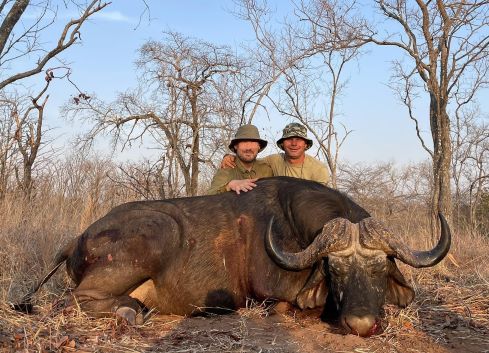
Zimbabwe has earned its place among Africa's great hunting destinations the hard way. Through decades of change, the country has retained vast safari areas, an exceptional professional hunting tradition and the kind of wild country where buffalo, elephant, lion and leopard still form part of the same hunting landscape.
That combination is what makes big game hunting in Zimbabwe different. A hunter may arrive with one clear objective, perhaps tracking an old dagga boy, pursuing a mature elephant bull or hunting lion, but the safari takes place in country where dangerous game is rarely experienced in isolation. Elephant may cross the same tracks being followed for buffalo. Lion can be heard from camp at night. Leopard spoor appears in the sand, and plains game remains part of the country through which the hunt unfolds.
Zimbabwe is well suited to hunters looking for a traditional African big game safari. Big Game Hunting in Zimbabwe is still largely built around tracking, walking and spending time in the field with experienced Professional Hunters and trackers who understand the country. Success is not simply a matter of finding an animal. The right bull, the right track or the right opportunity may take days to materialise, and that uncertainty remains part of the appeal.
The strength of Zimbabwe is also the depth of safari it can offer around a hunter's primary objective. A buffalo hunt can become part of a broader African safari. An elephant hunter may have opportunities to pursue other species during the same trip. A hunter travelling for lion or leopard is still immersed in genuine big game country throughout the safari.
Zimbabwe does not need to reinvent what an African hunting safari should be. In its best hunting areas, the fundamentals are already there: wild country, serious game, experienced hunting teams and hunts that still begin with tracks in the dirt and the question of where they lead.

Why Zimbabwe Still Feels Like Big Game Country
Zimbabwe's reputation as a big game destination is closely tied to the scale and character of the country available to hunters. Those considering Hunting in Zimbabwe will find established safari areas extending across large tracts of wild country, where rivers, mopane woodland, jesse bush and broken hills create habitat for both dangerous game and plains game.
In these areas, the hunt is rarely separated from everything else happening around it. A team following buffalo may encounter fresh elephant sign along the same drainage. Lion tracks can change the conversation around a vehicle in the morning, while the presence of leopard, hyena and other predators becomes evident through tracks and calls even when the animals themselves remain unseen.
That matters because the surroundings influence the way a safari feels. Zimbabwe can still offer hunting where the hunter spends long days walking and tracking through country occupied by animals capable of changing the situation quickly. The Professional Hunter and trackers are not simply searching for the target species; they are constantly reading what has moved through the area and what may still be nearby.
The country's big game hunting tradition has also developed around this style of safari. Generations of Zimbabwean Professional Hunters and trackers have learned their craft in areas where spoor, wind, animal behaviour and knowledge of the terrain remain fundamental to finding game. Modern equipment may help with communication and logistics, but once a promising track is found, much of the hunt still comes down to people on the ground deciding whether that track is worth following.
That combination of wild country, multiple big game species and a strong tracking tradition is a large part of Zimbabwe's appeal. The landscape is not simply the backdrop to the hunt. It is one of the reasons hunters continue to travel there.
A Safari Built Around One Serious Objective
The best big game safaris in Zimbabwe often begin with one clear objective. A hunter may travel specifically for an old Cape buffalo bull, a mature elephant bull, lion or leopard. That primary species determines much of the planning, the hunting area and how time in the field will be used.
A dedicated Cape Buffalo Hunt, for example, may revolve around finding fresh tracks at first light and following them until the herd or bulls are located. Elephant Hunts can involve covering enormous distances looking for the right track and then spending hours on foot determining whether the bull is worth pursuing. Lion and leopard require entirely different strategies, but the principle remains the same: the safari is built around giving the hunter the best realistic opportunity at the animal he came to Zimbabwe to hunt.
What Zimbabwe offers is the ability to pursue that objective without the safari feeling like a single-species hunt. The country surrounding the hunter remains alive with other game. While looking for buffalo, there may be elephant in the area. Days spent searching for elephant can reveal buffalo, plains game and predator sign. A lion or leopard hunt unfolds within the same broader ecosystem rather than in isolation from everything else.
This depth also creates opportunities to build a safari around the primary hunt. Depending on the hunting area, available quota and time allocated, additional dangerous game or plains game species may be included without losing sight of the animal that brought the hunter to Zimbabwe in the first place.
The important distinction is that the primary objective should still drive the safari. Trying to hunt too many species in too little time can compromise the hunt that matters most. Zimbabwe's strength is not simply the number of animals that can appear on a species list. It is the ability to build a serious safari around one important objective, with the depth of African hunting country surrounding it.
The Hunting Team Behind a Zimbabwe Safari
Zimbabwe has a long-established professional hunting tradition, and the quality of the team on the ground remains one of the country's greatest strengths. On a serious big game safari, the relationship between the hunter, Professional Hunter and trackers can become particularly important as days in the field begin to accumulate.
Trackers see details that most visiting hunters would walk straight past. They can distinguish fresh spoor from tracks made hours earlier, judge the direction animals are moving and notice subtle signs that help determine whether a particular animal is worth following. The Professional Hunter must then combine that information with knowledge of the area, wind and animal behaviour to decide when to continue, change direction or walk away and start again.
This becomes particularly apparent on hunts where considerable time may be spent searching for the right animal. Not every buffalo track leads to an old bull worth pursuing, and not every elephant encountered is the bull the hunter came to find. Knowing when not to continue can be as important as knowing when to follow.
As the hunt progresses, the teamwork becomes apparent. The hunter begins to recognise how the team communicates, how decisions are made and just how much knowledge is involved long before the final stalk begins.
Zimbabwe's reputation for big game hunting was built over generations, but it is the people working in its hunting areas today who continue that tradition. Good country matters. Game populations and quota matter. But when a hunt comes down to interpreting a track in the dust and deciding what to do next, the quality of the people standing beside the hunter matters just as much.
Big Game Hunting Without Losing the Rest of the Safari
A serious big game hunt can dominate the purpose of a safari without needing to dominate every day of it. This is another area where Zimbabwe's depth becomes valuable. Time spent searching for the primary quarry can still leave opportunities to pursue other species when conditions allow.
Plains game can add considerable variety to a longer safari. Depending on the hunting area, species such as kudu, sable, eland, waterbuck or bushbuck may be available, giving the hunter options when the primary hunt allows time to pursue something different.
The key is flexibility. An opportunity at an exceptional plains game animal may appear unexpectedly, while a change in weather or animal movement can temporarily shift the focus away from the main hunt. A good Professional Hunter understands when there is time to take advantage of those opportunities and when the primary objective demands complete attention.
This is particularly valuable on longer big game safaris. The hunter has travelled to Zimbabwe for a reason, and that objective should remain the priority. But some of the best moments of the safari may still come from opportunities that were never the main reason for booking the hunt.
When the Hunt Gets Close
Big game hunting in Zimbabwe is often measured in miles walked, but the moments that matter can eventually come down to a handful of yards. After hours on a track, the pace changes when the trackers slow down, voices disappear and rifles replace walking sticks.
In thick jesse or mopane, there may be little room for error. A buffalo bull can disappear behind a screen of brush only yards away, leaving the hunter searching for a clear shooting lane through the cover. Elephant can be close before there is a clear view of the bull being assessed. The Professional Hunter may be trying to judge the animal while simultaneously watching the wind, the rest of the herd and the position of everyone in the hunting party.
On Dangerous Game Hunts, this is where carrying the right rifle, and being completely comfortable with it, matters. A heavy dangerous-game rifle may feel reassuring when it leaves the gun safe, but after several hours following tracks through the heat and thick cover, the hunter still needs to be able to carry it comfortably, shoulder it instinctively and shoot it accurately when an opportunity develops quickly. Whether carrying a bolt-action rifle or a traditional double, familiarity matters more than what looks impressive in the gun safe.
There is also a point on a big game hunt where the hunter must trust the people around him. The trackers have brought the team close. The Professional Hunter is reading what is happening ahead. When the sticks go up, or the PH quietly tells the hunter to move forward, hours or even days of work can suddenly narrow into a few seconds.
That transition, from following a track through seemingly endless country to standing within close range of one of Africa's great game animals, is part of what Zimbabwe does exceptionally well.

Why Zimbabwe Remains a Classic Big Game Destination
Zimbabwe's reputation for big game hunting has endured because the fundamentals that built it remain relevant today. The country still has wild hunting areas, experienced Professional Hunters and trackers, and opportunities to pursue some of Africa's most sought-after dangerous game in country where the hunt must be earned.
A hunter can arrive with buffalo, elephant, lion or leopard as the primary objective and build the safari around that animal. What happens during the days that follow is less predictable. Tracks are found and abandoned. Animals move. Plans change. An opportunity expected on the first morning may take days to develop, while something completely unexpected can happen along the way.
That uncertainty is part of what keeps big game hunting in Zimbabwe firmly connected to the traditions that established the country's reputation. Technology and logistics may have changed, but a good hunt can still come down to an experienced team, a promising track and a hunter prepared to follow it for as long as necessary.
Zimbabwe does not promise that every hunt will unfold according to plan. What it offers is the chance to hunt big game in wild country, alongside experienced people, where success may still begin with finding the right track and being prepared to follow it.
Frequently Asked Questions
What big game can you hunt in Zimbabwe?
Zimbabwe offers hunting opportunities for several of Africa's major big game species, including Cape buffalo, elephant, lion and leopard, subject to available quota and current regulations. The country is particularly well suited to safaris built around one primary dangerous game species, with additional game potentially added depending on the hunting area, quota and length of the safari.
Is Zimbabwe good for Cape buffalo hunting?
Yes. Zimbabwe has a long-established reputation for Cape buffalo hunting, with opportunities ranging from tracking herds to pursuing old dagga bulls. The character of the hunt varies between hunting areas, but traditional tracking on foot remains an important part of many Zimbabwe buffalo safaris.
How long should a big game hunting safari in Zimbabwe be?
The appropriate safari length depends primarily on the species being hunted. A dedicated buffalo safari may require considerably less time than a hunt built around lion or leopard, while elephant hunting can also demand patience when searching for the right bull. Hunters combining several species should allow enough time for the primary objective rather than trying to fit too much into a short itinerary.
What is the best time of year for big game hunting in Zimbabwe?
Zimbabwe's hunting season generally extends through the drier months, with conditions changing as the season progresses. Earlier months can offer more vegetation and available water, while later in the dry season animals may become increasingly concentrated around remaining water sources. The best timing depends on the target species, hunting area and preferred style of hunt.
Can you combine buffalo and elephant on the same Zimbabwe safari?
Potentially, yes. Buffalo and elephant can be combined where the hunting area has suitable quota for both species and sufficient safari time is available. Hunters considering a combination hunt should decide which species is the primary objective so that opportunities for the second animal do not compromise the hunt they travelled to Zimbabwe to prioritise.
Is Zimbabwe a good destination for a first African big game hunt?
It can be an excellent choice for a hunter ready to pursue African big game. Zimbabwe's established Professional Hunting tradition, experienced trackers and opportunities for traditional tracking-based safaris are significant advantages. The right hunt, however, depends on the hunter's objectives, physical ability and previous hunting experience. Someone comparing Africa Hunting Trips for a first African big game safari should choose the hunting area, Professional Hunter and primary species carefully rather than selecting a safari based on price alone.
About the Authors
Pierre and Tamlyn van Wyk are the co-founders of Game Hunting Safaris. Born and raised in Africa, they have travelled and hunted extensively across the continent, with firsthand experience of African big game hunting and safari planning.