
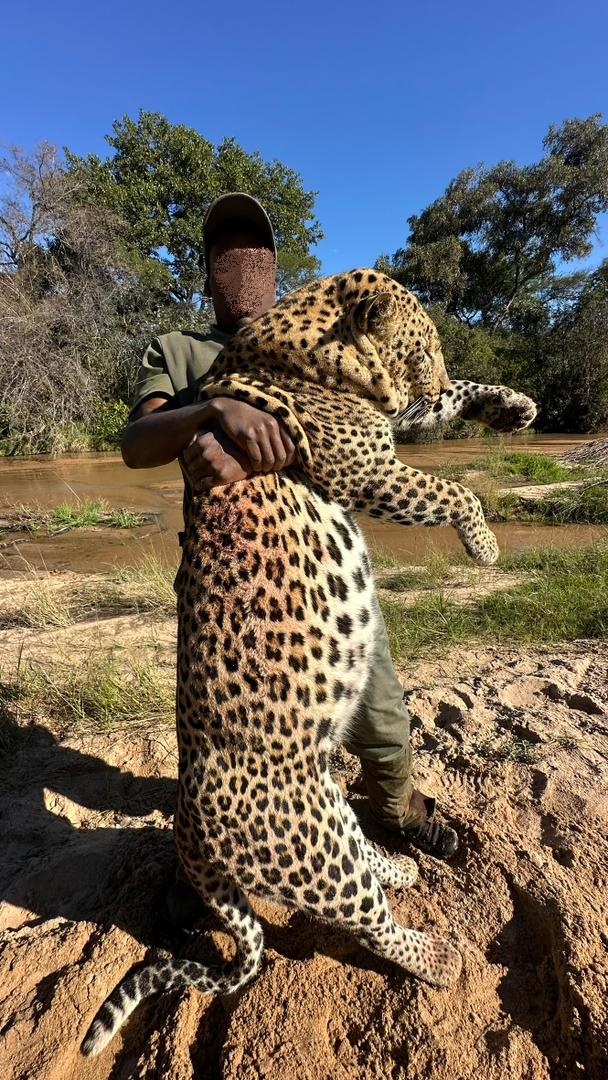
Zimbabwe has earned a formidable reputation for leopard hunting, but not because these cats are easy to find or predictable once found. The country combines excellent leopard habitat, abundant natural prey and a long professional hunting tradition with one of the realities that makes pursuing a mature tom so demanding: knowing a leopard is there is very different from getting an opportunity to hunt him.
A track in the sand, photographs from a trail camera or a bait being fed on can confirm that a leopard is working an area. That information may be encouraging, but it can also mark the beginning of a long contest with an animal that moves largely unseen and follows a schedule of its own.
Mature toms can cover considerable ground, alter their movements and appear when nobody expects them. A leopard may feed confidently and then vanish. He may return after dark, approach without committing or change his behaviour after the slightest disturbance. The hunting team must continually interpret what is happening while resisting the temptation to interfere every time the leopard does something unexpected.
This is where Leopard Hunting in Zimbabwe becomes particularly interesting. The hunt is built around accumulating small pieces of information and making decisions from them. Tracks, feeding activity, timing and the behaviour of an individual cat gradually begin to form a picture, but the leopard rarely provides all the answers at once.
Zimbabwe can give a hunter the country and hunting team needed to pursue an exceptional mature tom. What it cannot do is make the leopard cooperate. Finding him is only the beginning.
Good Leopard Country Does Not Guarantee an Easy Leopard Hunt
Zimbabwe has the ingredients needed to support healthy leopard populations across suitable hunting areas. Cover, water and natural prey allow these highly adaptable predators to occupy extensive country while remaining remarkably difficult to see. That combination has helped make Leopard Hunts an important part of Zimbabwe's long hunting tradition, but good leopard country does not necessarily make for an easy hunt.
That ability to remain unseen is part of what separates pursuing leopard from other forms of Big Game Hunting in Africa. Buffalo and elephant leave tracks that may eventually lead a hunting team directly to the animals. A leopard can leave enough evidence to confirm his presence while continuing to move almost entirely beyond the hunter's view.
Fresh spoor along a road or riverbed may reveal that a tom passed during the night. A bait can confirm that he is feeding in the area, while a trail camera may provide the first proper look at the cat and help the Professional Hunter assess whether he is the mature male they are looking for. Each clue answers one question while often creating another.
The quality of the country therefore matters, but so does the ability of the hunting team to interpret what is happening within it. Having several leopards moving through an area does not necessarily make the hunt simpler. Different cats may visit the same locations, females can complicate the picture, and a mature tom may appear just often enough to confirm that he is there without establishing the predictable pattern the team is hoping for.
That is where a productive leopard area begins to show its real value. It gives the hunting team something to work with: tracks to read, movement to understand and opportunities to identify individual cats. The challenge is turning that information into an encounter with the right leopard at the right time.
Finding a Leopard Is Only the Beginning
Locating a mature tom and understanding how he is using the hunting area are two very different things. Fresh tracks may confirm his presence, a trail camera may identify him, and a bait may prove that he is willing to feed, but none of those things guarantee that the hunter will ever see him.
The next challenge is establishing some form of pattern. When is the leopard moving through the area? How frequently is he returning? Is he feeding confidently or simply visiting briefly before moving on? Is the same tom responsible for the tracks and activity being recorded, or are several leopards moving through the area?
Answers rarely arrive all at once. A promising bait may suddenly go untouched for several nights. A tom photographed repeatedly after dark may appear to be settling into a routine, only to change it completely. Another leopard may begin visiting the same area, while lions, hyenas or other scavengers can interfere with what had appeared to be a developing opportunity.
This creates one of the frustrations that makes leopard hunting so compelling. The hunting team can know that the right tom is somewhere in the area and still be unable to predict when he will make his next move. Every new track, photograph and feeding visit adds another piece to the puzzle, but the picture can change just as quickly as it begins to make sense.
The temptation is to respond whenever something changes. Move the bait. Check the camera again. Alter the setup. Look for another leopard. Yet unnecessary activity can introduce exactly the disturbance the team is trying to avoid.
A successful leopard hunt therefore depends on more than finding a good cat. At some point, the Professional Hunter must decide whether the developing pattern needs to be changed or simply given time.
And sometimes, the hardest decision is to do nothing at all.
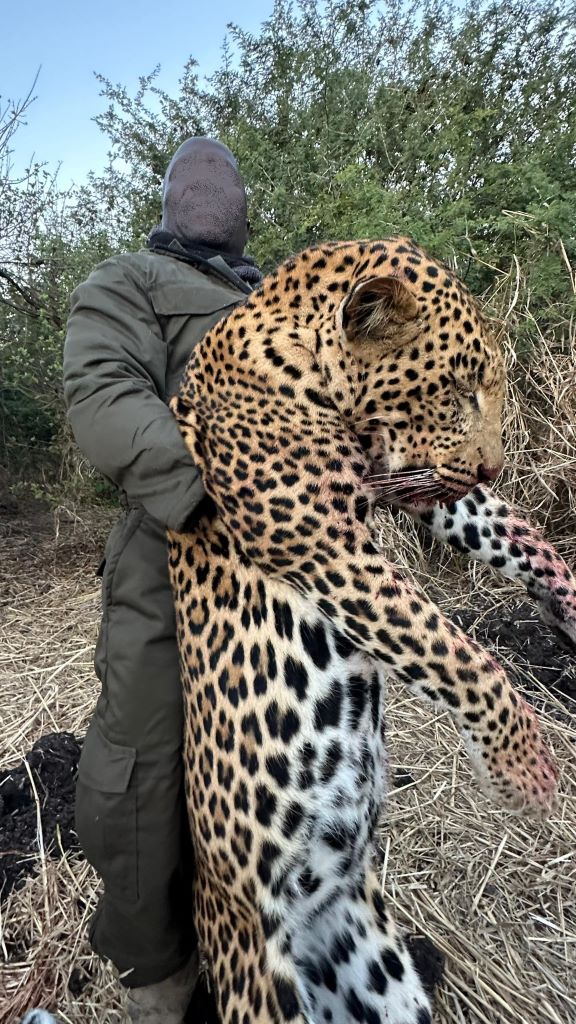
The Leopard You Are Hunting Is Learning About You Too
A leopard hunt involves gathering information about an animal that has spent its life gathering information about everything around it. While the hunting team is studying tracks, photographs and feeding patterns, a mature tom is moving through familiar territory where changes may not go unnoticed.
Every visit to a bait site has the potential to leave evidence behind. A vehicle has stopped. People have walked through the area. Human scent remains where there was none before. Branches may have been moved, a camera positioned or a blind prepared nearby. None of these things automatically causes a leopard to abandon an area, but unnecessary disturbance gives a cautious animal more information than the hunting team would like him to have.
This creates an unusual balancing act. The Professional Hunter needs enough information to understand what the leopard is doing yet obtaining that information can require entering the very area where the team wants the cat to feel secure.
Once a promising tom begins feeding, restraint can become as important as action. There may be little value in repeatedly checking a site simply because everyone wants to know what happened during the night. The timing of visits, the route used to approach and the amount of activity around the area can all become part of managing the hunt.
The hunter may see very little of this process. Hours can pass in camp while trackers and the Professional Hunter discuss a track, a photograph or whether a bait should be checked again. From the outside, it may appear that nothing is happening. The decision not to disturb a developing situation may be one of the most deliberate decisions made during the safari.
The challenge is not simply learning the leopard's routine. It is doing so without allowing the leopard to learn yours.
Sometimes the Most Important Sign Is That the Leopard Did Not Come Back
A mature tom that has been feeding regularly can create a growing sense that the hunt is finally coming together. Tracks confirm his movements, cameras show the right cat and several visits to a bait begin to suggest a pattern. Then, without warning, he does not return.
The absence immediately raises questions. Was the leopard disturbed? Has he changed his route? Did another predator move through the area? Has another leopard affected his behaviour? Or has he simply found something better to eat?
That last possibility is easy to underestimate. A wild leopard has choices. He may visit a bait repeatedly and then make a fresh kill of his own, feed somewhere else or simply decide that what has been provided is no longer the most attractive meal available. Leopards do not necessarily return predictably to the same bait night after night simply because the hunting team wants them to.
The condition of the bait can matter as well. Fresh meat is naturally more attractive than bait that has deteriorated, and warmer conditions can shorten the time that a bait remains appealing. Cooler periods can therefore offer an advantage by helping bait remain in better condition for longer, although no season can make a mature tom behave according to a timetable.
This is where the absence of a leopard becomes information. The Professional Hunter must decide whether something has genuinely changed or whether the cat simply needs time. Moving a bait too quickly could abandon a productive location. Checking repeatedly could introduce unnecessary disturbance. Doing nothing could be exactly the right decision or allow valuable hunting days to slip away.
There is no simple answer because the leopard is under no obligation to return. He can hunt for himself, feed where he chooses and changes his movements without giving the hunting team any explanation at all.
That uncertainty is part of the hunt. Sometimes the most important development of the day is not a new photograph or a fresh track. It is arriving at a bait that had been producing activity and discovering that, during the night, nothing happened.
The PH Is Trying to Hunt a Pattern
A Professional Hunter may spend days trying to understand the movements of a mature tom, but with leopard, a pattern can be difficult to establish and even harder to rely on. A cat that appears predictable for several nights can change his movements without warning.
Part of the difficulty is the amount of country a mature male may use. His movements can take him across a large territory as he hunts, patrols and responds to what is happening around him. A bait may give him a reason to visit one location, but it does not necessarily give him a reason to remain nearby.
The leopard also has no shortage of alternatives. He can make a fresh kill, encounter other feeding opportunities or simply continue moving through his territory. Even a bait that has been producing regular activity remains only one option available to an animal capable of finding its own food.
Then there are the other animals attracted by the same opportunity. Hyenas and other scavengers may discover a bait, creating competition, disturbance and noise around a site where the hunting team would prefer the leopard to feed confidently. A mature tom may tolerate that activity, avoid it or alter the timing of his visits. Once again, the hunting team is left trying to interpret what happened after everyone else has gone.
The PH is therefore rarely working with certainty. He is trying to identify enough consistency to create an opportunity without assuming that yesterday's behaviour will be repeated tonight. Tracks, cameras and feeding activity can suggest what the leopard might do next, but none of them can guarantee it.
This becomes particularly difficult as the safari clock begins to run down. The hunter has travelled thousands of miles to be there, the right tom has been identified, and everyone knows an opportunity may be developing. The temptation to act grows stronger with every passing day.
Yet putting the hunter into position too early may disturb a leopard that was beginning to return confidently. Waiting too long carries its own risk: the tom may move on, change his routine or simply disappear from the bait altogether.
That is the judgement a good leopard PH is continually making. He is not waiting for a perfect pattern, because with a mature leopard one may never exist. He is waiting for enough of a pattern to decide that tonight may finally be worth hunting.
The Leopard Finally Makes a Mistake
After days of reading tracks, checking cameras and trying to understand the movements of a mature tom, the opportunity can arrive remarkably quickly. The leopard that has occupied everyone's attention without ever being seen by the hunter is suddenly there.
By this point, much of the work has already been done. The hunting team has identified the right cat, chosen where to wait and decided that the possibility of an encounter justifies putting the hunter into position. What they cannot control is whether the leopard will appear or what he will do if he does.
Hours of silence may pass before anything changes. When a leopard approaches, the hunter may hear something before seeing him, or the first indication may simply be the cat appearing where moments earlier there was nothing. The same animal that has proved so difficult to understand can suddenly be standing within range.
This is not the time to rush. The Professional Hunter must be satisfied that the leopard is the correct animal, and the hunter needs a clear opportunity before taking the shot. Days spent waiting for this moment can create enormous pressure to act, but the final decision still has to be made carefully.
That contrast is part of what makes leopard hunting remarkable. A safari can involve days of uncertainty, changing plans and almost no direct contact with the animal being hunted. Then everything may depend on a few seconds when the right tom finally presents an opportunity.
The hunting team may have spent days trying to predict what he would do next. In the end, they only needed to be ready when the leopard finally made a mistake.
Why Zimbabwe Remains Exceptional Leopard Country
A mature tom may leave tracks, appear on cameras and feed regularly before changing everything without warning. That unpredictability is precisely why finding a leopard is only the beginning.
Zimbabwe provides the country in which the hunt can take place and the people capable of interpreting what happens along the way. The rest is a contest with an animal that has survived by being exceptionally difficult to understand and even harder to predict.
Zimbabwe's reputation for leopard hunting is built on more than the presence of good cats. Hunting in Zimbabwe takes place across diverse safari areas where suitable habitat, natural prey and experienced hunting teams provide the foundations for serious dangerous game safaris.
Frequently Asked Questions
Is leopard hunting legal in Zimbabwe?
Yes. Leopard hunting is legal in Zimbabwe when conducted under the country's hunting regulations and within the applicable quota and permit system. International hunters should book through an established safari operator and confirm current requirements, including those relating to the export and import of a leopard trophy.
How are leopards hunted in Zimbabwe?
Leopards in Zimbabwe are commonly hunted over bait where permitted. The hunting team may use tracks, feeding activity and trail cameras to identify mature males and understand their movements. Considerable preparation can take place before the hunter ever sits in a blind, and even a mature tom feeding on bait may never establish a predictable routine.
How long should I book for a leopard hunt in Zimbabwe?
Hunters planning longer Hunting Trips built around leopard should allow enough time for the hunting team to locate suitable cats, establish baits and react to changing leopard activity.
What is the best time of year to hunt leopard in Zimbabwe?
Zimbabwe's hunting season generally extends through the cooler and drier months, although the best timing for a leopard safari can depend on the hunting area and local conditions. Cooler weather can also help bait remain in better condition for longer. Hunters should discuss timing with the operator responsible for the specific area they intend to hunt.
What calibre is suitable for leopard hunting in Zimbabwe?
A leopard requires precise shot placement rather than extreme rifle power. Suitable medium calibres are commonly used, provided they meet Zimbabwe's legal requirements and the hunter can shoot them accurately. The Professional Hunter should advise on current minimum calibre regulations and the rifle and ammunition best suited to the planned hunt.
Can leopard be hunted as part of a larger Zimbabwe safari?
Yes. Depending on available quota, the hunting area and the length of the safari, leopard may be combined with other Dangerous Game Hunts or plains game species.
About the Author
Pierre van Wyk is Co-Founder of Game Hunting Safaris and has travelled and hunted extensively throughout Africa. He writes about African hunting destinations; big game and the practical realities hunters should understand when planning a safari.