
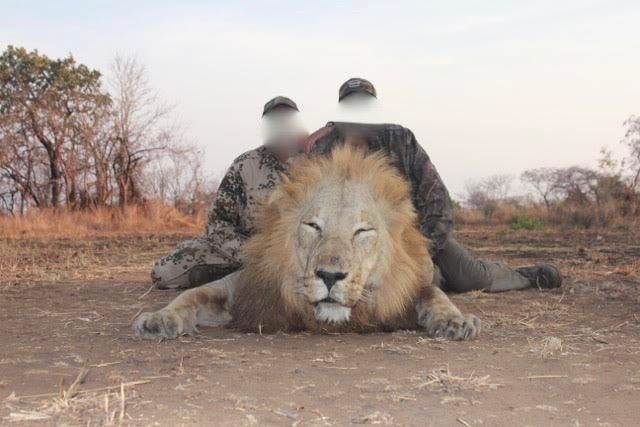
Long before today's hunters began planning safaris online, Tanzania had already earned its place in the story of African lion hunting. The names have changed over the generations, from Tanganyika to modern Tanzania, but the country's reputation for vast hunting areas, wild lions and traditional East African safaris has endured.
A reputation built over generations is not enough reason to cross the Atlantic today. American hunters considering Lion Hunting in Tanzania are making a serious commitment of time and money, and the question that matters is whether the country can still deliver the kind of lion safari that made it famous in the first place.
The answer lies in what Tanzania has not made easy.
A lion safari here can unfold across enormous stretches of wild country where finding evidence of lions is only the beginning. Tracks may appear on a road before disappearing into the bush. A lion may visit a bait and never return, while another may be present in the hunting area but prove unsuitable to hunt. Finding a lion does not necessarily mean the search is over; the Professional Hunter must still be satisfied that the animal is a suitable mature male before a shot is considered.
Days can pass while the Professional Hunter and trackers gradually build a picture of which lions are moving through the concession and where an opportunity might eventually develop.
This is where Tanzania's old reputation meets the modern safari. The rifles, vehicles and communications may have changed, but successful Lion Hunts still depend on understanding an animal that moves according to his own instincts. A wild lion does not know how far anyone has travelled, how many days have been booked or how much the safari costs.
This is why Tanzania still holds such a special place in lion hunting. The country offers no promise that the hunt will unfold according to plan. What it offers is the opportunity to pursue a mature wild lion across the kind of country where patience, good trackers, an experienced Professional Hunter and time still matter.
That is a reputation worth examining more closely.
The Reputation Was Built on Wild Country
Tanzania's reputation for lion hunting has never rested on lions alone. The country surrounding them has always been part of the story.
Lion hunting was once associated with a much broader sweep of Africa. Kenya played a role in the early East African safari era, while Uganda also formed part of the continent's historic hunting landscape. Farther south, Mozambique developed its own reputation for wild lion country and continues to offer lion hunting today. Political change, conservation policy and the closure of hunting in countries such as Kenya gradually redrew that map.
Tanzania remained one of the places where the tradition of pursuing wild lions has continued. That continuity matters. The country's reputation was inherited from the old East African safari era, but it has survived because Tanzania retained something increasingly difficult to find: extensive wild country where lions still move through functioning ecosystems alongside buffalo, elephant, leopard and abundant plains game.
Some of Tanzania's established hunting areas cover immense tracts of wilderness, and that scale changes the nature of a lion safari. Lions are free to move across large territories in response to prey, water, competition from other lions and the presence of prides. A male that leaves tracks in one area today may be miles away tomorrow, and there is no guarantee that a lion visiting a bait will settle into a predictable routine.
Hunting in Tanzania can feel very different from pursuing game in smaller or more intensively managed areas. The Professional Hunter and trackers are working within a much larger landscape, constantly gathering information from tracks, sightings, calls heard during the night and activity around baits. Individually, these clues may mean very little. Over several days, they can begin to reveal which lions are moving through the hunting area.
The Lion You Find May Not Be the Lion You Hunt
Even then, finding a lion is not enough.
Tanzania's requirements surrounding the harvest of lions mean the objective is to identify a suitable mature male. A younger lion may provide an exciting encounter and still be passed. A male may appear impressive at first glance but require further assessment by the Professional Hunter. Sometimes the right decision is simply to watch the lion walk away.
After days of searching, seeing a lion can feel as though the opportunity has finally arrived. Locating lions is only one part of the process. Identifying the right lion and being prepared to pass those that do not meet the required standard is what ultimately matters.
Timing adds another challenge. Lion hunting in Tanzania is restricted to daylight hunting hours, beginning one hour after sunrise and ending one hour before sunset. A suitable lion may be feeding on a bait during the night or still be there at first light yet move off before the legal hunting period begins. Equally, a lion arriving late in the day can leave very little time for an opportunity to develop.
The animal must be suitable, the Professional Hunter must be satisfied, and the opportunity still must present itself within the permitted hunting hours.
This combination of space, selectivity and timing helps explain why Tanzania still carries such weight in the world of lion hunting. The country gives lions room to behave like wild lions, while success still depends on patience, judgment and enough time to let the safari unfold.
Tanzania's reputation was not built because the country made lion hunting easy. It was built because Tanzania had the country and the conditions to make lion hunting real.
The Lion Begins to Control the Safari
A Tanzania lion safari rarely follows a daily schedule. Once signs of a promising male begin to appear, the priorities can change quickly.
A bait that was untouched yesterday may suddenly have been hit during the night. Fresh tracks on a road can send the hunting team in a completely different direction. A lion heard calling before dawn may confirm what the trackers have suspected for several days, while another animal that appeared to be settling into an area can simply disappear.
Gradually, the lion begins to dictate the course of the safari.
Routes are planned around checking baits and looking for fresh spoor. Information gathered the previous day influences where the vehicle heads the following morning. Other hunting opportunities may develop along the way, but somewhere in the background there is always the question of what the lion has done since the team last checked.
This is where patience becomes more than simply waiting. Every track, bait visit and distant call adds another piece to the picture. Some clues lead nowhere. Others can keep the team working the same area for days, only for the lion to change his movements and force the entire process to begin again somewhere else.
The restricted hunting hours add yet another layer. A trail camera may confirm that a mature male is visiting regularly, but if he consistently arrives after dark and leaves before the legal hunting period begins, knowing exactly where he is offers little immediate advantage. The challenge becomes finding an opportunity when the lion, the timing and the conditions finally come together.
Meanwhile, the rest of Tanzania's wilderness continues around the hunt. Buffalo tracks may cross the same roads used to check baits, elephants can move through the area, and leopard may visit or investigate activity intended for lions. It is one reason a lion safari here can feel connected to the broader tradition of Big Five Hunting rather than like the pursuit of a single animal in isolation.
Days can begin to revolve around an animal that may rarely be seen.
Twenty-One Days Changes the Way You Hunt
Time feels different on a long lion safari.
At the beginning, there can be a natural temptation to measure progress by what happens each day. Was a bait hit? Were fresh tracks found? Did the cameras reveal anything during the night? After several days in Tanzania's wilderness, that way of measuring success begins to change.
Baits need to be established and checked. Tracks begin to reveal which males are moving through an area. A lion that appears promising may disappear for several days before returning, while another may suddenly arrive where little activity had been expected.
A safari built around twenty-one days allows that uncertainty to unfold rather than forcing every decision into a narrow window. In some circumstances, particularly where lion is combined with other major species or a safari involves especially remote hunting country, the commitment can extend even further, with twenty-eight-day safaris also taking place.
That amount of time changes the way the days are approached.
There is less temptation to treat every fresh track as the last opportunity or every silent bait as a failure. The Professional Hunter and trackers have time to build knowledge of the area, adjust their strategy and follow developments that may take days rather than hours to become meaningful.
It also creates room for the unexpected. A lion that seemed to be the focus of the safari may prove unsuitable. Another may begin appearing in a completely different part of the concession. Weather can change movements. Elephants may disturb an area. Hyenas can interfere with baits. Sometimes the plan that looked promising in the morning has been completely abandoned by afternoon.
As the days accumulate, the safari becomes less about forcing an outcome and more about being ready when the right opportunity finally develops.
That is one of the differences between booking a lion safari and simply adding another trophy to a hunting itinerary. Tanzania asks for a considerable investment of time, and there is no guarantee that every day will produce visible progress. Yet those apparently uneventful days are often when the hunting team is learning the most.
By the time a mature lion finally presents the right opportunity, the moment may represent weeks of work that began long before he was ever seen.
And that is perhaps one of the reasons a Tanzania lion safari remains such a serious undertaking. Twenty-one days does not make the hunt easier. It simply gives the hunt enough time to become what it needs to be.
The Lion Is Not the Only Dangerous Game Out There
A lion may be the reason the safari was booked, but he is rarely the only dangerous animal occupying the country around camp.
Tanzania's great hunting areas support complex wildlife communities, and weeks spent searching for a mature lion can bring constant reminders of what else shares the landscape. Buffalo may leave fresh spoor across a road travelled that morning. Elephant can move through an area being worked for lion, while leopard and hyena may interfere with baits or reveal their presence without ever being clearly seen.
Buffalo are particularly relevant in lion country. Where large herds move through an area, lions may follow or spend time nearby, looking for opportunities to take calves, weakened animals or occasionally tackle adult buffalo. The same country that produces exceptional Cape Buffalo Hunts can therefore also provide important habitat and prey for the lions moving through it. Finding fresh buffalo sign may tell one story to a buffalo hunter and quite another to a team trying to understand where a mature lion might be spending his time.
This is what gives Tanzania's Dangerous Game Hunts their distinctive character. The safari is taking place within a functioning wilderness rather than around a single species, and what happens elsewhere in that ecosystem can influence the lion hunt itself.
There is also something different about spending several weeks in country where encounters with dangerous animals are part of everyday life. A set of buffalo tracks may change how an area is approached on foot. Fresh elephant sign can demand greater awareness from everyone in the hunting team. A lion calling somewhere beyond camp after dark is a reminder that the animal being pursued during daylight is moving through the same country while everyone sleeps.
None of this guarantees a more successful lion hunt. It does, however, help explain why Tanzania has retained the atmosphere of a traditional East African safari. Lion may be the priority, but the hunt unfolds within something much larger.
And after three weeks in that country, it can become difficult to separate the lion from the wilderness that made the hunt possible in the first place.
Does Tanzania Still Deserve Its Lion Hunting Reputation?
Tanzania's reputation for lion hunting was built long before the modern safari industry took shape. Generations have passed, hunting regulations have changed and much of Africa's historic lion-hunting map looks very different today. Yet Tanzania has retained something that cannot easily be recreated: vast hunting areas where wild lions still move through country shared with buffalo, elephant, leopard and countless other species.
Even a safari lasting several weeks offers no guarantee that events will unfold according to plan. Perhaps that is precisely why Tanzania still matters. The country asks for time and patience. It requires good judgment from the Professional Hunter and trackers, and sometimes the most important decision of the safari is the decision not to take a lion.
Those realities may not appeal to everyone. But anyone drawn to the tradition of pursuing a mature wild lion in genuinely wild African country will understand why Tanzania continues to occupy such a prominent place in the story of lion hunting.
The old East African safari era belongs to history, and there is little value in pretending otherwise. Tanzania's modern lion safaris operate in a different world, under regulations and expectations that earlier generations of hunters would barely recognize.
The fundamental challenge remains remarkably familiar.
Somewhere across an enormous stretch of Tanzania's wilderness, a mature lion is moving according to his own instincts. Finding him is difficult. Finding the right one is harder. And even then, everything still has to come together before an opportunity presents itself.
That is why Tanzania's lion-hunting reputation has endured.
It was never simply about having lions. It was about having the country in which lions could remain wild.
Frequently Asked Questions
Why is Tanzania famous for lion hunting?
Tanzania has been associated with lion hunting since the early East African safari era, but its modern reputation rests largely on the scale and wild character of its hunting areas. Lions move through extensive ecosystems shared with buffalo, elephant, leopard and other wildlife, while selective harvest requirements place the emphasis on suitable mature males. This combination of history, wilderness and demanding hunting conditions has helped Tanzania retain its position as one of Africa's best-known lion hunting destinations.
How long is a lion hunting safari in Tanzania?
Lion hunting in Tanzania generally requires a substantial commitment of time, with 21-day safaris commonly associated with hunting lion and certain other major species. In some circumstances, longer safaris of up to 28 days may also take place, particularly when multiple species are being pursued. Hunters should confirm current safari requirements and the exact number of hunting days with their outfitter before booking.
How is a suitable mature lion identified in Tanzania?
Tanzania uses age-based criteria as part of its approach to the selective harvest of male lions, with the objective of focusing hunting on mature animals. Determining whether a lion is suitable requires careful assessment by an experienced Professional Hunter, who may consider several physical characteristics rather than relying on a single feature. Current legal requirements should always be confirmed before the safari, as regulations can change.
Can lions be hunted at night in Tanzania?
No. Lion hunting in Tanzania is restricted to permitted daylight hunting hours. This can add considerably to the challenge because lions may visit baits or move through an area predominantly at night. A mature male may be regularly recorded on a trail camera yet consistently leave before legal hunting begins, meaning his presence alone does not guarantee an opportunity.
How are lions hunted in Tanzania?
Baiting is one of the established methods used to hunt lions in Tanzania, with the Professional Hunter and trackers looking for signs of lion activity and monitoring suitable areas as the safari develops. Tracks, calls, bait activity and, where used, trail cameras can all help build a picture of which lions are moving through the hunting area. The process can take considerable time, particularly when the objective is to identify a suitable mature male rather than simply locate any lion.
Can a Tanzania lion safari be combined with other dangerous game?
Depending on the hunting area, available quota and current regulations, a lion safari may form part of a broader dangerous-game hunt. Tanzania is renowned for species including Cape buffalo, elephant and leopard, although availability varies significantly between concessions. Anyone planning a combination safari should decide on their priority species before booking and confirm that the chosen hunting area offers realistic opportunities for each animal.
Search from our range of Hunts across various popular destinations in Africa.
Book Your Hunt