Designed by Hunters, for Hunters

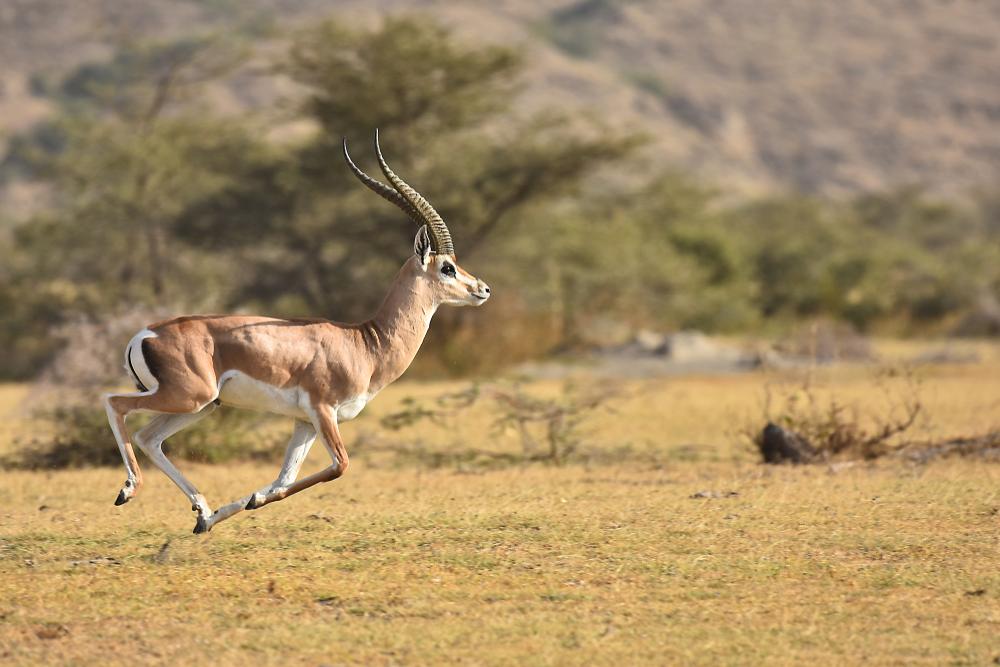
Gazelles are among Africa's most iconic antelope species and have long been associated with the open plains and vast landscapes of East Africa. While many hunters focus on larger plains game animals during their first safari, experienced hunters and collectors often develop a strong appreciation for the unique challenges that gazelles present.
Their exceptional eyesight, constant alertness, and preference for open country make them surprisingly difficult animals to hunt. Opportunities are often earned through careful stalking, patience, and precise shooting rather than simply closing the distance. Despite their relatively small size, mature gazelles are widely respected trophies among hunters who appreciate spot-and-stalk hunting in some of Africa's most spectacular environments.
Today, most gazelle hunting opportunities are found in East Africa and Ethiopia, where hunters can pursue several distinct species while enjoying traditional safari experiences and a remarkable diversity of wildlife. Many of these hunts take place alongside other classic Plains Game Hunts, creating opportunities to build a truly unique African trophy collection.
Whether pursuing a Thomson's gazelle on the plains of Tanzania, a Grant's gazelle in classic East African safari country, or a Soemmerring's gazelle in Ethiopia, these elegant antelope remain some of the most distinctive trophies available to African hunters.
Gazelles are rarely the primary target of a hunter's first African safari. More often, they appeal to hunters who have already experienced Africa and are looking to pursue species that offer a different challenge from the continent's larger antelope.
Part of that appeal lies in the way gazelles are hunted. Living in open country with little cover, they rely heavily on their eyesight and awareness to detect danger. Successful stalks often require careful planning, patient movement, and the ability to take accurate shots under field conditions.
Gazelles also occupy some of Africa's most famous hunting landscapes. The open plains of East Africa have attracted hunters for generations, and many American hunters view species such as Thomson's gazelle and Grant's gazelle as part of the classic safari experience.
For collectors, the attraction goes even further. Several gazelle species are found only within limited parts of Africa, creating opportunities to pursue animals that cannot be added to a trophy collection anywhere else in the world. This exclusivity has helped make gazelles increasingly popular among hunters building specialized East African and Ethiopian species collections.
While they may not carry the horn length of a kudu or the size of an eland, gazelles possess something equally valuable: a unique combination of beauty, challenge, and rarity that continues to attract experienced African hunters.
While Africa is home to numerous gazelle species, only a handful are regularly pursued by international hunters. These animals are primarily associated with East Africa and Ethiopia, where they occupy some of the continent's most iconic hunting landscapes.
Grant's gazelle is one of Africa's largest and most recognizable gazelle species. Mature males carry impressive lyre-shaped horns and possess a noticeably larger frame than many other gazelles. Found primarily in East Africa, Grant's gazelles are particularly popular among hunters pursuing traditional safari species in Tanzania.
Many hunters regard Grant's gazelle as one of the continent's most attractive plains game animals. Their larger body size, striking markings, and elegant horn shape make them a prized addition to any East African trophy collection.
Smaller than Grant's gazelle but every bit as iconic, Thomson's gazelle is often considered one of the defining animals of the East African plains. Large herds can frequently be seen inhabiting open grasslands where their speed, alertness, and constant vigilance make them surprisingly challenging quarry.
Although smaller in stature, Thomson's gazelles remain highly sought-after by collectors. Their distinctive markings and close association with the classic East African safari have made them one of the most recognizable antelope species in Africa.
Soemmerring's gazelle occupies a very different niche within African hunting. Found primarily in Ethiopia and parts of the Horn of Africa, it is considered one of the continent's most desirable gazelle trophies among serious collectors.
Larger than Thomson's gazelle and carrying impressive horns, Soemmerring's gazelle attracts hunters seeking species that are unavailable across most of Africa. Limited distribution and strong regional identity have helped establish it as one of Ethiopia's signature plains game trophies.
Several other gazelle species occur across Africa, including Dorcas gazelle, Speke's gazelle, and Cuvier's gazelle. While these species are less commonly encountered by international hunters, they contribute to the remarkable diversity that has made gazelles such an important part of Africa's hunting heritage.
Grant's gazelle and Thomson's gazelle are often encountered in the same regions of East Africa, and hunters visiting Tanzania for the first time frequently confuse the two species. While they share many similarities, a closer look quickly reveals some important differences.
The most obvious distinction is size. Grant's gazelle is the larger of the two species, standing taller, carrying a heavier body, and generally appearing more robust. Mature males also tend to carry longer, heavier horns than Thomson's gazelles.
Thomson's gazelles are smaller, lighter, and often display a much more prominent black stripe running along the flank. This bold marking is one of the easiest ways to identify the species in the field and is often the first feature experienced hunters look for when glassing herds on the open plains.
The two species also differ slightly in appearance and character. Grant's gazelles often appear more elegant, with longer legs and a more elongated frame, while Thomson's gazelles possess the compact build and distinctive markings that have made them one of the most recognizable animals in East Africa.
From a hunting perspective, both are highly respected trophies. Some hunters prefer the larger size and heavier horns of Grant's gazelle, while others are drawn to Thomson's gazelle because of its iconic status and close association with the classic East African plains.
Many collectors eventually pursue both species. Although they share the same landscapes and are sometimes encountered on the same safari, each represents a unique trophy and an important part of East Africa's remarkable hunting heritage.
When hunters think of gazelle hunting in Africa, Tanzania is often the first destination that comes to mind. The country's vast open plains, traditional safari areas, and remarkable diversity of wildlife have made it one of the continent's premier destinations for pursuing gazelle species.
Many of Tanzania's most famous hunting regions support both Grant's gazelle and Thomson's gazelle, allowing hunters to pursue two of Africa's most recognizable gazelle species during the same safari. This combination is one of the reasons the country remains so attractive to collectors building an East African trophy collection.
Hunters considering a safari can learn more about available Tanzania Hunting Safaris, including opportunities to pursue gazelles alongside buffalo, eland, zebra, hartebeest, and a variety of other classic East African plains game species.
Beyond the trophies themselves, Tanzania offers something increasingly difficult to find elsewhere in the world: vast hunting areas where wildlife still moves across enormous landscapes largely unchanged from the days of the classic East African safari. For many hunters, that experience is every bit as valuable as the trophies taken along the way.
While Tanzania is often the first destination associated with gazelle hunting, Ethiopia occupies a special place among experienced African hunters and collectors. The country offers opportunities to pursue species that are rarely available elsewhere, making it one of the most distinctive hunting destinations on the continent.
Among the most sought-after is the Soemmerring's gazelle, a striking species found primarily within Ethiopia and parts of the Horn of Africa. Its limited distribution and strong regional identity have helped establish it as one of the country's signature plains game trophies.
Ethiopia's appeal extends beyond a single species. Many hunters travel there specifically to pursue animals that cannot easily be hunted elsewhere in Africa, creating opportunities to add genuinely unique trophies to an African collection.
Hunters interested in these opportunities can learn more about Ethiopia Hunting Safaris, including the specialized plains game species that have attracted collectors to the region for generations.
For hunters who have already experienced the traditional East African safari, Ethiopia often represents the next chapter. The combination of unique species, diverse landscapes, and limited hunting opportunities creates a destination unlike anywhere else in Africa.
Gazelles may not carry the horn length of a kudu or the mass of an eland, but experienced hunters know exactly what separates an average trophy from an exceptional one. As with many African antelope species, the best gazelles are judged on far more than measurements alone.
Age is often the first thing hunters notice. Mature males develop thicker necks, heavier bodies, and a more dominant appearance than younger animals. Older gazelles frequently carry scars and signs of wear that reflect years spent competing with rival males and avoiding predators on the open plains.
Horn quality is equally important. Hunters typically look for good length, attractive symmetry, and strong lyre-shaped horn formation. However, one characteristic that often distinguishes an exceptional gazelle is horn mass. Heavy horn bases can dramatically change the appearance of a trophy, giving the animal a far more impressive and mature look in the field.
The difference can be striking. A typical mature gazelle may appear elegant and refined, while a truly exceptional old male with heavy bases and strong horn development immediately stands out from the rest of the herd. These are often the animals that stop hunters mid-glass and prompt a second look through the binoculars.
Character also plays a role. Some collectors are drawn to perfectly symmetrical trophies, while others appreciate old males carrying worn horn tips, scars, or other signs of age. Much like many of Africa's most respected plains game species, the trophies that are remembered longest are often those with a story written across them.
A great gazelle trophy is not simply a matter of inches. It is the combination of maturity, horn quality, character, and presence that makes an old East African gazelle stand out from the crowd.
Although gazelles are highly sought-after trophies, few hunters travel to Africa with the intention of hunting only a single gazelle species. Most safaris are built around a combination of animals that occupy the same open plains, river valleys, and savannah habitats.
In Tanzania, hunters pursuing Grant's gazelle or Thomson's gazelle will often encounter excellent opportunities for Zebra Hunts, Wildebeest Hunts, and various kudu species. Depending on the safari area, hunters may have opportunities to pursue both greater and lesser kudu during the same safari. Many of these species share the same landscapes and naturally complement one another on a traditional East African safari.
This is one of the reasons gazelles fit so well into a broader trophy collection. A hunter may arrive with a particular gazelle species high on the wish list, only to discover opportunities for several other iconic East African plains game animals during the same safari.
The appeal extends beyond simply adding numbers to a trophy room. Many hunters enjoy pursuing species that occupy different habitats and require different hunting approaches. Tracking kudu through thicker cover, glassing for zebra on open plains, and stalking a mature gazelle across short grass country can all occur during the same hunt.
As a result, gazelles are often part of a much larger safari experience rather than the sole objective. The combination of species available in East Africa is one of the reasons the region continues to attract experienced hunters from around the world.
The best gazelle hunting opportunities are generally found in East Africa and Ethiopia. Tanzania is particularly well known for Grant's gazelle and Thomson's gazelle, while Ethiopia offers opportunities to pursue unique species such as Soemmerring's gazelle that are rarely available elsewhere.
Grant's gazelle is the larger of the two species, with a heavier body, longer legs, and generally larger horns. Thomson's gazelle is smaller and is easily identified by the bold black stripe running along its flank. Although they often occur in the same regions of East Africa, most collectors consider them distinct trophies and many eventually pursue both species.
Grant's gazelle and Soemmerring's gazelle are generally regarded as the largest gazelle species commonly hunted by international hunters. Both are highly respected trophies and offer a noticeably different appearance from the smaller Thomson's gazelle.
Yes. Despite their relatively small size, gazelles can be surprisingly challenging to hunt. Their exceptional eyesight, preference for open country, and constant alertness often make stalking within shooting range more difficult than many hunters expect.
In some areas, yes. Hunters visiting Tanzania may have opportunities to pursue both Grant's gazelle and Thomson's gazelle during the same safari. Species availability will always depend on the hunting area and the safari package being booked.
Gazelles are often hunted alongside Zebra Hunts, Wildebeest Hunts, kudu species, and a variety of other East African plains game animals. In some areas, hunters may also combine gazelle hunting with dangerous game safaris depending on the concession and available quotas.
Popular choices include the .243 Winchester, .270 Winchester, .308 Winchester, and .30-06 Springfield. Most hunters simply use the same rifle they are carrying for the remainder of the safari, particularly when pursuing multiple species during the same hunt.
Yes. American hunters regularly pursue gazelle species in Tanzania and Ethiopia as part of guided African safaris. All hunting should be conducted through licensed outfitters operating within the laws and regulations of the host country.
A quality gazelle trophy is typically judged by a combination of maturity, horn length, horn mass, symmetry, and overall character. Experienced hunters often place just as much value on heavy horn bases, distinctive markings, and signs of age as they do on measurements alone.
Although gazelles may appear similar at first glance, each species possesses unique characteristics, occupies different regions, and represents a distinct hunting achievement. Many collectors view Grant's gazelle, Thomson's gazelle, and Soemmerring's gazelle as separate milestones within a broader African trophy collection.
Most gazelle hunts are booked as part of a broader African safari rather than as standalone hunts. Depending on the destination, hunters may combine gazelles with plains game, specialty species, or dangerous game. Hunters interested in exploring available safari opportunities can browse our Hunting Trips page for current hunting packages and destinations across Africa.
Search from our range of Hunts across various popular destinations in Africa.

Book Your Hunt