
13-Day Dwarf Buffalo, Sitatunga & Forest Game Safari in Gabon
Booking Season: 2026
Hunt Difficulty: Difficult

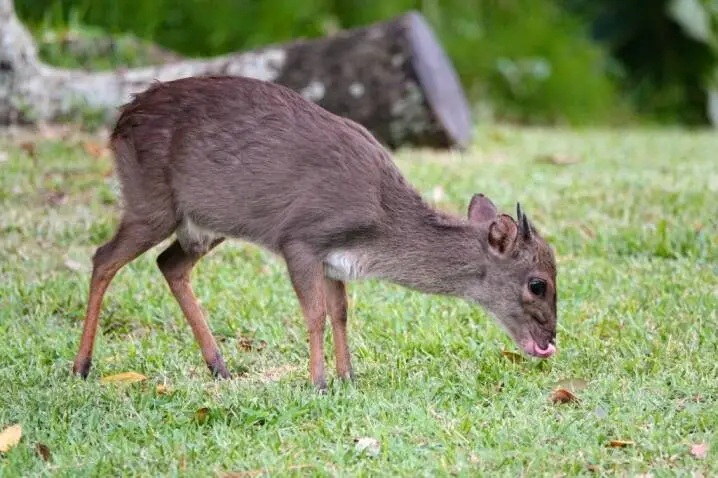
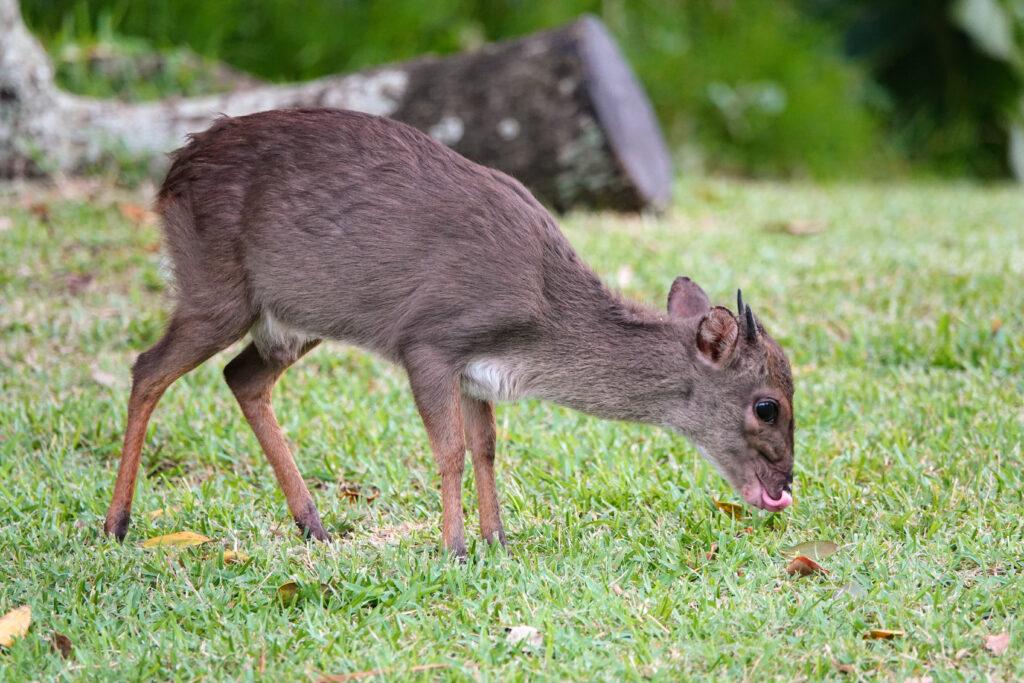
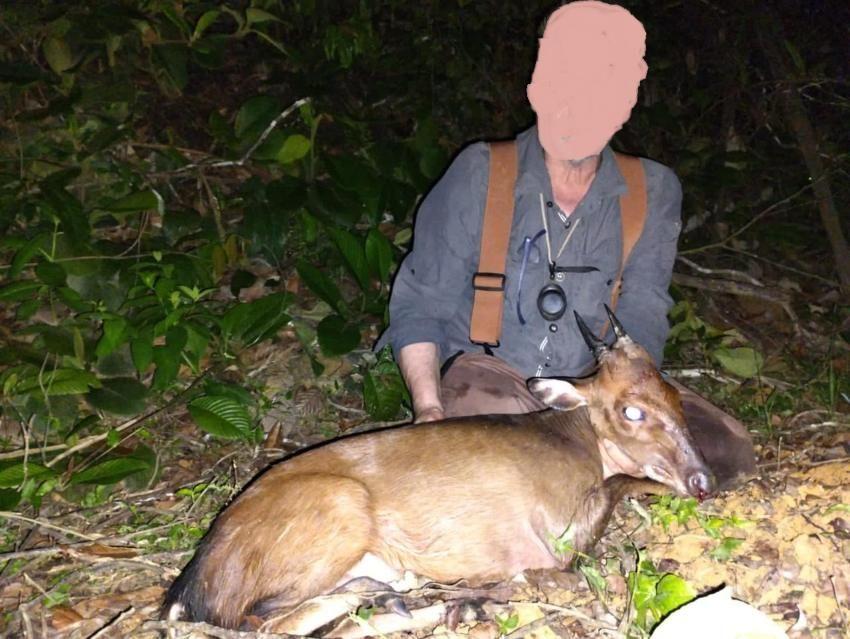
Blue duiker are the antelope you are most likely to see in Gabon’s rainforest. That does not make them predictable—or easy.
They appear often enough to stay on a hunter’s mind, but rarely long enough to turn a sighting into a result. Over time, the pattern becomes clear: more encounters, but no guarantee of success.
Blue duiker are among the most commonly encountered antelope in Gabon, not because they are easier to hunt, but because they occupy the same constrained spaces hunters are forced to use.
Movement in rainforest terrain is dictated by access. Hunters follow narrow paths, old logging tracks, and natural openings where visibility improves slightly. Blue duiker use these same corridors. They move along edges, transition zones, and breaks in vegetation where movement is possible, which naturally increases the likelihood of crossing paths. Over the course of a typical Gabon hunting safari, it is not unusual to have multiple blue duiker sightings in a single day, particularly when covering ground consistently.
This creates a common misconception—especially among first-time hunters in Central Africa—that higher encounter rates translate into better odds of success. They do not. What increases is exposure, not opportunity.
Available Blue Duiker Hunts
13-Day Dwarf Buffalo, Sitatunga & Forest Game Safari in Gabon
Booking Season: 2026
Hunt Difficulty: Difficult
10-Day Gabon Duiker and Forest Game Safari
Booking Season: 2026
Hunt Difficulty: Difficult
Blue duiker encounters are defined by speed and limitation. Most follow a familiar sequence: a brief movement in the undergrowth, a partial outline between trees, and then immediate disappearance back into cover. Even when an animal is seen clearly, the window to act is extremely short—often no more than a few seconds.
There is rarely a second chance. Unlike open-country hunting, there is no ability to track visually, reposition, or wait for a better presentation. The forest closes the moment as quickly as it creates it. This is where blue duiker differ from rarer species. With less frequently encountered animals, the challenge is often time in the field and locating the animal in the first place. With blue duiker, the encounter happens—but the limitation is converting it. The pressure shifts from finding to executing.
That distinction is critical for understanding success rates in Gabon.
For American hunters—particularly those accustomed to whitetail, mule deer, or open-country plains game—blue duiker hunting represents a fundamental shift in how opportunities develop.
There are no long sightlines. No glassing. No structured setups. Encounters happen inside confined space, often at close range, with no warning and no buildup. The instinct to wait for a clearer view or a more comfortable shot, which is often rewarded in North American hunting, works against you here. In the rainforest, hesitation usually ends the opportunity. This adjustment is not technical—it is behavioral. Hunters who adapt quickly to the pace and accept that not every variable can be controlled tend to perform better. Those expecting time to evaluate, reposition, or refine the shot often find that the moment has already passed.
Understanding this before entering the field is one of the most important factors in aligning expectations with reality.
Blue duiker are not limited to Gabon. Their range extends across much of Central and West Africa, including countries such as Cameroon, the Republic of Congo, and parts of the Democratic Republic of Congo. Across this range, they occupy similar environments—dense rainforest systems where movement is restricted and visibility is consistently limited.
While their distribution is broad, the way they are encountered does not change significantly from one country to another. The same constraints apply: short sightlines, brief encounters, and limited shooting opportunities. This means location matters less than environment. Gabon remains one of the more consistent destinations for hunters pursuing rainforest species due to the structure of its concessions and the way safaris are organized. For a broader overview of how these hunts are conducted, see our guide to hunting in Gabon.
Blue duiker can be encountered throughout the year in Gabon, but conditions in the forest shift depending on rainfall, and those shifts affect how opportunities develop.
During drier periods, movement through concessions becomes more controlled. Tracks hold better, access improves, and visibility—while always limited—is slightly more consistent. Hunters tend to cover ground more efficiently, which increases overall exposure to animals moving through established corridors. In wetter periods, the forest closes in. Vegetation thickens, ground conditions slow movement, and already narrow sightlines become even more restricted. Blue duiker are still present and active, but encounters become shorter and more reactive, with even less time to interpret what is seen.
There is no clearly defined “best” time in the way open-country hunting often allows. Instead, timing influences how manageable the environment is. Most hunters find that slightly drier conditions offer a more workable balance between movement, visibility, and opportunity—without changing the fundamental nature of the hunt.
The assumption that more encounters lead to better outcomes does not hold with blue duiker. Blue duiker are seen more often than most forest antelope, but each encounter presents the same constraint. Their size leaves little margin for error, their movement is immediate, and the environment rarely provides a clear or complete view. Repetition does not simplify the problem.
It is possible to see multiple animals over the course of a safari and not take a single one. Each opportunity is isolated. There is no progression from one encounter to the next—only the same requirement repeated under pressure: recognize the moment, commit to the shot, and execute without delay. Time in the field reinforces this rather than easing it. The more encounters a hunter has, the clearer it becomes how limited each one really is.
Shot placement on blue duiker is dictated by conditions rather than preference.
Visibility is often incomplete. The animal may be partially obscured, moving through cover, or visible only for a brief moment between openings. What presents itself is rarely a full, clear profile, but rather a limited view that must be interpreted immediately. There is no time to adjust or wait for improvement. The decision to shoot and the act itself happen in one continuous movement. Any hesitation usually results in a lost opportunity.
Broadside remains the most reliable presentation, but it cannot be expected. Consistent results depend on the ability to assess partial angles quickly and place a controlled shot within the constraints of the moment. For a more detailed breakdown, see our guide to shot placement for small antelope.
Blue duiker do not define how a safari in Gabon is planned, but they are part of what unfolds in the field.
Most hunts are built around primary species that require sustained focus and deliberate effort in close quarters. Time is spent accordingly. Movement is slow, controlled, and shaped by terrain rather than by the option to pursue different animals. Blue duiker appear during that process. They are seen while covering ground, moving between areas, or passing through sections of forest where visibility briefly opens. There is no separate effort directed toward them, and repeated sightings do not change how the hunt is conducted.
Blue duiker are best understood as part of the overall experience rather than a defined objective. The value lies in being ready when a brief opportunity presents itself, not in expecting consistency. This reflects the structure of a Gabon safari more broadly. Effort is focused, movement is dictated by the environment, and outcomes—across all species—are shaped by time in the field and the conditions on the ground, not by a fixed plan.
Blue duiker do not determine how a safari is structured, but they do influence how it unfolds.
They are encountered often enough to require constant awareness, appearing during periods otherwise focused on primary species. Those primary hunts—typically larger, more demanding animals—fall within the broader category of dangerous game hunts, where effort and attention are directed with intent. Blue duiker exist within that same system without shaping it.
They are not actively pursued, yet they remain one of the most likely animals to present an opportunity at any point. In classification, they sit closer to plains game hunts, although the environment and method of hunting differ significantly from open-country conditions. For a broader understanding of how these safaris are structured, see our guide to hunting in Gabon.
One of the most common assumptions is that frequent sightings improve the likelihood of success. In Gabon’s rainforest, that assumption does not hold.
Blue duiker are encountered more often than most forest antelope, but the conditions under which they are seen remain unchanged. Visibility is limited, angles are rarely complete, and the time available to act is measured in seconds. Whether a hunter sees multiple animals in a single day or goes several days without an encounter, the outcome is governed by the same constraint—whether a usable opportunity presents itself at all.
This is why success rates for blue duiker hunting are difficult to define in simple terms. Encounters are not the limiting factor. Execution, under pressure and within extremely narrow windows, is. Understanding this early is important. Blue duiker are not a volume-based species. They are an opportunistic one, and results depend far more on timing and readiness than on how often animals are seen.
Blue duiker hunting tends to appeal to hunters who are specifically interested in how hunting operates in dense Central African rainforest environments.
It suits those who are comfortable working within tight physical constraints, where visibility rarely extends beyond a few meters and where decisions must be made without the benefit of time or complete information. The ability to recognize a viable shot quickly—and act on it without hesitation—is more important here than extended tracking, glassing, or planned setups. For hunters researching what to expect from a Gabon hunting safari, this species provides a reliable reference point. It reflects the pace of the forest, the limitations of the terrain, and the way opportunities develop across most species encountered in this environment.
Those who value process, adaptability, and situational awareness tend to align well with this type of hunting.
This type of hunting is less suited to those expecting a structured or outcome-driven experience.
Blue duiker are often described as “common,” but that description relates to encounter frequency, not ease of hunting. Without the ability to respond immediately to a brief and often imperfect opportunity, repeated sightings do not translate into success. Hunters looking for clear shot presentation, the ability to evaluate animals over time, or a predictable progression toward a defined result may find the environment restrictive. The forest does not allow for controlled setups or extended decision-making. Opportunities appear without warning and are gone just as quickly.
For those comparing different types of African hunting safaris, this distinction matters. Rainforest hunting in Gabon operates on a fundamentally different timeline than open-country hunts, and species like blue duiker highlight that difference more clearly than most.
Are blue duiker common in Gabon?
Yes. Blue duiker are one of the most widely distributed and frequently encountered forest antelope in Gabon’s rainforest systems. Hunters typically see more blue duiker than any other antelope species during the course of a safari, although sightings remain brief and highly situational.
Does seeing more blue duiker improve your chances of success?
Not necessarily. While encounter rates are higher, success is not determined by how often animals are seen, but by whether a clear and actionable opportunity presents itself. Many sightings do not develop into shot opportunities due to limited visibility and extremely short time frames.
Can you specifically target blue duiker on a Gabon hunting safari?
Blue duiker are not usually hunted as a primary objective. Most are taken opportunistically while moving through forest terrain during a broader safari. Although they are common, the conditions in which they are encountered make deliberate targeting unreliable.
How difficult is blue duiker hunting in dense rainforest conditions?
Blue duiker hunting is considered technically challenging. The combination of small body size, fast movement, and restricted shooting lanes means that even at close range, shot execution must be immediate and precise. Difficulty comes from the environment as much as the animal itself.
What are the chances of successfully hunting a blue duiker in Gabon?
Chances are higher than with less frequently encountered forest species, but still far from guaranteed. Hunters may have multiple sightings over several days without a clear shot opportunity. Success depends on timing, positioning, and the ability to react instantly when a narrow window appears.
What caliber or rifle setup is best for blue duiker hunting?
Most blue duiker are taken at close range in dense vegetation, so rifles suited to quick handling and fast target acquisition are preferred. Shot placement is more critical than caliber choice, as opportunities are brief and angles are often limited.
Where do blue duiker live in Gabon?
Blue duiker inhabit dense rainforest environments, including thick undergrowth, forest edges, and natural movement corridors. They tend to move through the same constrained spaces hunters use, which is why encounters are more frequent than with other species.
How big does a blue duiker get?
Blue duiker are one of the smallest antelope species, typically weighing only a few kilograms. Their small size is a major factor in the difficulty of achieving clean, effective shot placement in forest conditions.
Is blue duiker hunting worth it in Gabon?
For hunters interested in understanding how rainforest hunting actually unfolds, blue duiker offer one of the most realistic and consistent points of engagement. While not typically a primary target, they represent the pace, pressure, and unpredictability that define hunting in this environment.
Search from our range of Hunts across various popular destinations in Africa.
Book Your Hunt