10-Day African Plains Game Safari in North West Province, SA
Booking Season: 2026
Hunt Difficulty: Moderate

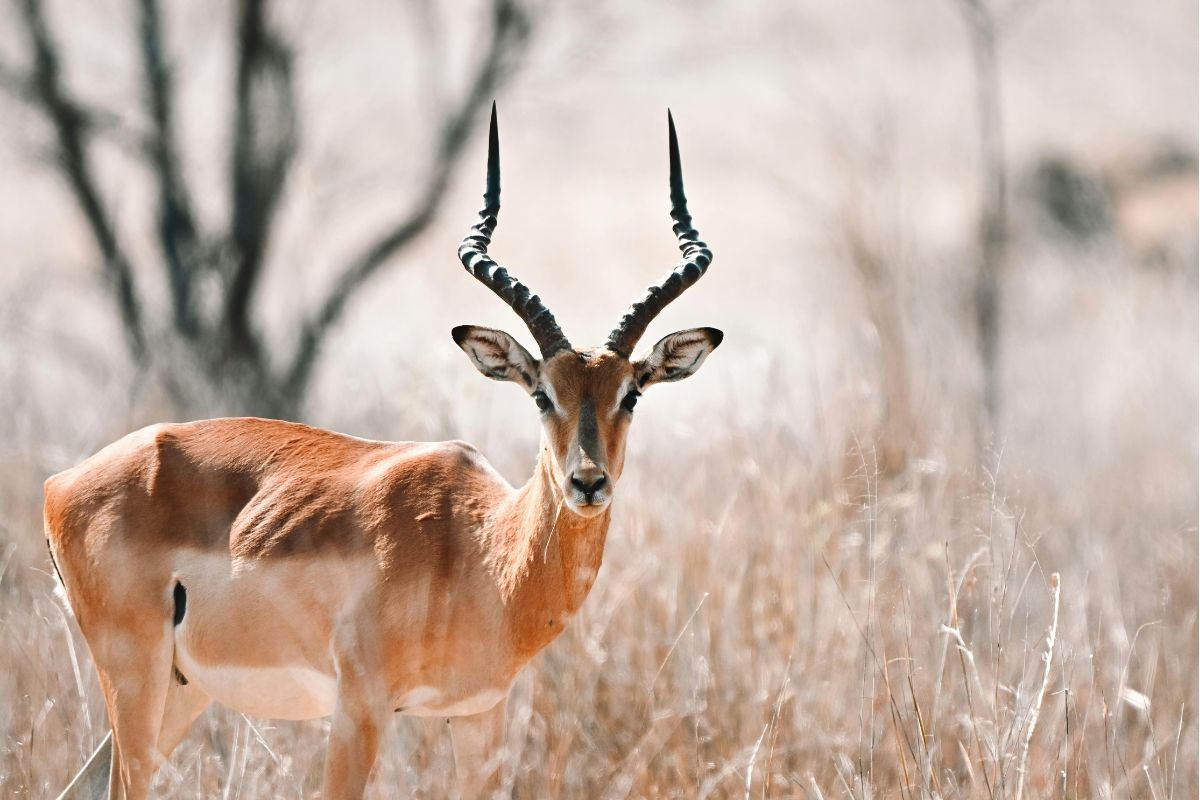
Impala hunting is often considered the starting point for many hunters traveling to Africa. Widely available, affordable, and found across a range of habitats, impala offer a balanced hunting experience that combines accessibility with just enough challenge to make the hunt rewarding.
For many, an impala is not just a first trophy—but the beginning of a broader plains game safari.Africa has many huntable plains game species available throughout the continent, but one that stands out head (or maybe that should be “horns”) above the rest is the Impala.
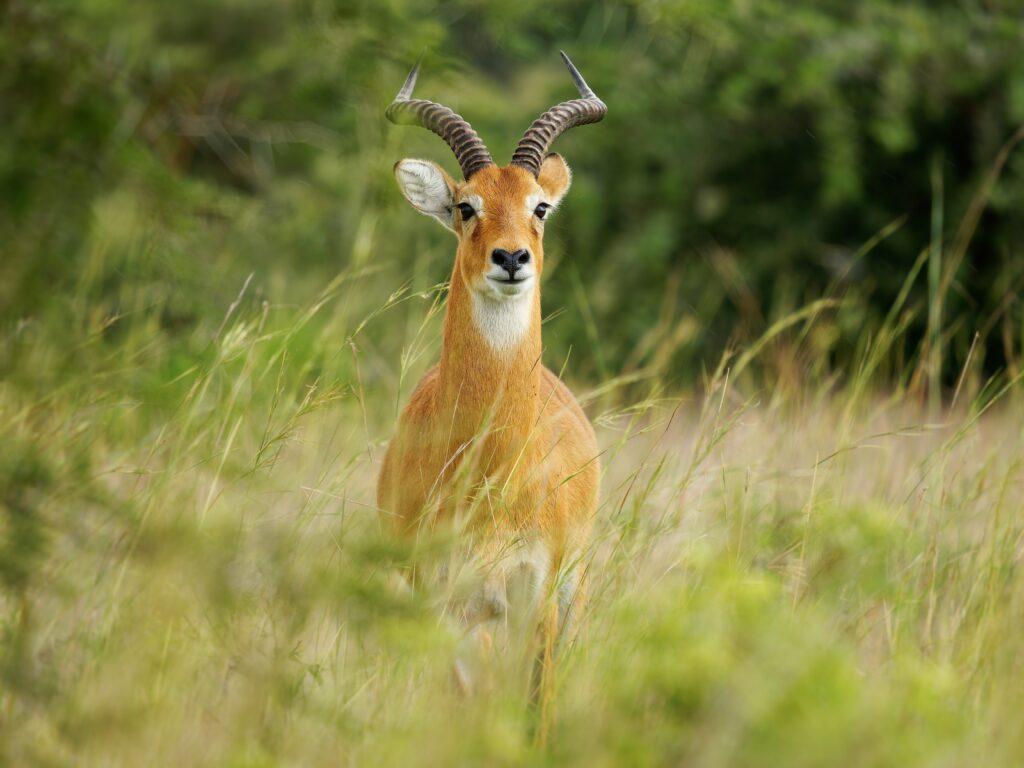
The Impala is a popular and graceful medium-sized antelope found throughout the African continent. It’s often referred to as the “McDonald’s of the bush,” firstly due to the “M” on its behind, as well as an abundant game species, with the joke being that you “find one on every corner in the bush.” Despite this, this African plains game antelope remains a sought-after trophy.
This antelope, with its beautiful lyre-shaped horns, is a trophy for both novice and experienced hunters, offering a challenging safari due to its keen senses of smell, hearing, and sight, together with the tendency to herd together when alarmed or scared.
There are two Impala subspecies, namely the Black-faced Impala, and the Common Impala, with the Common Impala having color variants due to selective breeding. These include the Saddle-back Impala, White-flanked Impala, Black Impala, and the Dappled Impala, all bred within South Africa.
While the Black-faced Impala is confined to northwestern Namibia and sections of Angola, the Common Impala is found in numerous African countries such as Angola, Botswana, Kenya, Malawi, Mozambique, Rwanda, South Africa, Tanzania, Uganda, Zambia, and Zimbabwe.
The Common Impala’s numbers are abundant, and the species has stable populations across the continent, while the Black-faced Impala’s numbers are decreasing, with less than 1,000 individuals in the wild.
Impala hunting forms part of African plains game hunting safaris and are hunted throughout Africa. The revenue from these hunts contribute to conservation, aiding local communities, and assisting in conserving the habitat and wildlife for generations to come.
Impala hunts form part of an African plains game package, with packages starting anywhere from 4-5 hunting days, depending on the number of animals included, the terrain, and region.
Available Impala Hunts
10-Day African Plains Game Safari in North West Province, SA
Booking Season: 2026
Hunt Difficulty: Moderate
South African Plains Game Hunt: Warthog, Blesbok, Zebra & Impala
Booking Season: 2026
Hunt Difficulty: Moderate
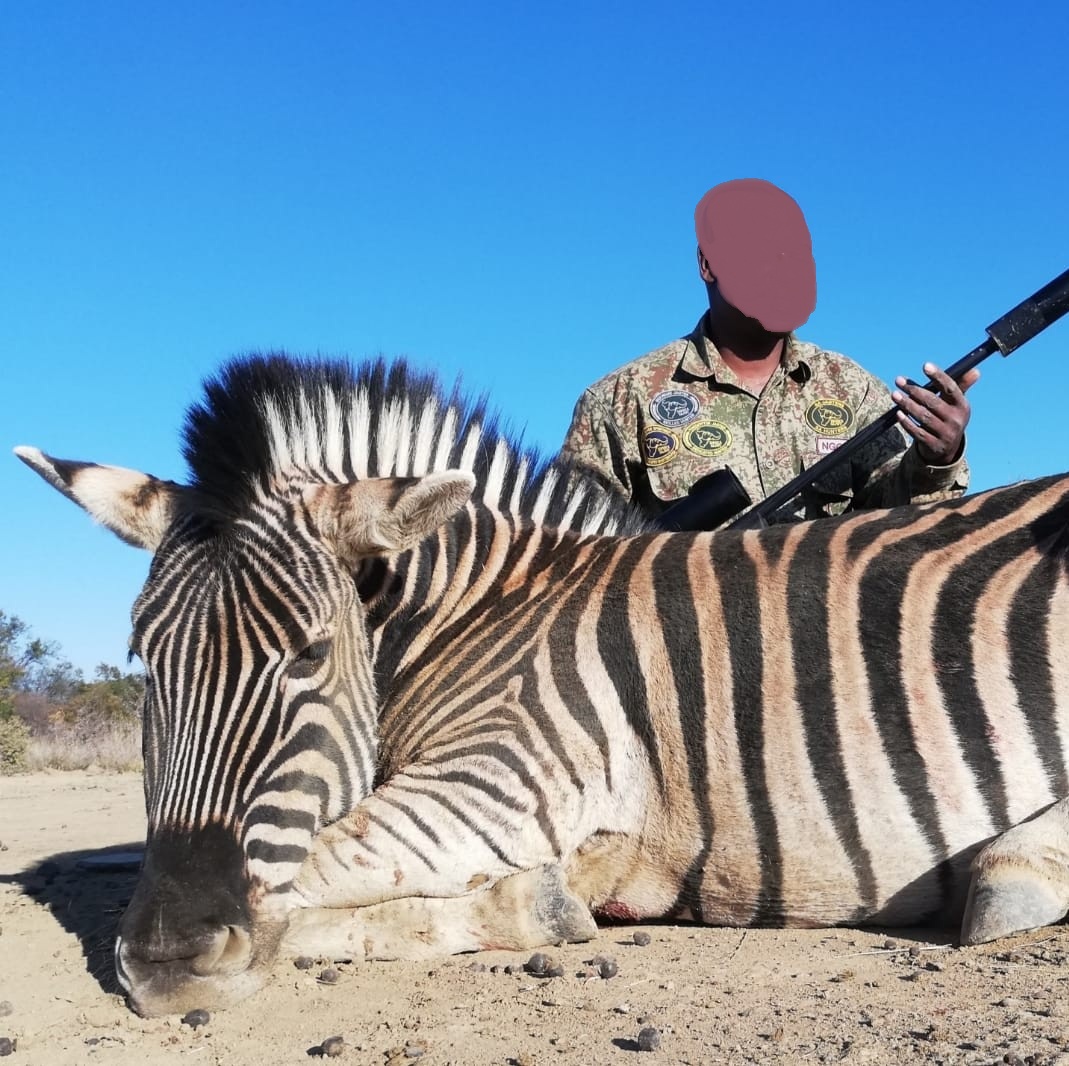
Hunt Eland, Zebra, Sable & 3 More Plains Game Species in SA
Booking Season: 2026
Hunt Difficulty: Moderate
Hunting Safari in SA 10 x Nights Plains Game Combination
Booking Season: 2025
Hunt Difficulty: Difficult

Plains Game Hunting in South Africa 5 Star Luxury 4 x 2
Booking Season: 2026
Hunt Difficulty: Moderate, Difficult
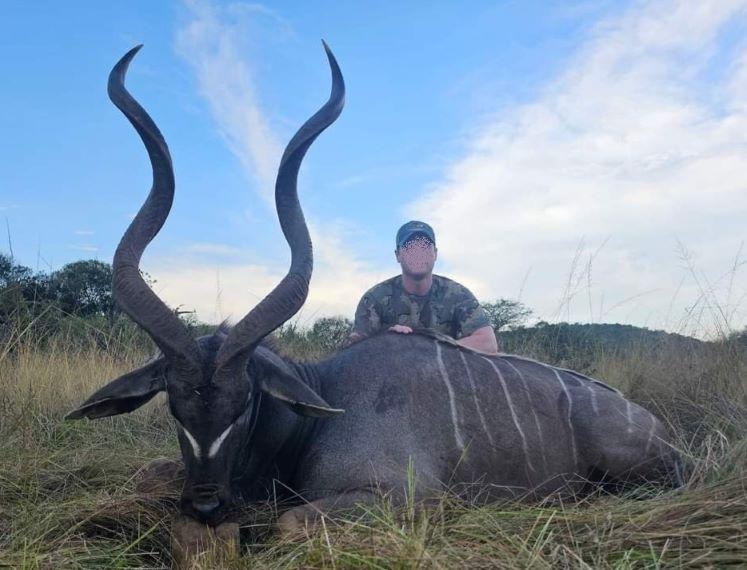
African Plains Game Safari in South Africa 6 Trophies KwaZulu Natal
Booking Season: 2026
Hunt Difficulty: Moderate
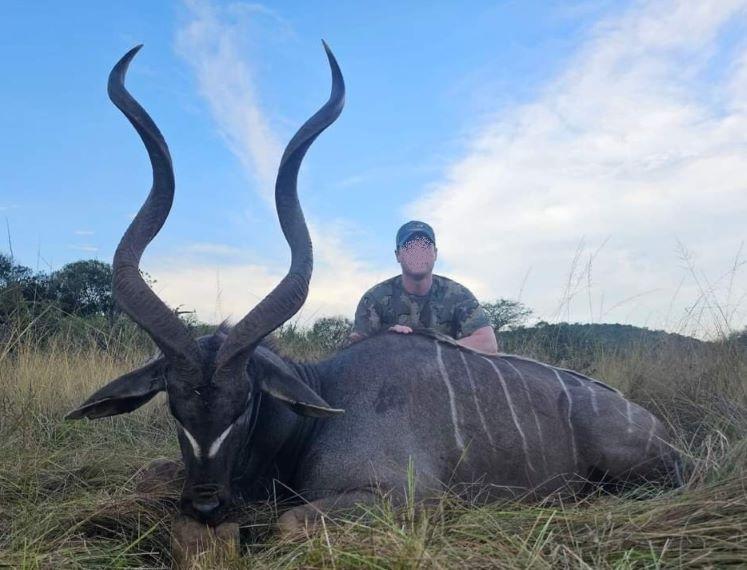
Zebra & Kudu Hunting plus 5 additional Species: 8 x Days in KZN
Booking Season: 2026
Hunt Difficulty: Moderate, Difficult

South African Plains Game Safari Trophy Nyala plus 5 Species
Booking Season: 2026
Hunt Difficulty: Moderate, Difficult
10-Day Plains Game Extravaganza Hunting in South Africa
Booking Season: 2026
Hunt Difficulty: Moderate
Plains Game Hunting in South Africa, 10 days x 10 x Species
Booking Season: 2025
Hunt Difficulty: Moderate
While the Impala antelope is scattered throughout south and east Africa, the most popular countries with the best Impala trophies include South Africa, Tanzania, Mozambique, Namibia, Zambia, Botswana and Zimbabwe.
South Africa is often referred to as the hunting mecca of Africa, and is home to an abundance of plains game, including the Impala. The country’s Limpopo province is renowned for its exceptional trophy Impala, as well as the sheer number of antelope, while KwaZulu-Natal, the Eastern Cape, and Mpumalanga provinces are all prime Impala hunting grounds.
Zambia offers challenging free-range Impala hunts, while Botswana’s Kalahari region and private reserves are home to top-tier trophies. Tanzania is renowned for its premier trophies, with free-range Impala hunts occurring in hunting blocks and conservancies in North and Central Tanzania.
Mozambique and Zimbabwe offer Impala hunts on private game farms and conservancies, where numbers are closely monitored. Impala hunting in Namibia is popular on commercial farms and conservancies near Etosha and the Kaokoland regions.
Each country provides hunters with their unique challenges in hunting this beautiful antelope, but the prize remains unchanged: A beautiful lyre-horned antelope to add to their collection.
Impala hunts are best conducted during the autumn rut (April/May), when male Impalas are more active and territorial as they fight and compete for breeding rights. This gives the hunter a better opportunity to find the best ram within the breeding herd and harvest that specimen.
An Impala hunt is best conducted early morning or late afternoon, as this antelope tends to be more active during the cooler sections of the day when they move around to feed or head to the water.
Impala hunting methods include ambush techniques, such as hunting from a blind, at the water source, or the more challenging option of stalking the antelope. To approach an Impala undetected takes a lot of skill, as they are extremely alert and their senses of hearing, sight, and smell are well-developed.
Impalas are primarily targeted for trophy hunting, meat, and the overall hunting experience. Impalas are often chosen as they are an iconic African plains game trophy, and the male’s elegant lyre-shaped horns enhance the trophy.
Impala hunts also support conservation and local economies, with revenues from hunting paying towards wildlife management, anti-poaching efforts, and community development. Impala meat is valued as a source of high-quality protein, which also benefits rural communities.
An Impala hunt generally forms part of an African plains game hunting safari and will include the basic service offerings such as accommodation, meals, drinks, professional hunter, camp staff, trackers, on-territory transport, and field preparation of the trophies.
Exclusions and optional extras when Impala hunting in Africa:
Impala are one of the most common plains game species in Africa and are included in the majority of plains game safaris. Their availability, combined with the range of terrain they inhabit, makes them a consistent and reliable hunting opportunity across several countries.
Although often viewed as an entry-level species, impala should not be underestimated. They are alert, quick to react, and rarely give you much time once they pick up movement or wind. Getting into position and taking a clean shot requires patience and control.
For many hunters, impala are the first animal taken on safari, but they remain a worthwhile trophy regardless of experience. A well-taken ram is always respected.
Impala are light-bodied animals, but their speed and constant movement place a premium on accuracy. Caliber choice should be based on what you can shoot confidently under field conditions.
The .243 Winchester is generally considered the minimum, while the .270 Winchester, .308 Winchester, and .30-06 Springfield are all widely used and perform reliably. These calibers provide more than enough performance when paired with proper shot placement and suitable bullet construction.
There is no practical advantage in using larger calibers for impala. Consistent shot placement and controlled shooting matter far more than additional power.
Shot placement on impala is straightforward but requires precision due to their smaller frame. The correct aiming point is the heart-lung area, positioned just behind the front shoulder in the lower third of the body.
Opportunities are often brief. Impala are rarely stationary for long, and hesitation or rushed shots are common causes of poor placement.
For a more detailed breakdown of shot angles and anatomy specific to similar-sized game, refer to our guide to shot placement for medium antelope.
Impala are often described as accessible, but that does not mean easy. They are highly alert, quick on their feet, and typically found in groups, which makes getting into range more difficult than expected.
They react quickly to movement, sound, and wind, and once alerted, they move off fast and rarely stop within range again. Most shots are taken at moderate distances, and success depends on staying controlled and taking the shot when it presents itself.
For first-time hunters, impala provide a realistic introduction to African hunting conditions without unnecessary complexity.
For many hunters, impala are the first animal taken on an African safari, and the experience often sets the tone for the rest of the hunt.
A typical day starts early, with time spent glassing open areas or moving slowly through likely feeding zones. Once a suitable ram is located, the focus shifts to getting into position without being seen or winded. This can take time, especially with multiple animals in a herd watching in different directions.
Impala rarely stand still for long. Opportunities often come and go quickly, and being ready to take a controlled shot when it presents itself is key. In many cases, your professional hunter will guide you through shot placement and timing, but execution ultimately comes down to staying calm and steady.
For first-time hunters, this is where the learning happens. Reading the wind, controlling movement, and taking a clean shot under pressure are all part of the experience. A successful impala hunt is less about difficulty and more about doing the basics well.
An impala trophy is judged on horn length, symmetry, and the shape of the curl. Well-balanced horns with a smooth, even curve are generally preferred over uneven or irregular shapes.
Mature rams tend to carry heavier bases and more defined horn structure, which adds to the overall appearance of the trophy.
Selecting the right animal is a combination of personal preference and guidance from your professional hunter in the field.
Impala are not just common—they are a foundational part of most plains game safaris. Their presence across a wide range of habitats makes them one of the most reliable species to hunt during a trip.
For outfitters, impala provide consistent opportunity. For hunters, they offer a balance of accessibility and challenge that fits naturally into a multi-species safari. It is not uncommon for an impala to be the first animal taken early in the hunt, which helps build confidence before pursuing more demanding species.
They also play an important role in the overall experience. Hunting impala teaches the fundamentals—movement, shot placement, and reading animal behavior—that carry over to every other species on the safari.
Because of this, impala are rarely treated as an afterthought. They are often one of the most memorable parts of the hunt, especially for first-time hunters.
Impala can be hunted throughout most of the year, but conditions influence both visibility and behavior.
The dry season generally provides better visibility and more predictable movement, as animals concentrate around water and feeding areas. The rut period can also offer good opportunities, as rams become more active and territorial.
Cooler months tend to provide more comfortable hunting conditions and better overall daytime activity.
Impala are often underestimated, which leads to avoidable mistakes in the field. Rushing the shot is one of the most common issues, especially when the animal appears briefly or begins to move off.
Their speed and reaction time are frequently misjudged. Even small movements or poor wind positioning can cause them to bolt before a shot is taken.
Shot placement errors are also common, particularly hitting too far back due to misreading body position. Taking a steady, controlled shot remains the most important factor in a clean and ethical kill.
Yes. Impala are widely considered one of the most practical starting points for first-time hunters due to their availability and balanced level of difficulty.
Calibers such as .270, .308, and .30-06 are widely used and provide a reliable balance of accuracy and performance.
Impala are not difficult in terms of size, but their alertness and speed make them a fair and realistic challenge.
Whether it’s finding impala hunts, stalking, or walking and stalking at dawn, we’re here to deliver the experience of a lifetime with integrity and precision.
✉️ Contact us today to speak with an expert and plan your tailored impala hunting adventure.
🌍 Browse our active hunting listings and secure your preferred species and dates.
Search from our range of Hunts across various popular destinations in Africa.

Book Your Hunt