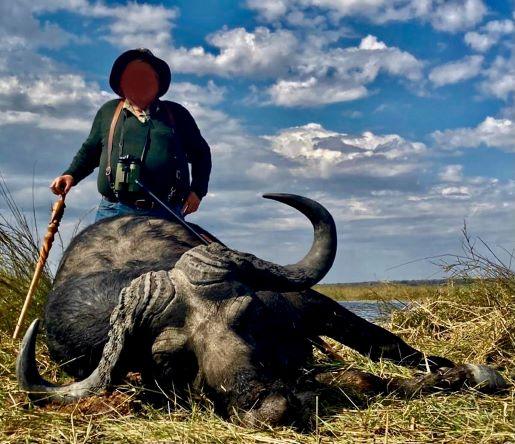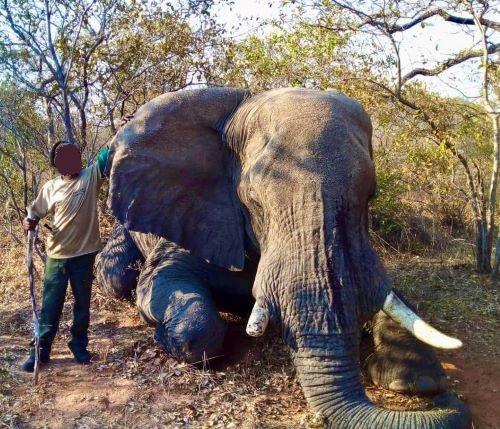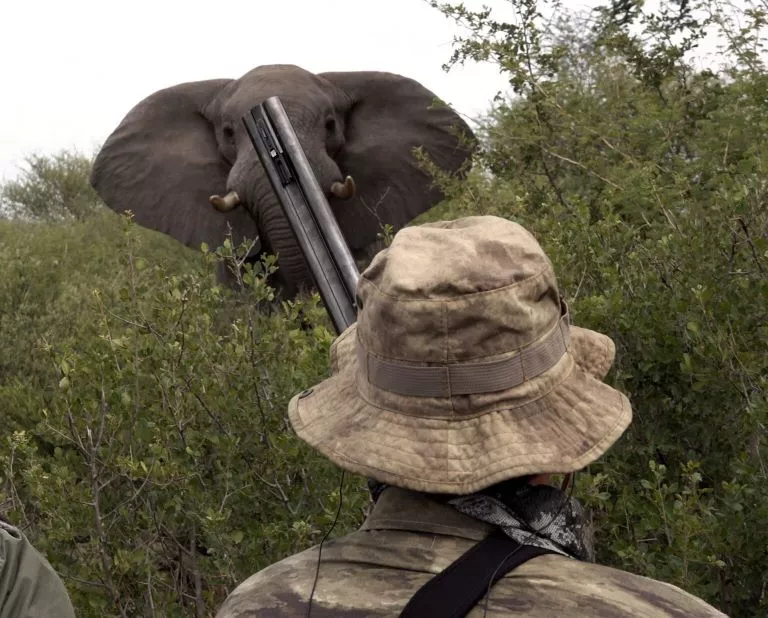
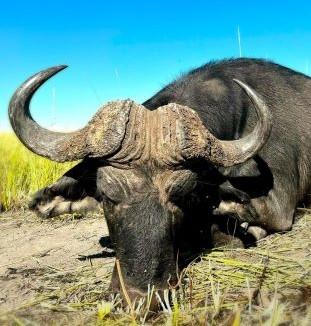
Free-Range Elephant & Buffalo Hunt in Botswana
Booking Season: 2026
Hunt Difficulty: Difficult

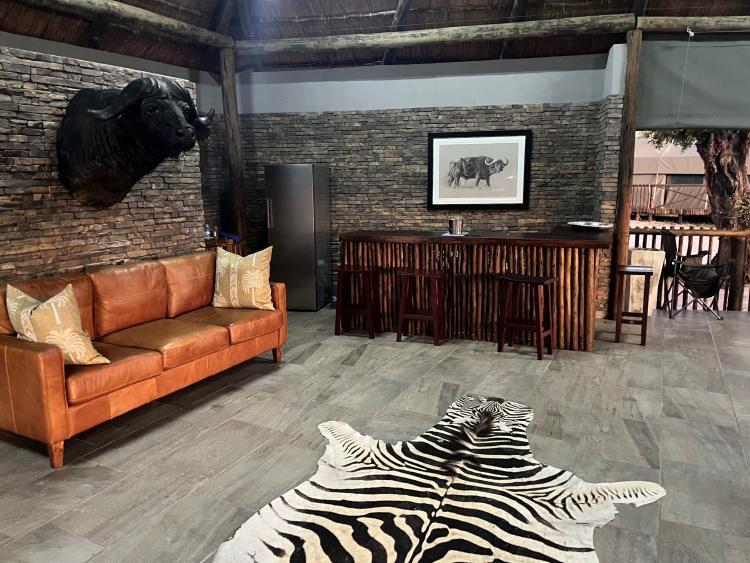
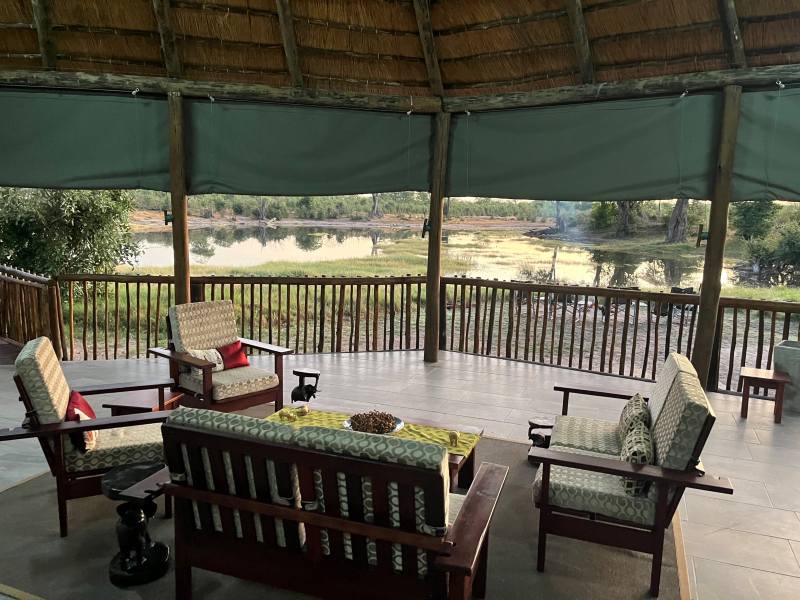
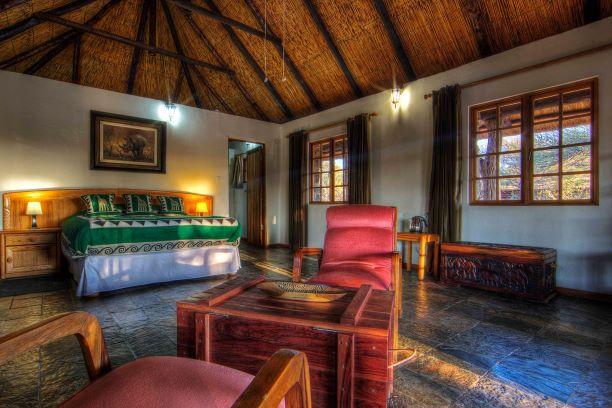
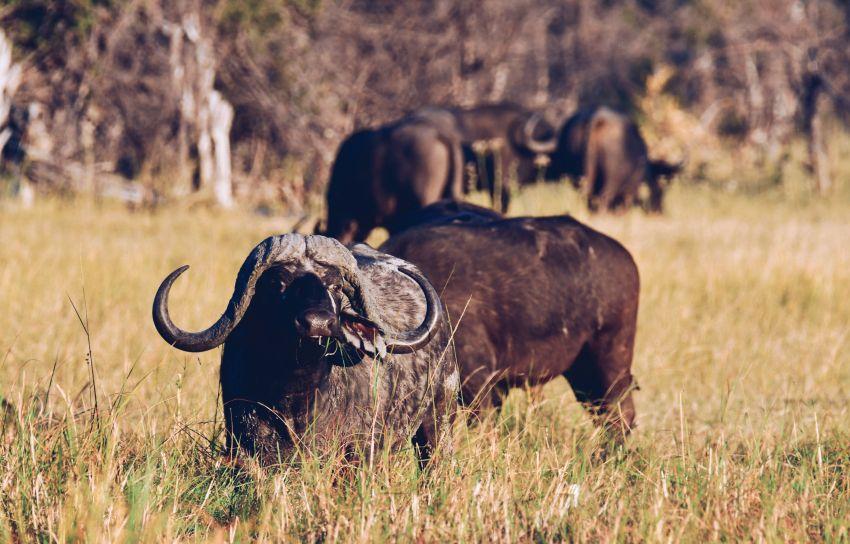
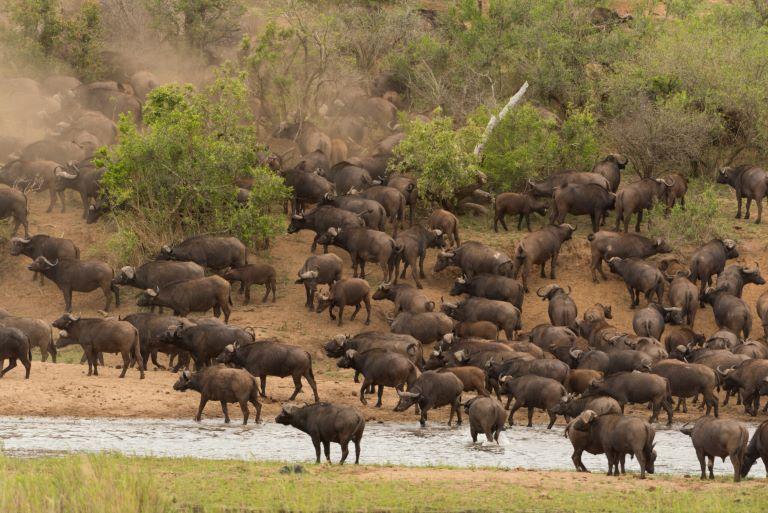
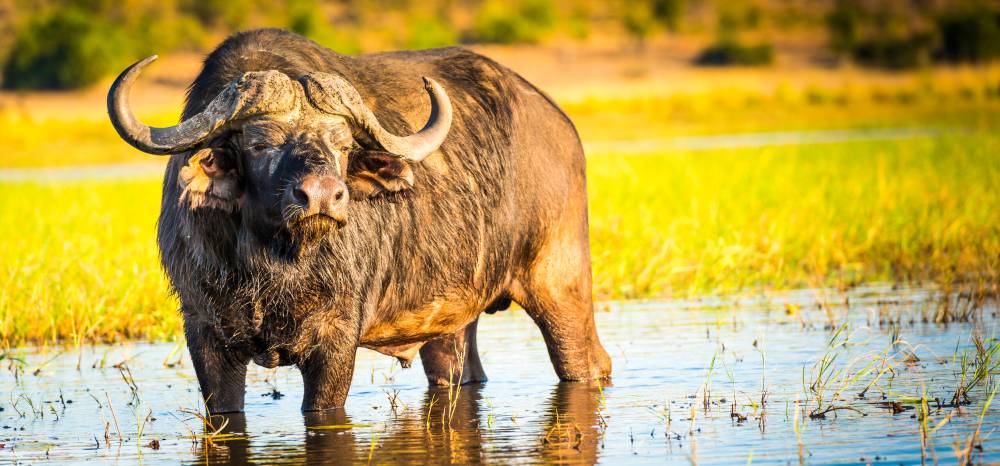
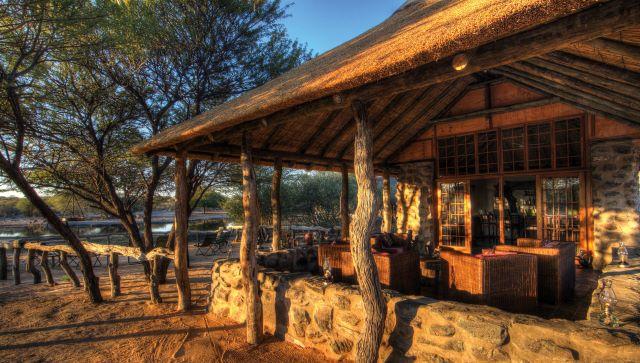
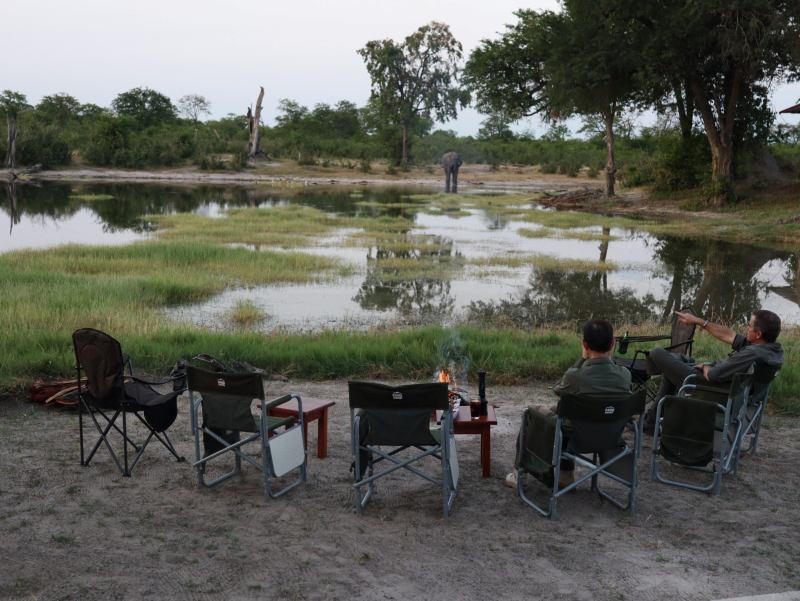
Comfortable safari chalets provide private en-suite accommodation where hunters can relax after a rewarding day in the field. Evenings are spent around the campfire enjoying hearty home-cooked meals, genuine Botswana hospitality and sharing the day's stories beneath Africa's spectacular night skies.
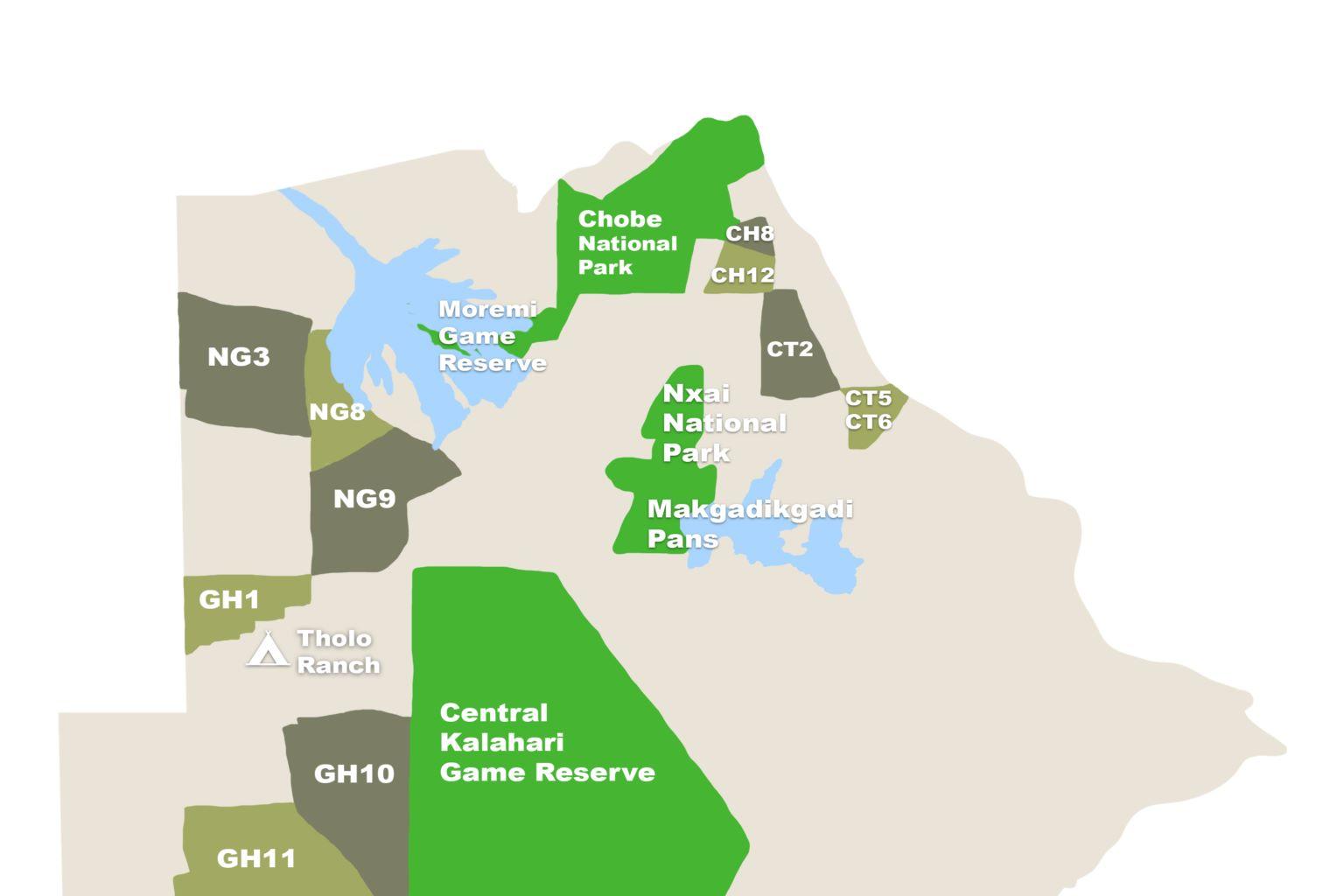
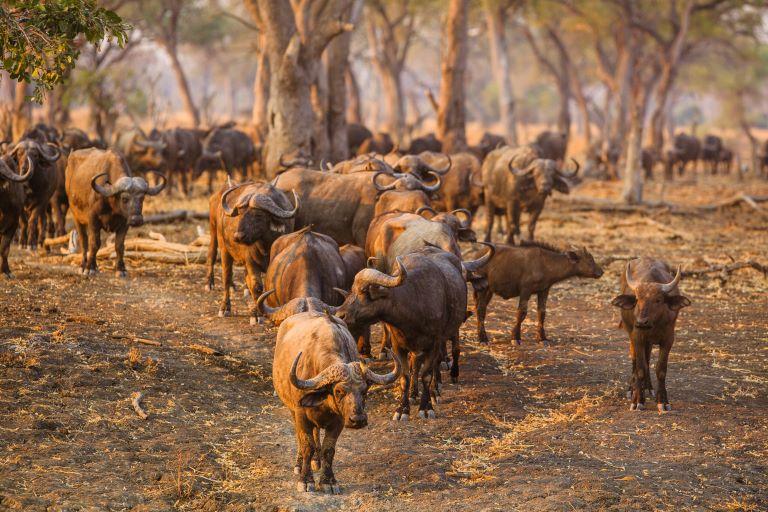
The Chobe region combines open floodplains, mopane woodland, riverine forest and broad savanna, creating exceptional habitat for free-ranging Cape buffalo. Generally flat terrain rewards traditional tracking on foot, with changing vegetation and seasonal water levels ensuring every hunting day presents a new challenge.
| Fence Type: | Free-range |
| Nearest Airport Name: | OR Tambo International Airport (JNB) ↓ Kasane International Airport (BBK) |
Botswana represents the Africa that has captured hunters' imaginations for generations, vast wilderness, free-ranging Cape buffalo and hunting concessions so large that a fence is simply not part of the landscape. Set within the legendary Chobe region, this safari offers the opportunity to pursue wild buffalo exactly as dangerous game hunting was meant to be.
Every day begins by cutting fresh spoor across immense government hunting concessions where mature bulls roam unrestricted through mopane woodland, riverine forests and open floodplains. There are no property boundaries to interrupt the hunt, no neighbouring ranches beyond the horizon and no feeling that the wilderness has been divided. Here, every mile walked reminds you that Botswana remains one of Africa's last great free-range hunting destinations.
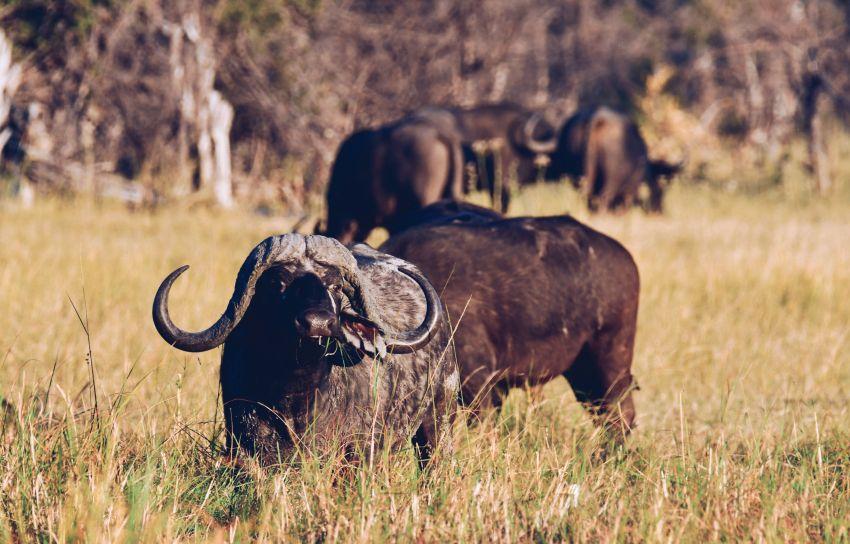
Hunters considering Cape Buffalo Hunting in Botswana will find few places that compare with the country's vast free-range hunting areas. This seven-day Chobe safari focuses specifically on tracking mature bulls across government hunting concessions, where every buffalo is pursued through traditional fair-chase hunting.
Price: US$ 22,400 per hunter (Exportable Trophy)
Duration: 7 Hunting Days
Hunter Ratio: 1 Hunter : 1 Professional Hunter
Hunting Area: Chobe Region, Botswana
Observers: US$450 per person, per day
Hunting Style: 100% Free-Range Cape Buffalo on Vast Government Concessions
There are very few places left in Africa where a buffalo can walk for miles without ever encountering a fence. Botswana is one of them. The country's vast government concessions preserve hunting on a scale that has become increasingly rare, allowing buffalo to move naturally between river systems, mopane woodland and open floodplains exactly as they have for generations.
That freedom changes the hunt. Every set of fresh tracks could lead several miles across untouched wilderness, every stalk develops on the buffalo's terms, and every successful trophy is earned through patience, fieldcraft and determination rather than familiarity with a property. It is this sense of unrestricted wilderness that makes Hunting in Botswana so highly regarded by dangerous game hunters from around the world, particularly those planning Big Game Hunting in Botswana.
The Chobe region has earned an international reputation for producing exceptional populations of Cape buffalo. Permanent water, fertile floodplains and extensive mopane woodland provide ideal habitat for large breeding herds and solitary Dagga Boys, allowing buffalo to move naturally across vast wilderness concessions that have changed little for generations. It is this combination of healthy habitat, strict wildlife management and low hunting pressure that has made Chobe one of Africa's most respected buffalo hunting destinations.
Unlike buffalo hunts conducted on smaller private properties, Cape Buffalo Hunting in Botswana often means covering significant distances on foot while reading fresh spoor and adapting to constantly changing conditions. One day may begin following tracks through dry mopane woodland before ending along a floodplain where buffalo have gathered to drink, while the next could involve glassing distant herds before planning a careful stalk across open country.
Success is never measured by how quickly a buffalo is found, but by the patience required to stay with the tracks, read changing conditions and close the final distance without being detected. In Chobe, every mature bull is earned through traditional fair-chase hunting, making every successful safari a true reflection of the hunter, the professional hunter and the Bushman trackers working together.
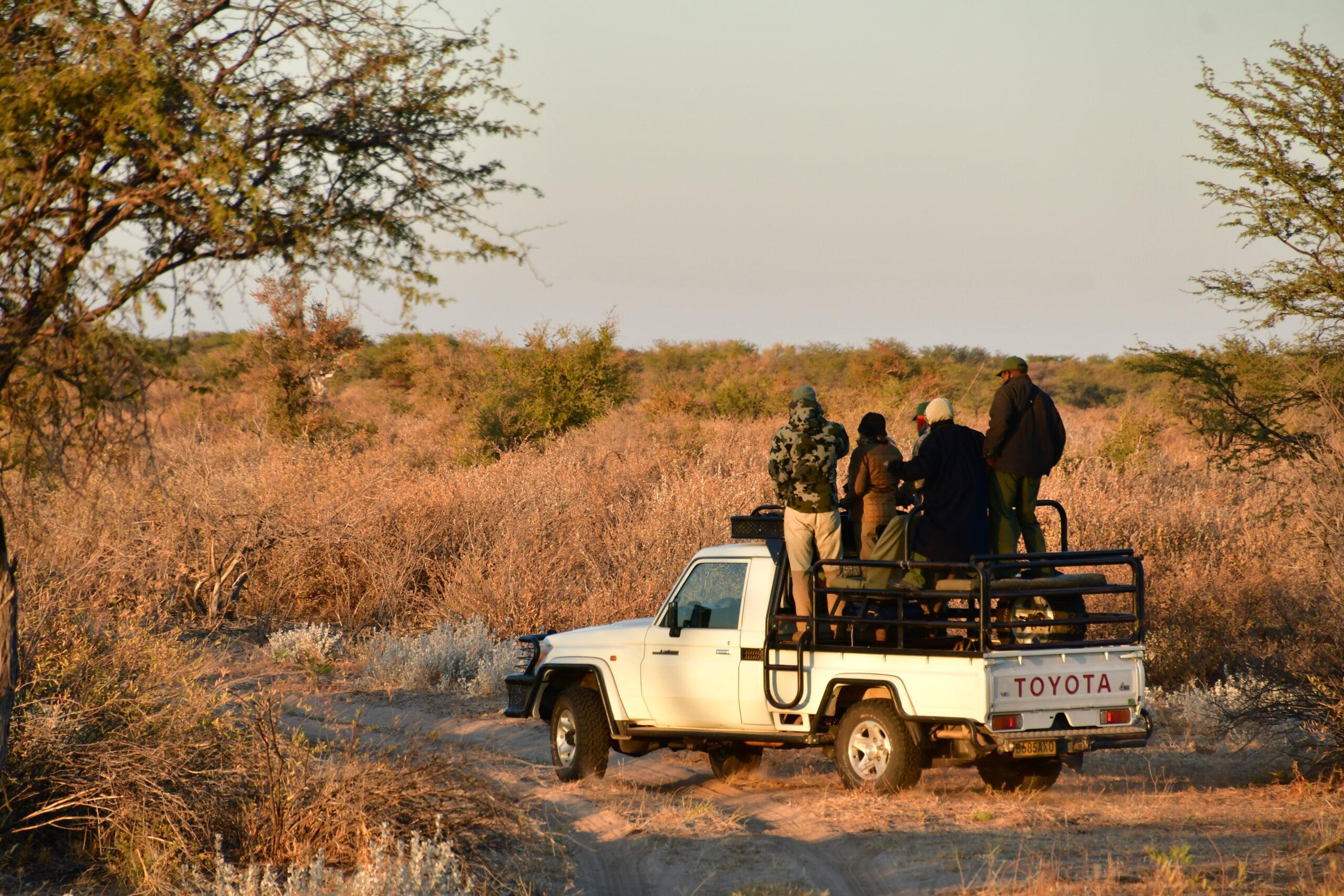
Every morning begins the same way, with fresh spoor. Before the first rays of sunlight reach the mopane woodland, your professional hunter and experienced trackers begin searching roads, game trails and waterholes for the tracks of mature buffalo bulls. Judging the size, age and direction of travel from a single print is a skill developed over decades, and it is these early decisions that often determine the day's success.
Once a suitable track has been found, the vehicles are left behind and the hunt continues on foot. Depending on the buffalo's movements, the tracking party may cover only a few hundred yards or several miles before finally catching up with the herd or an old Dagga Boy that has separated from the others. Wind direction, terrain and patience become far more important than speed, with every stalk unfolding differently.
There are no shortcuts in Botswana. Every successful buffalo is earned through teamwork between the hunter, professional hunter and trackers, making the final encounter all the more rewarding when the opportunity finally presents itself.
Botswana's buffalo hunting season runs from April through September, coinciding with the cooler, drier months of the year. As seasonal floodwaters gradually recede, buffalo begin following more predictable routes between permanent water and feeding areas, creating excellent opportunities for experienced trackers to locate fresh spoor each morning.
Cooler temperatures also make long days on foot far more comfortable for both hunters and trackers. Visibility steadily improves as the dry season progresses, while the firmer ground and shrinking floodplains make it easier to follow buffalo through the mopane woodland and open grasslands that define the Chobe ecosystem.
Although every safari presents different challenges, the combination of favourable tracking conditions, comfortable weather and natural buffalo movements makes the Botswana hunting season one of the finest times in Africa to pursue free-range Cape buffalo.
Cape buffalo rarely follow a script. Some days the hunting party may locate fresh spoor within minutes of leaving camp, while on others the trackers may cover several miles before finding the right bull to follow. Experienced hunters soon discover that success in Botswana depends less on covering ground quickly and more on remaining patient enough to let the hunt unfold naturally.
Every fresh track tells a story. The depth of a hoof print, the direction of travel and even the spacing between tracks help experienced Bushman trackers decide whether a buffalo is feeding, moving with purpose or simply drifting between water and cover. Those small details determine whether the hunt continues or whether the team begins searching for a better opportunity.
When the right Dagga Boy is finally located, everything slows down. Wind direction, communication and careful positioning become more important than speed, reminding hunters that the final few yards are often the most rewarding part of the entire safari.
Tracking buffalo is a game of patience. Stalking them is a test of discipline. After hours of following fresh spoor, the pace of the hunt changes almost instantly once the herd is located. Conversations become whispers, every step is measured, and the wind suddenly becomes the most important member of the hunting party.
Old Dagga Boys rarely give hunters a second opportunity. They survive by trusting their instincts, constantly watching the wind and slipping quietly into thick cover at the first sign of danger. Your professional hunter and Bushman trackers will carefully position the approach, often using every fold in the terrain and every patch of mopane to close the distance unnoticed.
When everything finally comes together, the moment is remarkably calm. There is no rush, no shouting and no excitement until the opportunity is right. It is these final few minutes, after hours of tracking, that remind hunters why free-range Cape buffalo remain one of Africa's most respected dangerous game animals.
Every experienced buffalo hunter understands that the first shot is the one that matters most. While a Cape buffalo may absorb tremendous punishment, good hunting has never been about how many cartridges are fired, it has always been about placing the first bullet exactly where it belongs.
That philosophy becomes even more important in Botswana's vast free-range concessions. After hours of tracking fresh spoor across the Chobe wilderness, there may be only a brief opportunity before an old Dagga Boy slips back into thick mopane or quietly melts away with the herd. Success is rarely determined by how quickly a hunter shoots, but by having the discipline to wait until the buffalo presents the right angle.
The final approach is often surprisingly calm. Your professional hunter, Bushman trackers and skinners have all worked together to create this single opportunity. Conversations become whispers, every movement is deliberate and the wind is watched as carefully as the buffalo itself. There is no pressure to rush the shot—only the responsibility to make it count.
Before travelling to Botswana, spend time becoming familiar with our Cape Buffalo Shot Placement Guide. Understanding the buffalo's vital anatomy and recognising the correct shot angles will do far more for your success than simply carrying a larger calibre. Confidence comes from preparation, and preparation begins long before you step onto the Chobe floodplains.
When the crosshairs finally settle behind the shoulder of a mature Dagga Boy, there should be no uncertainty. Hours of tracking, careful planning and patient stalking have all led to that single moment. In the end, the trophy is remembered not because of the shot itself, but because every decision made beforehand allowed that shot to happen.
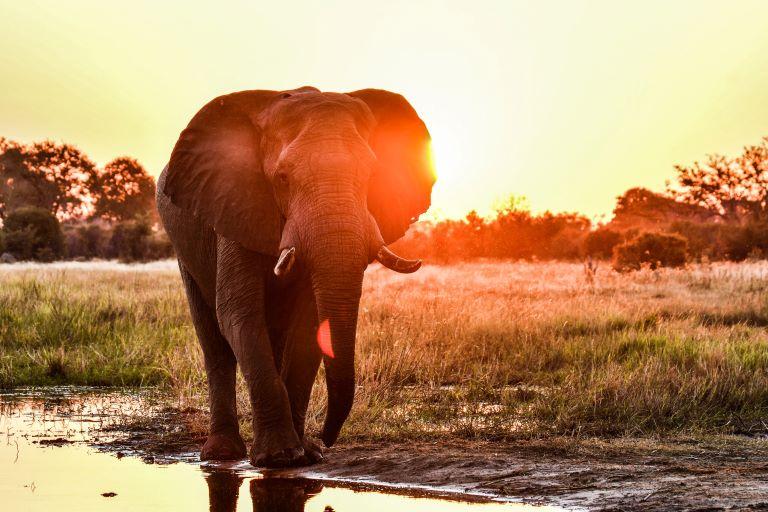
Your safari begins at Kasane International Airport (BBK), the gateway to Botswana's famous Chobe region. After clearing customs and being welcomed by Clive or a member of the hunting team, the journey to camp begins through one of Africa's richest wildlife regions, where elephant, buffalo, giraffe and plains game are often seen long before the first hunting day begins.
Most international hunters travel via OR Tambo International Airport (JNB) in Johannesburg before taking a short connecting flight to Kasane. Depending on your international flight schedule, an overnight stay in Johannesburg may be required, allowing plenty of time for connecting flights and, if necessary, temporary firearm import formalities before continuing to Botswana.
From the moment you leave Kasane, the scenery begins to change. Roads become quieter, settlements disappear and the feeling of entering true buffalo country becomes unmistakable. By the time you arrive in camp, the wilderness you have been reading about has become your new home for the next seven days.
Every buffalo hunt eventually returns to camp. Boots are kicked off, rifles are cleaned and the conversation naturally turns to the day's events. The track that almost disappeared in the mopane, the bull that caught the wind at the last second or the final stalk that ended only yards from a mature Dagga Boy all become part of the evening's stories around the fire.
After a full day on foot, few things are more satisfying than settling into a comfortable chair with your favourite cold beverage or a well-earned glass of Scotch while the African sun sinks below the horizon. Dinner is served around the campfire, stories grow better with every retelling and tomorrow's hunt is already being planned long before the first stars appear over the Chobe wilderness.
Comfortable safari accommodation provides the perfect place to recover before another early start. Spacious en-suite chalets, excellent home-cooked meals and genuine Botswana hospitality ensure every hunter is well rested and ready to follow fresh spoor again at first light.
Every hunter remembers his first free-range Cape buffalo. It isn't always the shot that stays with you, but everything that came before it, the first fresh spoor crossing the road at sunrise, the quiet conversations between the Bushman trackers, the miles walked through mopane woodland and the moment an old Dagga Boy finally stepped clear of the herd.
Botswana has a way of reminding hunters why they came to Africa in the first place. There are no shortcuts here, no guarantees and no fences waiting beyond the next ridge. Every successful buffalo is earned through patience, teamwork and respect for one of the continent's most formidable game animals, which is why Cape Buffalo Hunts remain such an important part of traditional African dangerous game hunting.
If you're searching for an African Hunting Trip that captures the spirit of traditional dangerous game hunting, the Chobe region delivers an experience that few places can still offer. Long after the photographs have been framed and the trophy has found its place at home, it is often the silence of the Botswana bush, the people you hunted alongside and the feeling of standing in truly wild country that remain your greatest memories.
Yes. This safari takes place on vast government hunting concessions in Botswana's Chobe region where Cape buffalo roam naturally without fences or artificial boundaries. Hunters pursue mature bulls on foot using traditional tracking methods, making every successful trophy a genuine fair-chase achievement.
Although the legal minimum is generally a .375 H&H, many experienced hunters prefer cartridges such as the .404 Jeffery, .416 Rigby, .458 Winchester Magnum or .458 Lott. Regardless of calibre, accurate shot placement and following the guidance of your professional hunter remain the most important factors in a successful buffalo hunt.
The hunting season runs from April through September during Botswana's cooler, drier months. As seasonal floodwaters recede, buffalo movements become more predictable, creating excellent tracking conditions throughout the Chobe region.
Hunters should expect to spend several hours walking each day while following fresh spoor across mopane woodland, floodplains and open savanna. Distances vary depending on the buffalo's movements, but a reasonable level of fitness allows hunters to enjoy the safari far more comfortably.
Please note that terms, conditions and price are subject to change without notice and rates at the time of the hunt will apply
You can speak directly with the outfitter before booking. GHS remains available throughout the process.
Needing assistance with firearm permits and international travel services, or good taxidermists? View our affiliated companies
View Affiliated Services