
13-Day Dwarf Buffalo, Sitatunga & Forest Game Safari in Gabon
Booking Season: 2026
Hunt Difficulty: Difficult

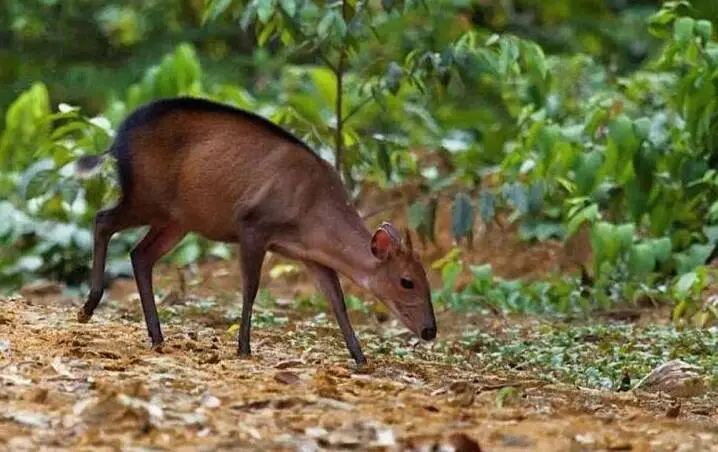
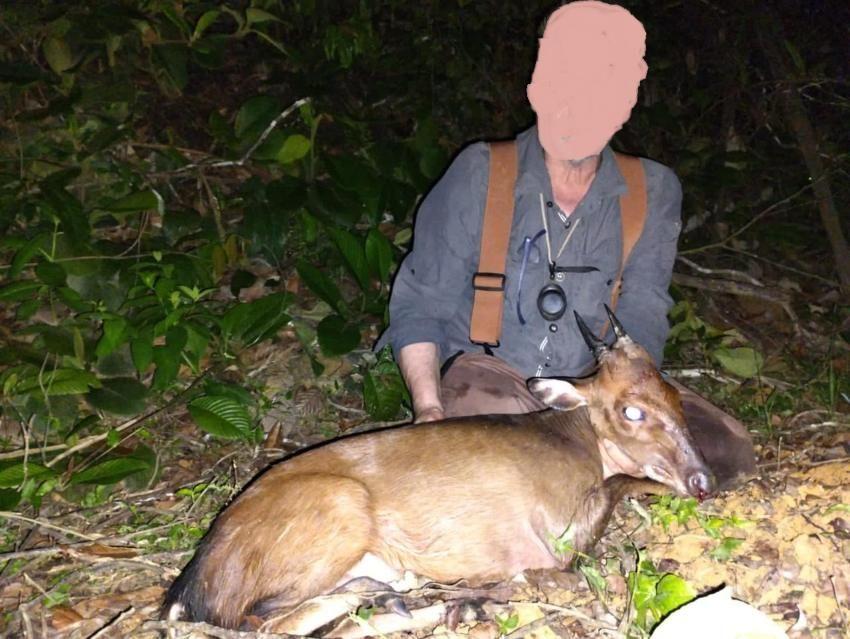
Peter’s duiker is one of the lesser-seen forest antelope species found in Central African rainforest systems, including parts of Gabon. Unlike more commonly encountered duiker species, it is not typically a focus of a hunt, but rather an occasional and unpredictable opportunity that arises during time spent in dense forest.
Movement is controlled by terrain, and encounters with smaller antelope species tend to be brief and situational. Peter’s duiker fits squarely into that category—present within the ecosystem but rarely encountered with any consistency.
For American hunters in particular, who are often accustomed to open terrain, longer sightlines, and more structured hunting environments, this represents a significant shift in how opportunities develop and how animals are encountered.
Peter’s duiker exists within the same dense rainforest systems that define hunting in Gabon, but sightings are infrequent. This has more to do with the environment than the animal itself.
Heavy vegetation, limited lines of sight, and the animal’s naturally elusive behavior all contribute to low encounter rates. Unlike species that move more predictably or use more visible terrain features, Peter’s duiker tends to remain within thick cover, often going unnoticed even in areas where it is known to occur.
As a result, most hunters will not see this species regularly—and many will not encounter one at all during a standard safari.
Available Peter's Duiker Hunts
13-Day Dwarf Buffalo, Sitatunga & Forest Game Safari in Gabon
Booking Season: 2026
Hunt Difficulty: Difficult
10-Day Gabon Duiker and Forest Game Safari
Booking Season: 2026
Hunt Difficulty: Difficult
Peter’s duiker are not tracked as a primary species, and most encounters occur incidentally while moving through dense forest terrain. These moments typically happen in the course of pursuing other animals or while covering ground within a concession, rather than through any deliberate effort to locate the species itself.
Movement through the rainforest is slow and controlled, often along narrow paths, old logging tracks, or natural corridors where visibility is marginally better than in the surrounding vegetation. Even in these areas, sightlines remain extremely limited, and animals are often detected more by movement than by clear visual identification. Encounters are often brief and rarely develop in a predictable way. A slight shift in the undergrowth, a glimpse of movement between trees, or the sound of an animal slipping through cover is often the first and only indication that something is present. In many cases, the opportunity lasts only a few seconds before the animal disappears back into dense vegetation.
For hunters, the challenge is not simply seeing the animal but recognizing the opportunity quickly enough to react. There is little time to assess, reposition, or wait for a better angle. Shots, when they present themselves, are close, instinctive, and entirely dependent on being prepared in the moment.
This is not a hunting scenario that allows for planning or adjustment. Encounters unfold quickly, and success depends on awareness, positioning, and the ability to act immediately when a narrow window opens.
Shot placement on smaller forest antelope such as Peter’s duiker is heavily influenced by the conditions in which they are encountered.
In the thick jungle canopy, visibility is limited and opportunities are brief. Most shots are taken at close range, often through narrow windows in vegetation, with little time to adjust position or wait for ideal angles. As a result, precision and familiarity with vital zones are more important than shot distance or equipment. Broadside opportunities are preferred, but not always available. Hunters must be prepared to recognize partial angles quickly and place shots accurately under pressure, often within seconds of first seeing the animal.
Because of these constraints, understanding shot placement before entering the field is critical. For a more detailed breakdown of where to aim and how different angles affect shot placement, see our guide to shot placement for small antelope.
A hunting safari in Gabon is shaped by environment first, and species second. Time in the field is dictated by dense rainforest conditions—limited visibility, controlled movement, and terrain that restricts how areas are worked. Unlike open-country safaris, where multiple species can be actively pursued and selected, hunting in Gabon follows a more structured and hierarchical approach.
Most hunting safaris are built around primary objectives, typically larger or more demanding animals that require sustained effort and careful positioning in close quarters. These hunts often fall within the broader category of dangerous game hunts, where time, focus, and decision-making are centered on a single primary species.
Smaller forest antelope, including Peter’s duiker, exist within that same system but do not dictate its direction. They are encountered opportunistically while moving through the forest, rather than being actively targeted. In that sense, they sit closer to the broader category of plains game hunts, although the environment and method of hunting differ significantly from more open terrain. This distinction matters.
Peter’s duiker is not a species that drives the structure of a safari in Gabon. It is part of the wider experience—an animal that may be encountered while working through the forest in pursuit of other objectives, rather than one that defines the hunt itself.
For a broader understanding of how these safaris are structured, see our guide to hunting in Gabon.
Expectations need to be set clearly from the outset. Peter’s duiker should not be considered a reliable or targetable species within a Gabon safari. Even in areas where the species is known to exist, encounters are inconsistent and often entirely dependent on time spent in the field, local conditions, and how the hunt unfolds day by day.
Visibility in rainforest environments remains extremely limited, and most encounters—when they do occur—are brief, reactive, and difficult to anticipate. Hunters may spend several days moving through suitable habitat without a single sighting, followed by a sudden and fleeting opportunity that lasts only seconds.
This is not unusual. Many hunters complete a full safari in Gabon without encountering a Peter’s duiker at all. Those who do typically do so as a result of extended time in the field rather than any deliberate strategy aimed at locating the species. Success, therefore, is not measured by frequency or predictability, but by readiness. Being able to recognize a brief opportunity and respond immediately is far more important than attempting to plan for one.
Understanding this distinction is critical. Approaching Peter’s duiker as an opportunistic species—rather than a defined objective—aligns expectations with the realities of hunting in dense rainforest conditions.
Peter’s duiker hunting in Gabon is best suited to hunters already committed to a rainforest safari who understand that opportunities for smaller forest species develop gradually, often without warning, and rarely on demand. Hunting in this environment suits those who are comfortable with uncertainty, patient in approach, and willing to accept that some of the most meaningful encounters happen without warning—and may not happen at all. In that context, Peter’s duiker is best understood as part of a wider objective—an addition to the hunt rather than its primary focus.
Hunters who value experience over volume are typically better aligned with this type of environment. The pace is slower, visibility is restricted, and outcomes are uncertain. Those accustomed to structured plains game safaris, where species can be selected and pursued more directly, may find the unpredictability of rainforest hunting a significant adjustment. There is also a strong appeal for more experienced or returning hunters, particularly those interested in forest antelope or looking to build a more complete understanding of Central African hunting environments. For these individuals, encountering a species like Peter’s duiker carries value precisely because it is not guaranteed.
This type of hunt suits those who are comfortable with uncertainty, patient in approach, and willing to accept that some of the most meaningful encounters happen without warning—and may not happen at all.
This type of hunting is not well suited to those expecting consistent sightings or a structured, high-volume safari experience. Hunters looking for predictable outcomes, the ability to target specific species, or a clearly defined trophy list may find the conditions in Gabon challenging. Rainforest hunting operates very differently from open-country safaris, with limited visibility, slower movement, and opportunities that develop without warning rather than through deliberate planning.
This is particularly true for less commonly encountered species such as Peter’s duiker. Even in areas where they are present, sightings are irregular and depend heavily on time in the field and local conditions.
Approaching this type of hunt with fixed expectations, especially around success rates or specific species can lead to frustration. A better approach is to view the experience as environment-driven, where encounters are shaped by movement, timing, and opportunity rather than predictability.
Can you hunt Peter’s duiker in Gabon?
Yes. Peter’s duiker can be legally hunted in Gabon within regulated rainforest concessions, typically as part of a broader hunting safari rather than as a standalone target species.
How common are Peter’s duiker encounters in Gabon?
Peter’s duiker are considered an uncommon species. Sightings are infrequent and depend largely on time spent in the field, specific hunting areas, and overall conditions during the safari.
Can you specifically target Peter’s duiker on a Gabon hunt?
No. Peter’s duiker are not typically hunted as a primary objective. Most animals are encountered opportunistically while moving through forest terrain during a broader safari.
How difficult is Peter’s duiker hunting in Gabon?
Peter’s duiker hunting is considered challenging due to dense rainforest conditions, extremely limited visibility, and very short encounter windows that require immediate reaction.
What are the chances of seeing a Peter’s duiker on a safari?
There is no guaranteed chance of seeing one. Many hunters complete a full Gabon safari without encountering a Peter’s duiker, even in areas where the species is known to occur.
Is Peter’s duiker worth hunting in Gabon?
For hunters interested in forest antelope or broader rainforest hunting experiences, Peter’s duiker can be a meaningful addition. However, it should be viewed as an opportunistic species rather than a primary reason for undertaking the hunt.
Search from our range of Hunts across various popular destinations in Africa.

Book Your Hunt