Hunt Lion, Buffalo and Hippo in Tanzania’s Selous
Booking Season: 2026
Hunt Difficulty: Difficult

Most hunters planning a Hunting in Tanzania safari dream about Cape buffalo, greater kudu or East African plains game such as gerenuk and Grant's gazelle. Few arrive with the Topi at the top of their trophy list.
That usually changes after the first stalk.
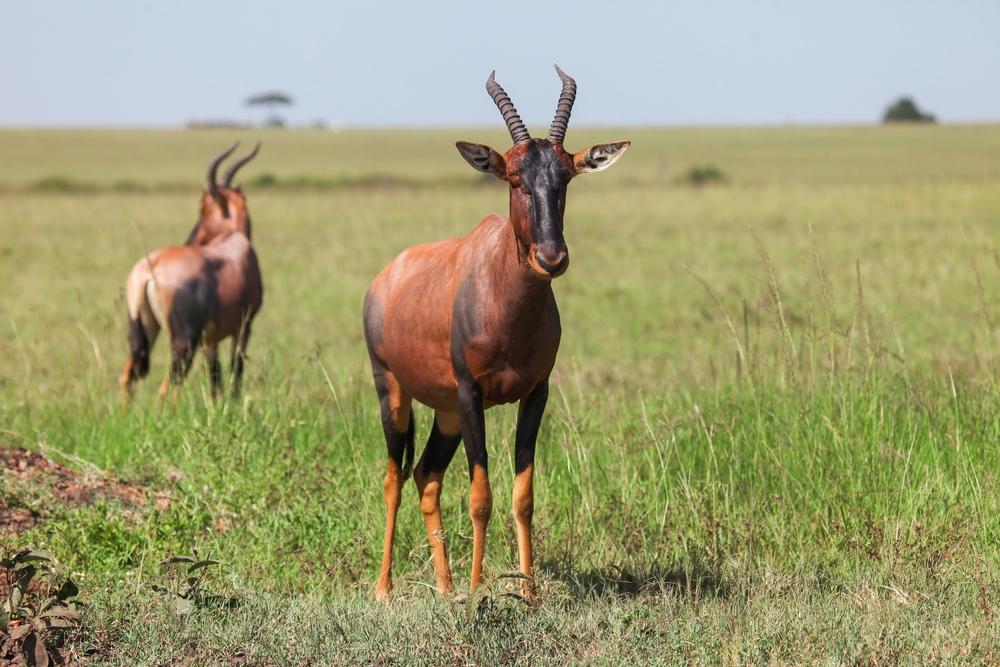
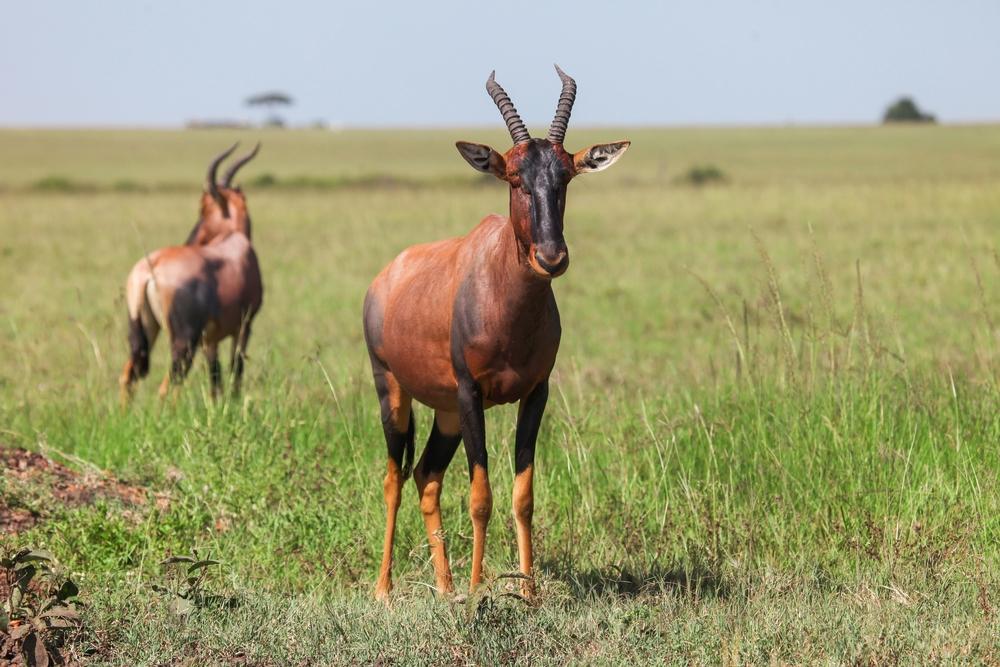
The Topi is one of East Africa's most distinctive antelope, combining exceptional eyesight, impressive speed and an almost constant awareness of its surroundings. Often seen standing proudly on termite mounds scanning the surrounding grasslands, mature bulls quickly earn the respect of hunters who mistake them for an easy opportunity.
While Topi may not enjoy the same reputation as some of Tanzania's larger plains game species, experienced professional hunters know they provide one of the country's most rewarding spot-and-stalk hunts. This guide explains where to hunt them, what makes them so challenging and why many hunters return home talking about their Topi just as much as the buffalo they originally travelled to pursue.
Available Topi Hunts
Hunt Lion, Buffalo and Hippo in Tanzania’s Selous
Booking Season: 2026
Hunt Difficulty: Difficult

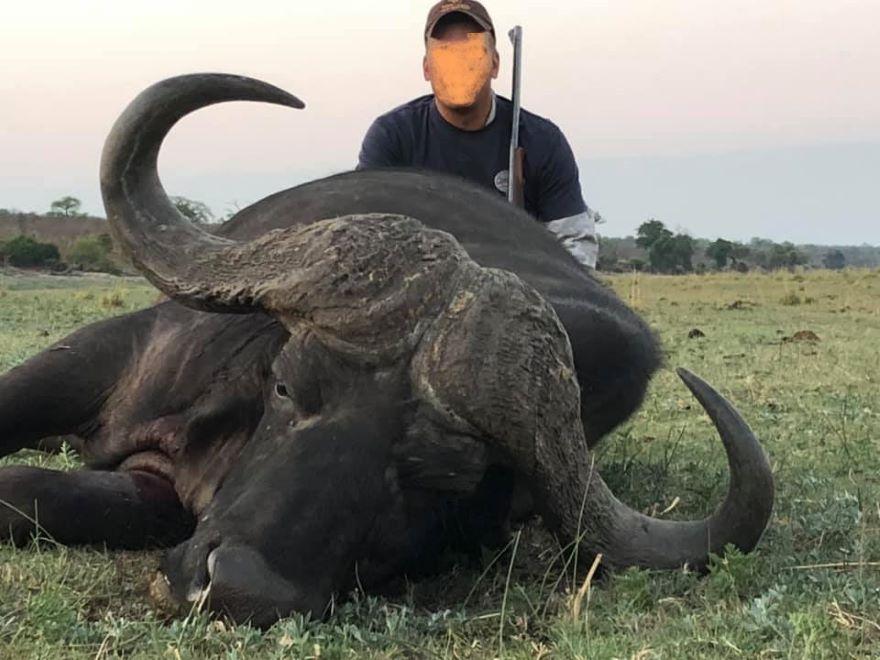
African Buffalo Hunt & Leopard 14 Days Selous Reserve
Booking Season: 2026
Hunt Difficulty: Difficult
One of the first things hunters notice about Topi is where they choose to stand. Unlike many plains game species that disappear into cover or remain hidden in long grass, Topi often seek the highest ground available, even if that is nothing more than an old termite mound rising above the surrounding savannah.
From these natural vantage points, a mature bull can watch the plains in every direction. Long before a hunter is close enough to appreciate the dark facial markings or heavy lyre-shaped horns, the Topi has often already noticed movement hundreds of metres away.
This constant awareness is one of the reasons Topi are so much more challenging than they first appear. Hunters who mistake them for an ordinary plains game animal quickly discover that closing the final distance is often the hardest part of the hunt.
Experienced professional hunters understand this behaviour well. Rather than walking directly towards a bull standing on a termite mound, they use the contours of the land, scattered trees and taller grass to remain out of sight for as long as possible. A successful stalk is usually won long before the rifle is raised.
It is a simple lesson, but one every hunter remembers after their first encounter with a mature Topi.
The first hunter to spot the Topi is not always the one with the advantage. More often than not, the Topi spotted the hunter first.
There is a moment on many Tanzanian safaris when a hunter first spots a mature Topi standing alone on the open plains. The reaction is often the same: "We'll be able to get close to that one." It seems like a reasonable assumption. The country appears wide open, the animal isn't moving, and the distance doesn't look particularly challenging.
Then the stalk begins.
A hundred metres later, the bull has already turned to look in your direction. Another hundred metres, and it quietly walks away, never appearing alarmed or rushed. By the time you reach the spot where it had been standing, the Topi is once again watching from another rise hundreds of metres away.
Only then do most hunters realise they have been playing the game by the Topi's rules all along.
Unlike species that rely on disappearing into thick cover, Topi trust their exceptional eyesight and their understanding of the landscape. They rarely panic or bolt without reason. Instead, they calmly stay one step ahead, forcing hunters to think more carefully about every approach, every change in the wind and every movement across the open plains.
By the end of the safari, hunters find themselves respecting the Topi for exactly the opposite reason they first underestimated it. Not because it was difficult to find, but because it proved remarkably difficult to outsmart.
One of the questions first-time hunters often ask is surprisingly simple.
"How do I know if it's a good Topi?"
Unlike species such as Cape buffalo or greater kudu, where attention often focuses on horn spread or massive bosses, judging a mature Topi is about far more than a single measurement.
Experienced professional hunters first look at the age of the bull. Mature Topi develop heavier, well-shaped lyre horns with good mass at the bases, while older bulls often carry themselves differently from younger animals. They are more likely to be seen standing alone, confidently watching over their territory from a termite mound or slight rise in the landscape.
Colour can also provide valuable clues. Mature bulls usually develop a richer, darker coat, particularly across the shoulders and upper legs, giving them the distinctive appearance that makes old bulls stand out against Tanzania's golden grasslands.
As with most Plains Game Hunts in Africa, the final decision is never based on a single characteristic. Age, horn shape, body condition and behaviour all come together before an experienced professional hunter recommends taking the shot.
In the end, trophy judging is about far more than inches. It is about recognising a mature bull that has earned its place on the plains.
One of the pleasures of hunting Topi in Tanzania is that you are rarely looking at just one species. The open savannahs and short-grass plains support an incredible diversity of East African plains game, meaning every stalk has the potential to reveal something unexpected.
It is not unusual to glass a mature Topi only to find a herd of zebra feeding nearby, a group of wildebeest moving across the plains or elegant Grant's and Thomson's gazelles standing alert in the distance. Each species occupies the landscape a little differently, creating one of Africa's most rewarding plains game hunting environments.
For hunters planning a traditional East African safari, these opportunities often become part of a broader adventure rather than a single-species hunt. Our guide to Gazelle Hunts explains the different gazelle species available across Africa, including the iconic Grant's and Thomson's gazelles that share many of Tanzania's most productive Topi hunting areas.
By the end of the safari, most hunters realise they were never simply hunting Topi. They were hunting one of the greatest wildlife ecosystems left in Africa.
Although Topi receive far less attention than species such as kudu or sable, they are one of the defining antelope of East Africa. Their range is closely associated with the vast grasslands and floodplains of Tanzania, Kenya and a handful of neighbouring countries, making them a species many hunters simply won't encounter elsewhere in southern Africa.
That is one of the reasons experienced hunters value them so highly. A mature Topi represents far more than another plains game trophy. It reflects a safari in one of Africa's most iconic landscapes, where open savannahs, seasonal floodplains and abundant wildlife combine to create a hunting experience found in very few places on the continent.
For hunters building an East African trophy collection, a mature Topi sits naturally alongside species such as Grant's gazelle, Thomson's gazelle, gerenuk and fringe-eared oryx. Together they represent a uniquely East African safari rather than simply another collection of African antelope.
Spend enough time hunting Topi and one image begins to repeat itself. A lone mature bull stands high on a termite mound, head held proudly above the surrounding grasslands, quietly watching the plains long before anything else seems aware of your presence.
At first, it almost looks deliberate, as though the Topi has chosen the highest point simply to admire its surroundings. Spend another day in the field, however, and you begin to realise there is a far more practical reason.
Life on the East African savannah rewards animals that see danger first. A slight rise in the landscape, an old termite mound or a gentle ridge offers a mature Topi an uninterrupted view across the surrounding plains. From these natural lookout points, they can detect movement long before a stalking hunter reaches comfortable shooting distance.
This behaviour also explains why Topi so often appear calm and unhurried. They rarely need to panic. More often than not, they have already seen the approaching danger, quietly stepped away and stopped again hundreds of metres farther on, where they resume watching the landscape as if nothing had happened.
It is one of the reasons experienced professional hunters rarely underestimate a mature Topi. They know they are not simply stalking an antelope. They are trying to outwit an animal that spends every daylight hour studying exactly the same country they are trying to cross.
After a few days on the plains, something else begins to change. You stop looking only for the animal and start looking for the places a mature bull would choose to stand. The old termite mound on the horizon no longer looks like part of the landscape. It becomes the first place you raise your binoculars.
That is often the moment when hunters stop seeing the Topi as just another plains game species. They begin to understand why it has earned the nickname of the sentinel of the savannah.
There is a conversation that plays out on countless East African safaris, usually the first time a Topi appears through the binoculars.
"Is that a hartebeest?"
"No...looks more like a tsessebe."
"Whatever it is...it's standing on another termite mound."
Almost every professional hunter has heard some version of it.
The truth is that unless you've hunted East Africa before, there is a good chance you won't recognise a Topi the first time you see one. It isn't because the animal is particularly rare. It simply isn't one of Africa's better-known antelope, and many hunters only learn to recognise one once they're standing on the Tanzanian plains looking through their binoculars.
What makes the Topi so memorable, however, has very little to do with its appearance.
Once the stalk begins, nobody is talking about whether it's a hartebeest, a tsessebe or a Topi anymore. The only conversation that matters is how to get within shooting distance. Suddenly, that termite mound isn't just another feature on the landscape. It's the perfect lookout point, and the bull standing on top of it seems to know exactly what advantage it has.
Approaches that looked simple from a distance become surprisingly difficult. Every fold in the ground looks promising until the Topi quietly turns its head in your direction. Before long, the bull calmly walks a few hundred metres away, stops on another rise and resumes watching the plains as though it had been expecting you all along.
By the time everyone returns to camp that evening, the story has usually improved with every retelling. Someone eventually leans back in their chair, takes another sip of beer and says what everybody around the fire has been thinking all day.
The camp erupts in laughter.
Not because it's a joke, but because everyone understands exactly what he means. The trackers grin, the professional hunter smiles quietly to himself, and even the hunter who eventually took a fine bull knows how many stalks fell apart before the one that finally came together.
That is probably the greatest compliment a Topi can receive.
It earns respect not because it carries the biggest horns or produces the highest trophy scores. It earns respect because it has a remarkable way of reminding even experienced hunters that Africa always has another lesson to teach.
Topi are not found throughout Tanzania, which makes choosing the right hunting area one of the most important decisions when planning your safari. The best populations occur in the country's vast open savannahs and floodplain ecosystems, where the combination of short grass, seasonal water and excellent visibility creates the perfect habitat for this uniquely East African antelope.
Some of Tanzania's finest Topi hunting takes place in renowned hunting areas such as Maasailand, the Moyowosi ecosystem and selected western concessions, where healthy populations are often encountered alongside Cape buffalo, zebra, wildebeest, Grant's gazelle and Thomson's gazelle. These areas provide exactly the open country that allows Topi to display the behaviour that makes them such memorable animals to hunt.
The best time to hunt depends largely on the area and the type of safari you have planned. Most professional hunters recommend the dry season, when grass becomes shorter, game concentrates around reliable water sources and stalking conditions generally improve. Visibility across the plains is often at its best, allowing hunters to spot mature bulls from considerable distances before planning a careful approach.
Unlike some species that require specialised safaris, Topi fit naturally into a traditional Tanzanian plains game or dangerous game hunt. Whether you're travelling primarily for a Cape Buffalo Hunt or building a classic East African plains game collection, adding a mature Topi often becomes one of the highlights of the entire safari.
If you're planning a safari specifically to hunt Topi, speak with your outfitter about the concession rather than simply the country. Tanzania offers exceptional hunting, but choosing the right area is every bit as important as choosing the right season.
Is Topi hunting suitable for a first African hunting trip?
Absolutely. Topi are an excellent addition to a first East African safari because they introduce hunters to classic spot-and-stalk hunting on Tanzania's open plains. If you're still deciding which safari best matches your hunting goals, our guide to African Hunting Trips compares the different hunting experiences available across the continent.
Why do experienced professional hunters enjoy hunting Topi?
Because Topi are rarely as easy as they first appear. Their exceptional eyesight, habit of standing on termite mounds and ability to detect movement from long distances make every successful stalk rewarding. Many professional hunters consider them one of Tanzania's most underestimated plains game animals.
Are Topi difficult to hunt?
Yes. Although they live in open country, mature Topi are extremely alert and often detect hunters long before the stalk is complete. Success depends on careful planning, using the terrain effectively and moving patiently rather than trying to cover ground quickly.
What other animals can I hunt with a Topi in Tanzania?
Topi are commonly hunted alongside Cape buffalo, zebra, blue wildebeest, Grant's gazelle, Thomson's gazelle, gerenuk and other East African plains game. This makes them a natural addition to hunters wanting a traditional Tanzanian safari rather than a single-species hunt.
What calibre is recommended for Topi hunting?
Most popular plains game calibres perform exceptionally well on Topi. Rifles such as the .270 Winchester, 7mm Remington Magnum, .308 Winchester and .30-06 Springfield are all excellent choices. Hunters combining Topi with Cape buffalo often simply use their .375 H&H throughout the safari.
When is the best time to hunt Topi in Tanzania?
Most Topi safaris take place during Tanzania's dry season, when shorter grass and improved visibility make spotting and stalking mature bulls easier. Your professional hunter can recommend the best concession and timing based on the species you wish to combine with your Topi hunt.
How do I know if a Topi is a mature trophy bull?
Experienced professional hunters judge maturity by looking at the bull as a whole. Heavy horn bases, well-shaped lyre horns, darker colouring, body condition and confident behaviour all help identify an older bull that has reached maturity.
Why do hunters remember Topi long after the safari?
Many hunters arrive in Tanzania expecting Topi to be an "extra" species. By the end of the safari, they often discover it provided one of the most challenging and enjoyable stalks of the entire hunt. It is an animal that quietly earns respect, often becoming one of the stories still being told long after everyone has returned home.
Search from our range of Hunts across various popular destinations in Africa.

Book Your Hunt