
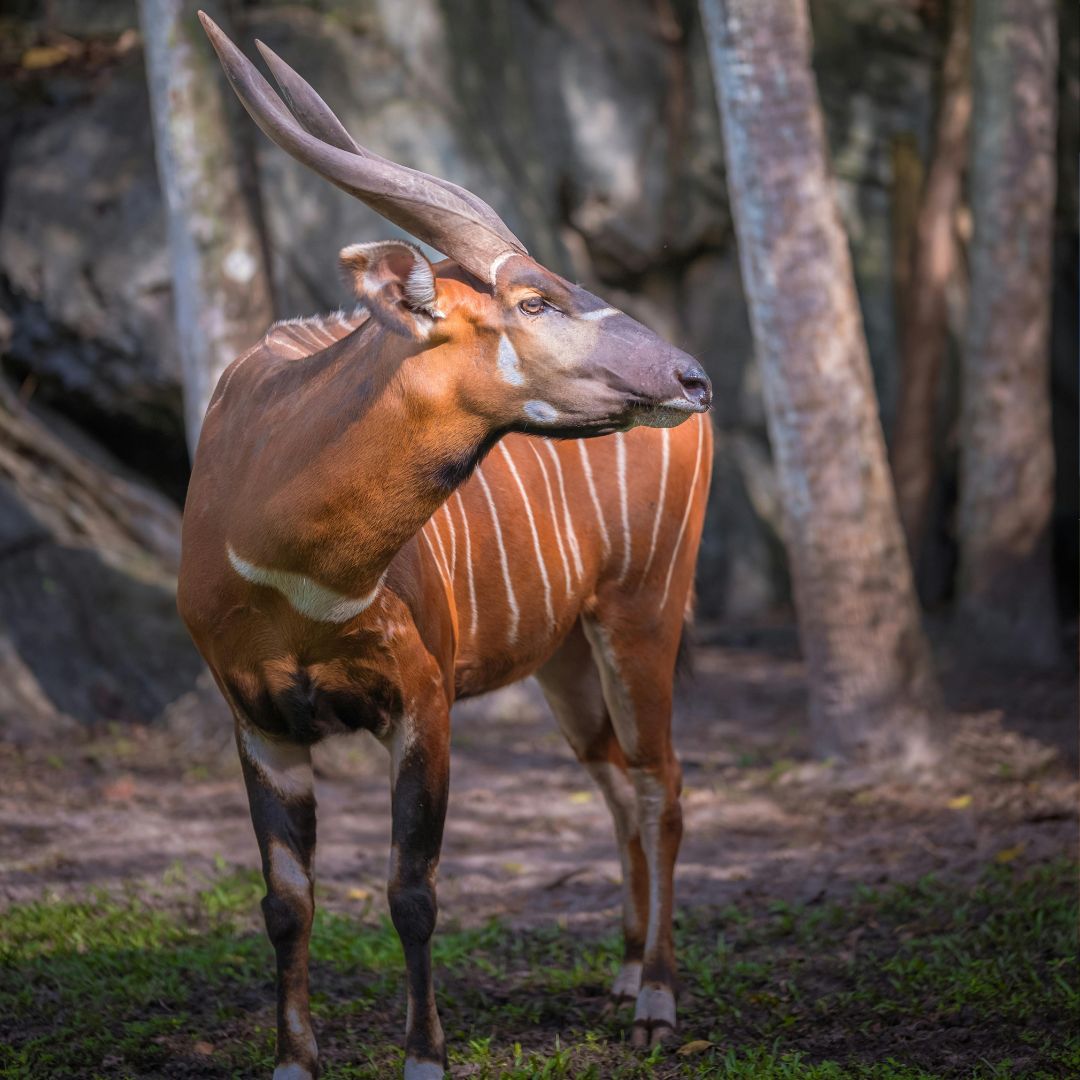
American hunters researching bongo hunts often discover very quickly that this is not a typical safari. Success is rarely measured by the number of animals seen or opportunities created. Instead, bongo hunting demands patience, persistence, and a willingness to spend long days in some of Africa's most challenging rainforest environments pursuing one of the continent's most elusive antelope.
Those interested in hunting in Cameroon quickly learn why the country has earned such a strong reputation among bongo hunters. Dense rainforest habitat, experienced tracking teams, and access to some of Central Africa's most sought-after species continue to make Cameroon one of the continent's premier bongo destinations.

[DYNAMIC-BLOGTABLEOFCONTENT]
Why They Are Called the Ghost of the Rainforest
The nickname “Ghost of the Rainforest” is not an exaggeration. Bongo inhabit thick tropical forests where vegetation can be so dense that visibility is sometimes limited to only a few yards.
In these conditions even a large animal can disappear almost instantly. Trackers may follow fresh spoor through the forest floor, reading subtle signs in soil, leaves, and broken vegetation, yet the animal itself remains invisible somewhere ahead.
Then suddenly a flash of color appears between the trees. A reddish shape moves through the shadows. White stripes flicker between shafts of filtered sunlight, and the spiral horns of a mature bull briefly come into view. A moment later the animal disappears again. Hunters who have pursued bongo say they saw the animal for only a few seconds before taking the shot.
Those brief moments are what make bongo hunting so unforgettable.
The Unique Challenge of Hunting in African Rainforest
Rainforest hunting is very different from the safari most hunters imagine when they first think about Africa.
In open savannah landscapes hunters may glass large areas of terrain while planning a stalk from distance. Rainforest hunting works in the opposite way.
Instead of spotting animals from afar, hunters move slowly behind trackers through thick vegetation following the spoor of animals that moved during the night.
The terrain itself can be physically demanding. Vines, fallen logs, tangled branches, and thick undergrowth make quiet movement slow and deliberate. Humidity is often high and the forest canopy blocks much of the wind, meaning the hunter must constantly pay attention to scent and sound.
Encounters with animals happen quickly and often at close range. For many hunters, bongo hunting in Africa feels less like a typical safari and more like stepping into an old-style expedition hunt.
The Role of Skilled Local Trackers
One of the most remarkable aspects of bongo hunting is the role played by experienced local trackers.
In many Central African regions these trackers have spent their entire lives moving through the forest and learning to read its subtle signs. They can identify the direction an animal traveled, estimate how recently it passed through an area, and determine whether the spoor belongs to a mature bull. They may notice details such as disturbed leaves, faint impressions in soil, or small breaks in vegetation that would go completely unnoticed by most hunters.
Following spoor in rainforest terrain is an extraordinary skill, and hunters quickly develop enormous respect for the trackers who make these hunts possible.
The Moment a Hunter Finally Sees a Bongo
After hours of moving quietly through the forest behind trackers, the moment when a hunter finally sees a bongo is unforgettable.
The trackers suddenly stop. A whisper travels back through the group.
“Bongo.”
At first the hunter may see only fragments of the animal between branches and leaves. Then the shape becomes clearer.
A deep reddish coat stands out against the green forest, marked by bright white vertical stripes. The horns sweep back over the shoulders in a heavy spiral. Often the opportunity lasts only seconds before the animal moves again.
The hunter must react quickly and place the shot before the bongo disappears once more into the forest.

Why Shot Opportunities on Bongo Are So Challending
Finding a mature bongo is only part of the challenge.
The dense rainforest habitat that helps conceal these animals also creates difficult shooting conditions. Hunters are often presented with brief opportunities through narrow openings in the vegetation, where only part of the animal may be visible before it disappears back into cover.
Unlike many open-country antelope hunts, there is rarely unlimited time to study the animal or wait for perfect positioning. Understanding proper shot placement on large antelope becomes especially important when opportunities are measured in seconds rather than minutes.
Experienced professional hunters place significant emphasis on patience and shot selection, as forcing a marginal shot in dense forest can quickly turn a successful opportunity into a difficult recovery situation.
Why Bongo Are So Difficult to Hunt
Several factors combine to make bongo hunting one of the most challenging hunts in Africa.
The terrain itself is extremely difficult. Dense rainforest limits visibility and allows animals to move quietly through thick cover.
Bongo are naturally cautious animals with excellent hearing and a strong sense of smell. Instead of running across open ground when disturbed, they often slip quietly into dense vegetation where they become almost impossible to see.
Another factor is their daily activity pattern. Bongo are largely nocturnal animals that move and feed during the night or early morning hours.
Hunters are usually tracking animals that traveled during the night and attempting to catch up with them during daylight.
This combination of dense terrain, cautious behavior, and nocturnal movement makes bongo antelope hunting one of the most difficult pursuits in Africa.
The Camouflage That Helps Bongo Disappear
The bongo’s striking striped coat actually serves an important purpose. Rainforest sunlight filters through the canopy in vertical shafts between trees and vines.
The bongo’s white vertical stripes mimic these patterns of light and shadow. This creates disruptive camouflage that breaks up the outline of the animal.
A bongo standing motionless among trees can be surprisingly difficult to detect. Many hunters have experienced the strange moment of looking directly into the forest before realizing a bongo had been standing there all along.
Why Bongo Horns Curve Backward
Another fascinating adaptation is the shape of the bongo’s horns. Unlike kudu, whose horns spread outward, bongo horns curve backward along the body.
This allows the animal to move through dense forest without the horns catching on branches or vines. Both males and females carry horns, although mature bulls typically develop heavier and more impressive spirals.
Broken horn tips are quite common, reflecting years of moving through thick vegetation.
Why Bongo Are Considered One of Africa’s Most Beautiful Antelope
Many hunters who pursue bongo describe the first sight of the animal as almost surreal.
A mature bull has a deep reddish chestnut coat marked with bright white vertical stripes that stand out vividly against the dark rainforest environment. The long spiral horns sweeping backward over the shoulders add to the animal’s striking appearance.
When sunlight filters through the forest canopy and catches the stripes on a bongo’s coat, the contrast between light and shadow can make the animal appear almost unreal.
Bongo Trophy Size and Horn Length
Mature bongo bulls carry impressive spiral horns that often exceed 30 inches in length. The horns grow in a graceful spiral and sweep backward along the body, allowing the animal to move through dense vegetation without catching on branches.
For many collectors, the combination of horn size, rarity, and the difficulty of bongo hunting makes the animal one of Africa’s most prestigious antelope trophies.
Where Bongo Hunts Take Place in Africa
Bongo hunting takes place primarily in the dense forests of Central and West Africa.
Countries such as Cameroon, Gabon, and parts of the Congo Basin provide some of the best remaining habitat for these elusive antelope. These regions contain the type of dense forest vegetation, remote wilderness areas, and relatively low human pressure that allow bongo populations to persist.
Hunters interested in bongo hunting in Cameroon are often drawn to the country's vast rainforest concessions, experienced tracking teams, and long history of successful bongo safaris.
Gabon is also associated with some of Central Africa's most intact rainforest ecosystems. Vast tracts of forest and exceptional biodiversity have made the country a respected destination among hunters interested in remote wilderness experiences.
The Congo Basin remains equally important to the story of the bongo. Stretching across several Central African countries, this immense forest ecosystem provides some of the largest remaining blocks of suitable bongo habitat on the continent.
While hunting regulations, concession availability, and safari opportunities vary between destinations, all of these regions share one important characteristic: they offer the dense rainforest environment that has helped make the bongo one of Africa's most respected and challenging antelope species.
Why Bongo Prefer Disturbed Forest Areas
An interesting behavior many hunters find surprising is that bongo often prefer areas of forest that have been naturally disturbed rather than untouched jungle.
When large trees fall, when elephants move through an area, or when small forest clearings open in the canopy, sunlight reaches the forest floor and new vegetation begins to grow. These openings create fresh shoots and tender plants that bongos prefer to feed on.
Because of this, trackers often focus their efforts around these disturbed areas where feeding activity is more likely to occur.
Understanding these feeding patterns can make the difference between wandering aimlessly through dense forest and locating fresh bongo tracks.
The Use of Hunting Dogs in Some Bongo Hunts
In certain regions of Central Africa, hunting dogs may be used during bongo hunts.
These dogs help locate animals in thick vegetation where visibility is extremely limited. Once the dogs find the animal, they may push it from dense cover or hold it briefly while the hunters approach.
The use of dogs requires experienced handlers and careful coordination between the trackers, professional hunter, and hunting team. While not used everywhere, trained hunting dogs can sometimes make it possible to locate animals that would otherwise remain hidden deep inside the forest.
Why Bongo Hunts Are Limited and Rare
Compared to many African plains game species, bongo hunts are relatively rare. The animals live in remote rainforest environments where hunting concessions are difficult to access and operate.
In addition, hunting quotas are usually limited to ensure that populations remain healthy. Only a small number of animals may be taken each year in many concessions. Because of these strict quotas, relatively few hunters pursue bongo annually.
How Local Communities Benefit from Wildlife Conservation
In many rainforest hunting areas, local communities play an important role in protecting wildlife.
Professional hunting concessions provide employment for local trackers, camp staff, anti-poaching teams, and guides. These opportunities create economic incentives for communities to protect wildlife and maintain the natural forest environment. Revenue generated from hunting safaris often contributes to anti-poaching patrols and wildlife monitoring programs.
Other Unique Species Found in the Rainforest
A bongo hunt can also provide a rare opportunity to encounter other fascinating African species.
Hunters pursuing bongo may encounter several species of duiker, many of which are endemic to rainforest ecosystems and highly sought after by collectors. Other animals found in these regions include animals associated with elephant hunts and forest buffalo hunts, both of which occur within parts of Central Africa's vast rainforest ecosystems.
Beyond the rainforest itself, Central Africa is also known for some of Africa's most sought-after savannah species. In areas where the forest gives way to more open country, hunters may pursue the Lord Derby eland, one of the continent's most respected antelope and a flagship species often associated with eland hunts in Central Africa.
Together, these species help explain why Central Africa continues to attract hunters seeking experiences that differ significantly from the more familiar plains game safaris found elsewhere on the continent.
Why Bongo Hunting Appeals to Serious Collectors
For veteran hunters who have already taken many of Africa’s classic species, pursuing a bongo often represents something special.
Very few hunters ever pursue a bongo during their lifetime. Among serious collectors, it remains one of the most respected and talked-about trophies on the continent. Not many hunters can say they have taken a bongo in the African rainforest.
For many experienced hunters, the pursuit of a bongo becomes less about adding another trophy to the wall and more about experiencing one of Africa’s most legendary hunts.
The Campfire Truth About Bongo Hunting
When hunters gather around the fire at night after a long day in the rainforest, the stories that get told are rarely about easy hunts. They are about the difficult days.
About following tracks through thick forest from sunrise until late afternoon. About moments when the trackers suddenly freeze and whisper that a bongo is nearby. Often the hunter only catches a glimpse of the animal before it disappears again into the forest.
Then finally, after hours or days of effort, the opportunity comes. For many hunters, the memory of the hunt itself becomes just as valuable as the trophy.
That is why bongo hunting holds such a special place in the world of African safaris.
Expanded Bongo Hunting FAQs
Where can you hunt bongo in Africa?
Most bongo hunting takes place in the dense rainforest regions of Central and West Africa. Countries such as Cameroon and parts of the Congo Basin provide some of the most suitable habitat for these elusive antelope. These areas contain vast tracts of dense forest where bongo populations still exist and where experienced trackers are able to locate animals by following spoor through the forest.
Because these concessions are often remote and difficult to access, bongo hunts usually require careful planning and experienced outfitters who understand the terrain and the behavior of the species.
Why are bongo hunts considered difficult?
Bongo hunting is considered challenging primarily because of the terrain in which the animals live. Dense rainforest vegetation limits visibility and makes it difficult to spot animals from a distance.
Instead of glassing large areas of terrain as hunters might do on the savannah, bongo hunts usually involve tracking animals on foot through thick forest.
Bongo are also naturally cautious animals with excellent hearing and a strong sense of smell. When disturbed they often slip quietly into dense cover rather than running into open ground, which makes them very difficult to locate once they disappear.
For these reasons, patience and skilled trackers play a major role in successful bongo hunting safaris.
How rare are bongo hunts?
Compared to many other African plains game hunts, bongo hunts are relatively rare. Bongo populations occur primarily in rainforest habitats that are difficult to access, and hunting quotas are often limited to ensure the long-term health of the species.
In many concessions only a small number of bongo may be taken each year. Because of these strict quotas, relatively few hunters pursue bongo annually.
This rarity is one of the reasons the species holds such prestige among serious safari hunters and collectors.
How long does a typical bongo hunting safari last?
Most bongo hunting safaris last between 10 and 14 days.
The extended duration allows hunters enough time to locate fresh tracks and follow them through dense forest terrain. Tracking bongo can sometimes take several days before an opportunity for a shot presents itself.
Because of the difficulty of the terrain and the elusive nature of the animal, longer safari durations provide the best chance for a successful hunt.
What caliber rifle is recommended for bongo hunting?
Bongo are large antelope, and most hunters prefer medium to large plains game calibers when pursuing them.
Common choices include cartridges such as the .300 Winchester Magnum, .338 Winchester Magnum, or the classic .375 H&H. These calibers provide adequate power and penetration while still allowing accurate shooting in the close-range conditions often encountered in rainforest environments.
As always, proper shot placement and familiarity with the rifle are more important than caliber alone.
Is bongo hunting dangerous?
Bongo are not considered dangerous game in the same category as animals such as buffalo or elephant. However, hunting in dense rainforest environments can present its own challenges.
Visibility is limited, the terrain can be physically demanding, and hunters must often move carefully through thick vegetation while following fresh tracks. Because of this, experienced professional hunters and skilled trackers are essential to ensure a safe and successful hunt.
Why are bongo hunts expensive?
Bongo hunts tend to be expensive for several reasons.
The concessions where bongo live are usually located in remote rainforest regions that require significant logistics to operate. Camps, vehicles, staff, and supplies must often be transported into areas far from major infrastructure. In addition, hunting quotas are typically very limited, which means only a small number of hunters can pursue the species each year.
Part of the revenue generated from these hunts often contributes to conservation efforts, anti-poaching patrols, and employment for local communities that help protect wildlife habitat.
About the Author
Pierre van Wyk has spent many years hunting across Africa and working closely with professional hunters and outfitters throughout the continent. Through these experiences he has developed a deep understanding of African wildlife, hunting traditions, and the realities of planning successful safaris.
Through Game Hunting Safaris, Pierre focuses on helping international hunters better understand African safaris and the species they hope to pursue. His goal is to provide honest, practical information that helps hunters prepare for the realities of hunting in Africa.
By sharing knowledge and experience, Pierre aims to ensure that hunters arriving in Africa have the best possible chance of enjoying a safe, ethical, and memorable safari.