
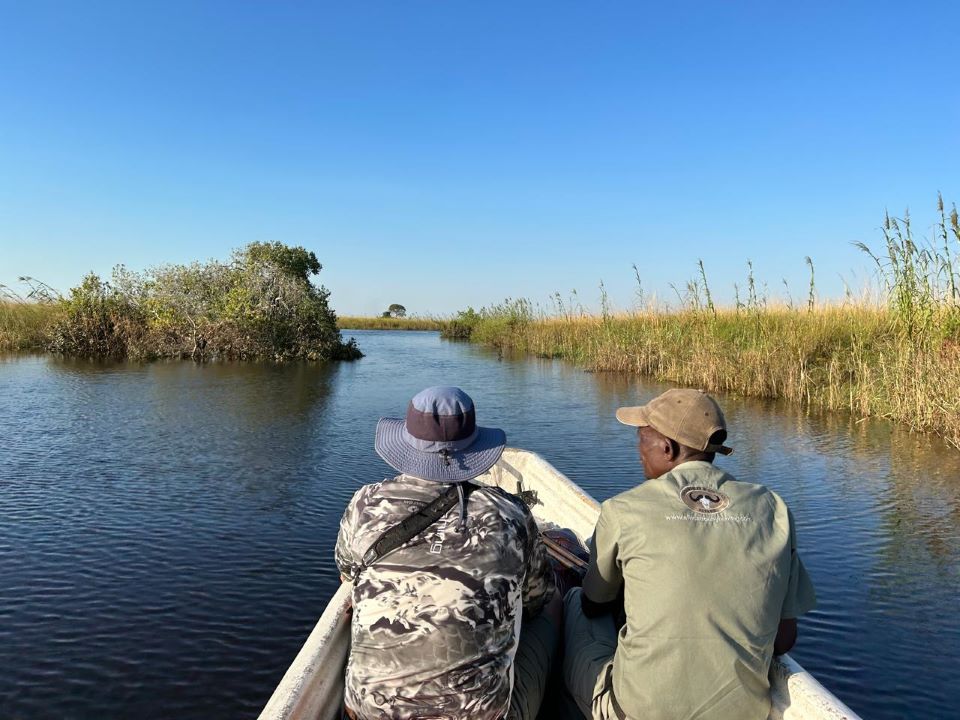
Spend enough time hunting Namibia and you begin to look at water differently. In much of the country there are no great rivers running through the hunting area and no dependable natural water in every valley. Rain is seasonal, surface water disappears, and across large areas wildlife depends at least partly on boreholes, dams and other permanent water points. Where those sources are situated can strongly influence how game uses the country around them.
A Namibian hunt does not mean driving from one waterhole to another looking for something to shoot. Quite often the opposite is true. A water point may be useful because of what happened there several hours earlier. Kudu tracks in the dust, gemsbok spoor leaving towards open country or the marks of animals that came in during the night can give a PH and tracker somewhere sensible to begin. By the time the hunter arrives, the animals themselves may already be miles away.
This is more noticeable as the dry season progresses. A water source that was only one of many options earlier in the year may become more important when temporary pans have dried and the surrounding country has lost moisture. Feeding country still matters. So do shade, cover, hunting pressure, wind and disturbance. Water is only one part of the picture, but in dry country it is a part that neither the animals nor the hunting team can ignore.
That is one of the less obvious things to understand about hunting in Namibia. A PH who knows an area well does not look at a waterhole merely as a place where animals might appear. He knows which species use it, which approaches they favour, where they tend to go after drinking and how that pattern changes as the country gets drier. The useful question is rarely just Where is the water? It is What does this water tell us about where the game has been — and where it is likely to be now?
This article is mainly about Namibia’s drier hunting country. The Zambezi Region, still commonly called the Caprivi by hunters, is a different ecosystem shaped by perennial rivers, floodplains and wetter woodland. Water matters there too, but in a different way, and should be treated separately rather than forced into a dry-country discussion.
Water Is Part of the Map in Dry Namibia
One of the easiest mistakes a visiting hunter can make is to judge a Namibian property by size alone. Acreage matters, but in dry country it tells only part of the story. A large block with poorly distributed water can hunt differently from a smaller area where dependable water is spread through good feeding and bedding country.
The same applies when looking across the landscape. Dry thornveld, red sand, rocky ridges and open grass can appear empty at first glance, especially to an American hunter more familiar with country where creeks, tanks or stock dams are easier to read on a map. In Namibia, some of the most important features may be far less obvious: a borehole tucked behind a ridge, a reservoir serving several valleys, or a water point that has remained reliable while temporary pans elsewhere have already dried.
Kudu may feed in thicker terrain well away from water and only return to drink under cover of low light. Gemsbok can range over much larger distances and often appear almost indifferent to country that looks punishingly dry. Warthog, zebra and hartebeest may use the same water but approach it differently, at different times, and from different directions.
For the PH, that distribution becomes part of the working map of the area. He is not only thinking about where water lies, but what surrounds it: browse, grass, shade, escape cover, road access, prevailing wind and the amount of pressure animals have experienced there.
A water point sitting in poor feeding country may be less important than one several kilometres away that is connected to good habitat by well-used game trails. Likewise, a waterhole close to a road may show plenty of spoor but produce very little daylight movement if animals have learned to associate vehicles with disturbance.
This is where local knowledge begins to matter more than a map.
A PH who has hunted the same property through several seasons will know which water points become important late in the year, which ones game approaches cautiously, and which valleys continue holding animals even when the surrounding country starts drying out.
A Waterhole Does Not Mean an Easy Hunt
Finding water is not the same as finding an animal willing to stand beside it in daylight. Older animals quickly learn where vehicles stop, where people walk and which water points receive regular pressure. Kudu may hang back in cover, warthog may approach cautiously, and gemsbok can use the surrounding terrain without ever giving the hunter an obvious opportunity at the water itself.
Experienced PHs often pay as much attention to the ground around a water point as to the water. Fresh tracks, well-used approaches, droppings, dust and the direction of travel can tell them which animals are using the area and when they were there.
Pressure changes those patterns. A waterhole that was productive early in the season may become far less useful once animals associate it with disturbance.
So the value of water is not that it guarantees a shot. It is that it gives the hunting team another place to start reading the country.
Tracks Around Water May Matter More Than the Water Itself
By first light, the most useful information at a Namibian water point may already be in the dust.
Fresh spoor can tell trackers what drank during the night, whether an animal was alone or moving with others, and which direction it took when it left. On good ground, the difference between a track made an hour ago and one made the previous evening can be obvious. That matters because a track worth following at sunrise may be a waste of time by mid-morning.
The direction of travel is important. A kudu bull leaving water towards the hills creates a different problem from gemsbok tracks heading into open terrain. One may be moving towards shade and bedding cover; the other may keep travelling across country that offers little chance of getting close without being seen.
Trackers are not simply confirming that an animal was there. They are deciding whether the spoor is fresh enough, whether the country ahead is huntable, and whether following it is likely to produce an opportunity before heat, wind or distance changes the odds.
The water itself can almost become secondary.
It gives the hunting team a place to pick up the story. The spoor tells them whether that story is worth following.
Animals Do Not All Use Water the Same Way
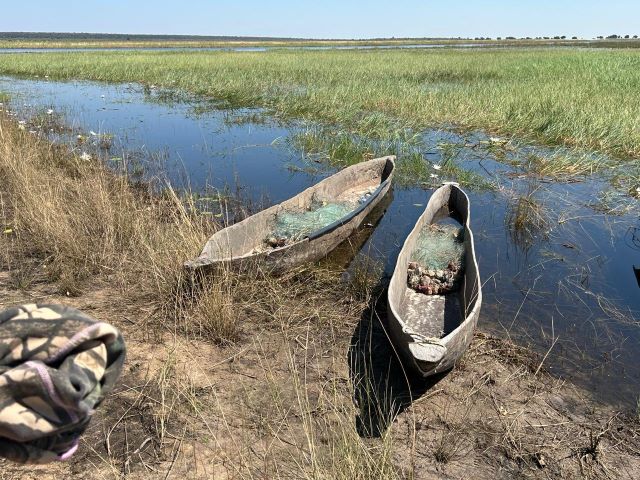
Water becomes more useful to a hunting team once you understand that different species use it differently.
Warthog need regular access to water and may use well-established approaches repeatedly. Zebra and hartebeest can also develop predictable patterns around permanent water in dry conditions. Kudu may feed and bed well away from it and approach more cautiously, particularly where a water point receives regular disturbance.
Gemsbok are a different proposition again. They are well adapted to arid country and can spend long periods away from surface water, drawing much of their moisture from the plants they eat. Finding gemsbok spoor near a water point does not mean the animals are tied closely to it.
For the PH, those differences matter. The same waterhole can provide useful information on several species, but the interpretation is not the same for each one. A warthog track may suggest a regular local pattern.
A gemsbok track may lead a long way.
Heat Changes the Way the Country Hunts
Heat in Namibia does more than make the day uncomfortable. It changes how both animals and hunters use the terrain.
As the morning warms, game often begins to settle into shade and movement becomes less obvious. A kudu bull that was still travelling at first light may be standing in thick cover by mid-morning seeking shade. Warthogs may remain closer to shade or mud, while gemsbok can continue moving through country that looks far too hot to hunt effectively.
The hunting team must adjust with it.
A fresh track at seven in the morning can be worth following hard. The same spoor several hours later may lead into country where the animal has already bedded, the breeze has become less dependable and visibility has deteriorated. Pushing too aggressively can turn a promising track into a bumped animal and a much harder hunt.
Heat can also play tricks on distance. Across open country, rising air can create a visible shimmer that softens detail and makes animals, horns and landmarks harder to judge through binoculars or a scope. At longer distances the picture can look sharp one moment and blurred the next, which is one more reason not to force a shot simply because the animal is finally in view.
Heat also changes the hunter’s own pace. Longer walks become more demanding, water consumption matters, and a PH may deliberately slow the hunt rather than force an approach during the worst part of the day.
The best decision is not always to keep following.
Sometimes it is to back out, let the country settle and start again when conditions begin to favour the hunter.
As the Dry Season Deepens, the Map Changes
The size of a Namibian hunting property does not change between the wet and dry seasons. The number of dependable places where game can drink often does.
After good summer rain, temporary pans may hold water, grass responds and browse improves. Animals have more options and can spread across the country. A waterhole that mattered in September may be only one of several usable sources earlier in the year.
As the months pass, those temporary options disappear. Surface water dries, vegetation loses moisture and permanent boreholes, dams and reservoirs become more important. The same property can begin to hunt differently as animal movement becomes closely tied to the remaining dependable water.
That does not mean every animal suddenly becomes easy to predict. Feeding country, cover and pressure still matter, and species respond differently. But the pattern becomes easier to read.
For a hunter, the date of a Namibia safari matters. The country you hunt in May may be using water differently from the same country later in the dry season.
The map has not changed; the way the animals are using it has.
Artificial Water Can Change How a Property Hunts
Drive through enough of Namibia and the skyline starts to tell its own story. Windmills, boreholes, tanks, solar panels and reservoirs are part of the working landscape, and in dry country they are as important to wildlife as they are to livestock.
Artificial water does not make a hunting area artificial. It simply provides dependable water where natural surface sources are seasonal or unreliable. What matters is where those water points sit, how many there are, and what kind of country lies between them.
A property with several well-spaced water points may hold game across a much wider area through the dry season. Another, with only one or two dependable sources, can develop far more concentrated movement as the season wears on.
It affects where tracks appear, how far animals travel, which valleys keep producing game, and how much pressure individual water points receive. It also means a failed pump or dry borehole can matter far more than a visiting hunter might expect.
These windmills and tanks are not just part of the scenery; they are part of how the country and the hunting work.
What Should a Hunter Ask About Water Before Booking Namibia?
Before booking, ask how water is distributed across the hunting area and whether the main sources are natural, borehole-fed or a mixture of both. Find out how many remain dependable late in the dry season and whether livestock uses the same water.
Then ask how the hunting is conducted. Does the PH normally use water to cut fresh tracks and then follow spoor? Is most of the hunting spot-and-stalk? Are blinds used for certain species or for bowhunters? Does the area hunt very differently in May compared with September?
We saw this first-hand in Namibia while hunting with Peter from Thormählen & Cochran Safaris during a drought-relief elephant hunt in Bushmanland. Peter made the point that in dry country, water should never be considered on its own. Feed, cover, pressure and dependable water all work together, and the balance between them changes as the season dries out. Our Bushmanland drought-relief elephant expedition reinforced the same lesson: when water becomes limited, it changes far more than where animals drink.
For hunters planning plains game hunts, those questions are especially useful. A species list may tell you what is available, but it does not tell you how kudu, gemsbok, springbok or warthog are using the property when you arrive.
The best question may be the simplest one:
How does this property change as it gets drier?
A good outfitter or PH should be able to answer that without reaching for a brochure.
Frequently Asked Questions About Water and Hunting in Namibia
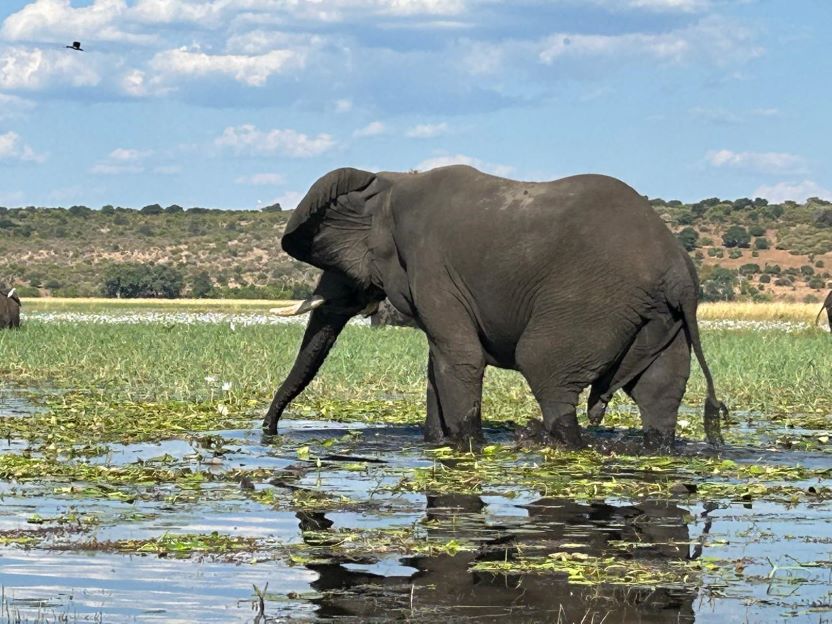
Do Animals in Namibia Depend on Waterholes?
It depends on the species, the area and the time of year. Warthog, zebra and several other species use dependable water regularly, particularly as the country dries out. Gemsbok are much better adapted to arid conditions and can obtain substantial moisture from vegetation, so they are not tied to surface water in the same way.
This is one reason a water point should be treated as part of the hunting picture rather than as a guarantee of finding game.
Is the Late Dry Season Better for Hunting in Namibia?
Not automatically, but the country can become easier to read as temporary water disappears and animals rely more heavily on dependable sources.
Later in the dry season, spoor around permanent water may become more useful and movement can become more concentrated. The trade-off is hotter conditions, drier vegetation and game that may already have experienced several months of hunting pressure.
Do Gemsbok Need to Drink Water Every Day?
No. Gemsbok are extremely well adapted to Namibia’s arid country and can obtain much of the moisture they need from the plants they eat.
That ability is one reason gemsbok hunting can take hunters surprisingly far from obvious water. Finding fresh gemsbok spoor at a borehole may tell you where the animal has been; it does not necessarily tell you where it will remain.
Are Namibia Hunts Conducted Over Waterholes?
Some are, particularly certain bowhunting situations, but it would be misleading to describe Namibian hunting simply as waiting over water.
Rifle hunts commonly involve glassing, cutting spoor, tracking and spot-and-stalk hunting. A water point may provide the first clue in the morning, while the actual stalk and shot take place kilometres away.
Does Artificial Water Make a Namibian Hunt Artificial?
No. Boreholes, windmills, solar pumps, dams and reservoirs are part of the working landscape across much of dry Namibia. In many areas they provide reliable water where natural surface water is seasonal.
What matters from the hunter’s point of view is how wildlife uses the wider property, the feeding country, cover, distance between water points and the amount of hunting pressure, rather than simply whether the water came from a borehole.
Is Hunting the Caprivi the Same as Hunting Namibia’s Dry Interior?
No. The Zambezi Region, still widely called the Caprivi by hunters, is influenced by perennial rivers, floodplains and wetter woodland. Water shapes hunting there too, but it does so in a different ecosystem.
That region is also home to much of Namibia’s dangerous game hunting, which is why its water systems deserve to be considered separately from the dry-country conditions discussed in this article.
Water Is Only One Part of the Hunt
Water helps explain how Namibia’s dry country works, but it is still only one part of choosing the right safari. Season, species, hunting area, PH, terrain and the way a property is managed all matter once the hunt begins.
For hunters comparing African hunting trips, Namibia is a good example of why two safaris that look similar on paper can hunt very differently once you get into the field.
About the Author
Pierre van Wyk is the co-founder of Game Hunting Safaris and has spent years hunting and travelling across southern Africa, including numerous hunts in Namibia. His focus is on the practical side of safari hunting, understanding the country, the hunting area, the operator and the small field decisions that can shape the outcome of a hunt.
Namibia remains one of the countries he knows especially well, from plains-game country in the dry interior to dangerous-game areas further north, and much of that experience comes from time spent in the field with Professional Hunters, outfitters and trackers.