
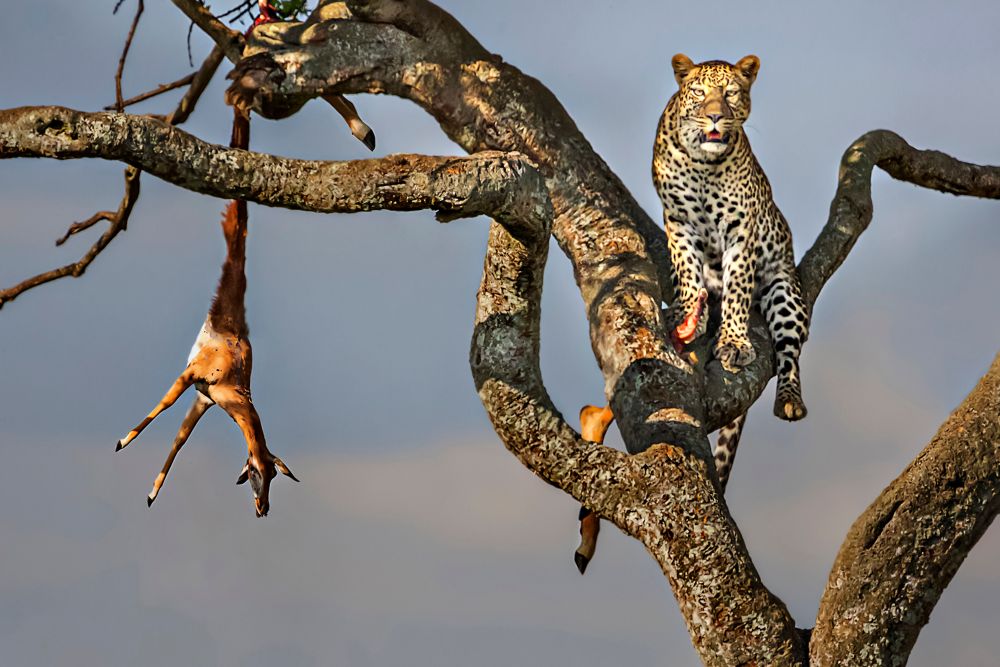
Mozambique has quietly become one of Africa's premier leopard hunting destinations. Not because the hunting is easy, but because much of the country still offers exactly what hunters hope to find: vast unfenced concessions, healthy leopard populations and the opportunity to pursue dangerous game in a country that remains genuinely wild.
A Leopard Hunting in Mozambique safari is built around patience rather than guarantees. Days are spent selecting bait sites, checking fresh tracks, reading camera images and watching how individual leopards respond before the hunter ever climbs into a blind. Success is measured by careful preparation, experienced Professional Hunters and allowing the bush to dictate every important decision.
The leopard may be the reason hunters first travel to Mozambique, but it is rarely the only reason they return. The same concessions often support exceptional Cape Buffalo Hunts, while Roosevelt sable and the endemic Niassa wildebeest give collectors the opportunity to pursue species found in very few other places on the continent. It is one of the few destinations where a dangerous game safari can naturally evolve into something much broader.
Mozambique does not pretend to be comfortable. Long days in the field, rough roads, thick bush and persistent tsetse flies are all part of the hunt. Leopard baits need constant attention, buffalo tracks can suddenly change the day's priorities, and every successful safari is earned rather than given.
That is precisely why so many hunters leave wanting to return.
[DYNAMIC-BLOGTABLEOFCONTENT]
Wild Country Produces Wild Leopards
The reputation of Hunting in Mozambique has always been built on wilderness rather than convenience. Vast unfenced concessions, healthy game populations and traditional safari hunting have quietly established the country as one of Africa's premier leopard hunting destinations.
Much of northern and central Mozambique remains remarkably untouched. Unfenced concessions stretch across miombo woodland, river systems and thick bush, supporting complete ecosystems where leopard still live alongside lion, elephant, buffalo, crocodile and a variety of plains game. It is this scale, rather than any single species, that allows leopard populations to thrive.
Healthy leopard populations begin with healthy ecosystems. Bushpig, bushbuck, duiker, baboons, monkeys, warthog and numerous antelope species provide a dependable prey base throughout the year. When food is abundant and habitat remains largely undisturbed, mature toms can establish territories that produce exceptional hunting opportunities over time.
Unlike smaller hunting areas where wildlife movements may be more predictable, Mozambique's leopard roam enormous territories. A mature tom may feed on a bait one evening and travel many miles before returning several days later. Success therefore depends on understanding how individual animals move through the concession rather than simply waiting for an opportunity to appear.
That is what continues to draw hunters back to Mozambique. Like the finest Leopard Hunts anywhere in Africa, success is never guaranteed. The leopard is not simply another species to pursue. It is a truly wild predator living in country vast enough that every sighting, every track and every successful hunt still feels genuinely earned.

Every Leopard Is Earned
Healthy leopard populations do not happen by chance. They are the product of extensive wilderness, abundant prey, responsible wildlife management and outfitters who invest considerable time and effort into protecting the areas they hunt.
Mozambique's leopard regulations also play an important role. Only mature toms above the legal minimum age may be hunted, allowing younger males to establish territories, breed and contribute to healthy leopard populations over the long term. Combined with careful quota management, this approach helps ensure the resource remains sustainable for future generations.
Anti-poaching programmes have become another important part of the story. Throughout many concessions, experienced scouts and trackers patrol enormous areas year-round, protecting wildlife and monitoring leopard activity. Some bring decades of bush knowledge that now plays an important role in conservation rather than exploitation, creating stronger protection for both wildlife and hunting areas.
Success still must be earned. Leopard baits require constant attention, roads are checked daily for fresh tracks, and a mature tom may feed confidently at one bait while completely ignoring another only a few kilometres away. Every concession presents different challenges, and every leopard writes its own story.
That uncertainty is part of the appeal. A mature Mozambique leopard is never simply waiting to be hunted. It remains one of Africa's most intelligent and elusive predators, surviving because it has learned to avoid danger every day of its life.
A Leopard Hunt Rarely Ends With One Species
A leopard permit may have been the reason for booking the safari, but it is rarely the only thing that captures a hunter's attention once they arrive in Mozambique.
The same wilderness that supports healthy leopard populations has also earned a reputation for exceptional Cape Buffalo Hunts. Mozambique is renowned for producing old dagga bulls carrying massive bosses, broomed horns and the scars of years spent surviving in truly wild country. They are not measured by width alone, but by the character earned through a lifetime spent living in some of Africa's toughest buffalo country.
Like leopard hunting, buffalo are rarely taken easily. Long days on foot are simply part of the safari, with ten miles before breakfast often feeling like a perfectly normal start to the day. Fresh spoor can lead hunters through thick miombo woodland, across dry riverbeds and into country where the buffalo always seem to stay one step ahead. It is demanding hunting that rewards patience, fitness and determination rather than comfort.
Mozambique offers an outstanding variety of Plains Game Hunts, many of them in the same vast concessions that support leopard and buffalo. From tiny duiker and bushbuck to impressive kudu, Livingstone's eland, waterbuck and a host of other species, hunters often discover opportunities they had never considered before arriving. It is one of the reasons a safari planned around a single leopard so often becomes something much broader.
Perhaps that is another characteristic that makes Mozambique different. Hunters may arrive focused on a single leopard, but they often leave with a far broader appreciation for everything the country has to offer. The first safari introduces Mozambique. The second is often about returning for everything there was not enough time to hunt the first time.

Mozambique Still Feels Remote
Long before the first leopard bait is hung, Mozambique already feels different.
The journey itself often becomes part of the adventure. Leaving the larger towns behind, hunters travel by charter aircraft or spend hours driving into remote concessions where the nearest village may be many miles away. The further you travel, the more the modern world quietly disappears, replaced by endless miombo woodland, sandy tracks and country that still belongs to wildlife.
That sense of isolation is part of Mozambique's appeal. Elephant cross the roads without warning. Buffalo leave fresh spoor in the sand before sunrise. Lions may be heard calling after dark, while tsetse flies quickly remind everyone that this is not a place designed for comfort. Every day feels a little unpredictable, and that uncertainty is exactly what hunters come looking for.
Mozambique's long Indian Ocean coastline may define the country on a map, but much of its hunting takes place deep inland in some of Africa's least developed safari country. Days are measured by the ground covered, the tracks found and the decisions made in the bush rather than the time on a watch.
Perhaps that is what makes Mozambique feel different from other hunting destinations. It still feels like an expedition into genuinely wild country, where the next bend in the road might reveal fresh leopard spoor, a herd of buffalo or an elephant bull quietly feeding beneath the trees.
Choosing the Right Concession Matters
Mozambique has earned an outstanding reputation for Big Game Hunting in Africa, but no two hunting concessions offer the same safari. Each area has its own habitat, wildlife populations and management objectives, making it important to match the concession to the species and hunting style you are looking for.
Some concessions have built their reputation around exceptional leopard hunting, where years of careful management and healthy prey populations consistently produce mature toms. Others are equally well known for old dagga bulls, while certain areas are recognised for elephant, crocodile or the opportunity to pursue several dangerous game species during the same safari.
The same applies to trophy quality and hunting style. A concession producing mature leopard may not necessarily be the best choice for elephant, while another area renowned for buffalo may offer a completely different type of hunt. Habitat, wildlife densities, concession size and long-term management all influence the opportunities available to hunters.
Understanding those differences helps hunters choose the Mozambique safari that best matches the species, trophies and hunting style they are looking for. Taking the time to make that decision often has a greater influence on the outcome of the hunt than any piece of equipment carried into the bush.
The hunt may begin with a leopard permit, but the foundation for success is laid long before the first bait is ever hung.
Not Every Leopard Country Feels Like This
Mozambique has never built its reputation by making leopard hunting easier. It has earned it by offering hunters the opportunity to pursue truly wild leopard across enormous, unfenced concessions where the bush still sets the rules.
Everything about the safari reflects that reality. Leopard baits demand constant attention. Buffalo tracks can change the day's priorities without warning. Tsetse flies, rough roads and long hours on foot simply become part of the hunt. None of it is designed for comfort, yet every part of it contributes to the kind of safari hunters remember long after they return home.
There is a quiet honesty about hunting in Mozambique. The country makes no promises and offers no shortcuts. Success still depends on good trackers, experienced Professional Hunters, careful preparation and the willingness to accept whatever the bush decides to give you on any day. Some mornings begin by checking leopard baits and end following the fresh spoor of an old dagga bull. Others are spent driving rough concession roads, knowing that tomorrow may tell a completely different story.
Perhaps that is what separates Mozambique from other destinations. The trophy may be the reason a hunter first arrives, but the wilderness, the people and the country itself are often what bring them back. Long after the leopard has been mounted, hunters remember the miles walked, the sound of lions after dark, the constant hum of tsetse flies and the feeling of being in one of the last places where Africa still feels genuinely wild.
Some of Africa's finest Hunting Trips are measured by far more than the trophies they produce. Mozambique remains one of the few places where leopard hunting is still defined by wilderness, patience and the satisfaction of earning every opportunity. It is not the easiest safari on the continent, and it was never meant to be. That is precisely what gives it its reputation.
Frequently Asked Questions
Why has Leopard Hunting in Mozambique become so popular?
Mozambique combines vast unfenced concessions, healthy leopard populations and traditional safari hunting in genuinely wild country. Strong wildlife management, sustainable hunting practices and experienced Professional Hunters have helped establish the country as one of Africa's premier leopard hunting destinations.
Can leopard and Cape buffalo be hunted during the same safari?
Yes. Many of Mozambique's premier hunting concessions naturally support both species, allowing hunters to combine leopard and Cape buffalo on the same safari. It is not unusual for a day to begin checking leopard baits before following fresh buffalo spoor through the concession.
What makes leopard hunting in Mozambique so challenging?
Leopard hunting in Mozambique demands patience and persistence. Leopard baits require constant attention, mature toms may travel enormous distances between feeds, and changing conditions often require Professional Hunters to adapt their strategy throughout the safari.
How do I choose the right hunting concession in Mozambique?
No two concessions are the same. Habitat, wildlife populations, management practices and the dangerous game species available all differ between areas. Choosing a concession that matches your hunting goals and expectations is one of the most important decisions you can make before your safari.
Where should I aim on a leopard?
Accurate shot placement is critical because opportunities are often brief and the margin for error is small. Before your safari, review our Leopard Shot Placement Guide to understand the vital anatomy and recommended shot placement for different shooting angles.
Is Mozambique suitable for a first leopard hunt?
Yes, provided hunters understand that Mozambique offers a traditional, physically demanding safari. Long days, rough roads, tsetse flies and genuinely wild hunting conditions are all part of the experience, making it an excellent destination for hunters looking to experience leopard hunting in one of Africa's last truly wild safari countries.
Author Bio
Pierre van Wyk is the co-founder of Game Hunting Safaris and has travelled extensively across Africa's premier hunting destinations, spending time with outfitters, Professional Hunters and trackers in some of the continent's most remote safari areas. His articles draw on first-hand experience in the field, providing practical insights to help hunters plan authentic African hunting safaris with confidence.